
Episcopal Palace, Murcia: What to See at the Palacio Episcopal

The Episcopal Palace is best treated as a piece of the cathedral square rather than a sight in its own right: a baroque bishop's residence whose front closes Plaza Cardenal Belluga opposite the cathedral. You come for the setting, the two-faced siting and the exterior, then spend your time next door.
What the Episcopal Palace is and who uses it today
Built between 1749 and 1768 on the site of the former Casa señorial del Marqués de los Vélez, the palace is baroque and was directed by several masters, among them José López and Baltasar Canestro. It now houses the residence of the Bishop of the Diocese of Cartagena, which is the key fact for anyone planning a look: this is a working residence, not a museum.
With the Casa Consistorial and the cathedral, it forms one of the most notable architectural groupings in the city, which is why the square reads as a single ensemble. Treat the palace as the third element of that trio and your expectations will match what you actually see.

Where it sits between Plaza Cardenal Belluga and Plaza de la Glorieta
The palace has two faces: the main facade on Plaza Cardenal Belluga and a rear facade opening onto Plaza de la Glorieta, with an address at Plaza del Cardenal Belluga 1. That double frontage is the most practical thing to know before you arrive, because it means you can find the building from either approach and pass between the two squares without retracing your steps.
In the old centre, the walk from the cathedral front to the Glorieta side takes a minute or two on foot, so there is no transport to arrange for the palace itself. Arriving from the river side brings you to the Glorieta facade first; arriving from the shopping streets brings you out on Cardenal Belluga facing the cathedral and the palace together.

The baroque exterior and how it fits the cathedral square
The palace is a baroque composition rather than a showy one, and its value on a short break is positional: it completes the frame around the square where the cathedral stands. Stand back towards the centre of Plaza Cardenal Belluga to see the palace, the cathedral and the Casa Consistorial in one sweep, then walk round to the Glorieta to see how the building turns its back on the second square.
Because the facade is the attraction, the stop costs nothing in time or money and works in any weather. Fifteen to twenty minutes for both squares is a fair allowance if you are simply reading the buildings; the cathedral and its museum are where the hours go. For the cathedral itself, including entry arrangements and the museum, see the dedicated guide to the Murcia Cathedral.
The courtyard, arcaded gallery and imperial staircase described from the street
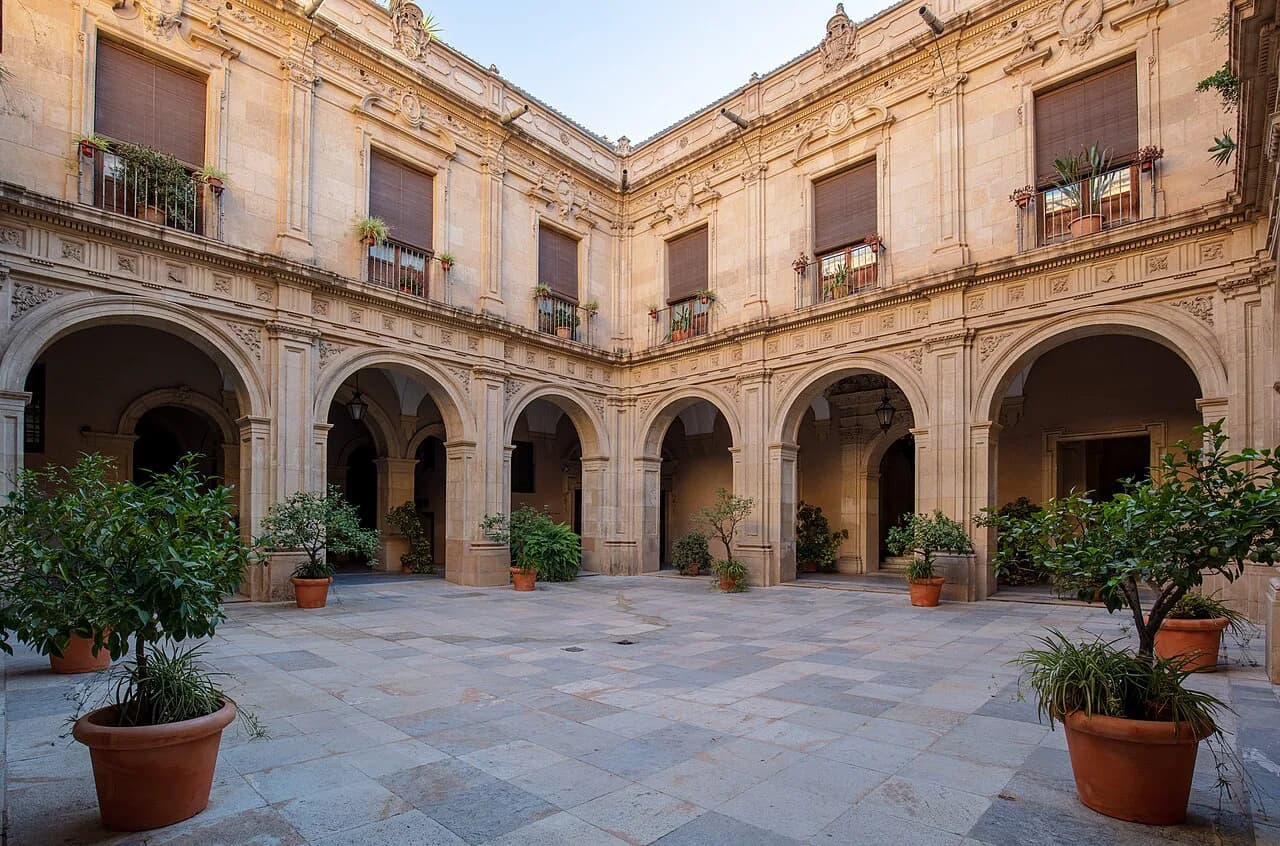
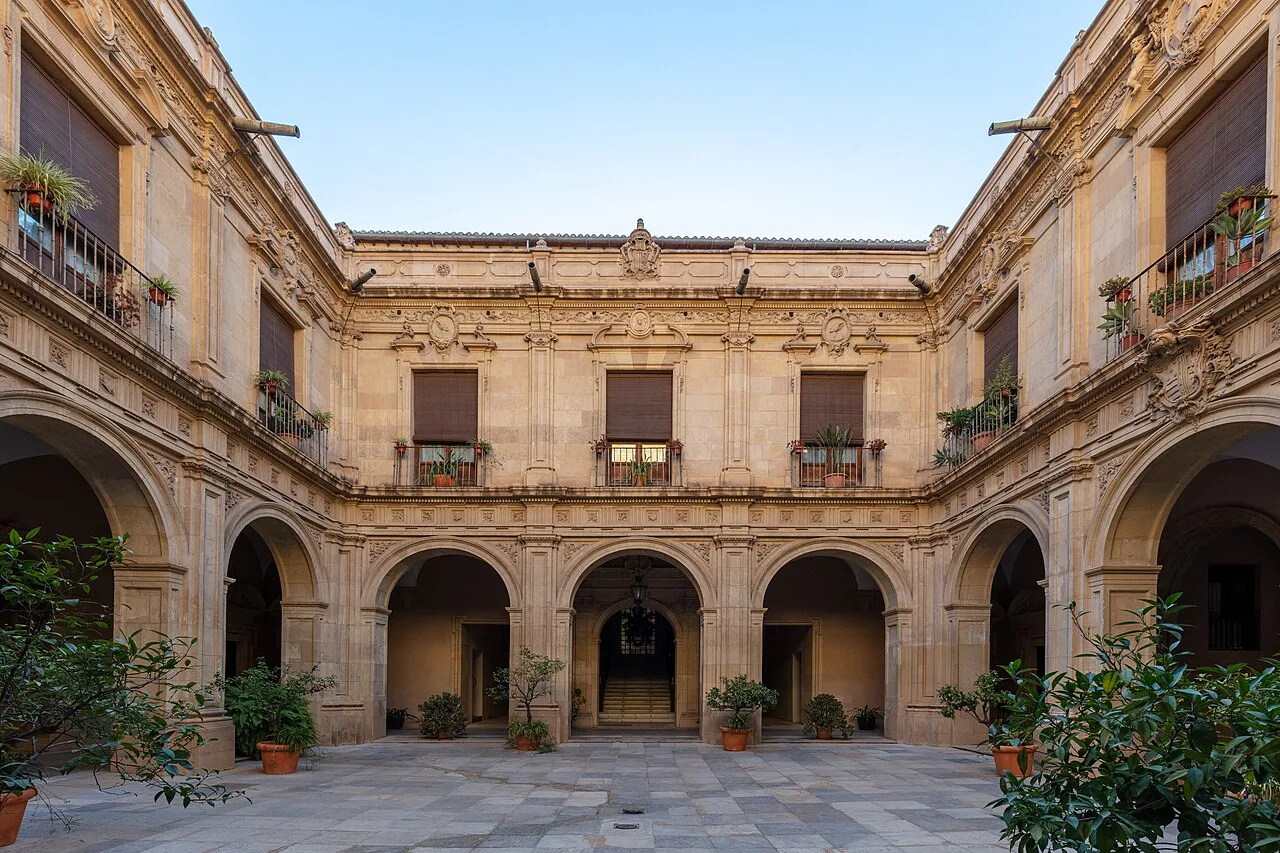
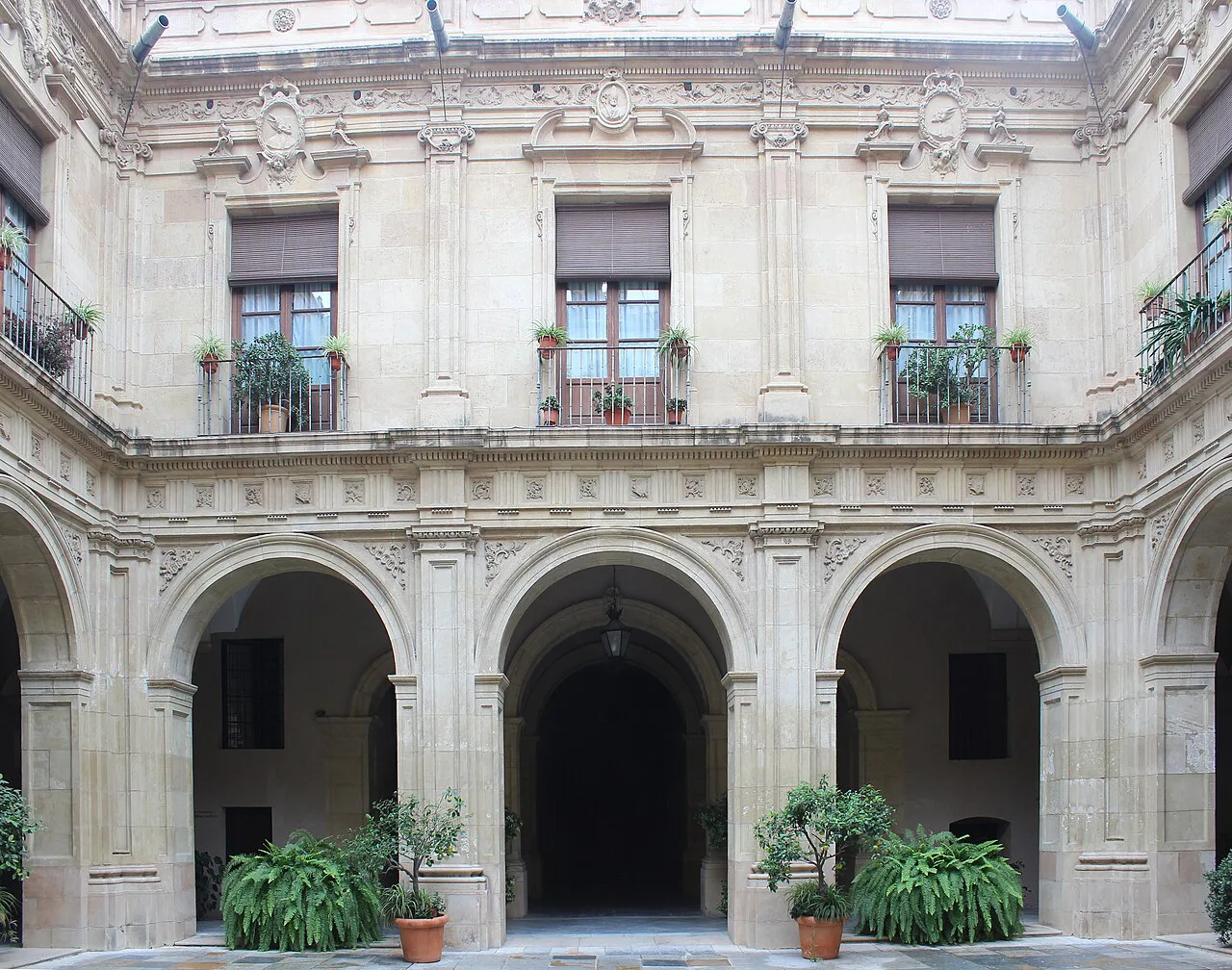
Inside, the building is organised around a large square courtyard, with a baroque arcaded gallery of round arches on pilasters at ground level, an entablature decorated with triglyphs and metopes above, and an upper storey of pilasters with Ionic capitals and balconies crowned by split pediments. Oval medallions of the bishops of the diocese, held by putti, sit in those pediments.
A grand imperial staircase rises from the courtyard to the first floor, where the bishop's private rooms and the rooms used for public and diplomatic activity are found, along with a small circular chapel whose sanctuary is aligned with its entrance door. The second floor is given over to staff accommodation. These are features of the building as described in accounts of the palace; how much of any of it a visitor can see depends on access through the diocesan offices, so plan on the exterior and ask at the tourist office on the square about anything more before relying on it.
How much time to allow and how it fits a short Murcia break
Give the palace itself ten minutes and the two squares together half an hour, photographed from both sides. If you are building a half-day around the square, the cathedral and its museum carry the weight and the palace supplies the frame; the Museo de la Catedral sits about 100 m away and the Glorieta de España about 80 m, both within a couple of minutes' walk.
The square is the natural anchor for a city walk, and the rest of the old centre follows from it: the Real Casino de Murcia and the Teatro Romea are both within easy reach on foot, and the broader set of city sights is mapped in the Murcia Attractions: 5 Visitor Guides collection.
Opening hours, tickets and access: what to confirm
The palace's role as the bishop's residence means interior access should not be assumed, and there is no published visitor route to plan around. The tourist office on Plaza Cardenal Belluga, about 50 m from the palace, is the practical place to confirm whether any part of the interior is open on the day you are there.
If the answer is no, the square still delivers: the cathedral, the Museo de la Catedral, the Glorieta and the chapter of Murcia's old centre around them fill the time without a ticket to the palace. Budget for the exterior as the default and treat any interior access as a bonus rather than the point of the stop.
Nearby: Murcia Cathedral, the Museo de la Catedral and the Glorieta de España
The cathedral front on Cardenal Belluga is the obvious next stop, and the Museo de la Catedral, roughly 100 m away, adds context on the diocese and the building. The Glorieta de España, about 80 m in the other direction, gives you the river side of the palace and a different view back towards the ensemble.
If you want a second, contrasting stop after the square, the Castillo de Monteagudo and the Cristo de Monteagudo stand over the Huerta de Murcia outside the city centre, useful as a half-day extension rather than a walk from the palace.
Is the palace worth a stop on a Murcia walk?
Yes, as a five-to-ten-minute stop folded into a visit to Plaza Cardenal Belluga, not as a destination in its own right. Come for the baroque front, walk through to the Glorieta to see the second facade, and let the cathedral and its museum carry the rest of your morning.
Frequently Asked Questions
Can you go inside the Episcopal Palace in Murcia?
The palace is the residence of the Bishop of the Diocese of Cartagena, so it is not run as a museum with a standard visitor route. Ask at the tourist office on Plaza Cardenal Belluga, about 50 m from the palace, whether any part of the interior is open during your visit.
What style of architecture is the Palacio Episcopal in Murcia?
It is baroque, built between 1749 and 1768, with a square courtyard, an arcaded gallery, Ionic pilasters and oval medallions of the bishops in the upper-storey pediments.