
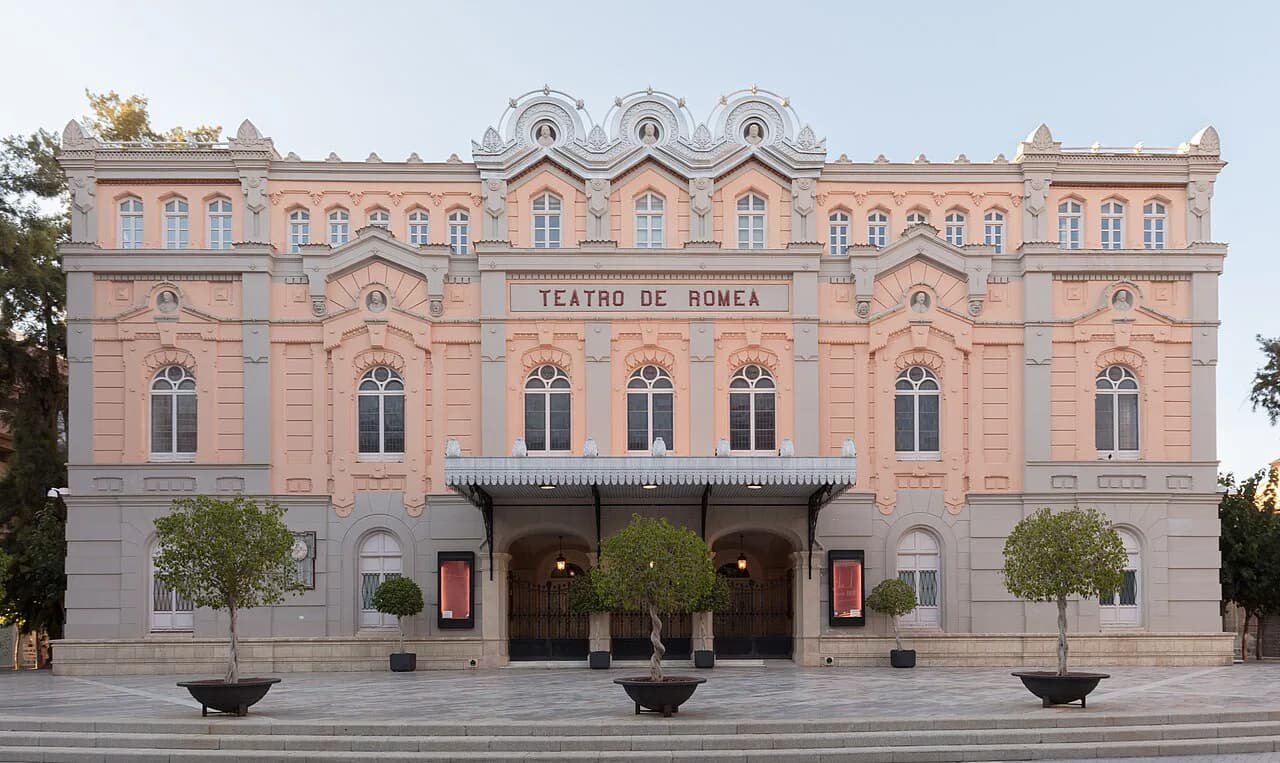
Teatro Romea, Murcia: What to See and How to Book

The Teatro Romea is Murcia's principal theatre, standing on Plaza Julián Romea in the historic centre, and you can see its facade and buy tickets for a show from the same small square. Treat it as a working venue rather than a monument: the reason to plan around it is a performance, not a walk-through. This guide covers where it sits, what to look at from the plaza, how the box office works and what else is within a few minutes on foot.
Where the Teatro Romea stands in central Murcia
The theatre occupies Plaza Julián Romea in the casco histórico, the compact old core of Murcia, and the regional tourism board gives its address as Plaza Julián Romea in the 30001 postcode. That puts it inside the ring of streets between the cathedral and the river, so you reach it on foot rather than by car. From the cathedral end of town, allow a leisurely ten to fifteen minutes through the shopping streets.
The square itself is small and functions as the theatre's forecourt, which means the building is best appreciated head-on rather than circled. Arrive from the Gran Vía side and the marquee and upper facade come into view as you enter the plaza. The wider set of Murcia Attractions guides is worth a look before you fix a route through the old town.
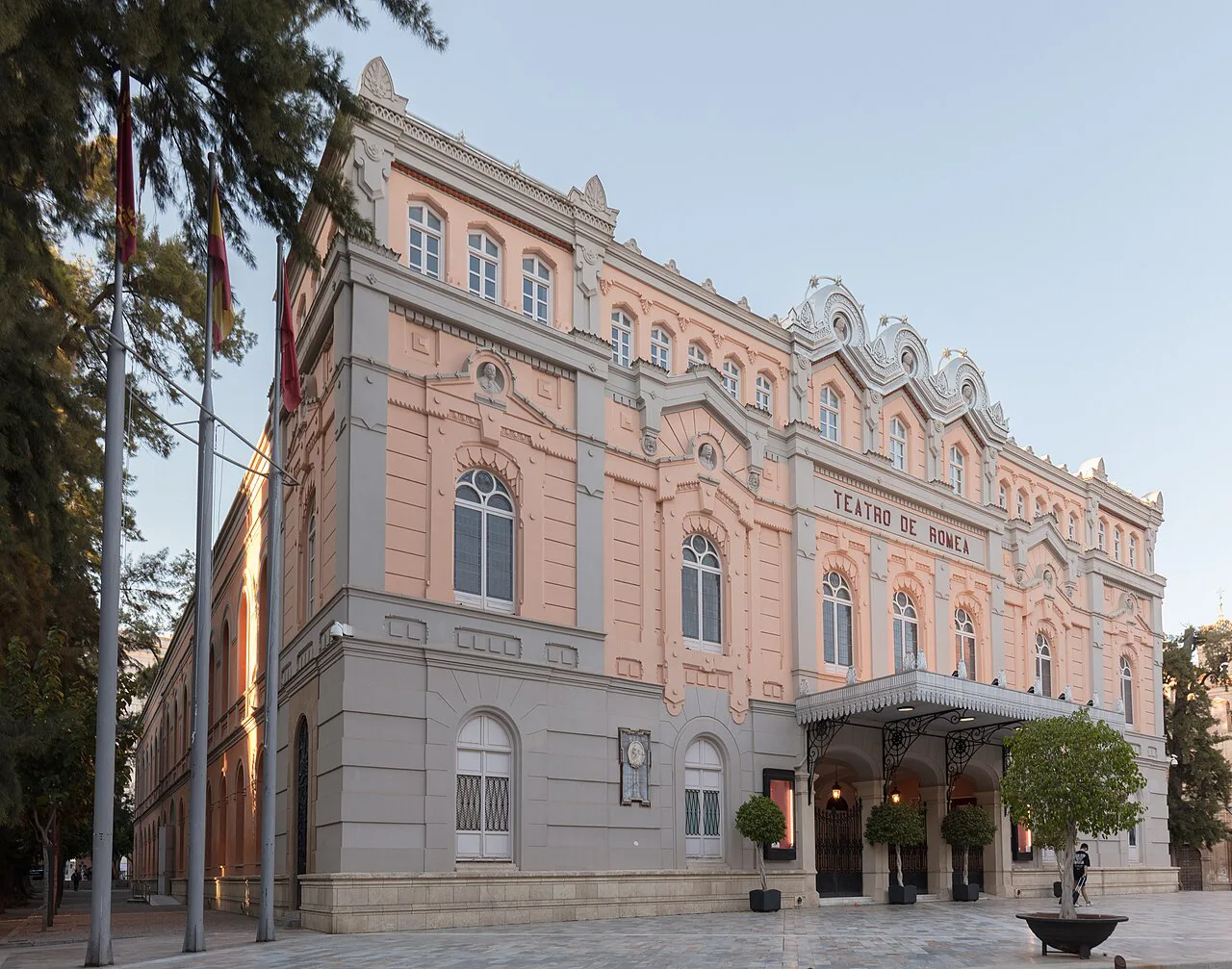

The building: Justo Millán's eclectic facade
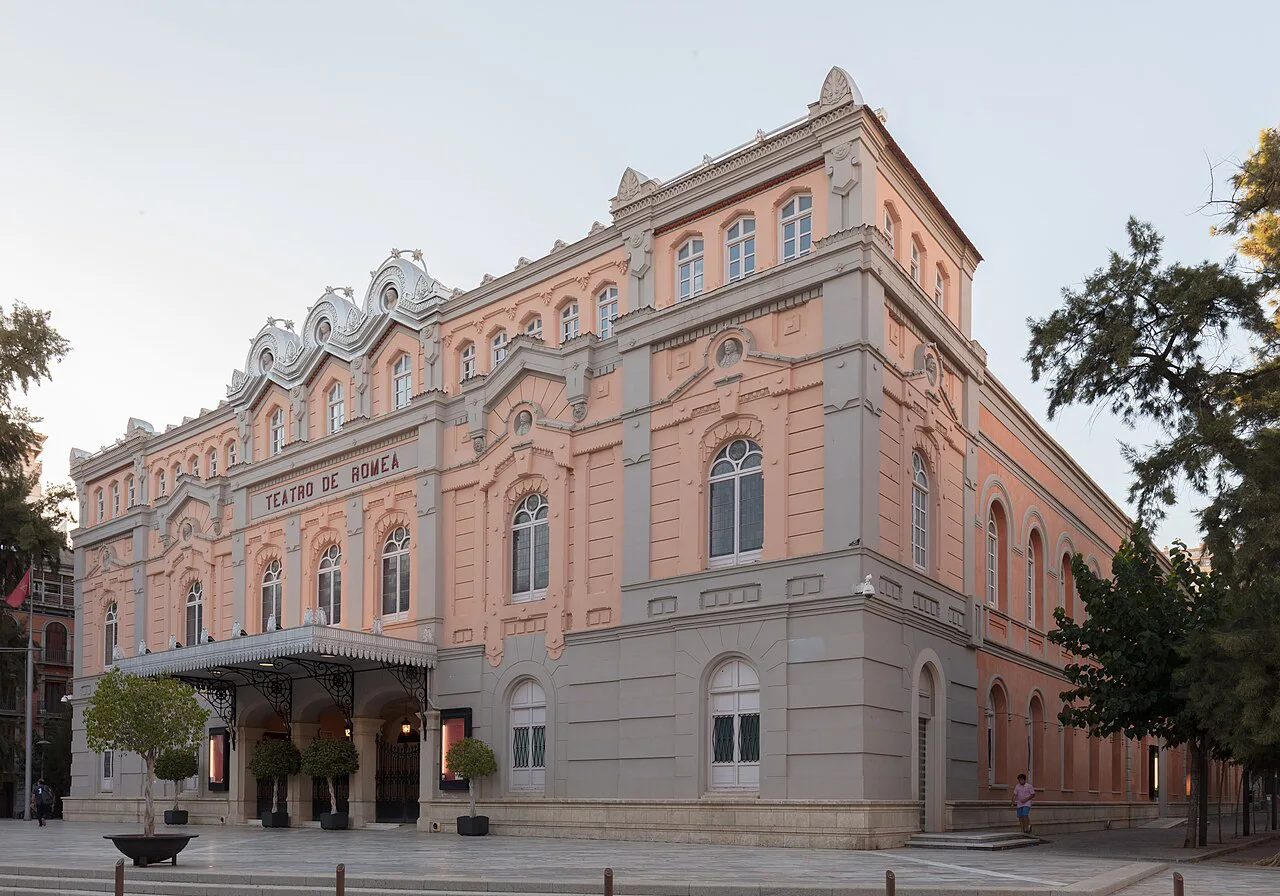
The present theatre was inaugurated in 1900 to designs by the architect Justo Millán, replacing an earlier building that had burned twice. The tourism board describes the style as eclectic, with a monumental neoclassical front carrying modernista details in the marquee over the entrance and the wrought-iron grilles. Reading the facade from the plaza is the main architectural pleasure of a visit that does not involve a ticket.
Above the entrance, three busts of composers crown the upper facade: Beethoven, Mozart and Liszt, a deliberate signal that this is a house of music as well as drama. Look for them before you go in, because from inside the auditorium the exterior detail is invisible. The marquee below them is the element most often missed by visitors who photograph the whole front from across the square.
Inside, the main auditorium seats 1,061, a size that makes the theatre feel generous without being cavernous, and the building also holds two smaller rooms used for meetings and other functions. The auditorium is the working heart of the house, so a show night is how you see it.

Tickets and the box office
The box office opens Tuesday to Friday from 11:00 to 13:30 and again from 17:30 to 20:30, and it is closed on Mondays. On Saturdays, Sundays and public holidays the counter opens two hours before a performance starts and not at fixed times, so a daytime call on a Sunday will usually find it shut. Plan your ticket buying around a weekday if you want to speak to someone in person.
The theatre's own site carries the programme and the online sales route, and the tourism board publishes a box office phone line and a separate office number for anyone arranging tickets from outside Spain. These are the practical alternatives to the counter when you are still at home planning the trip.
Online sales run through the theatre's own site, and its box office has also handled tickets for events staged at the Teatro Circo Murcia during shared programming cycles, so a single counter visit could cover both venues. That arrangement is worth knowing if the Romea is dark on the night you are in town. Check the season listing for what is actually on during your dates rather than relying on a schedule seen months earlier.
Booking a performance: what the programme covers
The Romea programmes theatre, dance and magic rather than opera alone, and recent cycles have mixed contemporary Spanish drama with classics and family-friendly illusionism. Teatro en Feria 2026 ran from 3 to 14 September 2026 and brought eight productions, among them a Christie mystery, a Lorca-inspired flamenco dance piece and a comedy headlined by Pepón Nieto. That run has finished, so treat the titles as an indication of the house's range rather than as a current listing.
When a show is on, tickets are sold both at the counter and online, and the theatre has opened sales on a fixed announcement date in the past, which means popular names can go quickly. Booking ahead matters most for the big comedy and mystery titles that fill the main house. If you are in Murcia for only one night, look at the calendar before you book travel rather than after.
The theatre also has a contact form for messages and enquiries, useful for questions about group seats or a specific performance that the website does not answer. Use the online sales route or the box office for actual bookings.
How long to allow: a plaza visit versus a show night
If you are only looking at the exterior and buying tickets, twenty minutes in the plaza covers it comfortably, with another ten if you want photographs of the facade in decent light. A daytime stop is short and architectural rather than immersive, since the interior is where the performances happen.
A show night takes the whole evening: the counter opens two hours before curtain on weekends and holidays, the auditorium seats over a thousand, and you will want to be in your seat before the doors close. Add time for the walk through the old town afterwards, when the streets around the plaza are quiet. Book the evening as your main plan rather than squeezing it around dinner elsewhere.
Access, seating and the smaller rooms
The theatre has a restoration history that includes a pioneering refurbishment in 1985, and the tourism board describes it as having reopened after a temporary closure with upgraded technical and comfort facilities. In practice that means a historic shell with a modernised auditorium, not a museum piece. Sitting in the main house is the way to experience the interior as a visitor.
Step-free access and specific seat types are not detailed on the tourism page, so ask the box office directly when you book, particularly if you need an aisle seat or wheelchair space. The two smaller rooms explain why the foyer can be busy on event days even when the main house is not full.
Nearby in the old town
The Murcia cathedral is a short walk from Plaza Julián Romea, and its baroque west front on the Plaza del Cardenal Belluga is the city's defining image. Pairing the two makes sense because both sit in the same compact core, and the cathedral square is the natural orientation point for the rest of the old town. Give the cathedral its own slot rather than tacking it onto the theatre stop.
The Real Casino de Murcia is another old-town interior within easy reach, a nineteenth-century club building known for its ornate rooms and library. It works well as the second indoor stop on a hot afternoon, when the plaza outside the theatre is at its least inviting. Check its visiting arrangements separately, since it keeps its own hours.
For a wider view of the city's monuments, the episcopal palace opposite the cathedral and the Castillo de Monteagudo on the northern edge of the Huerta de Murcia give you a religious and a defensive counterpoint to the theatre. Neither needs to be part of a theatre day, but both fill out a longer stay in Murcia.
Practical trade-offs before you go
The Monday closure is the single most common wasted trip, so do not plan a Monday morning ticket errand. The midday gap from 13:30 to 17:30 on weekdays catches visitors who assume a box office stays open through the afternoon. Build either the morning or the evening window into your day and you will not be caught out.
Murcia's inland summers make midday the least comfortable time to stand in an open plaza, so a morning facade visit or an evening performance suits the climate better than a 14:00 appointment. The air-conditioned auditorium is the draw in July and August, not the square.
Programme cycles change, and a listing seen weeks ago tells you nothing about tonight, so confirm dates and times on the theatre's own site before you travel.
Book the show, not just the facade
Base your visit on a performance if you can: the Romea is a working theatre, and a ticket gets you inside Justo Millán's building rather than leaving you on the pavement admiring the composer busts. Book online or ring the box office on a weekday between the published counter hours.
If your dates do not line up with a show, the plaza stop still earns twenty minutes on a cathedral-and-Casino circuit through the old town. Either way, avoid Monday and check the season listing before you commit an evening.