
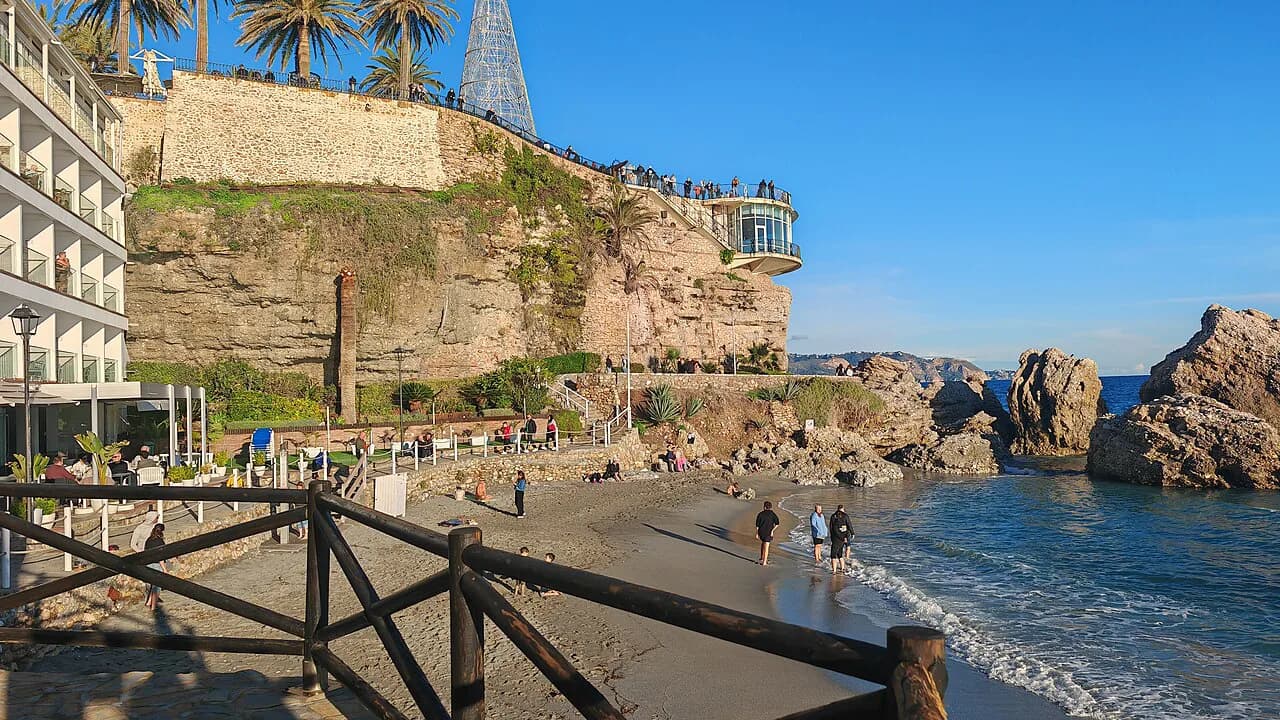
Balcón de Europa: Nerja's Clifftop Balcony

The Balcón de Europa is a free, open viewing terrace on the headland at the end of Nerja's old town, looking straight out over the Mediterranean. Allow 15 to 30 minutes at the railing, then use the viewpoint as the hinge for a wander back through the surrounding streets. This guide covers where the balcony sits, how to walk to it, what you see from the edge and what is worth adding nearby.
Nerja itself is the coastal town on the eastern edge of the Axarquía, the stretch of hills and cliffs east of Málaga, and most British travellers reach the area through Málaga airport before continuing along the coast. The balcony is the natural first stop because it costs nothing, needs no booking and sets the geography of the town in your head before you commit to anything ticketed.
What the Balcón de Europa actually is
It is a public promontory, not a building: a paved terrace and short paseo laid over the rock where the old town meets the sea. There is no ticket office and no door to queue at, which is exactly why it works as a filler between two other stops rather than a destination in its own right. Treat it as the anchor of a half-day in the centre, not the whole outing.
The name comes from the sense of standing on a balcony over the water, with the coast falling away on both sides. Because it is entirely outdoors and exposed, the experience is shaped by the weather rather than by opening times, and a windy day changes the visit more than any sign at the entrance will.
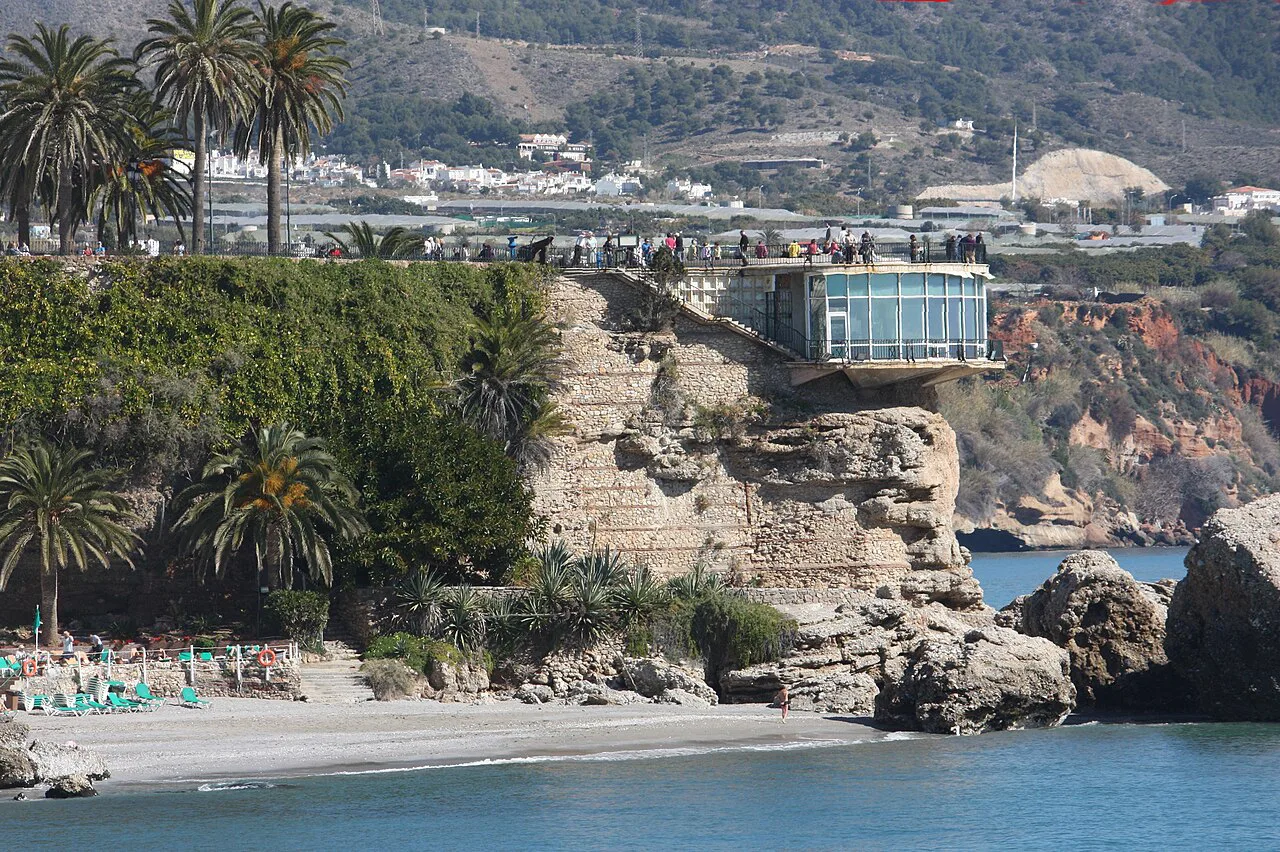

Where it sits in the old town
The viewpoint occupies the tip of the headland, with the old town's whitewashed lanes behind it and the Paseo del Balcón running along the exposed edge. Shops, cafés and small hotels cluster in the streets immediately inland, so the transition from open sea view to shaded street happens within a couple of minutes' walk.
Because the balcony is the end point of the centre rather than the middle of it, it is easiest to locate by working downhill through the old town until the streets run out. Aim for the seafront edge and you will find the terrace without needing a map on screen.
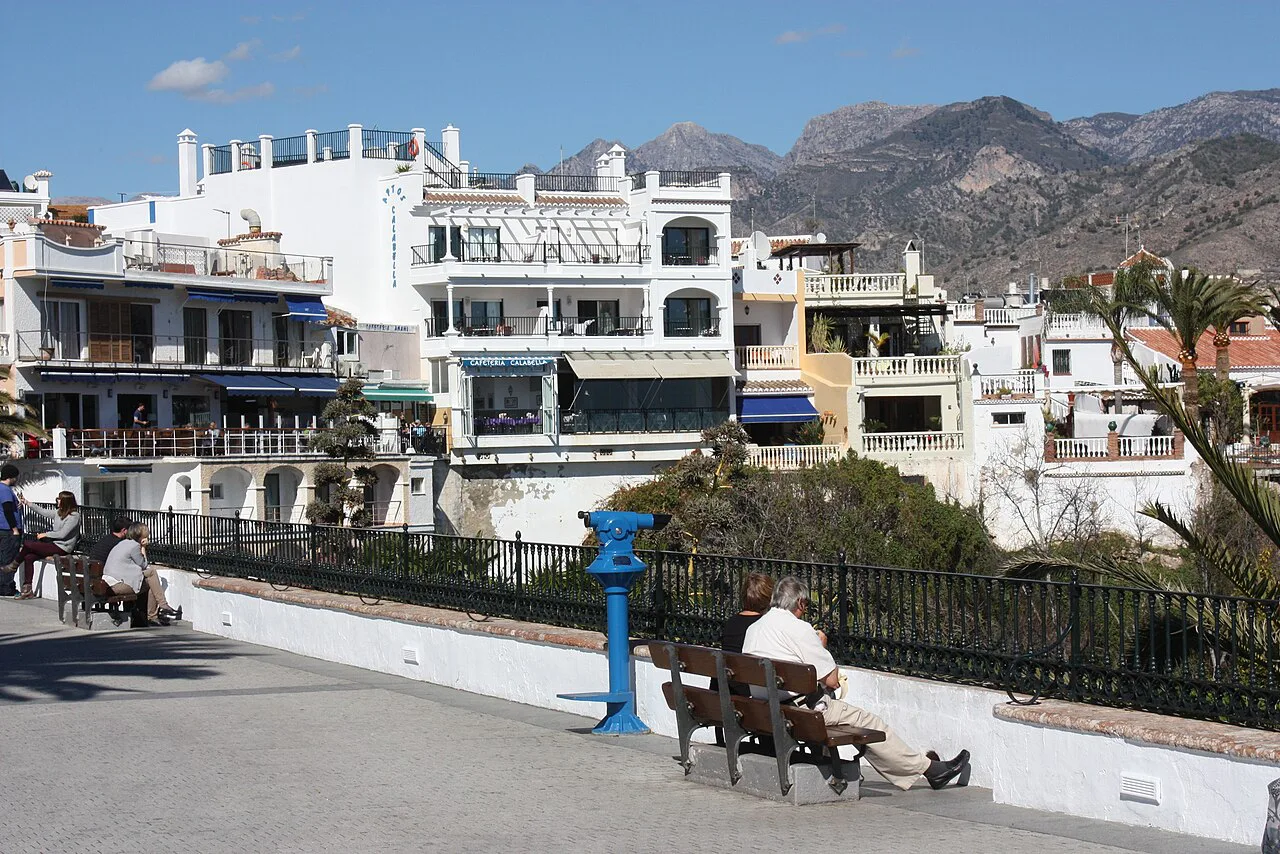

Walking there from the centre
From Nerja's central streets the approach is on foot, through pedestrian lanes that narrow as you near the headland. Comfortable shoes matter more than distance, since the surfaces are a mix of paving and uneven older stonework. The walk from the heart of the old town is short enough to do twice in a day, once in the morning and again for the evening light.
If you are driving, plan on parking inland and walking the last stretch, because the lanes around the headland are tight and best left to pedestrians. Arrive earlier in the day if you want an easier choice of spaces and a quieter railing.
What you see from the railing
The view is the point: rocky shore directly below, open sea ahead and the coastline curving away on either side. On a clear day you can read the whole shape of this stretch of the Axarquía coast in one sweep, which makes it the best orientation point in town for a first-time visitor.
Below the terrace the coast is genuinely rocky rather than sandy, so this is a place to look rather than to swim from. Keep that distinction in mind if you are planning the rest of the day around the water, and use the balcony as the scenic stop rather than a beach base.
How long to allow, and when to go
Fifteen to thirty minutes covers the railing, the paseo and a slow look along the coast, which is the honest shape of the visit. Anyone planning longer should be planning it around the streets behind the balcony rather than the balcony itself.
Early morning and the hour before sunset give the softest light and the thinnest crowds; midday in summer is hot, bright and busy, with little shade on the terrace. Inland Andalusian heat is fiercer, but the exposed headland still punishes anyone standing at the railing at the wrong hour.
Free access, sun and wind
The terrace is an open public space, so the visit is shaped by your own timing rather than by a booking. Carry water in summer, wear a hat and expect the stone to reflect heat back at you in the middle of the day.
The wind is the other constraint: the terrace faces open sea, and a breezy afternoon can make the outer edge uncomfortable for small children or anyone unsteady on their feet. Stay on the inner side of the paseo if the gusts are strong and the view is still almost as good.
Paseo del Balcón and the streets behind
The balcony itself is the natural place to start a loop back into the old town. From there, the lanes inland hold the parish church and small squares that give the centre its shape, and a slow circuit takes in far more of Nerja than the balcony alone.
The Iglesia de El Salvador, Nerja's main parish church, sits in the old town close enough to fold into the same walk, and it is the obvious second stop after the sea view. Pair the two and the morning has a proper shape without needing a ticket for either.
The centre's main squares are where the streets widen again, and they make a sensible finishing point before you head back uphill or along the coast.
Nearby: the coast's other viewpoints
Nerja's appeal is largely a chain of small coastal lookouts, and the Balcón is the best known of them rather than the only one. Walk the seafront edge in either direction and you will find further places to stop where the rock meets the water, all of them free and outdoors.
The Acueducto de Nerja, the old aqueduct on the edge of town, is a different kind of stop and works well as an add-on if you have a car or Don't mind a longer walk. It rewards the detour with a piece of local engineering history rather than another sea view.
Nearby: the Cuevas de Nerja
The Cuevas de Nerja are a separate, ticketed attraction west of town, so they need planning rather than a spur-of-the-moment add-on, because a time slot is chosen when you book. Treat them as a separate half-day from the old town wander.
Admission includes an audio guide and entry to the Museo de Nerja, and the interior holds the Sala del Cataclismo, home to a stalactite roughly 33 metres long. Ticket prices are tiered by age and category, so confirm the current figures with the ticket provider before you book; the listed adult rate at the time of writing was 15.50 €, with reductions for children, young people, seniors and visitors with disabilities.
The combined ticket links the cave visit with the Museo de Nerja, so you get two parts of the experience on one admission. Download the audio guide before you go in: there is no mobile coverage inside the caves.
Should the Balcón anchor your Nerja afternoon?
Yes, as a free 15 to 30 minute pause that gives you the town's geography before you spend money elsewhere. Pair it with the old-town lanes and the parish church, then decide separately whether the caves warrant a booked slot.
The balcony costs nothing and asks little of you, which is precisely why it earns its place at the start of a short break rather than as its climax.
Frequently Asked Questions
Do you need tickets for the Balcón de Europa?
No. The viewpoint is an open public terrace at the end of the old town, reached on foot through the surrounding streets. There is no gate to queue at, so it fits into a walk whenever you are passing.
Which airport serves Nerja?
Málaga is the airport that serves the Axarquía coast, including Nerja, and most British travellers fly in there before continuing east along the coast by road. Check current transfer options and times with the operator you book, as services change.
Can you see the sea from the Balcón de Europa?
Yes, the whole point is the open Mediterranean view from the headland, with rocky shore below and the coastline running away on both sides. It is an exposed outdoor terrace, so light and wind change the visit far more than any opening schedule.
Are the Cuevas de Nerja close to the Balcón?
They are a separate, ticketed site west of the old town rather than a quick add-on, so plan them as their own half-day. Tickets include an audio guide and entry to the Museo de Nerja in town, and prices vary by category, so confirm the current rate before booking.