
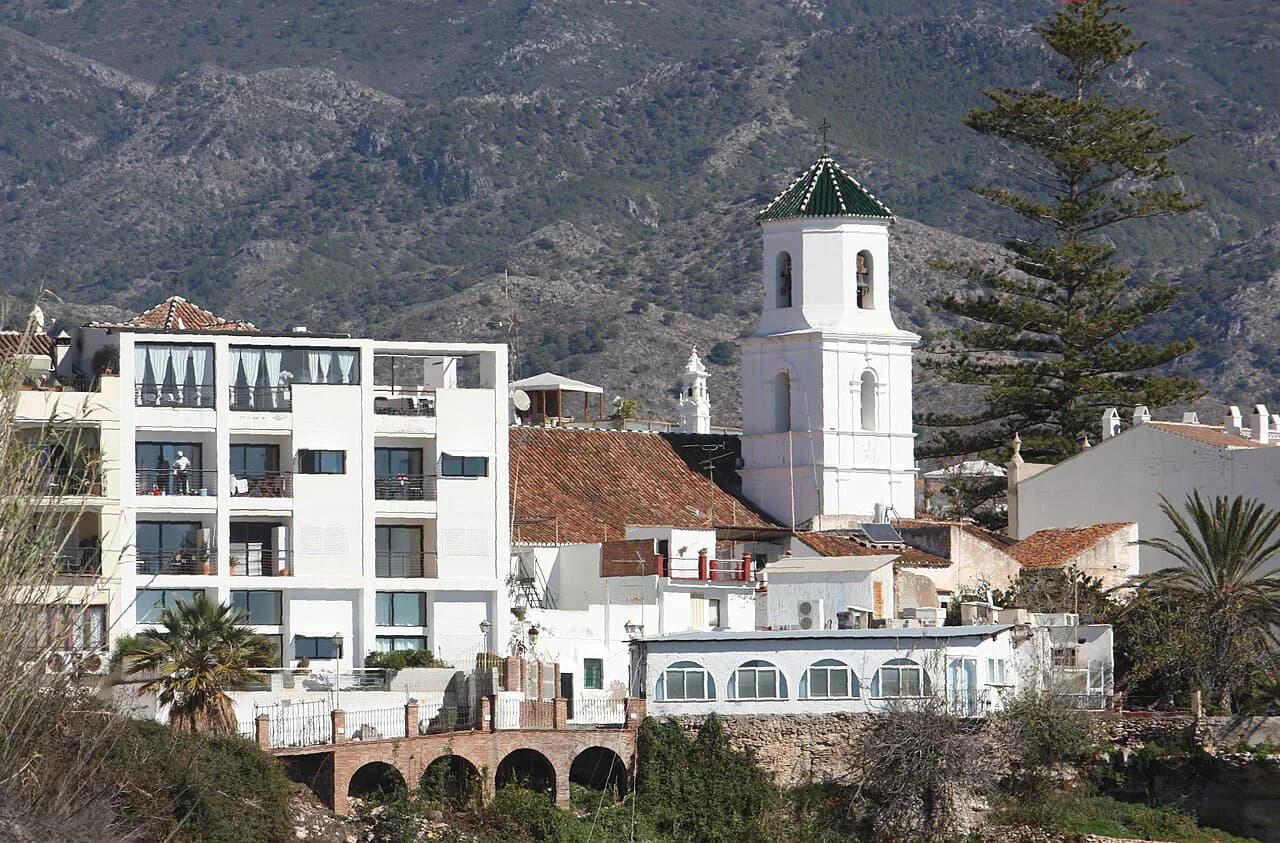
Iglesia de El Salvador, Nerja: what to see at the church by Plaza Cavana

The Iglesia de El Salvador, also called the Church of El Salvador, is a working parish church in the heart of Nerja's old town, tucked between Plaza Cavana and the Paseo del Balcón de Europa. It is a place to look round while wandering that cluster of streets, not a ticketed monument that needs booking ahead. This page sets out where the building stands, how you reach it on foot, the Baroque details to notice and the artworks inside, then what to see in the immediate area.
What the Iglesia de El Salvador is and where it stands
The Parroquia de El Salvador is the historic parish church of Nerja, standing between Plaza Cavana and the Paseo del Balcón de Europa, the promenade that ends at the town's famous viewpoint. That places it in the oldest part of the centre, among lanes of whitewashed houses and small plazas on the coastal side of town. Look for the church frontage as you reach Plaza Cavana, with the Balcón de Europa a short walk away.
Nerja itself sits in the province of Málaga on the eastern Costa del Sol, and travellers based in Málaga or arriving via Málaga airport usually reach the town by road along the coast. Treat the church as a focal point of the old town rather than a destination in its own right. The wider set of sights in the town is mapped out in the Nerja Attractions: 5 Visitor Guides collection.
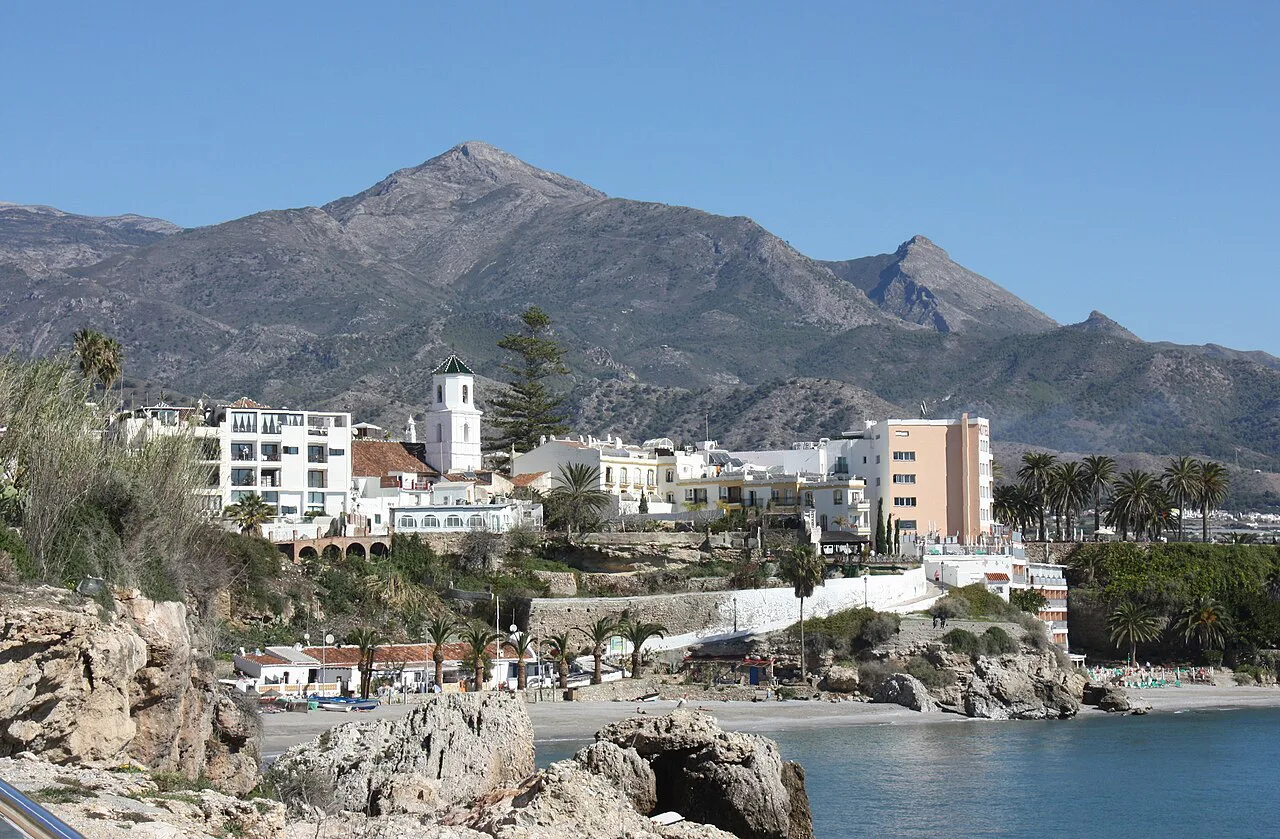

How to reach it on foot from the Balcón de Europa and Plaza Cavana
Coming from the Balcón de Europa, walk up from the promenade into the streets behind it and follow signs for Plaza Cavana; the church frontage opens directly onto the square, so you will find it without needing a map once you are in the old town lanes.
If you are using the church as a point on a longer stroll, the natural sequence is the Balcón de Europa first, the viewpoint at the end of the promenade, then the short walk into the streets behind it towards Plaza Cavana and the church.

The building itself: 1697 origins, the 1724 bell tower and Baroque character
The church was originally completed in 1697 and shows clear Baroque influence in its design, a style that survives despite later changes to the building. The bell tower was added in 1724, giving the church the profile you now see above the old town rooftops. A meticulous restoration in 1997 safeguarded the historic fabric and brought the Baroque character back into focus.
For a visitor, the practical point is that the church is a compact Baroque parish building, not a cathedral. Look at the tower from Plaza Cavana before you go in, and note the plain exterior walls, which give little away about the interior. It is a Catholic parish church of the early modern period, recorded under the name Iglesia Parroquial de El Salvador in Nerja, Málaga Province.
Inside the church: the Encarnación mural, the Cristo de Bronce and the three Archangels
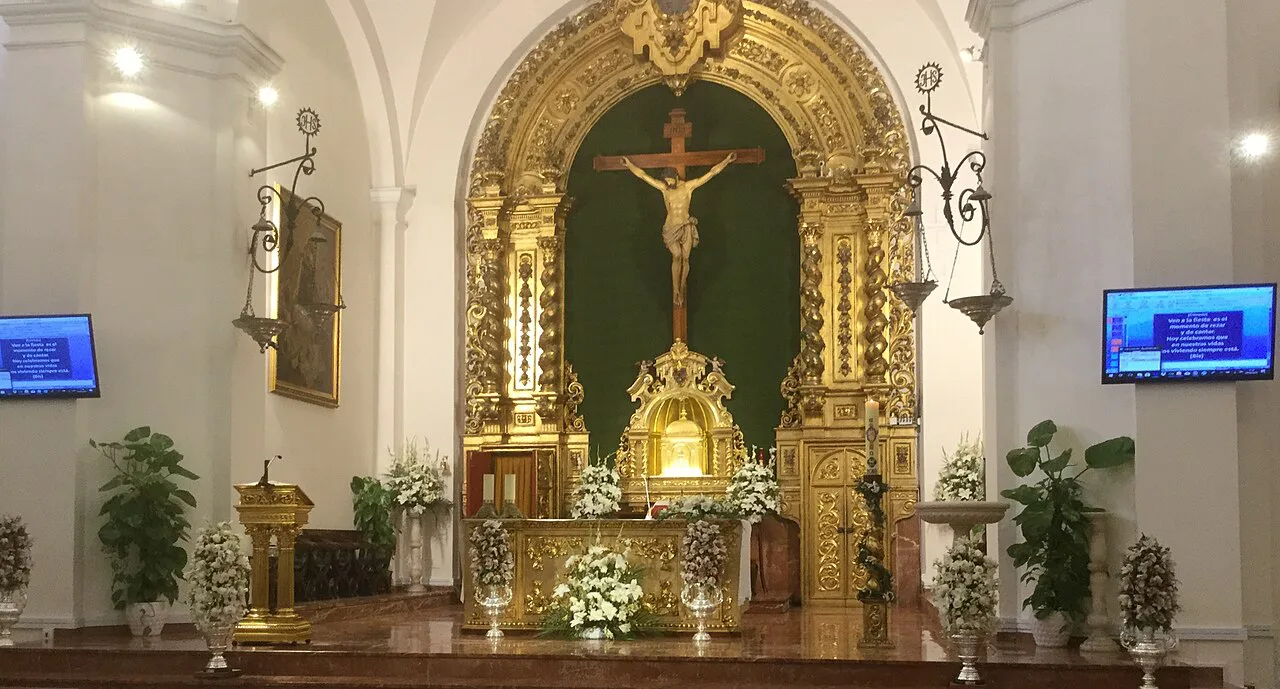
Inside, visitors are met with a collection of artworks rather than bare walls. A striking mural painted by Francisco Hernández depicts the Encarnación, and the Cristo de Bronce statue, created by Aurelio Teno, takes centre stage in the church. Look at both deliberately: the mural is easy to walk past if you are looking only at the altar end.
The most distinctive feature is the prominent presence of the three Archangels, with particular emphasis on San Miguel, the patron saint of Nerja. These figures symbolise protection and blessing, and they reflect the spiritual traditions the community has kept, so they carry meaning for local people rather than being decoration alone. Read them as a set: the archangel group tells you what the parish in this town holds dear.
San Miguel as Nerja's patron saint and what the archangel figures mean here
San Miguel is Nerja's patron saint, and his prominence inside El Salvador connects the church to the town's public identity rather than to a general Andalusian tradition. The archangels, with San Miguel leading them, stand for protection and blessing, which is how the community has understood them over the centuries. When you see the figures, you are looking at a local devotion expressed in art, not a generic decorative scheme.
That context makes the church worth a closer look than its size suggests: if you understand the patron saint angle first, the archangel figures make sense as the centre of the interior rather than as an oddity. It also explains why the church functions primarily as a place of worship: devotional art in a parish is there for the congregation.
When to slot a visit into a wander round the old town
The church is a modest addition to a walk through the old centre rather than an outing in itself. Nerja's compact centre means you can pair it with the viewpoint and a walk along the promenade in the same afternoon.
The sun on the open promenade can be strong in the middle of a summer day, so the lanes around Plaza Cavana make a sensible break. Check mass and opening times with the parish before travelling, since services take priority over sightseeing and entry is not guaranteed outside worship.
Attire and conduct: visiting a working parish church with respect
This is an active Catholic parish, so dress as you would for a church anywhere: covered shoulders and no beachwear, with hats off inside. VIVAndalusia advises appropriate attire as a sign of respect for the religious setting. Keep voices low if a service is in progress, and be prepared to wait or return later if the church is occupied.
Photography and movement inside should follow whatever is signposted or asked of you on the day. If you arrive during a service, the respectful choice is to step back and come again rather than to walk round the artworks while people are praying. A Sunday service described on Tripadvisor starts at 10.30am, which is worth knowing if you would rather visit outside worship.
What is nearby: the Balcón de Europa, the Cueva de Nerja and the Museo de Nerja
The Balcón de Europa, Nerja's clifftop viewpoint, is a few minutes' walk from the church and is the obvious next stop, with views along the coast and a promenade that is easy to stroll. The town's archaeology and history are covered at the Museo de Nerja in the centre, which makes a natural companion to the church if you want more context on the area.
Outside town, the Cueva de Nerja, run by the Fundación Cueva de Nerja, is the major natural sight of the area and needs its own slot in the day. Together these give you a morning at the church and centre and an afternoon elsewhere, without the day feeling rushed.
Should you build the church into your old-town walk?
Yes, if you are already wandering the streets between the Balcón de Europa and Plaza Cavana: the Iglesia de El Salvador is a cool, quiet pause with three specific things to look at, provided it is open when you call. Skip it only if you are short of time and heading straight for the caves.
The realistic plan is a morning or late afternoon in the old town, a look inside the church if it is open, and a walk down to the viewpoint afterwards. Confirm service times and opening with the parish before you go, then build the rest of the day around it.
Frequently Asked Questions
Is the Iglesia de El Salvador in Nerja a museum or a working church?
It is a working Catholic parish church, not a museum with timed entry. Worship takes priority over sightseeing, so treat any visit as a quiet pause in the old town rather than a scheduled attraction, and check opening times with the parish before relying on entry.
What artworks should I look for inside the church?
Look for the mural of the Encarnación by Francisco Hernández, the Cristo de Bronce statue by Aurelio Teno, and the three Archangels with San Miguel at their head. San Miguel is Nerja's patron saint, so the archangel group is the heart of the interior.
Can I visit the Iglesia de El Salvador while walking from the Balcón de Europa?
Yes, the church is by Plaza Cavana close to the Paseo del Balcón de Europa, so it fits naturally into a walk through the old town lanes. Step back if a service is in progress.