
Basílica de Santa María, Alicante: a Visitor's Guide to the City's Oldest Church

The Basílica de Santa María is worth 30 to 45 minutes of your day in Alicante: the city's oldest church, begun in the 15th century on the site of the old main mosque, with Gothic origins and later Baroque and Rococo layers. It sits on the Plaza de Santa María in the Casco Antiguo, a few minutes uphill from the seafront, and works best as a stop within an old-town walk rather than a standalone morning. This page covers where it is, what to look for on the outside and inside, the pieces worth seeking out, and what else lies within a few minutes' walk. See also our Alicante Attractions: 6 Visitor Guides for the wider picture.
What the Basílica de Santa María is and why it matters
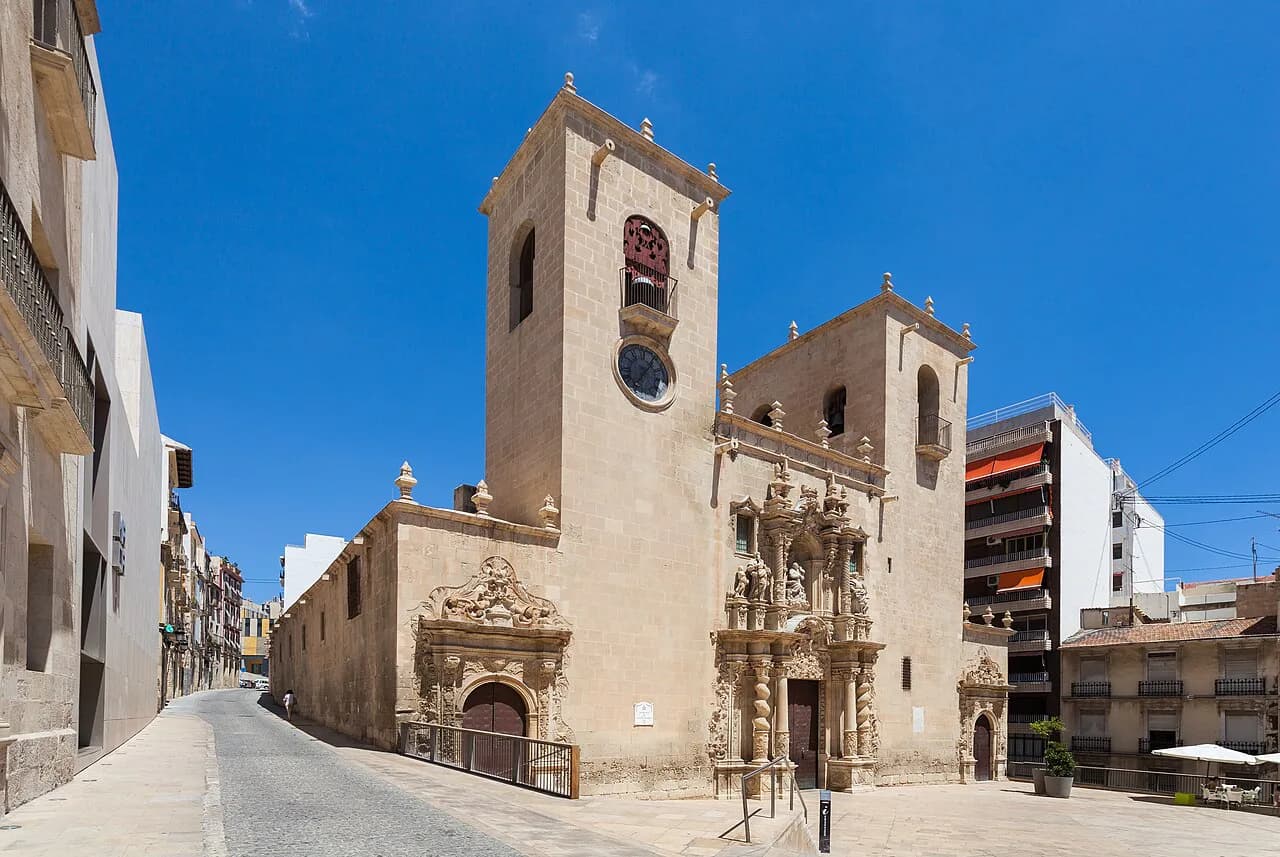
The church stands on the site of what the city's main mosque once occupied, and construction began in the 15th century, which makes it the oldest Christian temple in Alicante. The building as you see it today is a palimpsest of centuries rather than a single campaign: Gothic origins, later Baroque and Rococo layers, and a good deal of history that has left its mark on the walls. That combination is the reason to step inside rather than simply photograph the facade and move on.
It is still a working parish and Basílica, not a museum, and the Hermandad Sacramental Cristo del Mar has held it as its canonical seat since 1942. When a service is under way, sightseeing waits; that is the visitor's courtesy everywhere in Spain, and it applies here. The Plaza de Santa María, s/n, is the address to use if you need to get in touch before visiting.

Where it is and how to find it in the old town
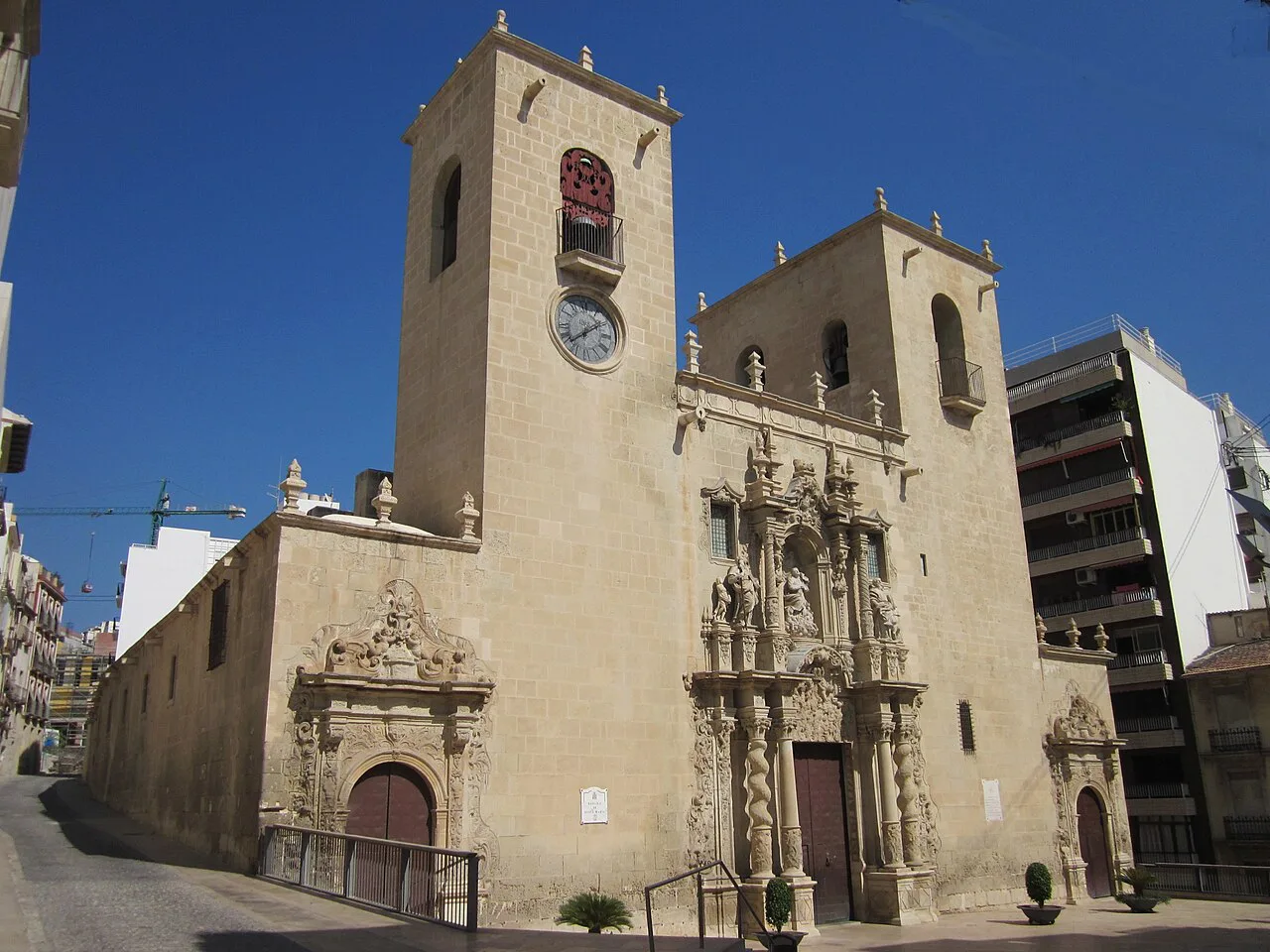
The Basílica occupies the Plaza de Santa María, s/n, in Alicante's Casco Antiguo, a few hundred metres behind the harbour-side streets. Coming from the port or the seafront promenade, climb into the old town and follow signs for the Plaza de Santa María; the square opens up around the church's main portal. If you have already explored the Ayuntamiento, it is a short uphill walk rather than a taxi ride.
From the Plaza de Santa María the old town falls away in lanes, and the Castillo de Santa Bárbara rises above the rooftops. Treat the square as a crossroads rather than a destination: you will pass through it two or three times in a day's wandering. That proximity is what makes the church so easy to fit in on the way to somewhere else.

The exterior: three Baroque portals
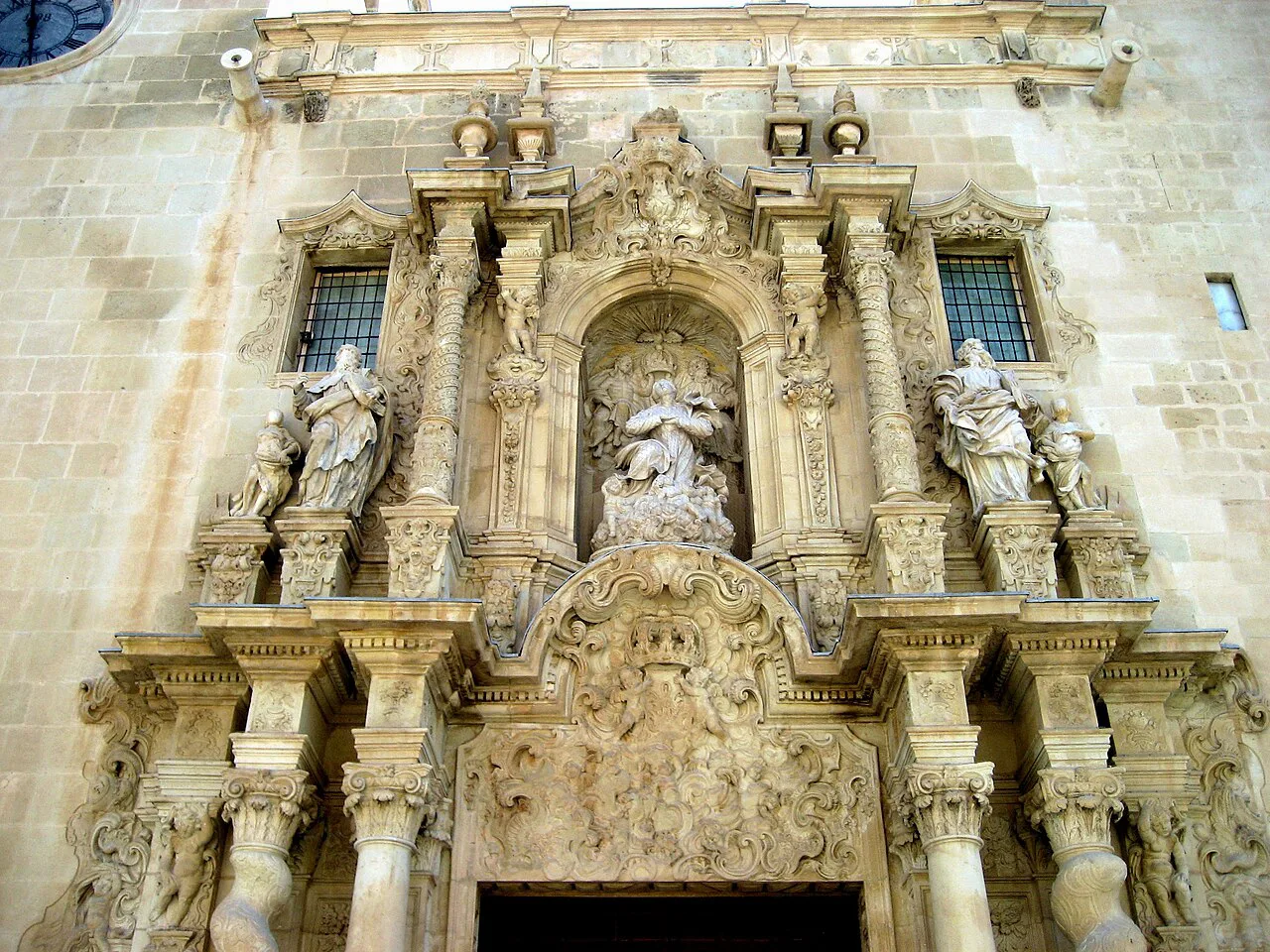
Before stepping inside, walk the outside of the building and look for the three Baroque doorways, which the Comunitat Valenciana tourist board singles out. The main portal faces the Plaza de Santa María. Architecture this layered can be read quickly from the street, and it sets up what you are about to see in the interior.
Inside: one nave and a ring of side chapels
Internally the church is straightforward to understand: a single nave with chapels set between the buttresses that line both sides. Because the plan is open, you can take in the whole space from the west end before wandering into the chapels. Look for the many works of art the church holds, which the local cruise tourism association describes as one of its defining features; they sit alongside ordinary parish furnishings rather than behind glass.
The pieces worth seeking out
Two pieces justify a closer look. The high altar is Rococo work of the 18th century, which the regional tourist board calls out for its detail; the Baroque organ is dated 1653 and sits high above the nave. Give these two your time and the rest of the visit can be quick.
The interior also carries the Baroque and Rococo styles the church's own guide describes, alongside its older Gothic bones. Because the church is in active use, parts of it may be closed off during services; there is no reason to be surprised by that. Look, listen to whether a service is happening, and adjust.
How long to allow and when to go
Plan on 30 to 45 minutes: enough to walk the three portals, take in the nave, spend time at the high altar and the organ, and read a little. It slots neatly into a walk that also takes in the Ayuntamiento, the old-town streets and the citadel above, and needs no half-day of its own. If you are short of time, the nave and high altar are the priority.
Mornings and the early evening are the sensible slots in summer, when the middle of the day is hot. Services take priority over sightseeing, so time your arrival around them rather than assuming the door will be open whenever you turn up.
Opening times, tickets and masses
Hours, any ticket arrangements and service times are not fixed in the sources used here, so confirm them before you set out. The Comunitat Valenciana listing and the church's own contact details are the places to check, and that is also where to find out whether a service will take priority on a Sunday.
Build the church into the rest of the day's plan without depending on a specific slot, and you won't be disappointed by a closed door. If a service is in progress, wait outside; the square is a pleasant place to do it. Everything beyond the door stays open for the rest of the old town.
What else is within a few minutes' walk
The Plaza de Santa María is ringed by old-town lanes, and the Castillo de Santa Bárbara looms above. Of these, the castle and the cathedral are the obvious additions to a morning: both sit close enough to pair with the church. The Plaza de Santa María and the surrounding streets are where the old town's life is most concentrated.
A few minutes away, the Museo de Arte Contemporáneo de Alicante and the MARQ museum give you two very different indoor options for the hot hours. The MACA is the closer contemporary option; the MARQ covers the province's archaeology. Either one makes a sensible companion after the church.
Fitting the Basílica into an Alicante visit
Alicante attractions are concentrated in the centre, so the Basílica de Santa María can be paired with the Alicante Town Hall, the cathedral and the castle in a single day rather than treated as a separate outing. Treat the church as one stop on the same loop, not as a half-day destination.
Practical summary for visiting the Basílica de Santa María
Yes, if you are already walking the old town: it costs you less than an hour, and the high altar, the 1653 organ and the three portals are enough to justify the door. It is not a reason to plan a day around, and it is no substitute for the castle above. Build it into the morning and let the square do the rest.
Explore more Alicante guides
Frequently Asked Questions
Why is the Basílica de Santa María famous?
It is Alicante's oldest Christian church, begun in the 15th century on the site of the old main mosque, and it holds a 1653 Baroque organ, an 18th-century Rococo high altar and three Baroque portals. It is also the canonical seat of the Hermandad Sacramental Cristo del Mar, which has been based there since 1942.
Is the Basílica de Santa María free to enter?
The sources used here do not give an entry price or free-entry slot, so no charge or free access is assumed. The Comunitat Valenciana tourist board listing and the church's own contact details are the places to confirm the current arrangements, including any ticket or donation expected, before you go.
What should I see first inside?
Start at the west end to see the single nave and the chapels set between the buttresses, then head for the Rococo high altar and look up at the 1653 organ. Those two pieces are the ones worth lingering over.
When is the Basílica de Santa María open to visitors?
Opening hours and service times are not fixed in the sources used here. Check the Comunitat Valenciana listing and the church's contact details for the day you plan to visit, and remember that a service takes priority over sightseeing.