
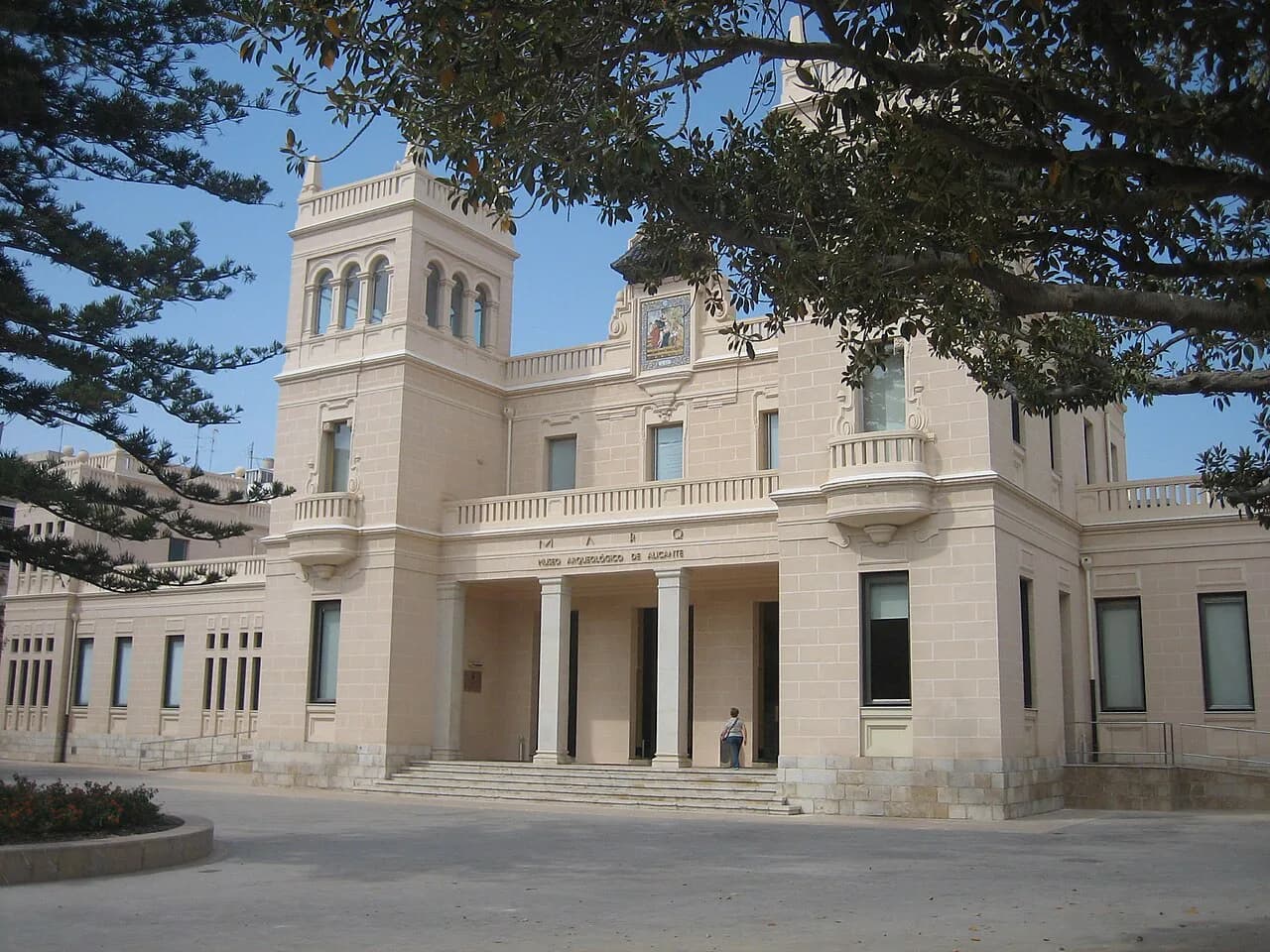
MARQ Alicante: what to see at the Archaeological Museum

The MARQ is worth two hours of an Alicante short break, and it is the obvious indoor option when the midday sun makes the old town uncomfortable. The Museo Arqueológico de Alicante is a provincial museum rather than a city one, so its displays run from prehistoric rock art to the Roman port of Dianium and the Islamic port of Dāniya. This guide covers where it sits, what the galleries contain, which outlying sites need a separate trip, and how to fit it around the rest of Alicante.
Where the MARQ is on Plaça Doctor Gómez Ulla
The museum stands on Plaça Doctor Gómez Ulla in the Ensanche, a short walk from the Explanada de España and the Plaza de los Luceros. That makes it an easy add-on to a morning around the Explanada or a tram connection at Luceros. If you are coming from the Santa Bárbara castle side, allow a little longer because the old town streets climb.
Trams and city buses serve the streets around the museum, and the address is listed as Plaça Doctor Gómez Ulla, S/N, in the Ensanche. For the museum itself, check the current tram and bus routes against the Alicante transport operator's map rather than relying on an old printed plan. Treat the museum as the anchor of a northern loop: MARQ first, then back down through the town towards the water.
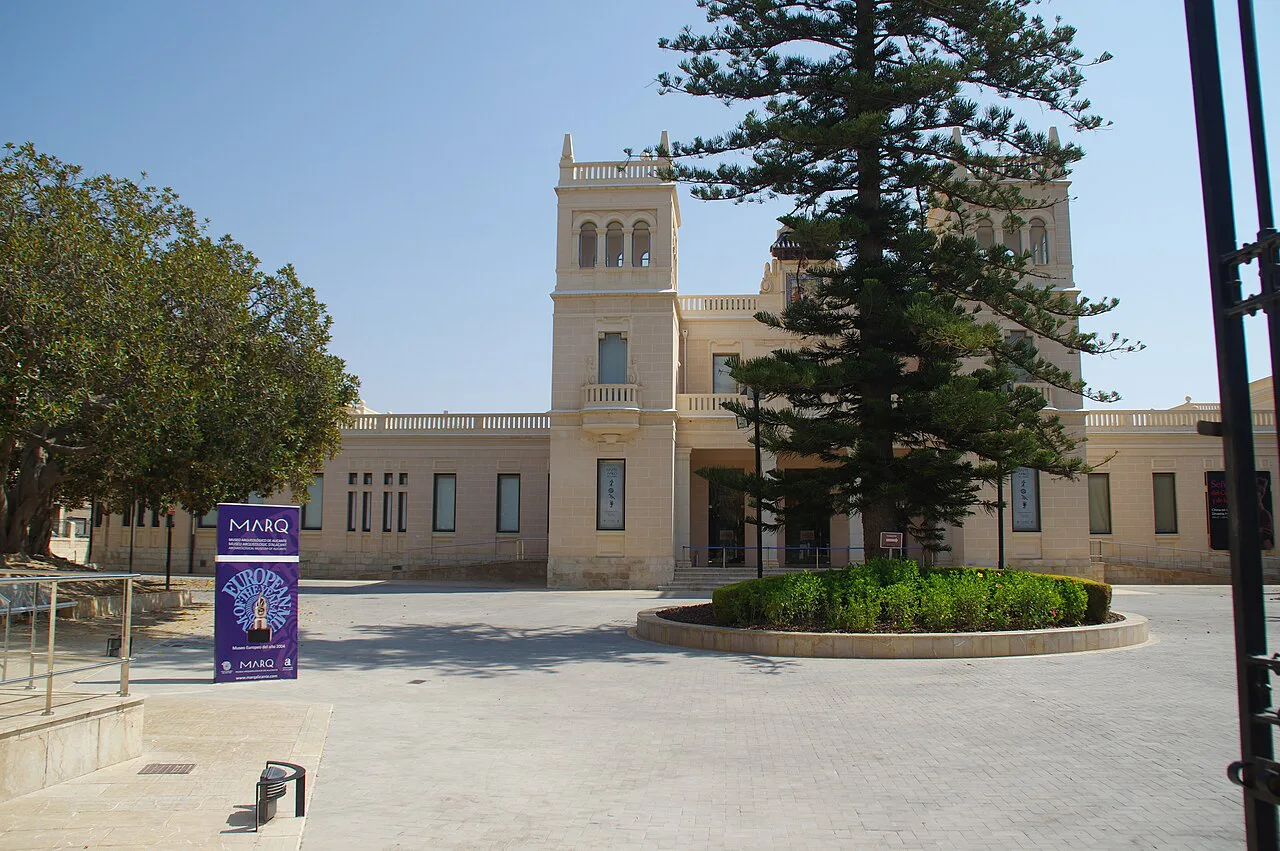

What the permanent exhibition covers
The MARQ presents its permanent exhibition to general visitors rather than to specialists: labels and context first, vitrines second. The museum describes its approach as a renewal of the traditional exhibition system, and the result is archaeology told by professionals for anyone who wants the province's past in one afternoon.
The content runs from rock art and Iberian settlement through the Roman foundation of Dianium and on to the Islamic medina of Dāniya, one of the Mediterranean's significant ports in its period. Allow time for the Roman and Islamic rooms, which carry the strongest material.
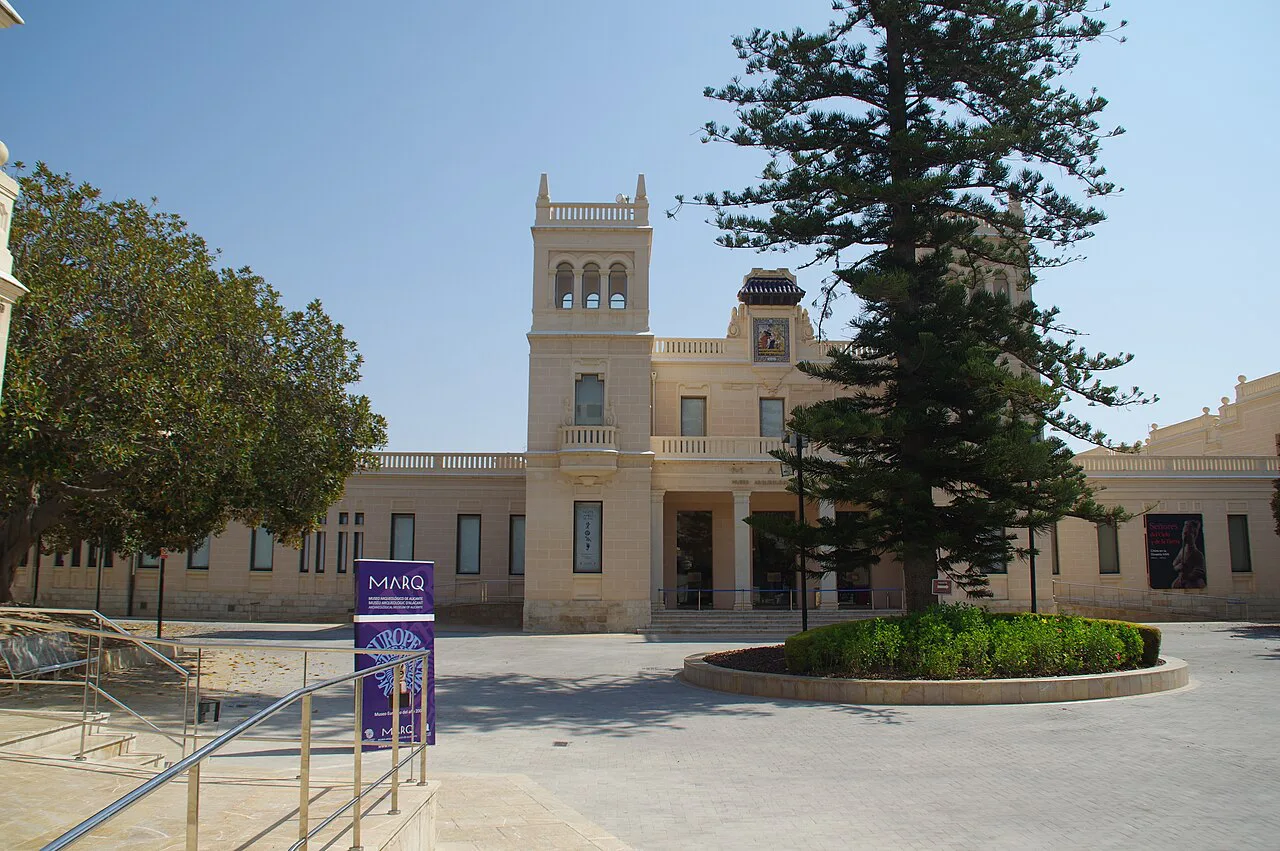

Temporary exhibitions currently on show
El oro y el universo. Saberes indígenas de Colombia is the temporary exhibition, running from 29 June 2026. It brings Colombian goldwork and indigenous knowledge into the museum, and the MARQ has programmed theatrical and animated visits alongside it, aimed at families and at visitors who prefer a guided performance to reading panels.
A second, smaller display in the vestibule presents research from the Cova del Randero excavation project, carried out between 2007 and 2021 with the Diputación de Alicante and the Ayuntamiento de Pedreguer. It is a short add-on rather than a reason to come, but it shows how the museum's fieldwork feeds its displays. If you only have an hour, prioritise the permanent galleries and the gold exhibition.
The MARQ's archaeological sites and monuments around the province
The museum and its foundation manage the province's main visitable archaeological sites, which sit outside the building and need their own trips. These include Lucentum, the Illeta dels Banyets, the Cova de l'Or, the rock art at Pla de Petracos, the Torre Almudaina and the Cava Gran d'Agres. None of these is inside the Alicante museum, so do not expect to see them on the same ticket or in the same afternoon.
The foundation also holds the management of two provincial monuments, listed separately on the museum's site. For practical planning, treat the sites as day-trip material: pick one, confirm its access arrangements through the MARQ's own site pages, and build the rest of the day around it. Lucentum, on the edge of Alicante, is the most convenient if you have no car.
The Dénia rooms and what they add to a Dénia visit
Dénia, Arqueología y Museo is a separate MARQ exhibition made with the Museu Arqueològic de la Ciutat de Dénia, hosted in Dénia and not part of the Alicante building. It traces the city from the Catxupa cave rock art through Iberian sites such as Alt de Benimaquia and the Penya de l'Àguila fortress on the Montgó. The narrative then runs through Roman Dianium into the Islamic port of Dāniya and the later villa.
The displays are built around a contrast between sea and land, and the loaned pieces come from around ten museums, archives and foundations. Standouts include the Verge del Roser from the church in the castle, the bronze Neptune from the Hort de Morand, jewellery from the raval of Dāniya, and a toy pedal car from Dénia's toy museum. If you are heading to Dénia anyway, these rooms give the town's castle and street plan a context that the beach side never explains.
How long to allow inside the museum
Two hours covers the permanent galleries and the temporary show at a reasonable pace; three hours lets you use the family and educational material without rushing. Pace the visit by room rather than by clock: the prehistoric and Iberian material is quicker, the Roman and Islamic rooms slower.
Pace the visit by room rather than by clock: the prehistoric and Iberian material is quicker, the Roman and Islamic rooms slower. If you are travelling with children, the theatrical visits tied to the temporary exhibition are the natural fit and should be booked through the museum's own activities page.
Tickets, opening hours and booking
The museum publishes its tickets, opening hours and booking arrangements on its own organise-your-visit pages, which is where you confirm them before travelling. Those pages are the only reliable source for current admission charges, reduced rates and any free slots, so check them close to your date rather than trusting an old listing. Group and educational visits are arranged separately through the museum.
Booking ahead is sensible when a temporary exhibition is drawing crowds, and the MARQ sells and registers places for its guided and theatrical visits through its site. For the permanent galleries alone, the museum's own pages are where you confirm whether you need to book.
Nearby: the Explanada, Luceros and the harbour
Coming out of the museum, the Explanada de España is a short walk towards the harbour front, with its wavy tiled promenade and palm line above the harbour. Plaza de los Luceros, one of the city's main transport hubs, is closer and makes a convenient point to pick up a tram onwards. Both are free and both work as an evening finish.
The old town cluster, the Concatedral de San Nicolás, the Basílica de Santa María and the Museo de Arte Contemporáneo de Alicante, sits on the far side of the centre and pairs well with a late-afternoon walk. For the full set of what to see in the city, work from the Alicante Attractions: 6 Visitor Guides overview and pick two or three rather than trying to tick everything.
If you are staying near the Plaza del Ayuntamiento, the walk up to the MARQ passes the Alicante town hall and the harbour front, so it makes a sensible single line through the city. Combine it with a Castillo de Santa Bárbara visit only if you have a full day, since the climb and the museum together fill one comfortably.
Is the MARQ worth half a day in Alicante?
Yes, if you want one museum that explains the province rather than a single period of the city. The permanent galleries and the Colombia exhibition together justify two to three hours, and the building is an indoor option when the heat is at its worst. Skip it only if your Alicante time is down to a few hours and the castle and old town are the priority.
Before you go, confirm opening times, admission and exhibition dates on the museum's organise-your-visit pages, and check separately whether the Dénia exhibition fits a trip along the coast. Then place the visit in the middle of the day and leave the Explanada and the old town for the cooler hours.