
Castillo de Santa Bárbara: how to visit Alicante's hilltop castle

Entry to Castillo de Santa Bárbara is free, and the only fixed cost most visitors pay is the lift up from Playa del Postiguet, at 2,70€. The fortress crowns Monte Benacantil at 166 metres and delivers a 360-degree panorama over Alicante, the port and the sea. This guide covers the seasonal opening hours, the ways up and what to see once you are through the gate.
It is a hilltop stop rather than a museum you rush: the official site recommends allowing at least an hour, and two hours lets you take in the exhibitions and the walls without hurrying. The castle has held Bien de Interés Cultural status since 1961. If you are building a short break around the city, it sits alongside the other sights covered in these Alicante Attractions: 6 Visitor Guides.
Where the castle sits on Monte Benacantil
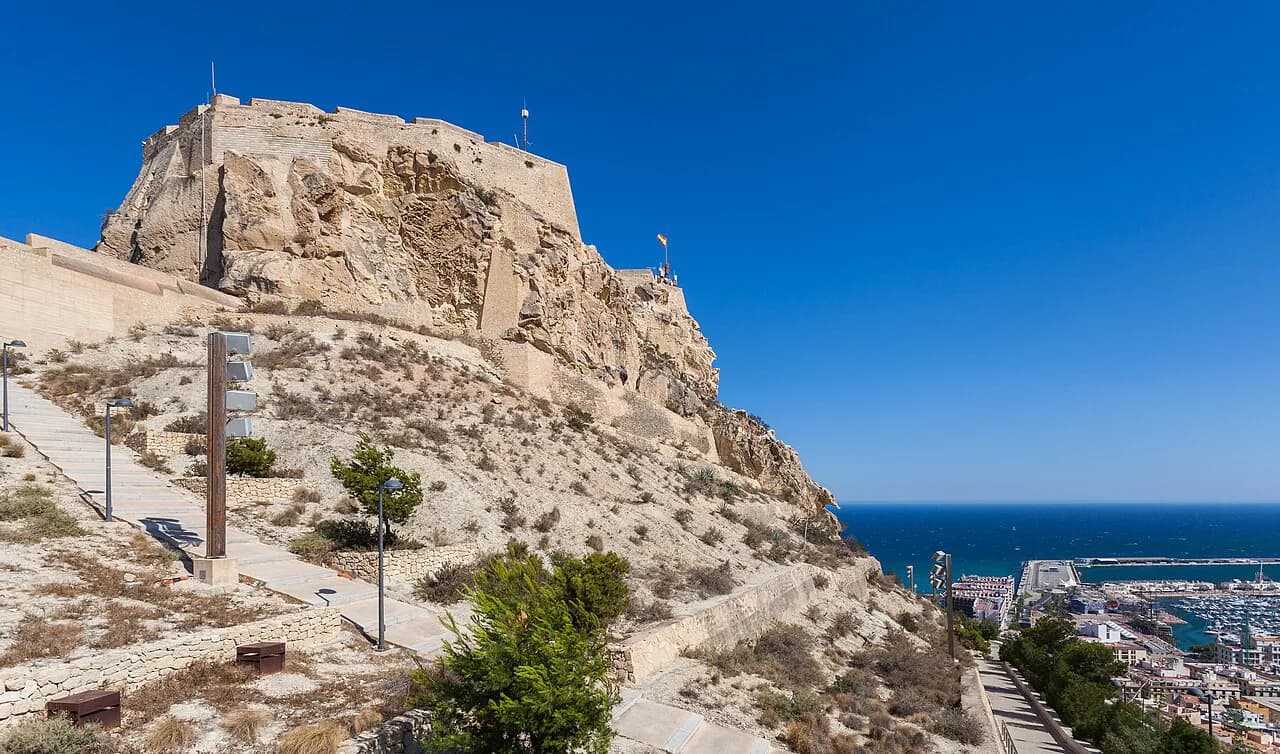
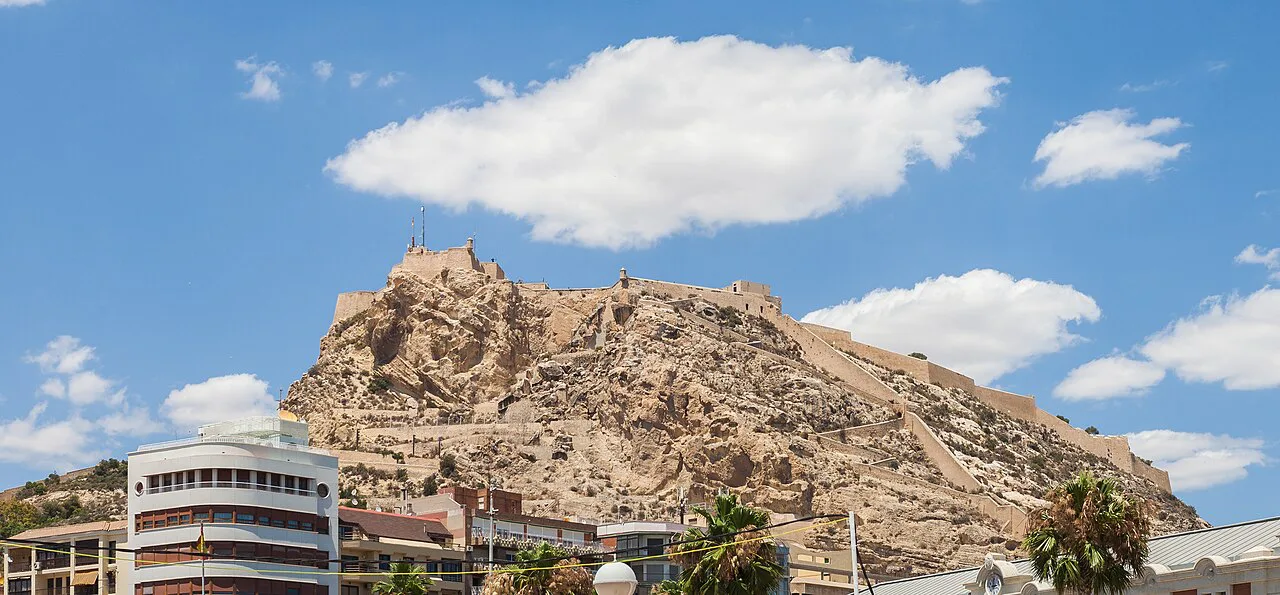
The castle occupies the flat summit of Monte Benacantil, the mountain that rises directly behind Alicante's old town and separates the historic centre from Playa del Postiguet. It was conceived as one of the largest medieval fortresses in Spain, and its walls now enclose exhibition rooms, courtyards and a shop as well as the ramparts. Because the summit is flat and broad, the climb rewards you with walking space rather than a single viewpoint.
The mountain is a landmark you can orient yourself by: from the seafront the castle is the long rampart on the skyline, and from the old town it is the slope directly above the cathedral quarter. Plan the castle as the anchor of a morning or late afternoon, with the streets below filling the rest of the day.

Opening hours by season, last entry and closed days
Hours change four times a year rather than staying fixed. From 15 November to 27 February the castle opens daily from 10.00 to 18.00; from 28 February to 16 June it runs 10.00 to 20.00; from 17 June to 4 September it stays open until 23.00; and from 5 September to 14 November it closes at 20.00. No entry is allowed in the 30 minutes before closing, so aim to be at the gate well ahead.
The fortress shuts entirely on 24 June, on 24, 25 and 31 December, and on 1 and 6 January. On days with performances, the official site advises checking the closing time in advance. The summer band's late finish makes an evening visit realistic in July and August, when the inland heat makes midday walking uncomfortable.

The Postiguet lift: price and last ascent times
The fastest way up is the lift from Avenida Juan Bautista Lafora, directly opposite Playa del Postiguet. The lift costs 2,70€ and is free for retired pensioners and over-65s; the castle itself charges nothing to enter. Tickets for the lift can be booked online through the castle's own site.
Timing matters at both ends of the day. The last lift up leaves 40 minutes before the lift closes, and the last descent is 20 minutes before closing. On the summer timetable that means a late ascent is possible, but you cannot linger past the cut-off and expect a ride down.
Walking up: two signposted routes
Two marked walking routes reach the summit, both rated moderate difficulty and taking around 30 minutes. The first starts at the Alicante town hall and crosses the old town before reaching the Parque de la Ereta, where the city skyline and the Mediterranean open out. The second begins at Playa del Postiguet and climbs the western face of the mountain via Calle Virgen del Socorro, looking over the beach and the northern part of the city.
Walking costs nothing but the climb is real: the paths are rated moderate, so wear proper shoes and carry water, particularly in summer. The old-town route doubles as a way of seeing the cathedral quarter and the streets around the town hall on the way up, which makes it the better choice if you want the walk to double as sightseeing.
Taxi, microbús and car access
Taxis are the recommended motorised option, and the official site lists approximate daytime fares of 4€ to 5€ from the Perpetuo stop, 4,50€ to 5,50€ from the Mercado stop, 6€ to 7€ from Plaza del Mar and 6,50€ to 7,50€ from the Meliá hotel. Night-time and public-holiday fares are higher; the castle page gives the ranges for each stop.
The microbús costs 1,45€ and runs roughly every 40 minutes, connecting Puerta del Mar, the Postiguet footbridge, Plaza Gómez Ulla in front of the MARQ and the castle itself. Cars can drive up Calle Vázquez de Mella to drop passengers at the entrance, but parking inside the castle grounds is not allowed; use the car parks at Parque de la Ereta or the MARQ instead. The MARQ is the archaeological museum below the hill, covered separately in the guide to MARQ Alicante.
What to see inside: courtyards, halls and the aljibe
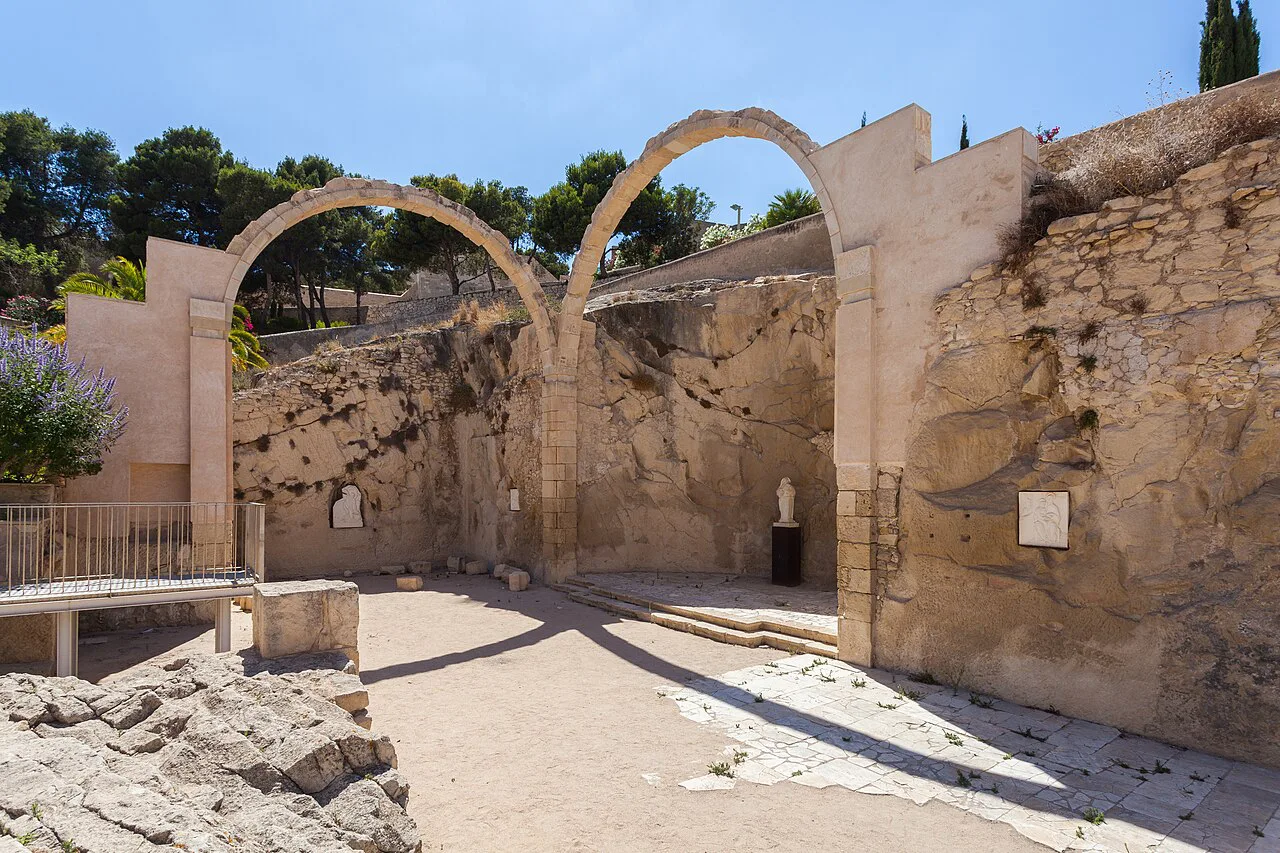
The castle's highlights are listed on its own site: the Patio de Armas, the Salón Felipe II, the garita de la campana, the old dungeons and the aljibe, the great water cistern. Indoor exhibitions fill several rooms, which gives you a covered option when the sun is at its strongest, and a shop is also on site.
Practical pattern: walk the ramparts first while you are fresh, then move through the halls and cistern in the heat of the day. Allowing at least an hour is the official suggestion, and two hours covers the exhibitions without rushing. The site also advertises tasting experiences, from chocolates and turrones to local wines and craft beers, bookable separately if you want to build them into the visit.
Views from the walls and towers
The 360-degree view from the summit takes in the city, the port, Playa del Postiguet and, on a clear day, the island of Tabarca offshore. The ramparts run around the whole enclosure, so you can follow the walls and pick your angles rather than crowd one terrace. Sunset is the obvious slot if light matters more to you than heat.
The castle sits above Alicante's old town, so the descent on foot leads you straight into the streets around the Basílica de Santa María and the Museo de Arte Contemporáneo de Alicante. Both are within the same historic quarter, which makes a castle visit the natural start to an afternoon below.
How long to allow and when to go
Budget one hour minimum and two hours for a comfortable visit including the exhibitions. Add the ascent: 30 minutes on foot by either route, or a short lift ride. The official site recommends at least an hour inside, so treat anything shorter as a flying stop.
Alicante is coastal, but the castle is exposed rock and stone, so midday in high summer is the least comfortable time to be on the walls. Use the seasonal hours to your advantage: the 23.00 close from 17 June to 4 September allows a late-afternoon or evening visit when the light softens. In winter the 18.00 close means an early start if you want the full circuit.
Nearby: old town, Parque de la Ereta and Postiguet beach
The walk down through the old town brings you to the Basílica de Santa María and the surrounding lanes, then on to the cathedral and the town hall squares. The Parque de la Ereta, on the city side of the mountain, is the natural pause on the way up or down, with terraces looking back over the rooftops. Playa del Postiguet lies at the foot of the lift, so a swim after the castle is a simple add-on.
For a fuller day, pair the castle with the contemporary art at the MACA in the old town or the archaeology at the MARQ below the hill, then finish at the Plaza del Ayuntamiento and the seafront. Each is a short walk or microbús ride from the castle entrances.
Which way up should you take?
Take the lift if time is short or the heat is on, pay the 2,70€ and skip the climb; walk the old-town route if you want the streets and the Ereta park on the way. The castle entry itself is free either way, so the decision is about legs and time, not budget.
Set your day around the seasonal closing time and the 30-minute cut-off before it, and check the current hours and lift booking on the castle's official pages before you travel. That way the climb, the walls and the view all fit into a single unhurried block of the day.