
Baluard de Santa Llúcia: Visiting the Bastion Above Sa Penya

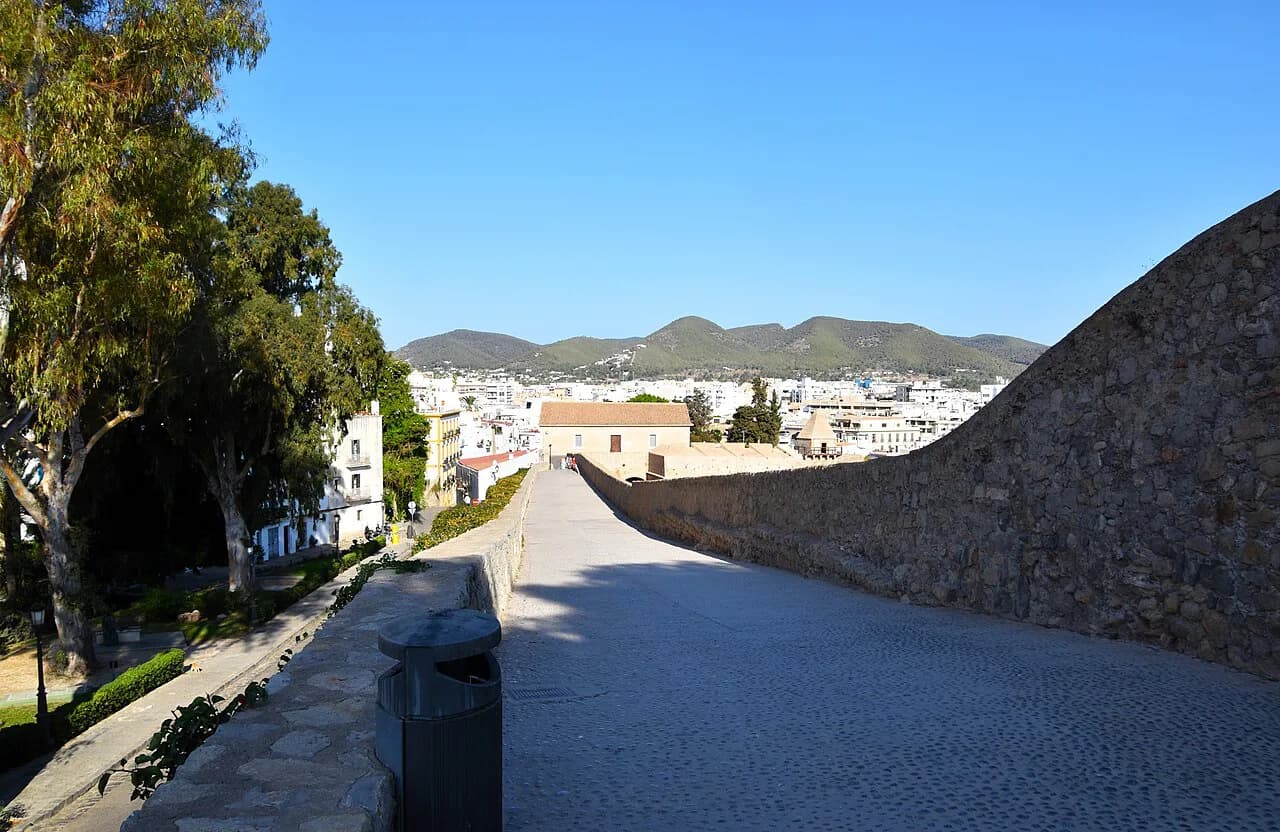
Baluard de Santa Llúcia is the first bastion you meet on the Renaissance wall walk around Dalt Vila, sitting directly above the sa Penya neighbourhood with the port and the sea in front of it. Treat it as a stopping point on a circuit rather than a museum with a queue: its draw is the position and the 18th-century powder magazine built inside it. This guide covers where the bastion sits, how to reach it through the old entrances, and how the first stretch of the ramparts continues to the Sant Joan bastion.
One of seven bastions on the Dalt Vila walls
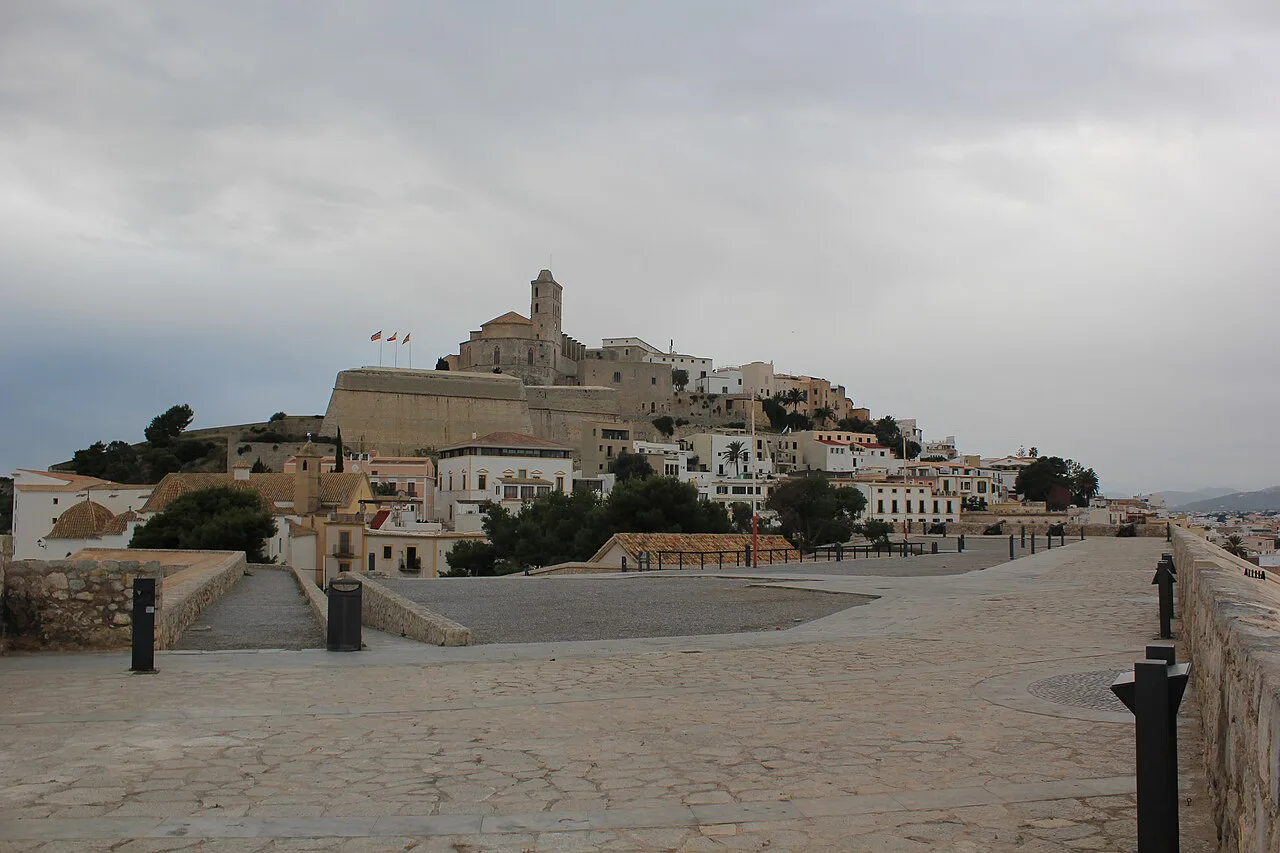
The fortress around the Puig de Vila, the high ground of Eivissa, was built in the Renaissance on the orders of the Spanish monarchy to a design by the Italian engineer Giovanni Battista Calvi, and it was finished at the end of the sixteenth century. It wraps ten hectares with a perimeter of 1,800 metres and is divided into seven bastions, each planned with enough angles of fire to defend its stretch of wall. Santa Llúcia is one of those seven, which is why it reads as a piece of military engineering rather than a monument in its own right, and it is one of the stops in our Ibiza Town Attractions guide.
The walls have five entrances, and the main one is the old drawbridge position at the Portal de ses Taules, facing the Marina quarter. Because the bastions are linked by the adarve, the walkway along the top of the ramparts, you can enter at one gate and leave at another instead of retracing your steps. That layout is what makes Santa Llúcia worth planning into a route rather than visiting on its own.

Where the bastion sits above sa Penya
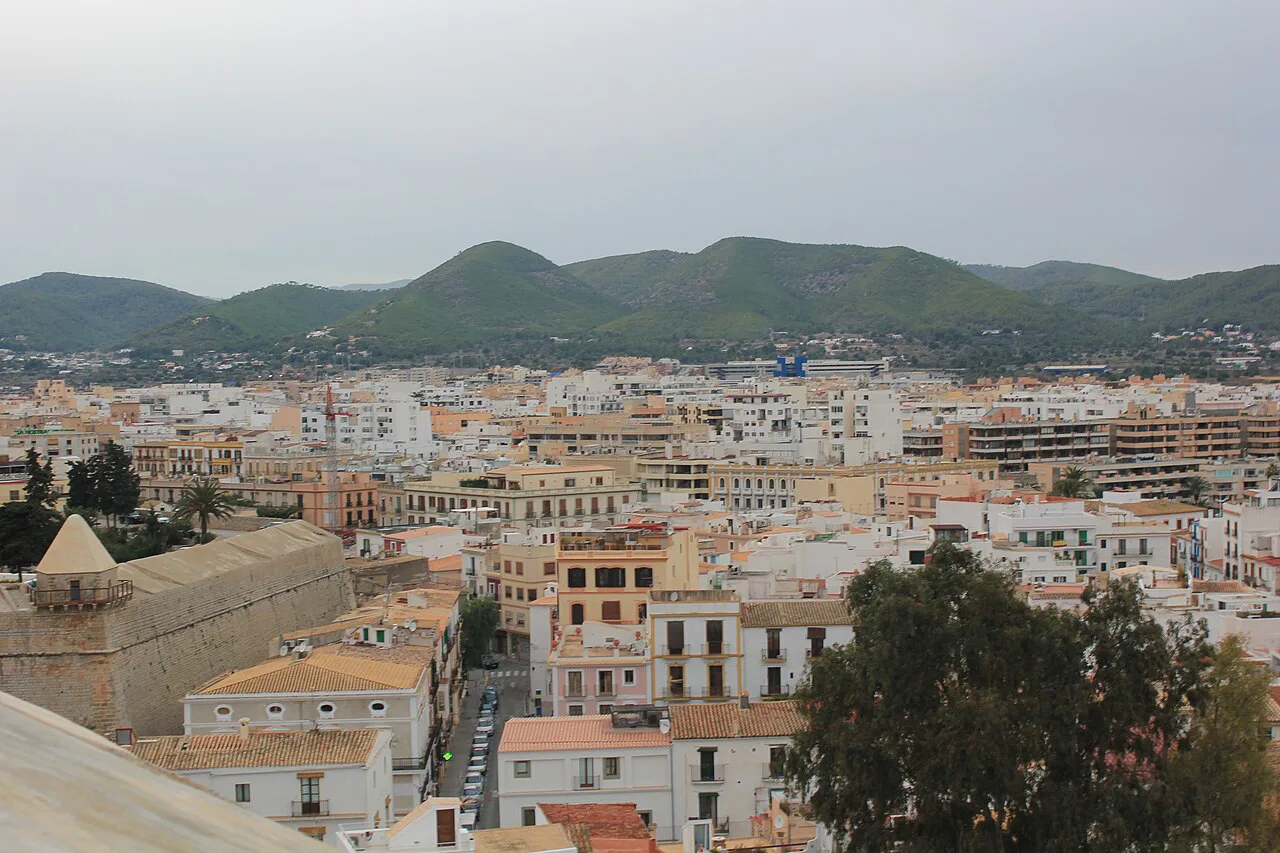
Santa Llúcia stands at the foot of the sa Penya district, the lower old-town quarter that spills down towards the harbour. From the bastion the wall walk gives onto the whole city and the sea, which is the reason to pause here rather than hurry past. The powder magazine inside the bastion dates from the eighteenth century.

How to reach it through the old gates
The classic approach is through the Portal de ses Taules, the principal and most spectacular of the five entrances, which occupies the site of the former drawbridge facing the Marina. At the top of the ramp two Roman statues flank the way, replicas of marble originals kept in the Museu Arqueològic, and above them sits the shield of the Crown with its Latin inscription recording that the walls were built in 1585 under Felipe II. Behind the gate is the es Rastrillo, the former parade ground with its round arches and a Renaissance balcony, where the guard corps was stationed.
Two other pedestrian ways in are worth knowing. The Portal Nou, the second pedestrian entrance, runs through a tunnel to the Parc Reina Sofia and is protected by a circular orejón with the Cavaller de Sant Lluc artillery structure above it, while a third tunnel, es Soto Fosc, connects the Sant Jordi and Sant Bernat bastions and has a car park outside, so some visitors begin the circuit there. Each gate drops you onto a different stretch of wall, so pick the one that suits where you are sleeping or arriving from.
What to see inside the bastion
The powder magazine is the structure to look for here, a surviving piece of the fortress's working life rather than a display. Do not expect exhibition rooms or a visitor centre inside Santa Llúcia: the bastion's appeal is the masonry, the gun positions and the drop over sa Penya. Save your museum time for the contemporary art museum further along the wall.
The wall walk to the Sant Joan bastion
From Santa Llúcia you descend by the Ronda Narcís Puget Viñas, passing along the crenellations directly above the Portal de ses Taules. That brings you to the Baluard de Sant Joan, which overlooks the Marina and holds the Museu d'Art Contemporani d'Eivissa in the former armoury, with two watchtowers at its ends. Continue by the Ronda Calvi and the next stretch opens views down to the Puig des Molins and the coast towards Platja d'en Bossa.
The Baluard de Sant Joan was adapted in the 1960s to carry the only vehicle access into the fortress, used by residents of the quarter and by public transport. If you want to see how the circuit works as a whole, the Turisme Eivissa site also runs guided and theatrical walks of Dalt Vila that start from these gates.
The view at dusk towards the harbour
Because the bastion faces the port and sits over sa Penya, the walk from Santa Llúcia towards Sant Joan is the stretch that catches the changing evening light. Walking the perimeter is a way to see the city and the sea from above rather than from the street. Carry your own judgement on timing: the walls are open-air, and the walk is best done while there is still light to see the route down the stairs and rondas.
How long to allow
Give the bastion itself a few minutes and the first stretch of wall rather longer, since the walk between Santa Llúcia and Sant Joan involves stairs and sloping rondas rather than a flat promenade. The full circuit of the perimeter, passing five bastions from Santa Llúcia round the Puig de Vila to es Castell, the Cathedral and back down by the town hall, is a half-day affair if you also stop at the museums. If you have only an hour, do Santa Llúcia to Sant Joan and leave by the Portal de ses Taules.
One nearby stop does publish its times and price. The Baluard de Sant Pere, also called the Baluard des Portal Nou, holds an interpretation centre on how the walls were built and an open-air concert space. The published times at that bastion run Tuesday to Thursday 10:00 to 16:30 and weekends 10:00 to 14:00 in March and from October to December, with longer summer hours, and the published price is 2 euros, free for residents, children under 12 and visitors over 65. You can call +34 971 392 390 to confirm them before you set out.
What is nearby
The Catedral d'Eivissa stands at the top of the hill on the Plaça de la Catedral, reached from es Castell by a narrow alley, and the Carrer Major leads back down through the old town to the arc of sa Portella, the last surviving gate of the medieval wall. The town hall on the Plaça d'Espanya sits by es Revellí, a semi-bastion built in the 1930s with a tunnel beneath it, and the viewpoint there looks over the harbour mouth and the tomb of Guillem de Montgrí, who promoted the thirteenth-century conquest of the island. On the other side of the walls, the Portal Nou opens onto the Parc Reina Sofia, handy if you arrive from the newer part of town.
Start at Santa Llúcia and walk the wall east
Santa Llúcia rewards a short stop, not a separate excursion: come in through the Portal de ses Taules, take the Rastrillo, look into the powder magazine, then follow the crenellations above the gate down to Sant Joan. Plan the rest of the day around the cathedral at the top of the hill and the heritage centre at Sant Pere, and leave yourself enough daylight to enjoy the walk without rushing.