
Puig des Molins: Ibiza's Punic Necropolis and Museum

Puig des Molins is Ibiza Town's ancient cemetery: a low hill 500 metres west of the walled city where the Phoenicians, Punics and Romans buried their dead for most of antiquity, paired with a museum of the finds. Allow around an hour for the excavated hillside and its museum together. This guide covers what the site is, how it sits just outside the living town, how to reach it on foot from the port, what you actually see, and the reported opening hours.
It is one of the easiest ancient sites in the Balearics to fold into a short break, because it needs no car and no early start. The trade-off is that it rewards a little context: the tombs themselves are empty rock chambers, and the story sits in the layout of the hill and in the grave goods displayed in the museum next door.
What Puig des Molins is and why it matters
The hill was the urban cemetery of Eivissa from the city's Phoenician foundation in the seventh century BC through the Punic and Roman periods. The first burial ground covered roughly 10,000 square metres, and the dead stayed close to the living, separated only by a shallow dip rather than by distance. That proximity is what makes the site unusual to walk today: you stand among tombs within sight of the walls of the modern town.
The name comes from the windmills that stood on the summit from at least the fourteenth century, now out of use. The hill forms a small ridge with three elevations, and the lower slope is where the burials were cut, which is why the excavated area reads as a terraced hillside rather than a flat park.

Where it sits, relative to Dalt Vila
Puig des Molins lies about 500 metres west of Puig de Vila, the promontory occupied since the city's foundation and now crowned by Dalt Vila. The two are separated by a small hollow, formed by the present Carrer de Joan Xicó, Carrer de Tanit and Carrer de Joan Planells. In practice this means the cemetery is a short walk from the walls, not a trip out of town.
Knowing that geography helps you plan: come down from the old town through the Portal de ses Taules, cross the modern streets westward, and you reach the museum and the excavated slope without needing a bus. The same walk works in reverse, with the tombs as a cool, quiet stop before climbing back up.

Getting there on foot from the port and Dalt Vila
From the port and the Marina, head west past the edge of the old town and up towards the hill; the museum building sits at the foot of the excavated slope. Walking is the sensible way to arrive, since the distances are short.
If you are coming from the Passeig de Vara de Rey end of town, the approach is straightforward on foot and takes only a few minutes more. Wear shoes with grip: the paths over the excavated hillside are uneven rock and earth, and summer dust makes them slippery underfoot.
For a broader look at how the site fits with the rest of the town's sights, the Ibiza Town Attractions: 5 Visitor Guides collection groups the walls, gates, cathedral and this necropolis by location.
What you see on the excavated hillside
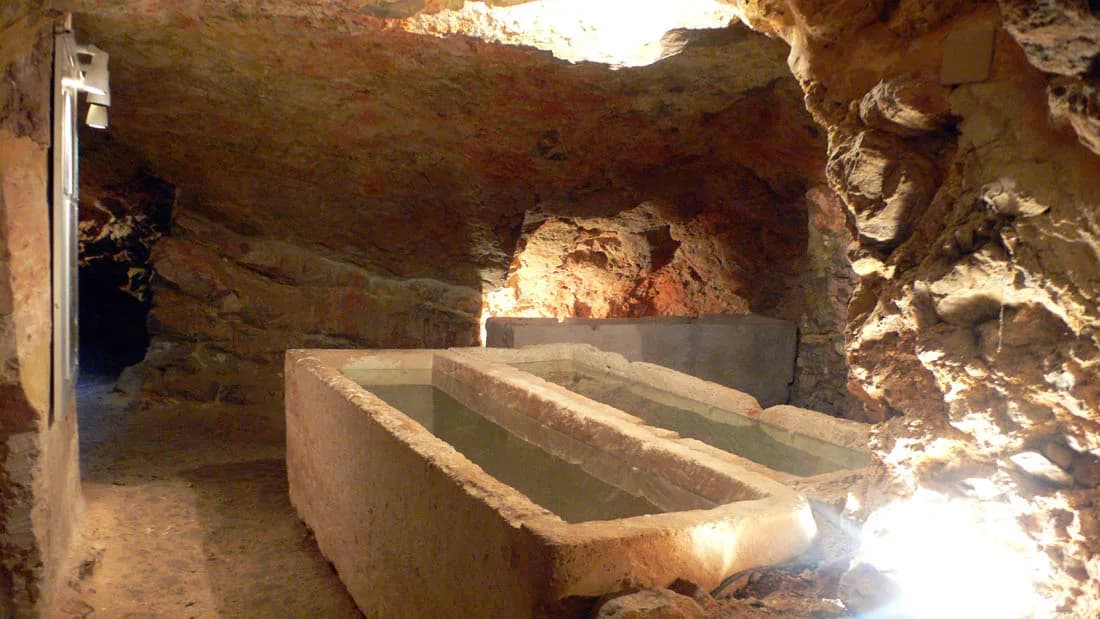
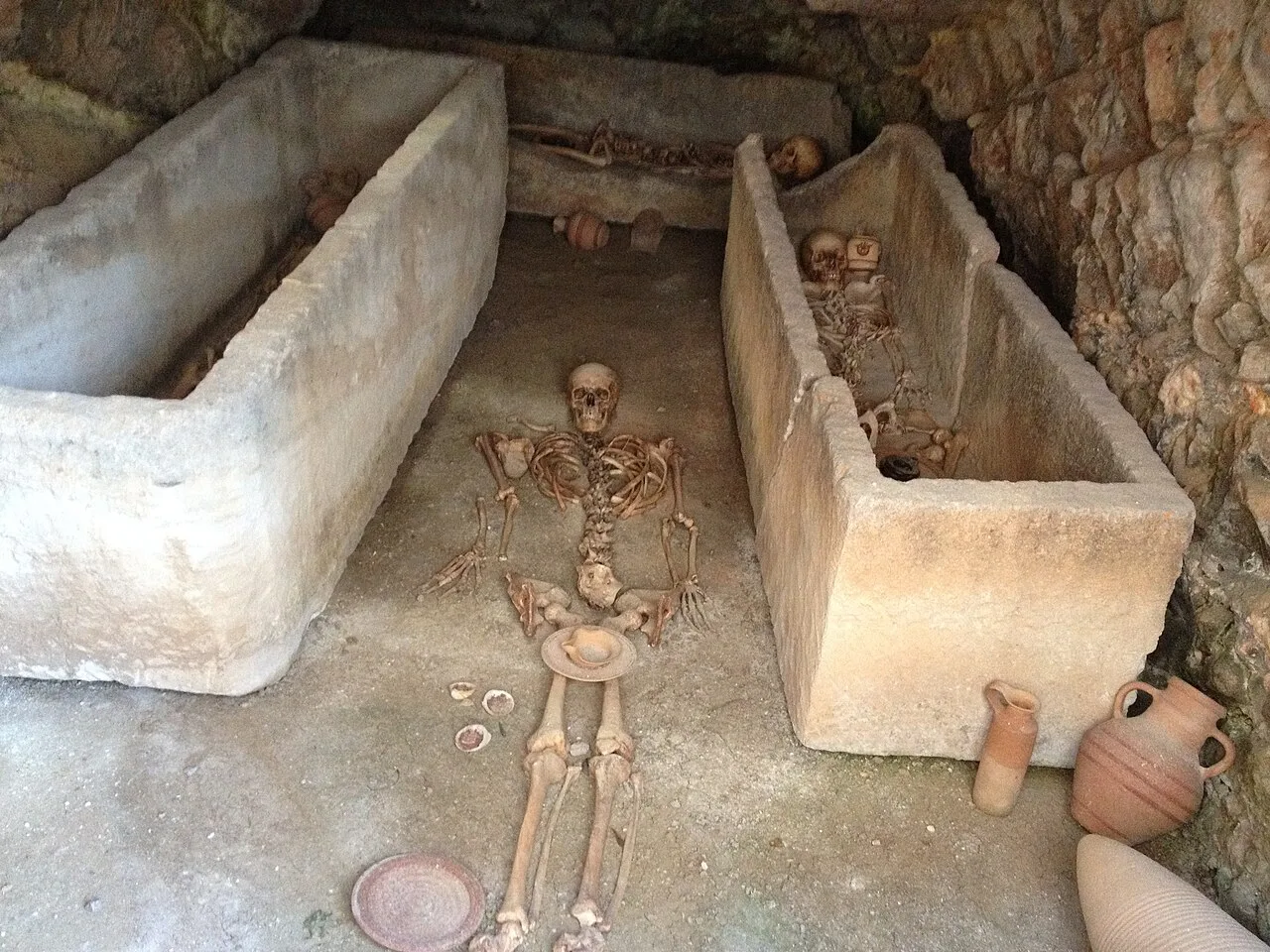
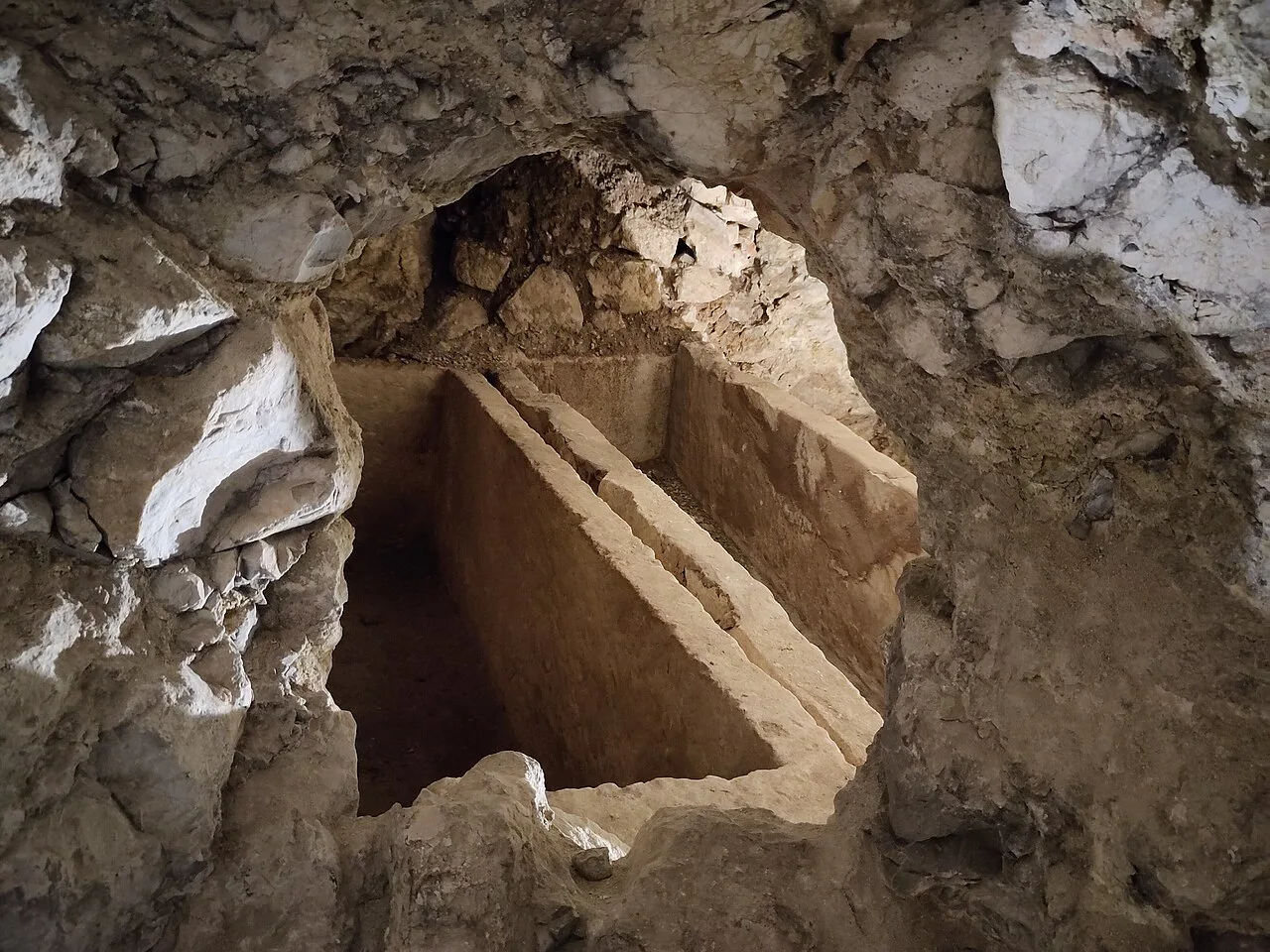
The visit is mostly outdoors: a slope of rock-cut hypogea, the underground chambers where cremations and inhumations were placed over centuries. Many are open to view from the paths, cut straight into the limestone, and the scale of the cemetery becomes clear as you follow the terraces.
Look for the variation between phases: Phoenician burials at the lowest part of the slope, Punic tombs cut deeper from the late sixth century onwards, and later Roman re-use of the same ground. Because the site stayed in use for so long, the hill is effectively a layered record of changing burial custom rather than a single-period monument.
The windmills that gave the hill its name stood on the summit, and their presence explains the site's local name. The excavated area is exposed, with little shade, so the outdoor section is best done early or late in the day in summer.
The museum and its grave goods
The museum holds the material recovered from the tombs: ceramics, terracotta figures, scarabs, amulets and coins, arranged by the Phoenician, Punic and Roman phases of the cemetery. These objects carry the story the empty chambers cannot, particularly the religious symbols associated with the goddess Tanit that appear on Punic material from Ibiza.
The museum and the necropolis are run together as a single visit, so plan on seeing both rather than treating the museum as optional. A shop at the necropolis sells publications of the archaeological museum and reproductions of pieces such as ceramics, terracottas and coins, which makes a more distinctive souvenir than most of what the marina sells.
Theatre-led visits that act out the burial rites
The town hall tourism service runs a theatrical guided visit to the necropolis that performs the Phoenician, Punic and Roman funerary rites on site, with the civilisations woven into the stories of individual characters linked to the cemetery. It is a free activity but requires booking in advance by phone on 971 17 60 90.
For the twenty-fifth anniversary of the UNESCO World Heritage declaration in 2024, the necropolis ran guided tours under the title Viaje al más allá: dioses, ritos y tumbas, on Tuesdays and Saturdays at 11.00 and 12.30, with an English-language tour on Thursdays at the same times. Treat that as a 2024 programme rather than a standing schedule, and ask about the current offer when you call to book.
Opening hours, closing days and tickets
Reported visiting hours for the archaeological museum and the necropolis are seasonal: in winter, from 1 October to 31 March, Tuesday to Saturday 09.00 to 15.00; in summer, from 1 April to 30 September, Tuesday to Saturday 10.00 to 14.00 and 18.00 to 20.00, plus Sundays 10.00 to 14.00, with Mondays and public holidays closed. These hours were published some years ago, so confirm current times and admission with the museum before you build a day around them.
Members of the friends association of the archaeological museum get free access to the necropolis as well as to the museums of Mallorca and Menorca, with a discount at other state-run museums. Check the current ticket price and any reduced or free slots at the museum entrance or on its own published information, since rates change and are not fixed here.
The Monday closure and the midday break in summer hours are the two things most likely to catch out a short-break plan. If Monday is your only full day in Ibiza Town, put the necropolis on another day and use Monday for Dalt Vila's streets and walls, which stay open to walk.
How long to allow, and the summer midday trade-off
Budget about an hour for the excavated hillside and the museum together, and rather more if you read the displays carefully or join a guided visit. The site is small enough to combine with Dalt Vila in a single morning, which is how it best fits a short break.
The honest trade-off is heat. The tombs are outdoors and unshaded, and inland Ibiza's summer midday sun makes the slope uncomfortable from late morning; the evening opening in the summer season exists for good reason. In winter the reverse applies, with short daylight hours and a mid-afternoon close, so an early start matters more than a late one.
What else is close by
The Museu Arqueològic d'Eivissa i Formentera, on Vía Romana, is the island's main archaeological museum and covers the same Phoenician, Punic and Roman past as the necropolis, so the two make a natural pair if you want the full archaeological picture.
Above the cemetery, Dalt Vila's walls, the Catedral de Santa Maria de les Neus and the bastions reward a slow walk, and the Baluard de Santa Llúcia gives a view back over the modern town towards the necropolis hill. Treat these as short add-ons rather than a second itinerary.
Should Puig des Molins be on your Ibiza Town list?
Yes, if you want one archaeological stop that explains the island's deep past without leaving town, and you can give it an hour on a day other than Monday. Skip it in favour of the walls and cathedral if your time in Ibiza Town is a single afternoon, since the necropolis needs unhurried attention to be worth the detour.
Go early in summer, check the museum's own published hours and prices before setting out, and consider the theatre-led visit if you want the burial rites explained rather than simply seen.