
Ibiza Cathedral: What to See Inside Dalt Vila's Catedral

Ibiza Cathedral crowns Dalt Vila, the walled old town of Eivissa (Ibiza Town), and the climb through the gates is part of the visit. Allow the best part of an hour for the cathedral itself and the Diocesan Museum inside it, plus the walk up. This guide covers what you see from outside, the route on foot, the interior and its art, and how to time the climb around the midday heat.
Where the cathedral sits in Dalt Vila
The cathedral stands on Plaça de la Catedral at the high point of Dalt Vila, the fortified upper town that looks over the harbour and the modern centre below. Its position above the walls means you arrive on foot, and the final approach is the reward for the climb. Address details and a contact number for the cathedral are listed on the Balearic Islands tourism site.
For the wider set of sights in the old town, including the walls and the gates, see the Ibiza Town Attractions collection: 5 Visitor Guides. It sets the cathedral among the stops that make up a half-day in Dalt Vila.

What it looks like from the outside
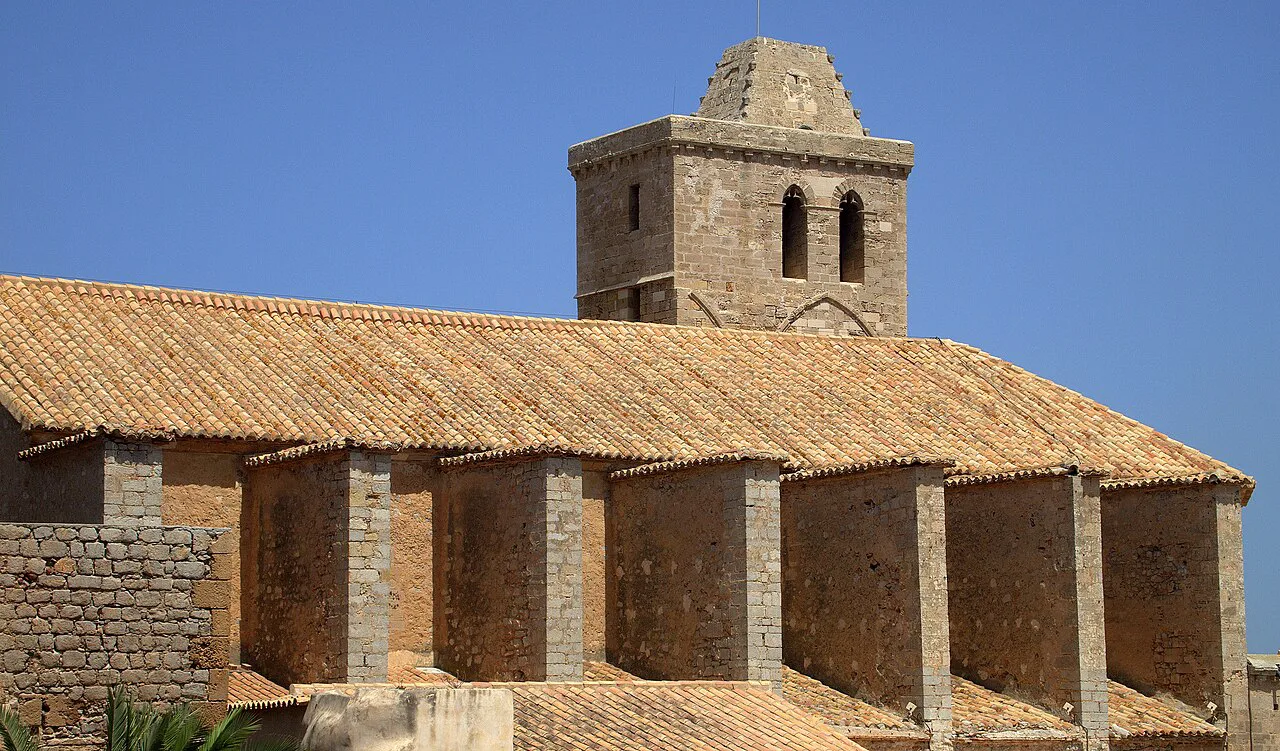
From the square the cathedral reads as a solid, sober building: the buttresses are the feature that stands out most, giving the exterior a weight that suits its position above the walls. Dedicated to the Virgin of the Snows, Santa Maria de les Neus, it was begun in the 13th century on the site of a former Moorish mosque, which had in turn probably replaced earlier places of worship. Only the tower survives from the original Gothic design, and the interior was remodelled in the baroque style in the 17th century.
The cathedral is one stop on a walk through the old town that includes the great gate, the Portal de ses Taules. If you want to understand the approach before you set off, the guide to the Portal de ses Taules, Ibiza Town covers the gate and the walls it pierces.

How to get up on foot through Dalt Vila
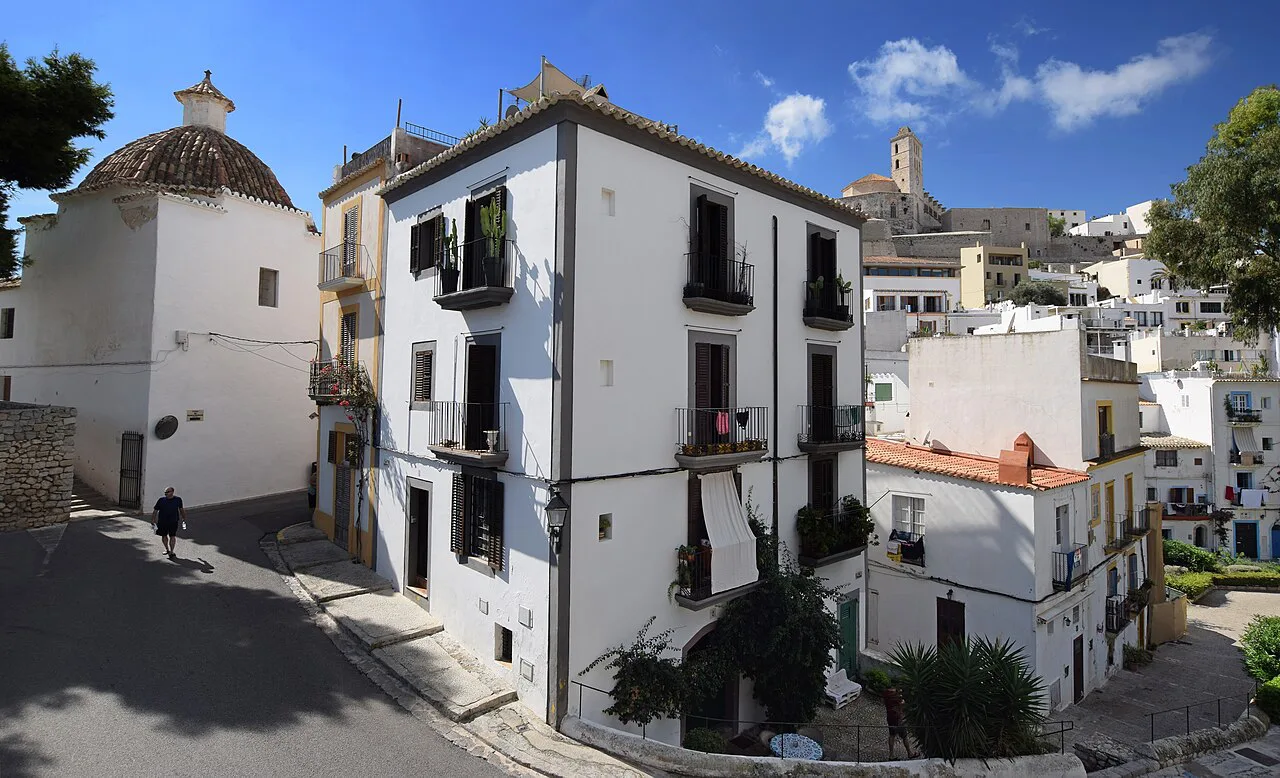
The cathedral is reached on foot through Dalt Vila's streets and gates, and the climb is the part of the visit to plan rather than rush. Dalt Vila's gates and lanes lead up through the walled town, with the cathedral standing at the top on Plaça de la Catedral, so pace the ascent rather than treating it as a step off the street.
The lower town around the Passeig de Vara de Rey is where the climb typically begins, from the modern centre up into the walls. The Passeig de Vara de Rey, Ibiza Town is a useful reference point for starting the walk, with the old town rising directly above it.
What to see inside: the nave, chapels and apse
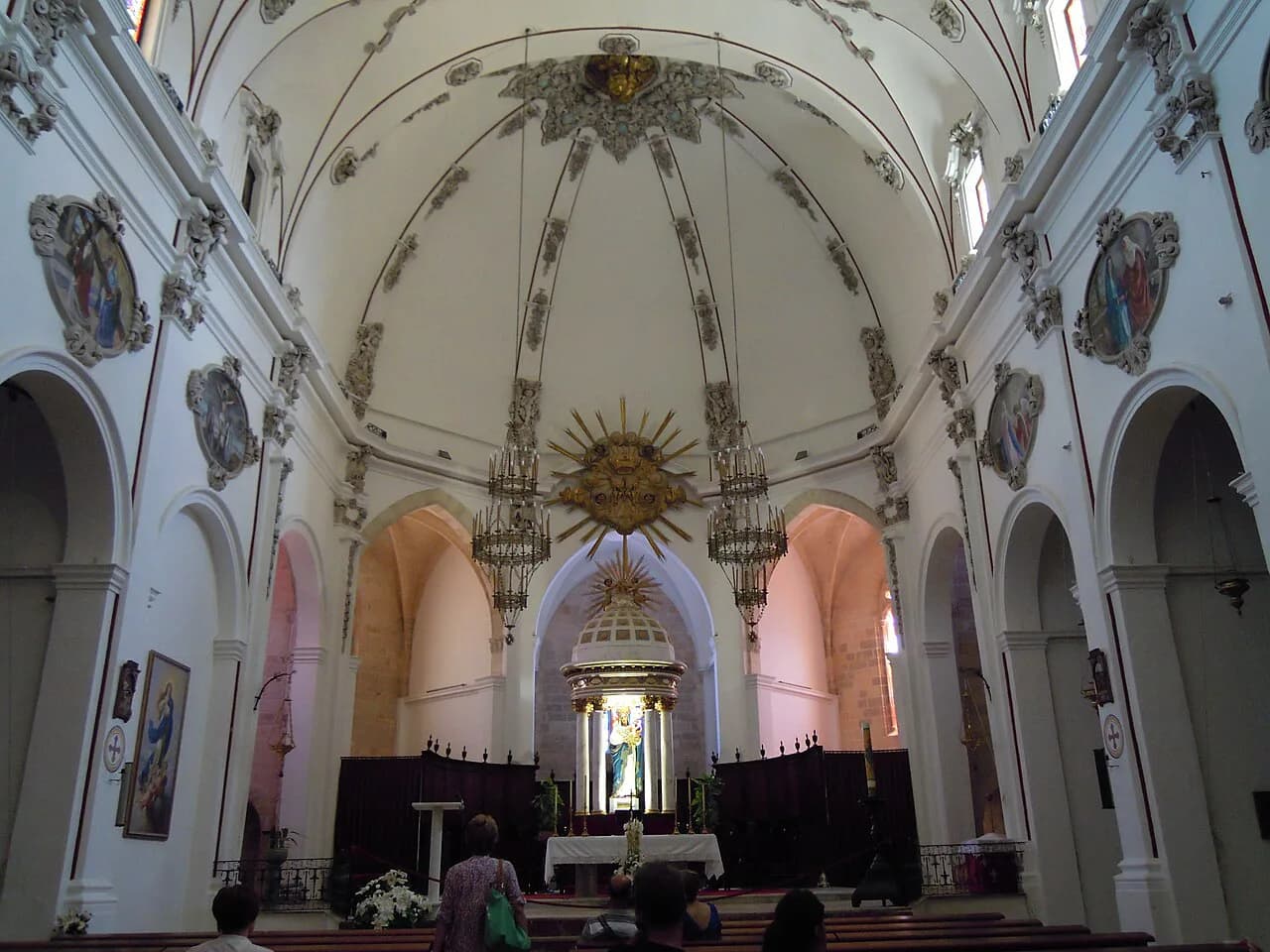
Inside, the plan is simple to read: a rectangular nave with side chapels and a pentagonal apse. The chapels line the nave and give the interior its rhythm, while the apse closes the space at the far end. The 18th-century organ is part of the furniture of the building, and the interior as a whole is the baroque remodelling of the 17th century.
The cathedral holds an important collection of religious art and objects, and much of it is displayed in the Diocesan Museum, which you reach from inside the cathedral. Treat the cathedral and the museum as two stops in one building: the church first, then the collection.
The art worth seeking out
Among the works to look for are the Gothic paintings of St Anthony and St Thecla by Francesc Comes, from the 14th century, and two 15th-century Gothic panels of St James and St Matthew by Valentí Montoliu. The Holy Generation, by the maestro de Calvià, dates from 1515 to 1520. Also noted are the altarpiece of St Gregory and the Souls in Purgatory, Valencian or Genoese in origin and from the 16th century, and a relief of the Virgin of the Rosary from the 16th or 17th century.
The single object most worth seeking out is the Gothic monstrance in gold-plated silver by Francesc Martí, made in 1399. It sits alongside the paintings and the relief as the core of the collection, so give the display time rather than walking straight through.
The bell tower and its bells
The tower is the one element that survives from the cathedral's original Gothic design, and it holds a set of bells from the 16th and 17th centuries, still kept on the third floor of the bell tower. It is the detail most easily missed on a quick visit, so look up before you leave the square.
How long to allow and when to go
Allow around an hour for the cathedral and the Diocesan Museum together, and add the walk up through Dalt Vila on top of that. The climb is exposed, so the middle of the day in summer is the least comfortable time to make it; go early or later in the afternoon and the ascent is far easier. Build the cathedral into a half-day in the old town rather than treating it as a quick stop between the harbour and the modern centre.
Opening hours and entry: where to confirm
The cathedral's listing on the Balearic Islands tourism site gives the address on Plaça de la Catedral and a telephone number, +34 971 39 92 32. Current opening hours and any entry charge are not stated there, so check before you climb rather than assuming them from a guide.
What else is close by
Once you leave the cathedral, the walls and bastions of Dalt Vila are the immediate draw. The Baluard de Santa Llúcia, Ibiza is one of the bastions on the circuit, and it fits naturally into the walk down from the cathedral square.
Below the old town, the Puig des Molins Ibiza is the Phoenician and Punic necropolis that gives Eivissa its ancient depth, and it pairs well with the cathedral as a contrast between the Christian town above and the earlier burials below. Add it to the same half-day if you want the old town's history in sequence.
Make the climb part of the visit
Ibiza Cathedral rewards a visit planned around the walk: enter through the Portal de ses Taules, climb through Dalt Vila while it is cool, and give the interior and the Diocesan Museum around an hour before walking back down. Confirm opening hours and any charge on +34 971 39 92 32 before you set out, then pair the cathedral with the bastions and the Puig des Molins necropolis to make a full half-day in Eivissa.