Things to Do in Ibiza Town: Dalt Vila, Museums and Viewpoints
Plan a short break in Ibiza Town with Dalt Vila's gates, walls and cathedral, its small museums and the Santa Lucía viewpoint, plus how to walk it all.
On this page
One full morning covers the core of Ibiza Town on foot: through the Portal de Ses Taules into Dalt Vila, up Carrer Major past the Museu Puget and the Madina Yabisa interpretation centre, on to the cathedral and back down by the Santa Lucía bastion for the harbour view. It is a compact, walkable climb rather than a day of transport, which is why it suits a short break based in Eivissa (Ibiza Town) itself. This guide groups the sights by area, adds a sample walking loop and flags how the old town competes with the rest of the island for your time.
Eivissa or Ibiza Town: what the name means for a visitor
Signs, bus fronts and museum labels tend to use the Catalan Eivissa for the town and the island, while English-language booking sites say Ibiza Town. Treat them as the same place rather than as a town and a separate resort, or you will waste time searching for a transfer that does not exist. The walled upper town inside the walls is Dalt Vila in every version.
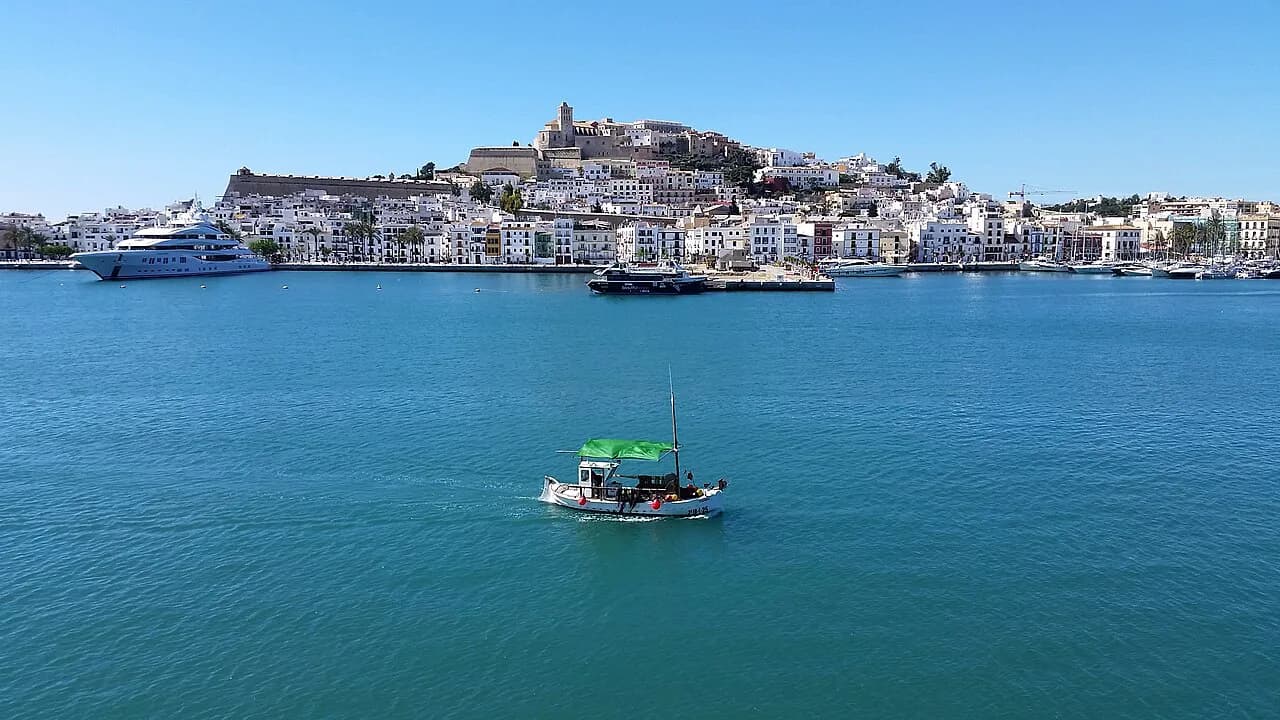
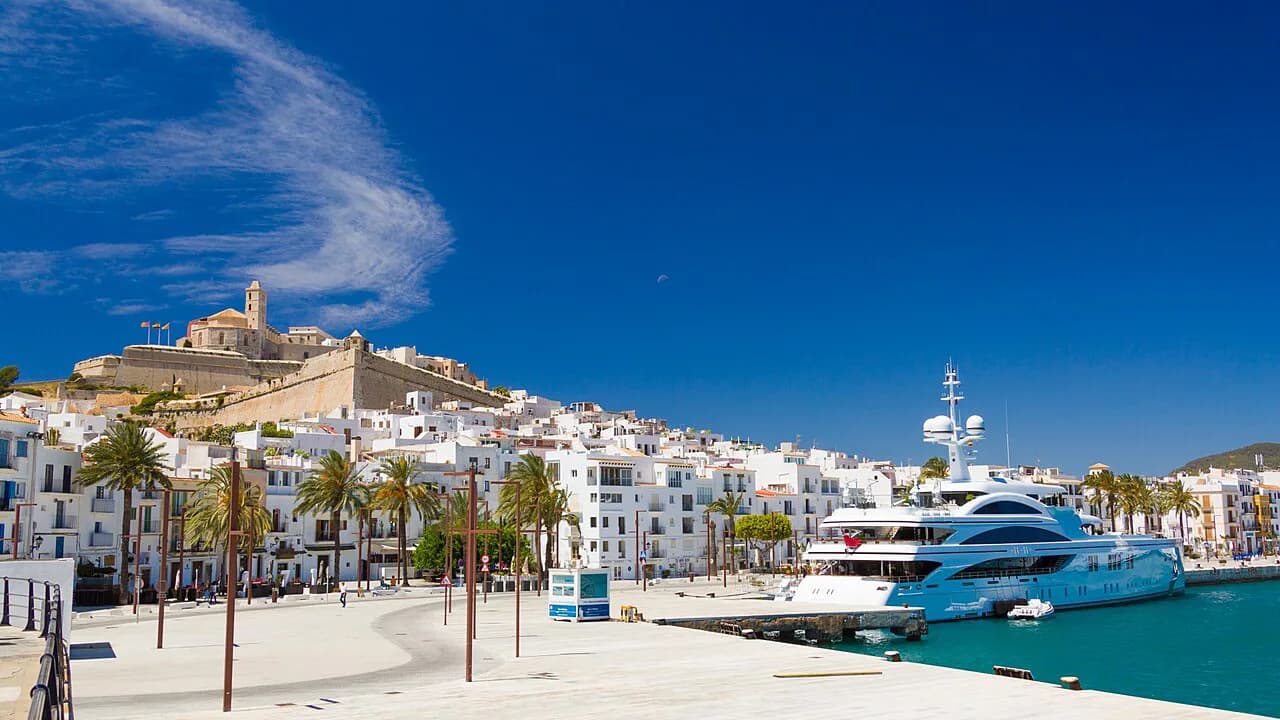
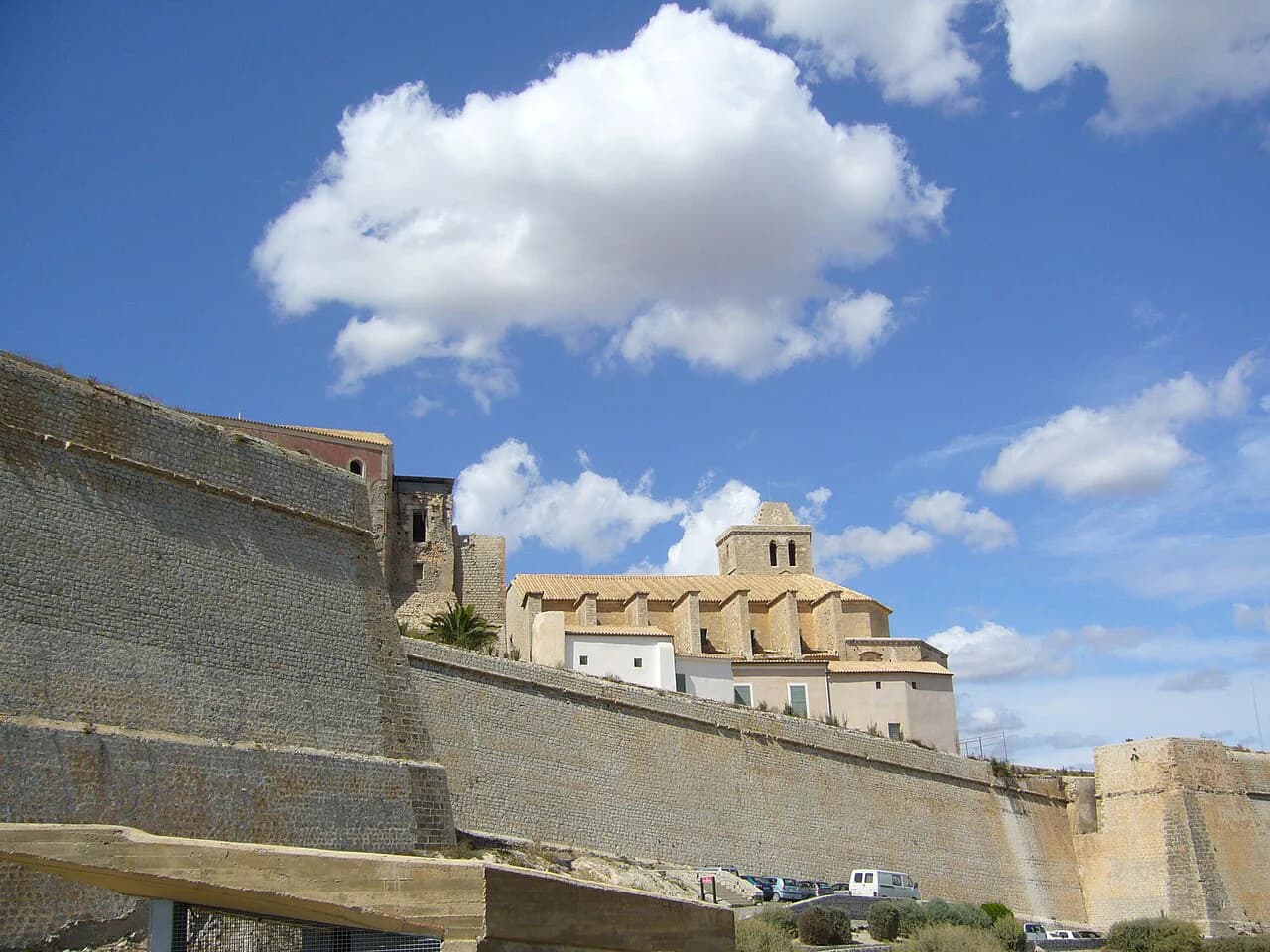
That split matters for planning. The historic centre sits in a ring of sixteenth-century walls above the port, and it has been on the UNESCO World Heritage list since 1999, according to the local tourist write-up of the city centre.
Entering Dalt Vila through the Portal de Ses Taules
Start at the port and walk up rather than trying to drive into the old town: the Portal de Ses Taules is the main gateway through the walls, which is exactly where an on-foot approach makes sense. The slope begins gently and stiffens as you climb, so keep the serious walking for the morning cool if you are here in high summer.
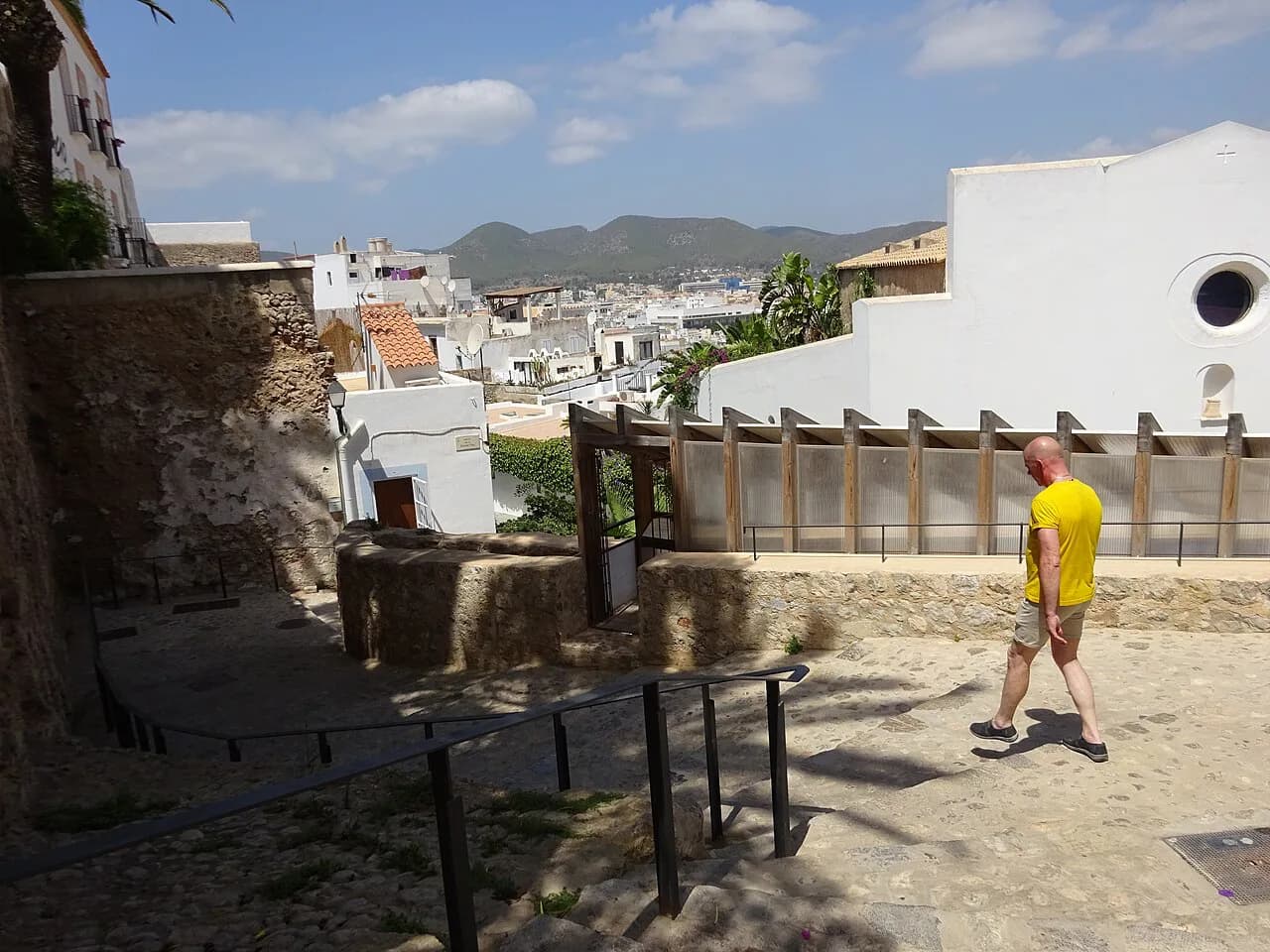
Immediately inside, the lanes are cobbled and uneven, and the route up to the cathedral passes through a tight grid of stone streets rather than a straight staircase. Flat shoes and a slow pace matter more here than any planning app. The old town is small enough that getting mildly lost costs you minutes, not a morning.
The Santa Lucía bastion and the harbour view
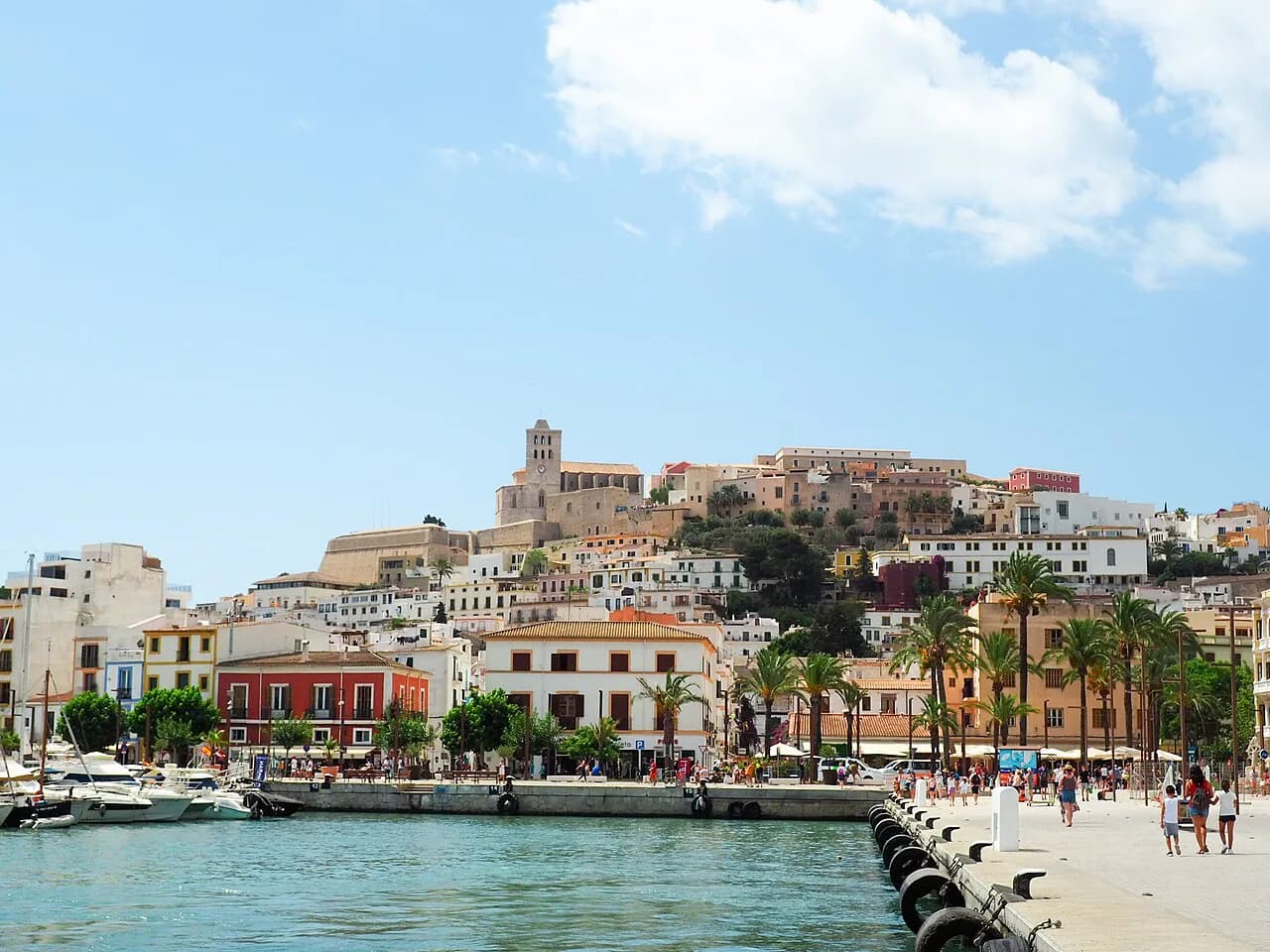
Turn into the Baluard de Santa Llúcia soon after the gate and you get the classic two-part view of Ibiza Town: the U-shaped marina on one side, and the flat-roofed fishing quarter of Sa Penya on the other, with cannons still standing on the bastion platform. The same local account describes the spot as a former defensive position turned lookout, which is the most efficient single stop in the old town if you only have time for one panorama.
Come back here late in the day for a second look if your schedule allows; the light across the harbour and the walls reads very differently from morning to evening, and no ticket is needed for the bastion viewpoint between paid museum visits.
Dalt Vila's cathedral, the Catedral de la Virgen de las Nieves
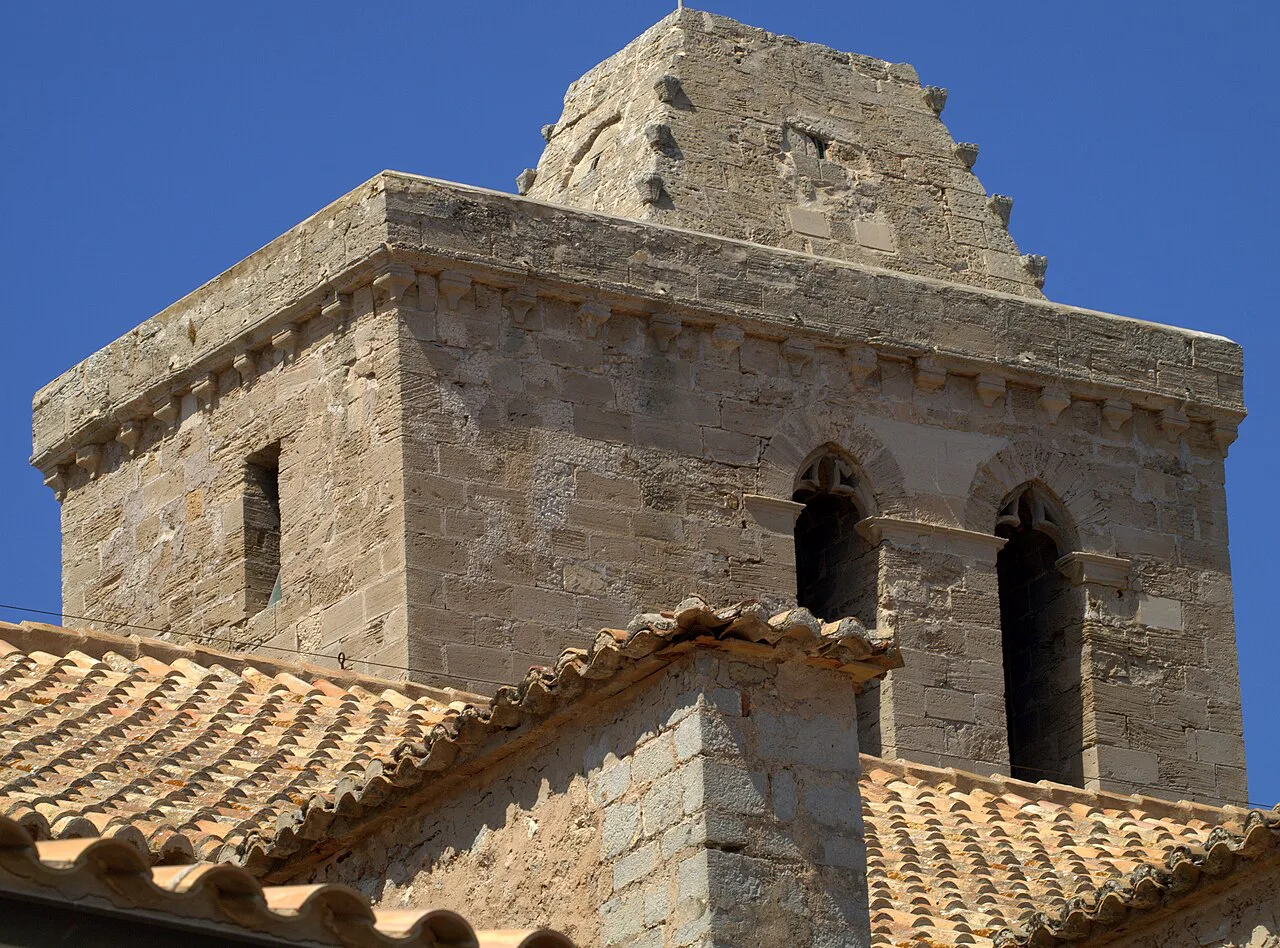
The Catedral de la Virgen de las Nieves sits at the top of the climb on the Plaça de la Catedral and is the visual full stop of the old town, visible from several points below. It is Catalan Gothic in structure, was built over the site of the former mosque, and had its interior reworked in Baroque style in the eighteenth century, with the image of the town's patron saint above the main altar.
Allow for the possibility of finding the doors closed to casual visitors during a service rather than assuming a fixed tourist timetable. Check the notice on the door when you arrive and plan the rest of the loop around it; the square outside is the natural place to wait.
The Museu Puget on Carrer Major
On the way up or down Carrer Major at number 18, the Museu Puget occupies a fifteenth-century Gothic building and holds around 130 paintings by Narcís Puget Viñas and his son Narcís Puget, donated to the state by the family. The collection is a set of oils and watercolours recording island landscapes and everyday life from more than a century ago, which makes it the most rewarding small museum in the old town for anyone interested in how Ibiza looked before tourism.
Its windows open over whitewashed rooftops towards the sea, so budget a little longer than the room count suggests. The museum's temporary exhibitions change, so the permanent Puget collection is the reliable reason to go in.
The Centre d'Interpretació Madina Yabisa on Carrer Major
Two doors away at Carrer Major 2, the Centre d'Interpretació Madina Yabisa uses audio-visual displays to tell the story of the town, with most weight on its Islamic period, when Eivissa was known as Madina Yabisa and ranked among the significant cities of the medieval Mediterranean. A large scale model of Dalt Vila marks the bastions, including Sant Pere and Sant Jaume, so it doubles as a map for the rest of your walk.
The name tracks the town's layers: Phoenician, then Roman Ebusus, then Islamic, then Christian. Do this centre before the cathedral if you want the building to make sense as you walk into it.
Casa Colom and the Capella de Sant Ciriac
On Carrer de Sant Ciriac, the Casa Colom is a small house museum devoted to the argument that Columbus came from Ibiza, run by the association that promotes the theory, and it keeps documents gathered by the local historian Nito Verdera. It sits next to the Capella de Sant Ciriac, and the entry charge cited for the house is 3,50 euros.
Treat it as a curiosity with a point of view rather than neutral history, and it earns its place on a loop that is already passing the door. The lanes here are among the narrowest in Dalt Vila, with shaded patios and planted corners that reward a slower pace than the main ascent.
Casa Broner in Sa Penya
Down in the fisherman's quarter of Sa Penya, on the Travessia de Sa Penya, Casa Broner is the house designed by the architect Erwin Broner, preserved as a museum and a striking counterpoint to the stone and lime of the walled town above it. It is the strongest reason to leave the main Dalt Vila circuit and drop into the lower neighbourhood.
Pair it with a wander through Sa Penya's stepped alleys rather than treating the quarter as a shortcut back to the port; the two halves of the old town feel quite different underfoot, and the lower one is where everyday life is most visible.
The Marina and Sa Penya: the streets below the walls
Below the walls, La Marina and Sa Penya form the commercial and residential base of the old town, with shops, terraces and narrow streets running back from the water. The local city guide notes hundreds of shops selling clothing and accessories in and around the walls, which makes this the natural place to fold browsing into a sightseeing morning.
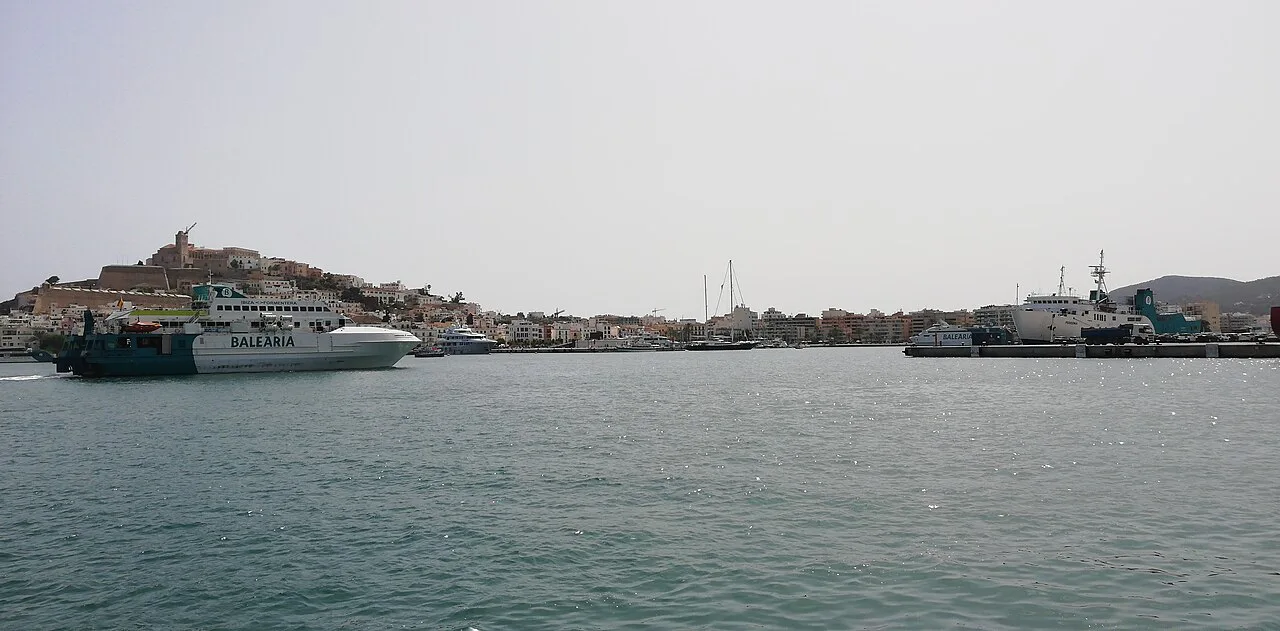
The port itself is the practical hub: ferries and pleasure boats tie up in the U-shaped harbour, and the Passeig de Vara de Rey gives you a flat, shaded promenade to start or end on. If you want the detail on which streets to walk in which order, the Ibiza Town walking tour lays out the loop, while the Ibiza Town map helps you see how the gate, the bastion and Carrer Major stack up vertically.
A common one-day shape starts with coffee near the port, walks up through the gate, works Carrer Major, reaches the cathedral, and returns via Santa Llúcia before crossing into Sa Penya for Casa Broner. That order keeps the climb in the cooler part of the day and leaves the flat streets for when you are tired.
How long Ibiza Town needs, and what to leave for the rest of the island
Half a day is enough for the gate, the bastion, Carrer Major's two museums and the cathedral at an unhurried pace; a full day adds Casa Colom, Casa Broner and a proper wander through La Marina and Sa Penya. Beyond that, the town competes with the island: the north has coves and rural villages, the south has the salt flats and long beaches, and the west has the sunset side.
If your break is short, give Ibiza Town one clear morning and keep the afternoon for one area outside it rather than trying to sample three. Villages such as Santa Gertrudis and Santa Eulalia suit travellers who want the interior without a long drive, and the island's bus network reaches the nearer coastal spots for those without a car.
Getting to Ibiza Town and moving around on foot
Once you are in the town, everything in this guide is walkable: the port, the gate, the climb, the museums and the descent form a loop of a couple of kilometres with steps and gradients. Public buses and ferries connect the town with other parts of the island, and the port area is the natural interchange for both.
For a car-free day, keep the town walk for the morning and take a bus or ferry to a nearby coastal stop afterwards, then return to the promenade for the evening. Do not attempt to drive into Dalt Vila; leave the vehicle near the port and walk up.
Costs and tickets in euros
Ibiza Town's best-value sights are the streets themselves: the gate, the bastions, the cathedral square, the lanes of Dalt Vila and Sa Penya, the port and the promenade are all open territory with no entry charge. Against that, Casa Colom is quoted in the local city guide at 3,50 euros, and the Museu Puget and the Madina Yabisa centre sit in the modest paid category.
Ask at each desk for the current tariff before you commit, since small municipal museums adjust charges, and ask whether reduced rates apply. If your budget is tight, the bastions, the cathedral exterior and the lanes alone justify the climb.
When to go: heat, crowds and closures
The climb to the cathedral is exposed in places and the stone streets hold heat, so start early in summer and keep the middle of the day for the museums or the shade of Carrer Major. The gate and bastion are busiest when day visitors come ashore in numbers, so the earlier you climb, the quieter the walls.
Churches and small museums here keep their own hours, so check each door rather than assuming a continuous day; a midday pause is common practice in the Balearics. Build the loop around the outdoor sights and treat any interiors as a bonus.
Build your Dalt Vila loop from the port
Start at the port, walk up through the Portal de Ses Taules, take in the Santa Llúcia bastion, then work Carrer Major's two small museums before the cathedral and drop into Sa Penya for Casa Broner. That order gives you the best light on the harbour, keeps the climb in the coolest hours, and leaves the flat streets for the end.
If you are comparing short-break towns, the same approach works elsewhere: walled quarters with a gate, a cathedral and a handful of small museums that can be walked in a morning, as in the things to do in Alcúdia guide or the things to do in A Coruña guide. What sets Ibiza Town apart is the density: gate, bastion, museums and cathedral within a few hundred metres of each other.
Explore more Ibiza Town guides
Frequently Asked Questions
Is Ibiza Town expensive to visit?
The old town itself is cheap: the gate, walls, bastions, cathedral square, port and lanes are open streets to walk, and the paid sights are small municipal museums rather than major visitor attractions. Ask at each ticket desk for the current tariff and any reduced rate.
Is Ibiza Town walkable from the port?
Yes. The Portal de Ses Taules gate into Dalt Vila is a short climb from the harbour, and the whole circuit of gate, bastion, Carrer Major, cathedral and Sa Penya can be done on foot with steps and gradients rather than transport.
Where is the non-party side of Ibiza?
Dalt Vila, the walled old town, is the clearest answer inside Ibiza Town: museums, cathedral, bastions and viewpoints. Beyond the town, the interior villages and the protected south-east landscape around the salt flats give a quieter day out.
Sources
Notes for your next Spanish town break
Optional updates to our guides.
You might also like
Continue reading
More guides you'll find useful