Ibiza Town Walking Tour: A Self-Guided Route Through Dalt Vila
Follow a self-guided walking tour of Ibiza Town from Puig des Molins through the Porta Nou and up to Dalt Vila's cathedral, with what to see at each stop.
On this page
Ibiza Town is a morning's walk, not a day's: the walled upper town of Dalt Vila is compact enough to cross on foot in a few hours, and the whole route from the Puig des Molins necropolis to the marina fits comfortably before lunch. This guide gives the stops in walking order as one continuous loop, so you can follow it without constantly checking a screen. It covers what to look at at each gate, bastion and church, where the climb gets steep, and how to cut it short if you only have half a day. For a broader set of stops, see Things to Do in Ibiza Town; for the detailed spatial context of the citadel, see Dalt Vila.
The shape is simple: start south of the walls among the Phoenician tombs, enter through the Porta Nou, climb the bastions and cobbled lanes to the cathedral at the summit, then descend through the old sailors' and fishermen's quarters to the port. Almost everything sits within a couple of kilometres, but the ascent is genuine and the exposed ramparts bake at midday, so an early start is the sensible choice in summer.
Route at a glance: stops in order
The walk runs in six stages: Puig des Molins, the Porta Nou and bastions of Sant Pere and Sant Jaume, the lanes up to the cathedral square, the cathedral and the seaward bastions, Sa Portela and Plaça de Vila, then the descent through La Marina and Sa Penya to the marina and Passeig de Vara de Rei. Allow roughly three to four hours including a museum stop and time on the walls; without museum entries it is a two-hour stroll.
Treat the sequence as a spine rather than a rule. The climb from Porta Nou to the cathedral is the only demanding section, and everything after the summit is downhill, which makes the order worth keeping even if you skip individual stops. Keep a copy of the Ibiza Town map on your phone for the tangle of lanes inside the walls, where street signs are sparse and several alleys dead-end at ramparts.
Start at the Puig des Molins necropolis
Begin outside the walls at the Puig des Molins, the Phoenician burial ground that predates everything else on the route. More than 3,000 tombs were cut into the rock here, and a visit takes in the excavated graves in the hillside plus a hypogeum, the low cave chamber where stone sarcophagi and skeletons remain.
The cave ceiling is low and visitors are handed a hard hat before going in, which sounds fussy until you see the height of the passages. Entry to the site is free, and the small museum holds the grave goods recovered there, including jewellery, funerary masks, amphorae and coins. It anchors the walk because it explains the city before the walls existed, so give it 30 to 45 minutes rather than treating it as a preamble.
Enter the walls at the Porta Nou and climb the bastions
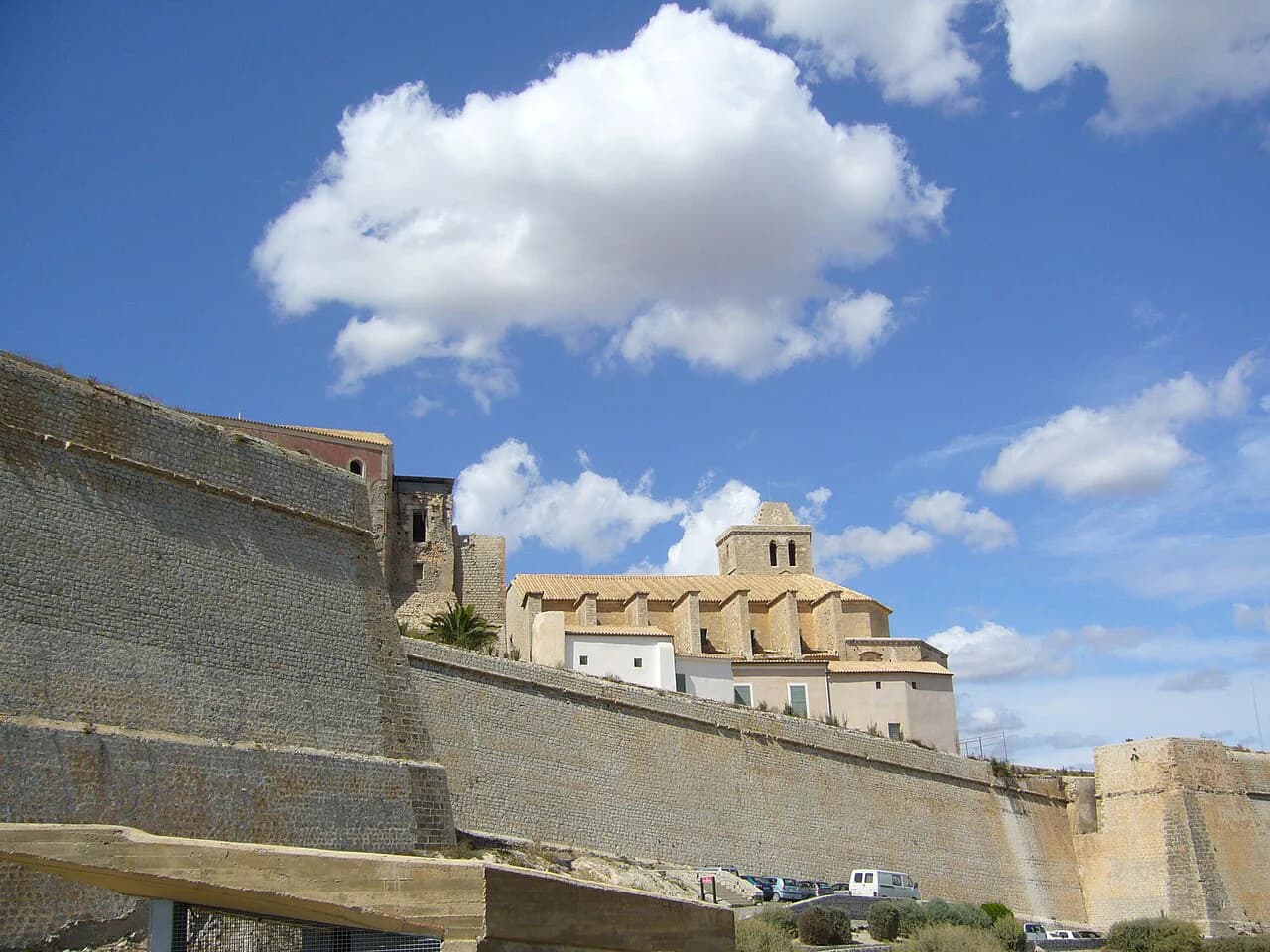
From the necropolis, the walls of Eivissa rise directly ahead and you enter through the Porta Nou, one of the historic gateways into the fortified town. Inside, the route forks: a stairway on the right climbs towards the upper town, while on the left sits the Baluard de Sant Pere, the first of the defensive platforms built under Felipe II in the sixteenth century to hold off Turkish raids.
Push a little further along the rampart to the Baluard de Sant Jaume, where the first proper view opens over the modern city and back across the necropolis you have just left. This is the moment to decide how much wall-walking you want: the ramparts are broad and easy underfoot but almost entirely without shade, so on a hot morning it is better to take the view here and drop into the lanes rather than follow every bastion.
The walled town above is a UNESCO World Heritage Site as an exceptionally well-preserved fortified city, and the climb is where that status becomes obvious: gates, bastions and sloping glacis are all still legible as defences rather than ruins.
The cobbled lanes up to the cathedral square
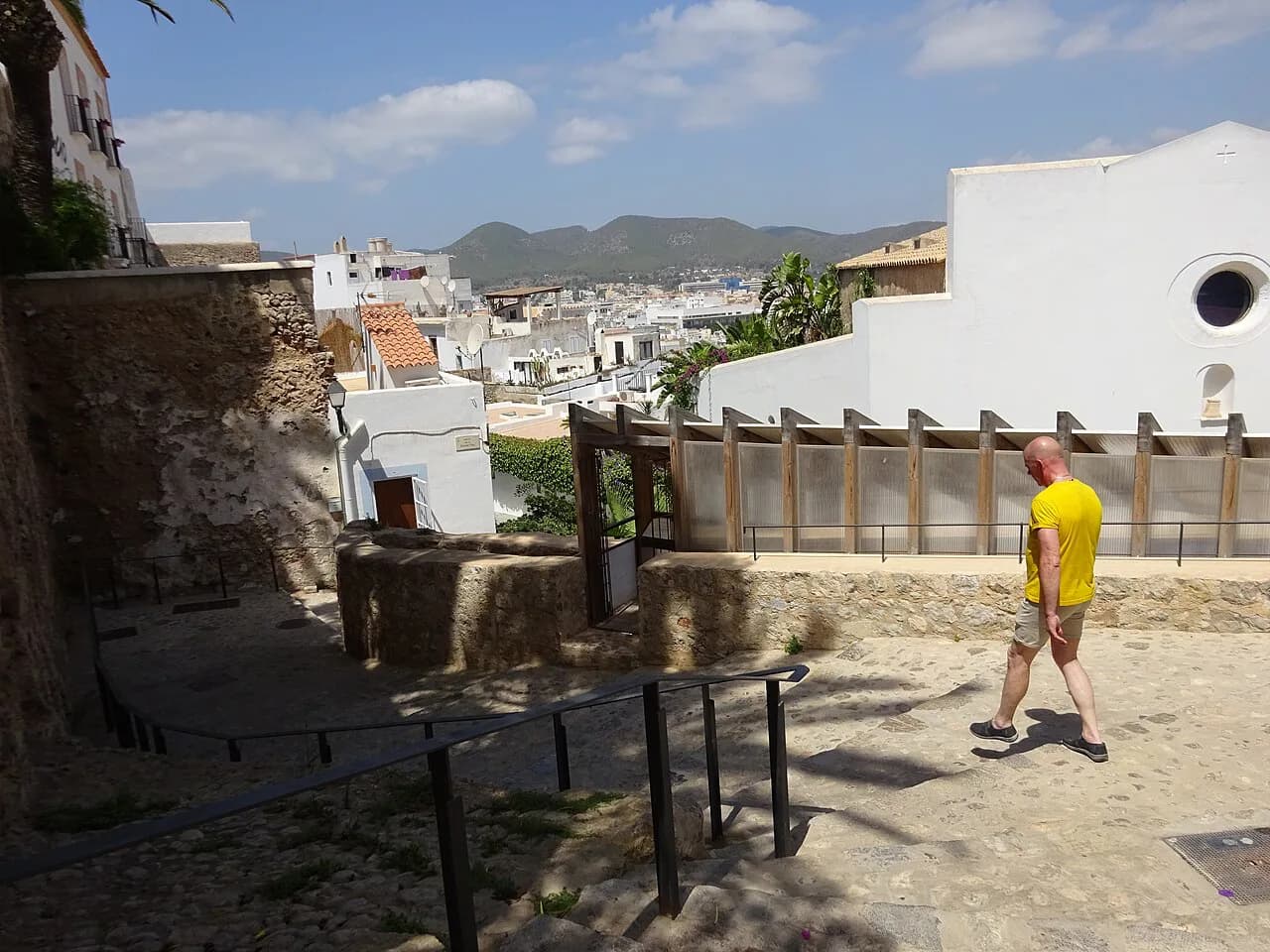
Back at the Porta Nou and the Plaça del Sol, take the stairway opposite and simply keep climbing. The lanes are cobbled, narrow and lined with whitewashed houses spilling bougainvillea, and the gradient eases as you near the top. This stretch is the heart of the walk, so resist rushing it.
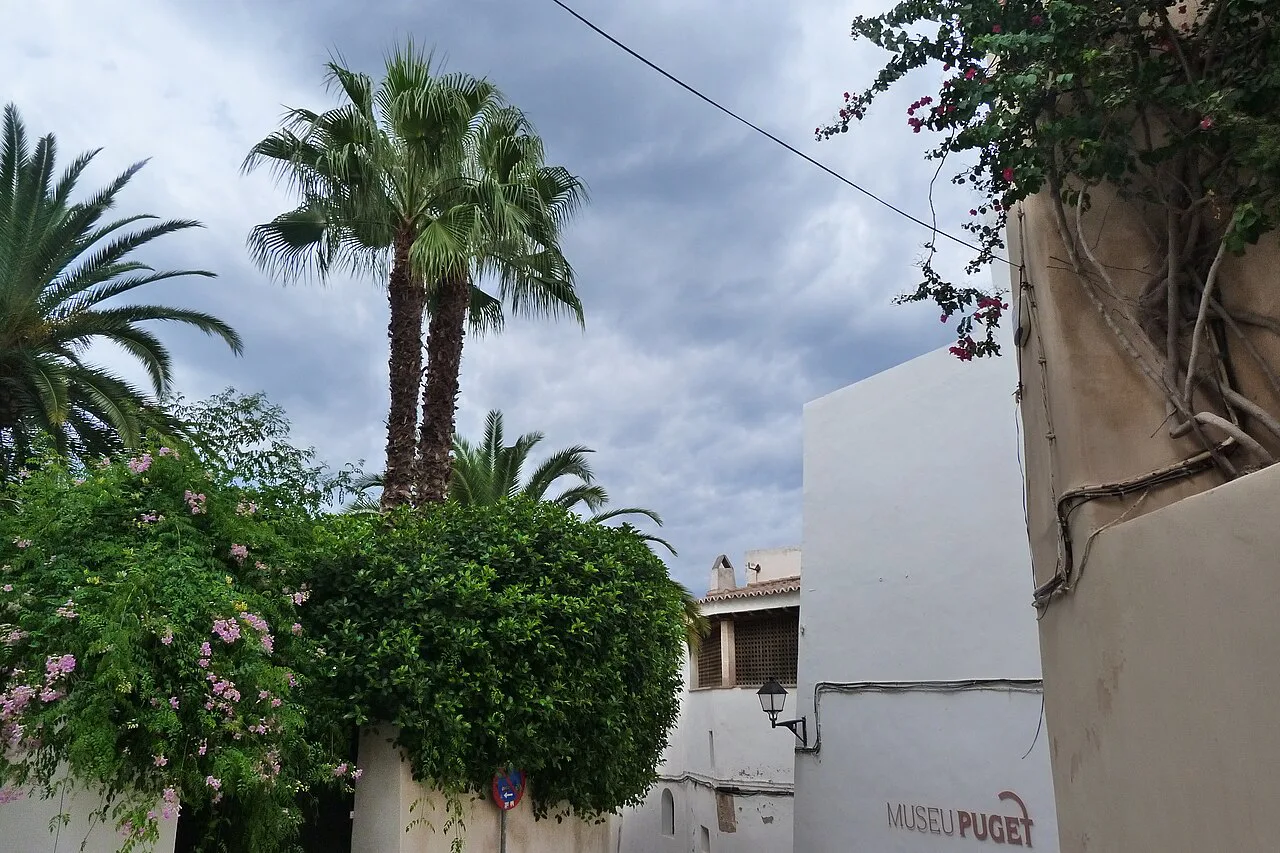
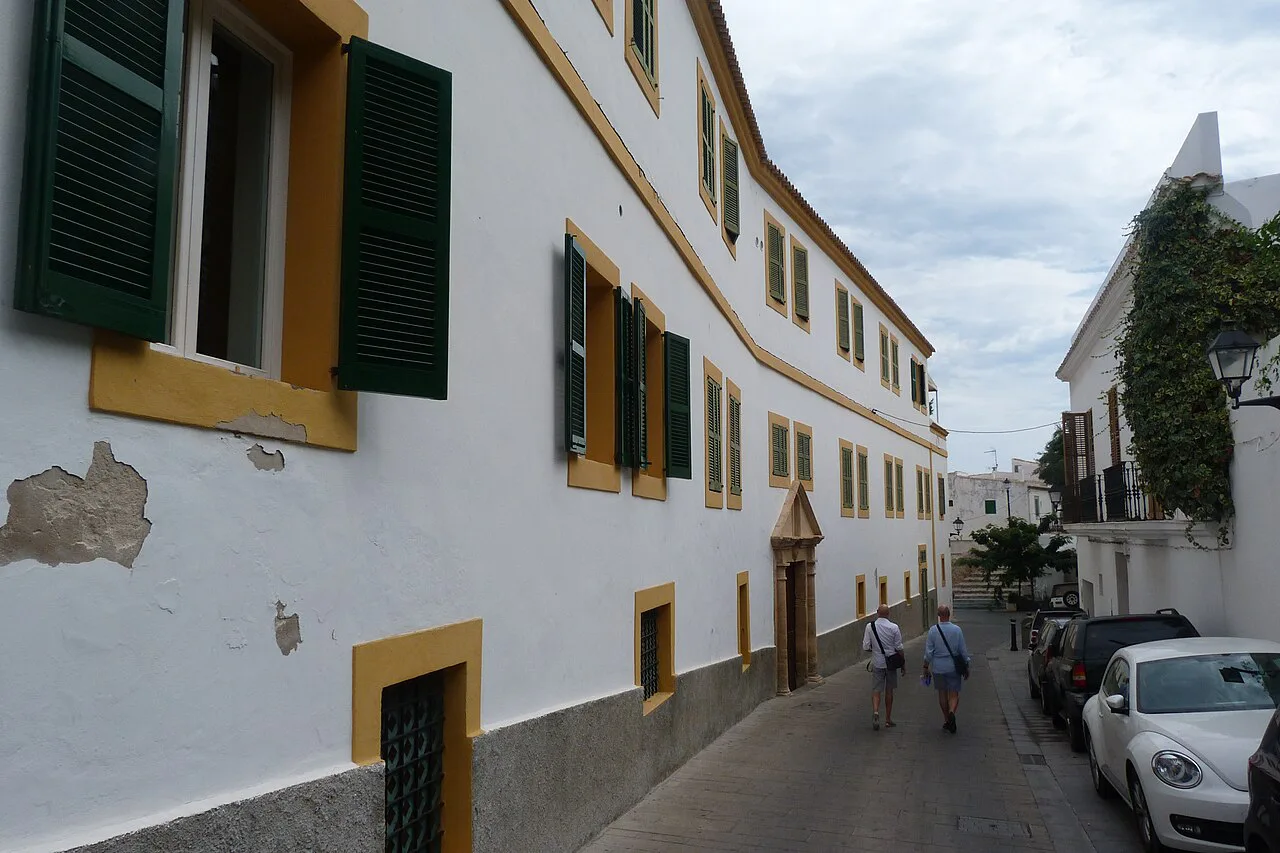
Two stops break the climb. The Capella de Sant Cristòfol is a small chapel where nuns sell traditional sweets, and the noble palaces along the way include the house holding the Museu Puget, a collection in a handsome noble residence. Dalt Vila holds a cluster of other museums too, among them contemporary art and archaeology collections, so pick one to enter rather than trying to tick off several.
If your timing is tight, this is the section to slow down in and the museums to skip, because the streets themselves are the attraction. If you have longer, the Museu Puget is a worthwhile pause before the final pull up to the square.
The cathedral of Santa Maria de les Neus and the seaward bastions
At the highest point of Dalt Vila stands the cathedral of Santa Maria de les Neus, the natural summit and turning point of the route. Visit the interior if it is open when you arrive; the building is also easy enough to appreciate from the square outside, and it can be closed to visitors, so do not build the day around going in.
From the cathedral, walk the ramparts on the seaward side through the Baluards de Sant Bernat, Sant Jordi and Santa Tecla. This is the finest stretch of the whole circuit, with the harbour, the modern town and the open sea laid out below, and it is where the descent begins. Go carefully: the parapets are low in places and the drop is real.
Aim to be up here early. The upper bastions have no shade at all, and the inland heat at midday makes the exposed stone genuinely uncomfortable between roughly late morning and mid-afternoon in summer, which is the strongest argument for starting the walk at opening time.
Sa Portela, Santo Domingo and Plaça de Vila
Drop from the walls at Sa Portela and continue to the Església de Santo Domingo beside the Baluard de Santa Lucia. The church and its neighbouring bastion mark the transition from the military upper town to the civic one, and the walk between them is short and shaded in parts.
Carry on to the Plaça de Vila, the small square that served as the town's civic centre inside the walls and still reads as a gathering point. Note the Portal de ses Taules and the Pati d'Armes on your way down: the main gate into the citadel and the courtyard behind it are among the most photogenic pieces of the fortifications, and they sit directly on the descent towards La Marina.
Several monuments in this quarter close on public holidays, and churches may shut to tourists during services, so a Sunday or fiesta visit can leave you looking at façades rather than interiors. Build that into expectations rather than treating it as a setback.
Descend through La Marina and Sa Penya
Below the walls, the city changes register completely. La Marina, the old sailors' quarter between Dalt Vila and the port, was historically the waterfront district where mariners lived at sea level while the nobility held the heights, and today its lanes are the busiest and most animated part of the old town.
Next door is Sa Penya, the fishing quarter with the most picturesque streets in the city, all cobbles and slopes tucked beneath the Baluard de Santa Lucia. It is small, and easy to wander into and out of in twenty minutes. This is also where the walking tour most naturally turns into shopping, since the lower quarters carry the bulk of the small shops, so leave room at the end rather than racing to the port.
The honest trade-off is time. The walls and cathedral reward an early, focused climb, but the lower quarters are where the city feels lived in, and cutting them to save an hour leaves the walk lopsided. If you must shorten the route, trim the museums, not La Marina.
Finish along the marina and Passeig de Vara de Rei
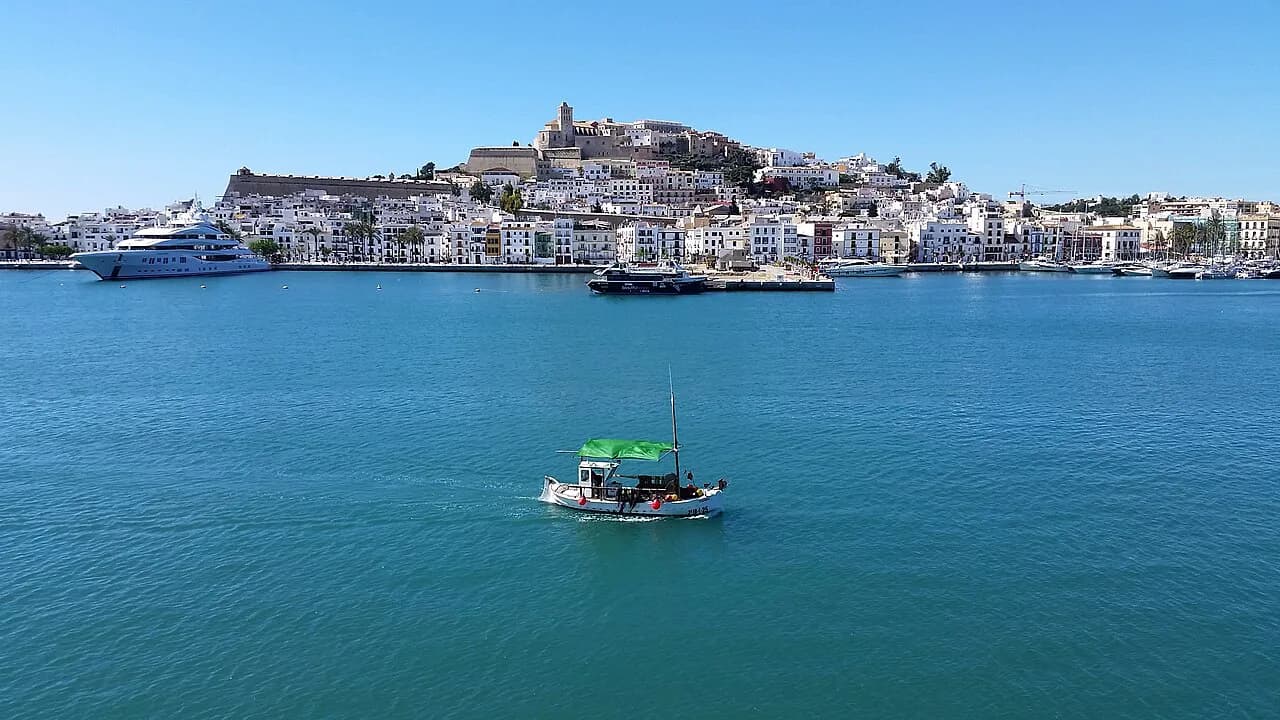
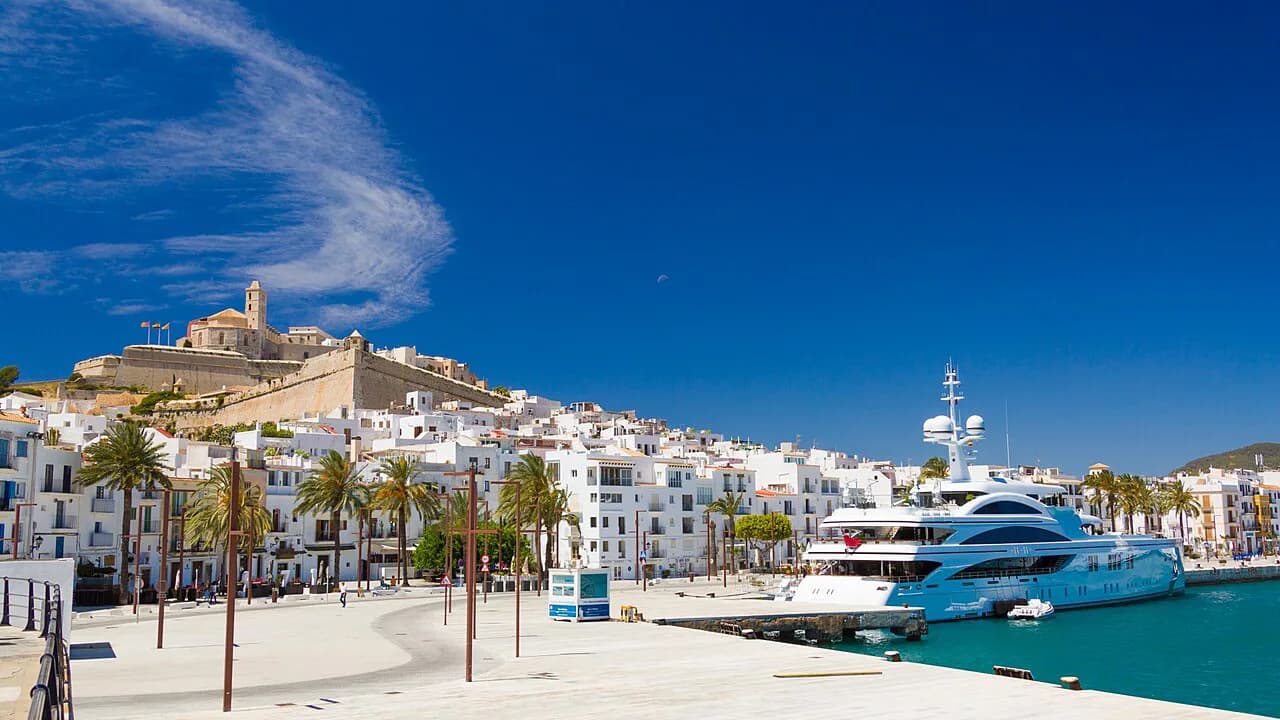
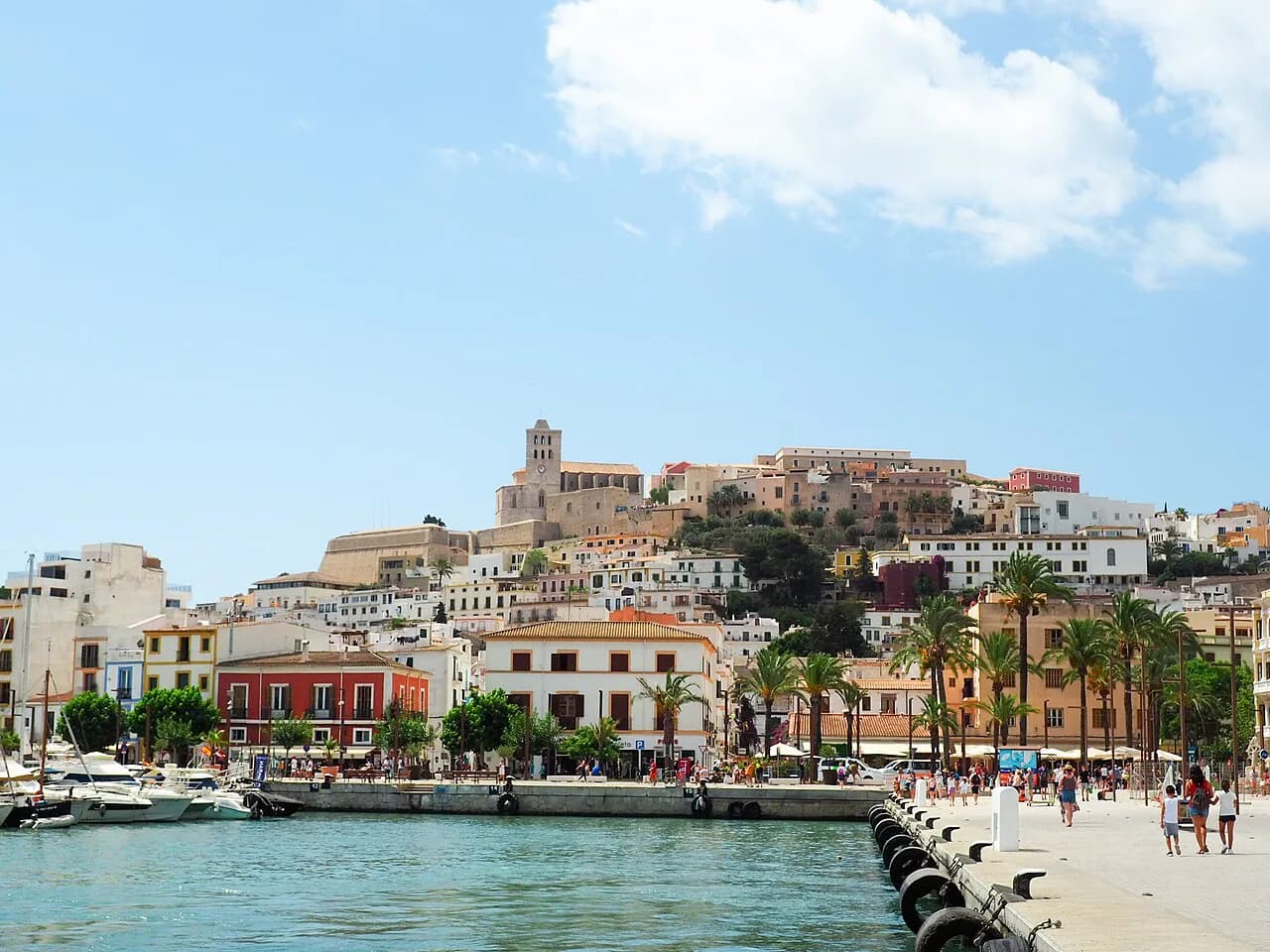
End at the port, then follow the seafront out towards Marina Ibiza and Marina Botafoc. The walk from the port of Eivissa is about 1.5 km, roughly 15 minutes at an easy pace, and it delivers the classic photograph of Dalt Vila: the whole walled town seen from the water, with the cathedral crowning the ridge.
Inland of the port, the Passeig de Vara de Rei is the city's central promenade, pedestrian and lined with historic buildings, and it links the harbour and La Marina with the newer town. The Plaça del Parc, at the foot of the walls, is the natural place to sit down after the descent. From here you can walk back to the starting point at Puig des Molins, or finish at the port if you arrived by ferry.
How long it takes, and how to split it
Count on three to four hours for the full route with one museum and unhurried time on the bastions; a brisk version without interiors is closer to two hours. Dalt Vila itself can be covered in a morning, which is why the lower quarters and the marina make a natural second half rather than an add-on.
With half a day, start at the Porta Nou instead of Puig des Molins, climb straight to the cathedral, cross the seaward bastions and come down through Sa Portela to La Marina. That keeps the drama and cuts the archaeology. With a full day, do the whole thing slowly and add the necropolis museum, then spend the afternoon in the lower town.
Break the walk for shade on the Plaça de Vila or in the lanes below the cathedral rather than on the ramparts, where there is none. The lower quarters also offer the easiest exit points if heat or tired legs set in, with a short walk back to the port from anywhere in La Marina.
Doing it without a car, or with a guide
No car is needed. The city centre and Dalt Vila are entirely walkable from the port, and the old town can be combined with public transport if you want to go further afield later in the day. Buses and ferries serve the wider island, but check timetables on the day rather than assuming a frequency.
Guided options exist, including free tours of the city and private tours of the capital, which suit anyone who wants the chronology of Carthaginians, Romans, Byzantines and the Crown of Aragon explained on site. A free tour is paid by tip rather than a fixed ticket, so budget for that rather than treating it as free. Otherwise, this route is genuinely self-guiding.
Whatever you choose, confirm cathedral and museum opening times and any holiday closures before setting out, since the interiors are the only part of the route that can be shut on the day.
Where to end your Ibiza Town walk
End at the marina end of the seafront, where the view back to Dalt Vila is the payoff for the climb, then walk the Passeig de Vara de Rei into the newer town or cut back through La Marina to the port. If you started at Puig des Molins, the loop closes in about ten minutes from the harbour.
The walk works best started early, with the bastions done before the heat builds and the lower quarters saved for when shade matters less. That order also puts the museums and cathedral at the point in the day when you are freshest for them.
Frequently Asked Questions
Is the Ibiza Town walking tour free to do on your own?
The route itself costs nothing: the streets of Dalt Vila, the bastions and the descent through La Marina and Sa Penya are public ground. Entry to the Puig des Molins site is free, while museums and the cathedral interior may have their own arrangements, so check before you set out if those matter to you.
Can you walk from the port of Ibiza up to Dalt Vila?
Yes. The walled town sits directly above the harbour, and you can reach the Porta Nou on foot in a short climb from the waterfront. The ascent is steep in places but continuous, and the seaward walk out towards Marina Botafoc is flat.
How far is the walk from Dalt Vila down to La Marina?
It is a few minutes rather than a distance: the descent through Sa Portela and the Portal de ses Taules drops you straight into La Marina and Sa Penya at the foot of the walls. Allow longer for the wandering than for the walking.
Sources
Notes for your next Spanish town break
Optional updates to our guides.
You might also like
Continue reading
More guides you'll find useful