Jerez Horse Show: The Real Escuela's Andalusian Horse Ballet
What the Jerez horse show at the Real Escuela involves, what the guided visit adds, and how to weigh the equestrian ballet against the Cartuja stud farm.
On this page
The Jerez horse show is the equestrian ballet Cómo Bailan los Caballos Andaluces, staged by the Fundación Real Escuela Andaluza del Arte Ecuestre in the Recreo de las Cadenas, a 19th-century palace with gardens. It is choreographed classical dressage rather than a stable tour: Andalusian horses and riders perform set movements, and you book a seat for a fixed performance. This guide separates the show-only ticket from the combined museum product and the guided visit, then sets the Cartuja stud farm alongside as the pedigree-focused alternative.
Two practical points shape the planning. The visit side of the institution runs on restricted days and hours, which means the date has to be fixed before the rest of a short break falls into place, and the performance schedule sits separately from that. Our guide to Things to Do in Jerez de la Frontera sets out the wider day out, with the old town and its cathedral quarter covered in our Jerez Old Town guide.
What the Jerez horse show actually is
The performance is a ballet ecuestre: a sequence of classical dressage exercises set to music and ridden in costume. The city's tourism board lists it as the headline attraction of Jerez's equestrian scene alongside the Yeguada de La Cartuja-Hierro del Bocado.
The institution dates from 1973, founded to systematise a riding tradition that drew on the great European schools, Vienna among them, which had originally been formed with Andalusian horses. That history is why the show reads as courtly rather than folkloric: palace arena, formal dress and a programme of named movements.
The horses are Andalusian, the breed English speakers often call PRE, and the line most associated with Jerez is the Cartujano, traced by the city's tourism board to the 15th century. In the arena you watch trained stallions at work; for the bloodline story itself, the stud farm section below is the better stop.
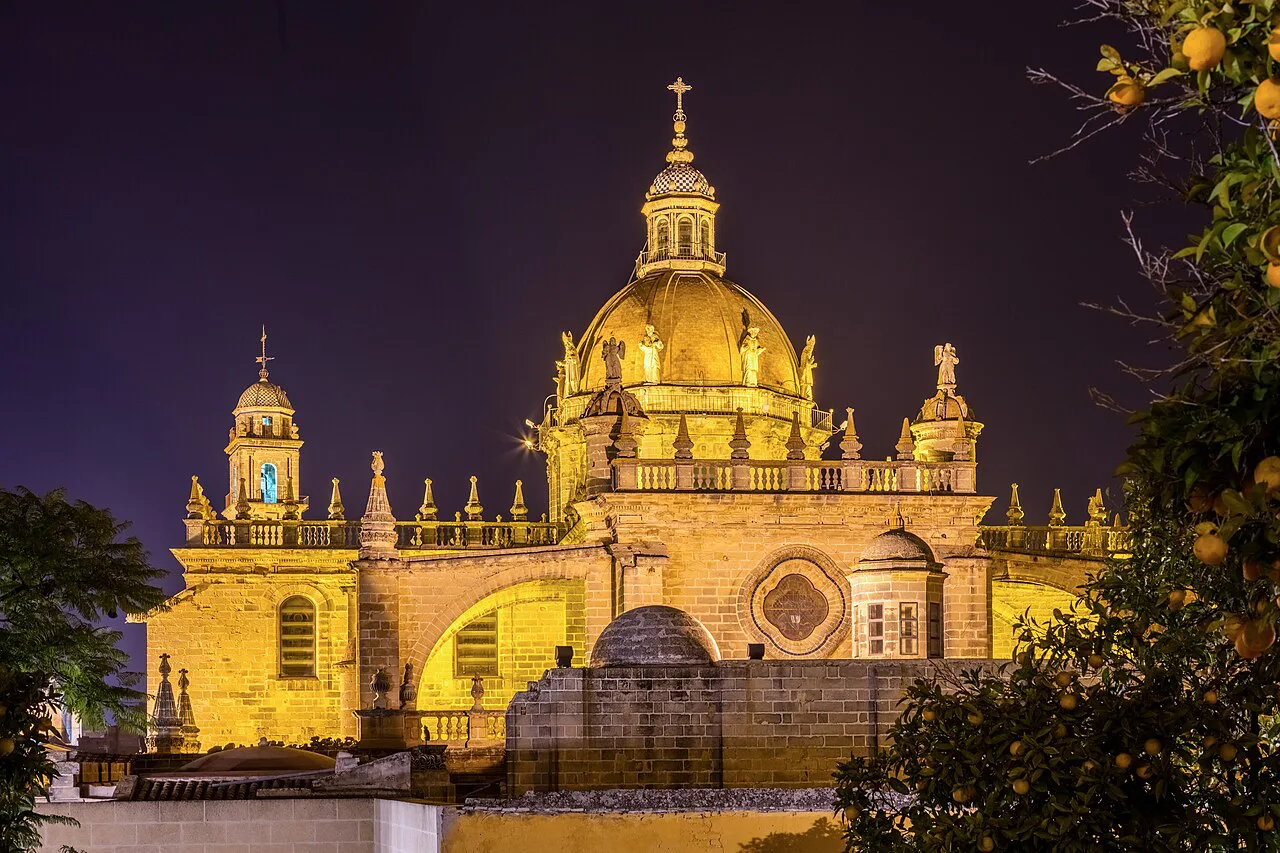
Where it happens: the Recreo de las Cadenas
Everything happens at the Recreo de las Cadenas, a 19th-century palace designed by Charles Garnier, the French architect behind the Paris Opéra. Visitors enter through a semicircular gateway flanked by two small pavilions and hung with the chains that give the property its name, then pass into gardens planted with exotic species around a large central fountain. You arrive through a private estate rather than a sports hall.
Inside the grounds the working buildings sit close together: the Picadero, painted in albero and white, where horses are schooled daily; an octagonal stable block of five wings with twelve boxes each; the guadarnés at its centre; and the saddlery workshop. The Museo del Arte Ecuestre occupies the palace basement across eleven rooms, and the Museo del Enganche holds carriages, harness and costume in a former bodega complex.
The show and the visit are genuinely different products. A ticketed performance puts you in the arena for the choreography; the guided route takes you through the stables, museum rooms and palace at walking pace, with the horses visible in their boxes. If you have one slot in Jerez, decide first whether you want spectacle or behind-the-scenes access.
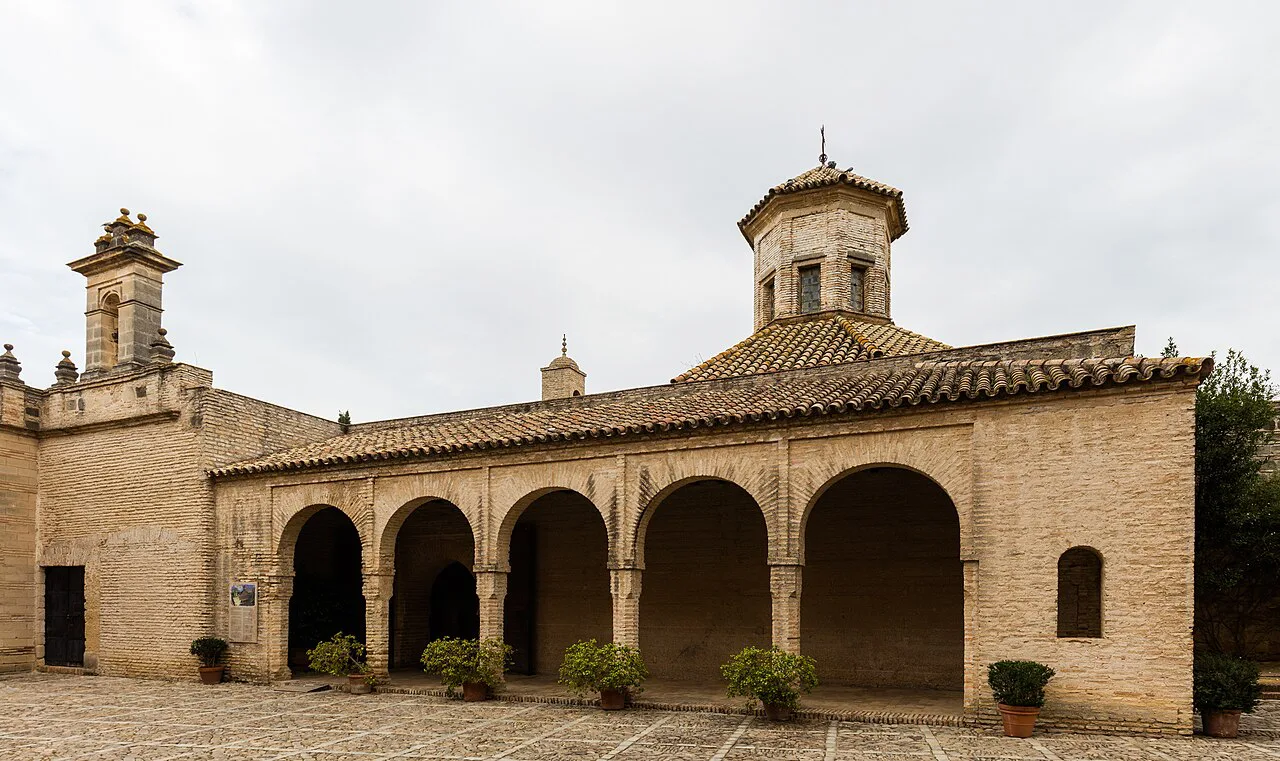
What you see in the show
Expect a compact programme built around classical dressage rather than jumping, racing or carriage driving. Riders work in formation and solo, and the horses perform collected movements that take years to train. It is a seated, music-led performance, so it suits anyone who enjoys watching skilled craft even without prior horse knowledge.
The daily training in the Picadero is the opposite: riders schooling horses through repetitions, correcting and restarting, with no music and no costume. If you want to understand how the ballet is made, the training session is more revealing; if you want the finished article, book the performance.
Performance lengths vary by product. Booking platforms list a one-hour show-only entry and a longer combined ballet-and-museums entry, while the guided visit runs about two hours on the museum-inclusive option. Check the duration shown on the ticket you actually buy rather than assuming all three are the same.
Tickets: show-only versus the combined entry
Prices on the booking platforms are listed per person and change with the product. A show-only entry appears at €27, a longer ballet-plus-horse-museums ticket at €32, and the Cartuja stud visit at €20; a general-entry ticket to the school is listed from €16. Treat these as platform prices rather than official box-office tariffs, since they bundle partner terms and cancellation policies.
The combined option adds the Museo del Arte Ecuestre and the Museo del Enganche to the performance, which is worth it if you want the carriage collection and the history of the Andalusian horse in one go, but it stretches the visit to roughly half a day. Show-only suits travellers fitting Jerez around Cádiz, where time in the arena is the whole point.
Bookings through these platforms typically come with a mobile voucher, instant confirmation and, where offered, free cancellation up to 24 hours before. Those terms belong to the reseller, not to the school, so read the cancellation line on the specific ticket before paying. Seating is sold within a shared stand rather than as individual seats chosen on a plan.
The guided visit of the school
The guided route strings together the stops that make the Real Escuela more than an arena: the Picadero, the octagonal stables, the saddlery workshop, the Palacio and the two museums. Staff explain the school's origins, its training programme and the working life of the horses, so you leave knowing what the performance represents rather than just having watched it.
After the circuit you can return to the training, browse the shop or sit in the bar and gardens, and the outdoor picadero and gallop track are open to stroll. The iron figures around the stable yard show the exercises performed in the show, a useful primer if you are seeing the ballet later the same day.
Commentary is offered in several languages, including English, Spanish, French and German on the platform listings. If language matters, say so when booking rather than assuming an English departure will be waiting.
Training sessions versus the choreographed show
The Picadero is where the school's day-to-day work happens, and the tourism board describes the training as a fixture of the visit. Watching riders school horses through the same movements that appear in the ballet, without music or costume, is the closest you get to seeing the craft rather than the product, and it takes less time than a full performance.
The trade-off is atmosphere. Training sessions are working appointments, so horses come and go, riders pause to talk, and nothing is timed to please an audience. The show is the polished version with the setting to match, which is why short-break visitors usually choose it, and why anyone with a serious interest in dressage often prefers the morning.
Days, timings and when the visit does not run
The guided visit runs from 10:00 to 14:00, with staff receiving groups every half hour from 10:30 to 12:30 and the last entry at 12:30. It operates on Mondays, Wednesdays and Fridays, with listed exceptions: no visit on 25 September or 25 December, no Wednesday visit on 1 November or 6 December, and no Friday visit through August, September and October or on 8 December. Those autumn Fridays are the trap for anyone building a late-summer break around the school.
Show days and times are set separately from the visit calendar, so a date that works for the guided tour may not have a performance. The platform listings advertise a 10:00–14:00 window and tell buyers to consult the official calendar for changes to the show schedule. Fix your date against that calendar before booking travel into Jerez.
The alternative: the Yeguada de La Cartuja-Hierro del Bocado
The Cartuja stud farm is the other half of Jerez's equestrian identity, described by the city's tourism board as the principal breeding operation in the world devoted to the Cartujano horse, with visits that include seeing the horses at liberty and demonstrations. Where the Real Escuela gives you a rehearsed performance in a palace, the stud gives you an active farm and the lineage behind the animals you saw dancing.
The visit runs about two and a half hours and is listed at €20 per person on the booking platform, with more than 200 horses on the property. It suits travellers who care about breeding history and seeing animals in the open; it is less of a spectacle and more of a working visit.
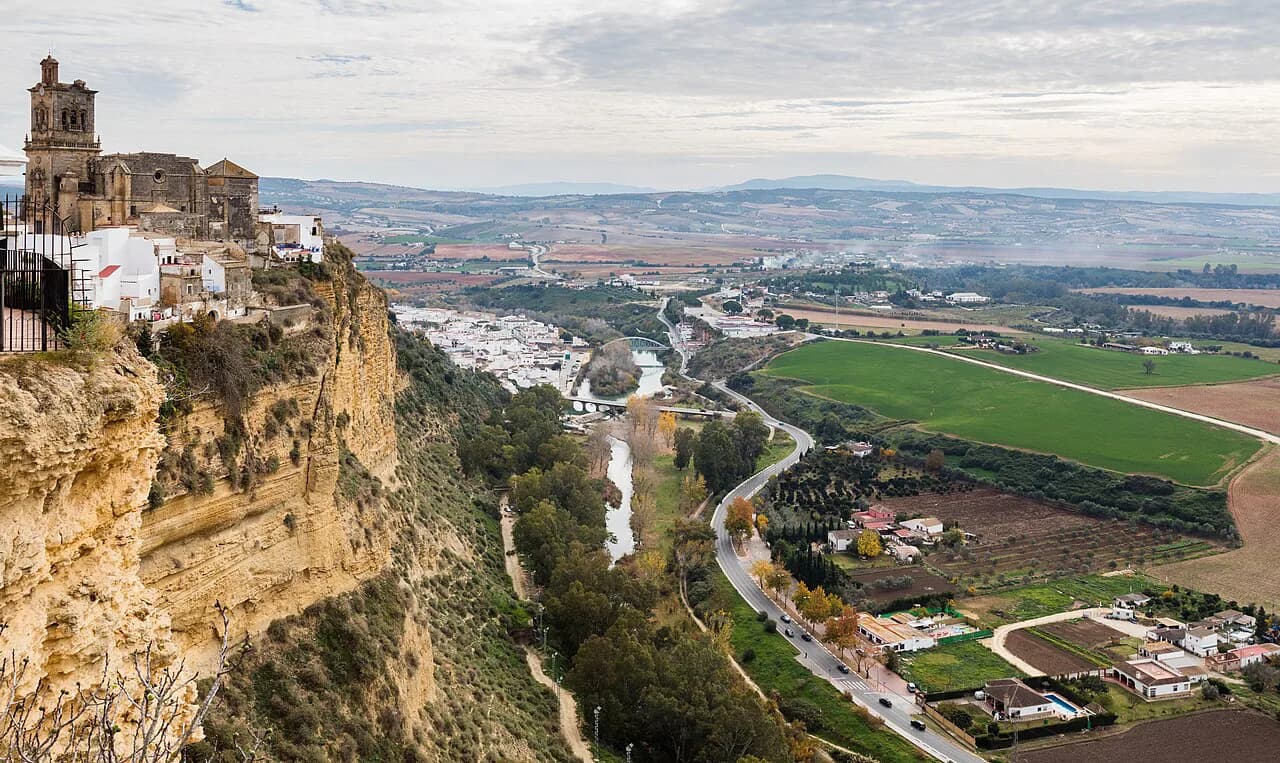
Jerez sits within easy reach of the rest of Cádiz province, so either choice can be paired with the old town and its cathedral, or with a run out to Arcos de la Frontera on the Río Guadalete. Either works best as the anchor of a single full day rather than an add-on to a crowded one.
Show, guided visit or stud farm?
Choose the show if you want the image Jerez is famous for: an hour or so of choreographed dressage in a Garnier palace, bookable with a mobile voucher and, where the reseller offers it, free cancellation up to a day ahead. Choose the combined ticket only if the carriage and equestrian-art museums interest you enough to give up half a day. Choose the guided visit if you would rather see the stables, saddlery and training than watch a performance.
Choose the Cartuja stud farm if pedigree and open fields beat choreography. Whichever you pick, settle the date against the published calendar first, because the visit runs on three days a week with seasonal exclusions and the show has its own schedule; our Jerez Attractions: 4 Visitor Guides hub places the school alongside the rest of the city's sights.
Explore more Jerez guides
Frequently Asked Questions
What breed are the Spanish dancing horses in the Jerez show?
They are Andalusian horses, the breed often called PRE, and the Cartujano line is the one most associated with Jerez, traced by the city's tourism board to the 15th century. The Real Escuela trains them in classical dressage, the discipline behind the ballet.
Is the Jerez horse show the same as the Feria del Caballo?
They are different things. The Jerez horse show is the Real Escuela's staged equestrian ballet, Cómo Bailan los Caballos Andaluces, performed at the Recreo de las Cadenas and booked as a ticket. The Feria del Caballo is Jerez's own annual fair, separate from the school's programme.
Can I watch the horses train without booking the show?
Training in the Picadero is part of the guided visit of the school, which runs on restricted days and hours, so it is not a walk-in attraction. The guided route is the way to see the working stables and the riders at exercise.
How long should I allow for the Real Escuela?
Allow about two hours for the general-entry and guided-visit products, longer if you take the combined ballet and museums ticket, which the platform lists at four hours. A show-only ticket is listed at one hour, leaving room for the old town the same day.
Sources
Notes for your next Spanish town break
Optional updates to our guides.
You might also like
Continue reading
More guides you'll find useful