Jerez Map: Where the Old Town Sights Sit
A visitor's map of Jerez de la Frontera: the Alcázar, cathedral, San Miguel and the Santiago flamenco quarter, and how the streets link up on foot.
On this page
Jerez is best walked as four linked areas rather than a checklist: the Alcázar and cathedral at the heart of the historic centre, the open plaza del Arenal to the north-west of them, San Miguel to the east, and the Santiago flamenco quarter beside the old walls. Get those anchors straight and the rest of the old town falls into place around them. This guide maps the centre by quarter, adds the Cartuja as a separate outing, and finishes with the stations and airport links.
The city sits in Cádiz province in Andalucía, between the sea and the sierra, and its casco histórico is protected as a conjunto histórico-artístico. Within it, the Islamic past survives in the walls, the Alcázar and the old mosque that is now the chapel of Santa María la Real.
Where Jerez sits in Cádiz province
Jerez de la Frontera is one of the largest towns in Cádiz province, set between the coast and the hills inland. The A-4 motorway ties it to Cádiz, roughly 35 km away, and to Sevilla, about 90 km away, which makes it easy to slot into a wider Andalusian trip. It also has its own international airport about 10 km from the city centre.
If you are coming from the Costa del Sol, treat Jerez as a distinct stop rather than a suburb of the coast resorts. Reaching it from Málaga by road is a long motorway run, so most travellers either base themselves in Cádiz province or arrive by train. The railway station sits within the city, with regional and national services toward Madrid, Sevilla and Córdoba.
How the historic centre is laid out
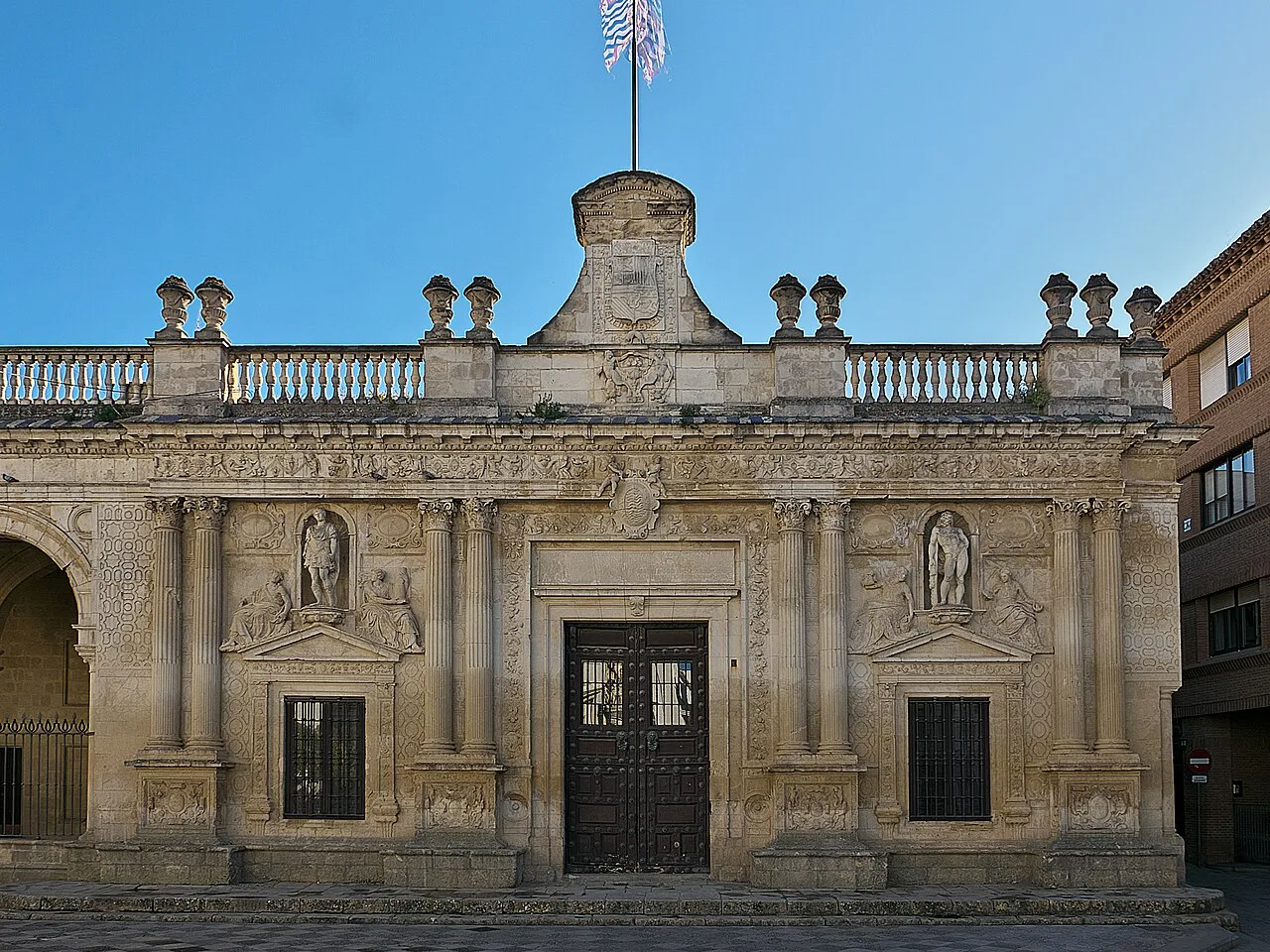
Think of the centre as a ring of open space with a dense core inside it. Plaza del Arenal is the broad square on the edge of the old town, with the Ayuntamiento and Cabildo Municipal close by, and it works as a natural starting point. From there you head south into the lanes toward the Alcázar and cathedral, or east toward San Miguel.
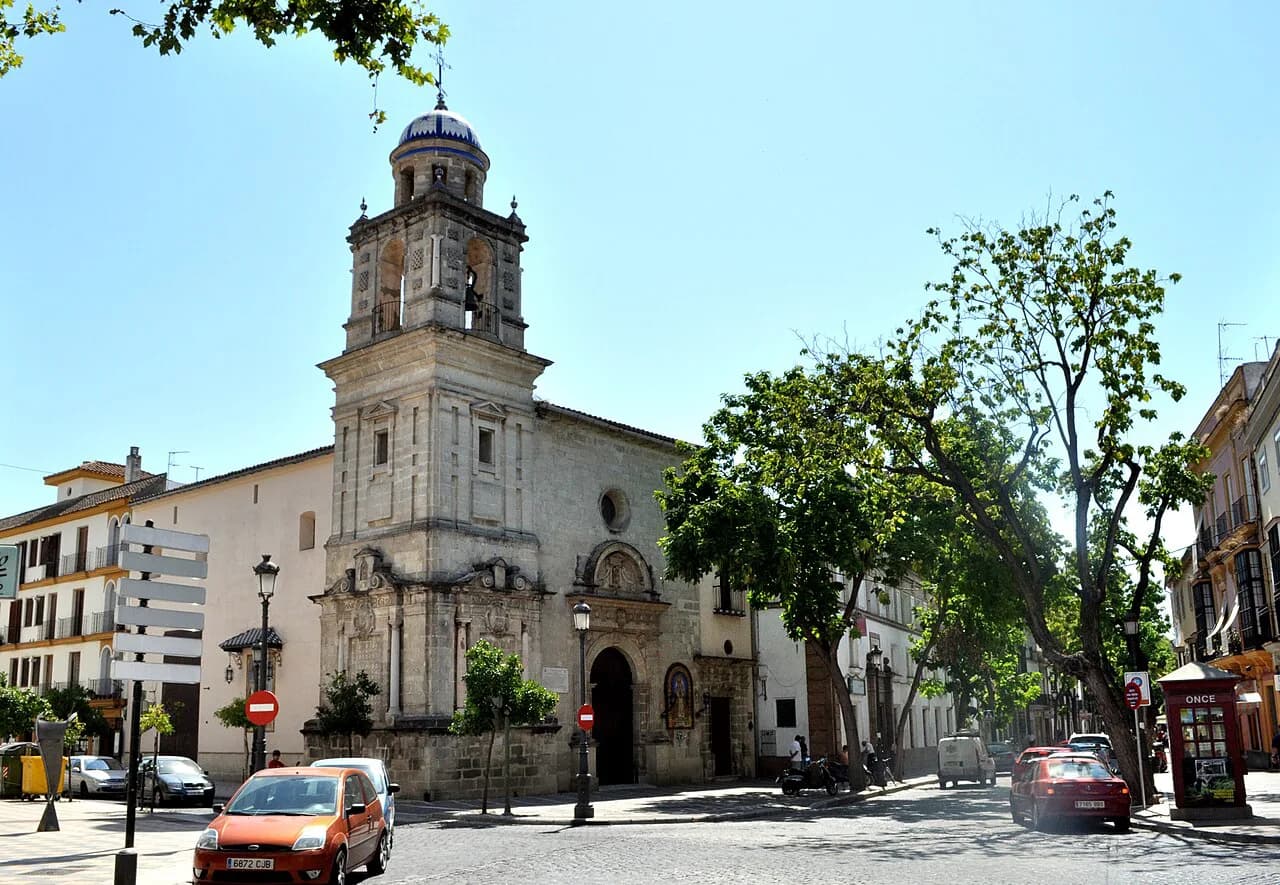
From the Arenal the next landmarks are the Iglesia de San Dionisio, with its mudéjar lines, and the Convento de San Francisco, which preserves a thirteenth-century cloister. Those sit in the older, walled part of town, where religious and civil architecture crowd together. That older quarter holds treasures such as the churches of San Mateo and San Lucas and the Riquelme and Pemartín palaces.
Jerez is a good city to wander without a fixed route, and its old town is our own starting pick for a short break. If you want the wider picture before you commit an afternoon, the full things to do in Jerez guide covers the sights that sit on this map in more detail.
The Alcázar quarter
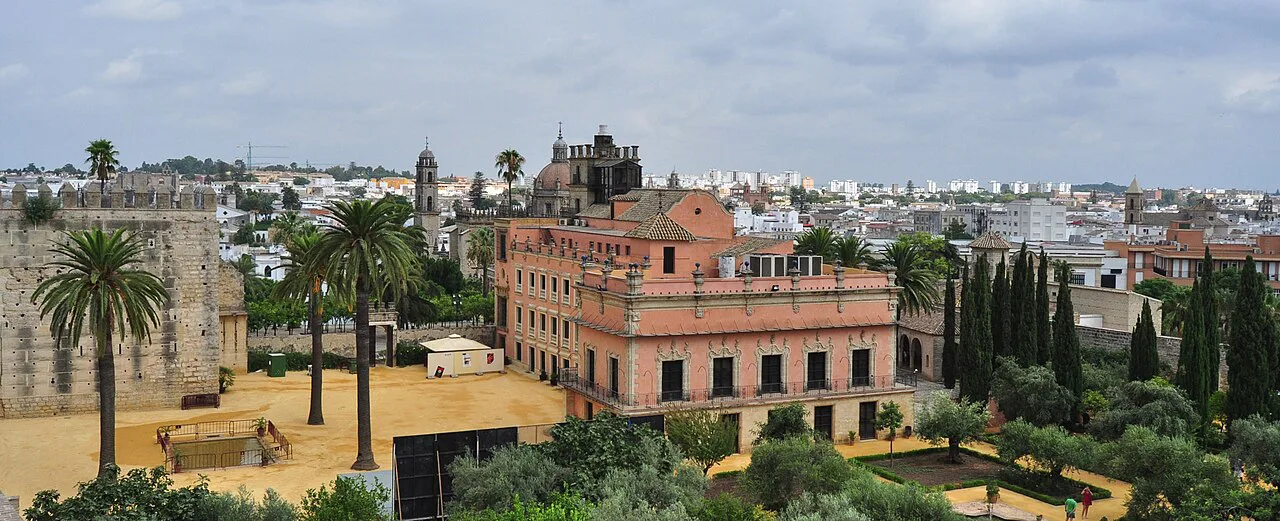
The Alcázar is the strongest anchor in the centre, an Almohad fortress whose octagonal towers date to the twelfth century. Inside, the complex keeps the Patio de Armas, the Palacio del Almirante and the Arab baths, whose vaulted rooms are pierced with light wells. Nearby, the Palacio de Pemartín now holds the Centro Andaluz de Flamenco.
Just behind the fortress, the Mezquita is now the chapel of Santa María la Real, a small building whose Islamic fabric survives under Christian use. In the adjoining baroque Palacio de Villavicencio, a Cámara oscura lets you look out over the rooftops of the whole city. That makes the tower a viewpoint as well as an artefact, which is a good reason to finish at the Alcázar rather than start there.
Expect the Alcázar to be the busiest single sight in the centre, and expect midday summer heat in the open courtyards. The fortress, the cathedral and the churches are all close enough to walk between, so the sensible order is to work the shaded lanes in the morning and save open squares for the cooler ends of the day.
Around the cathedral
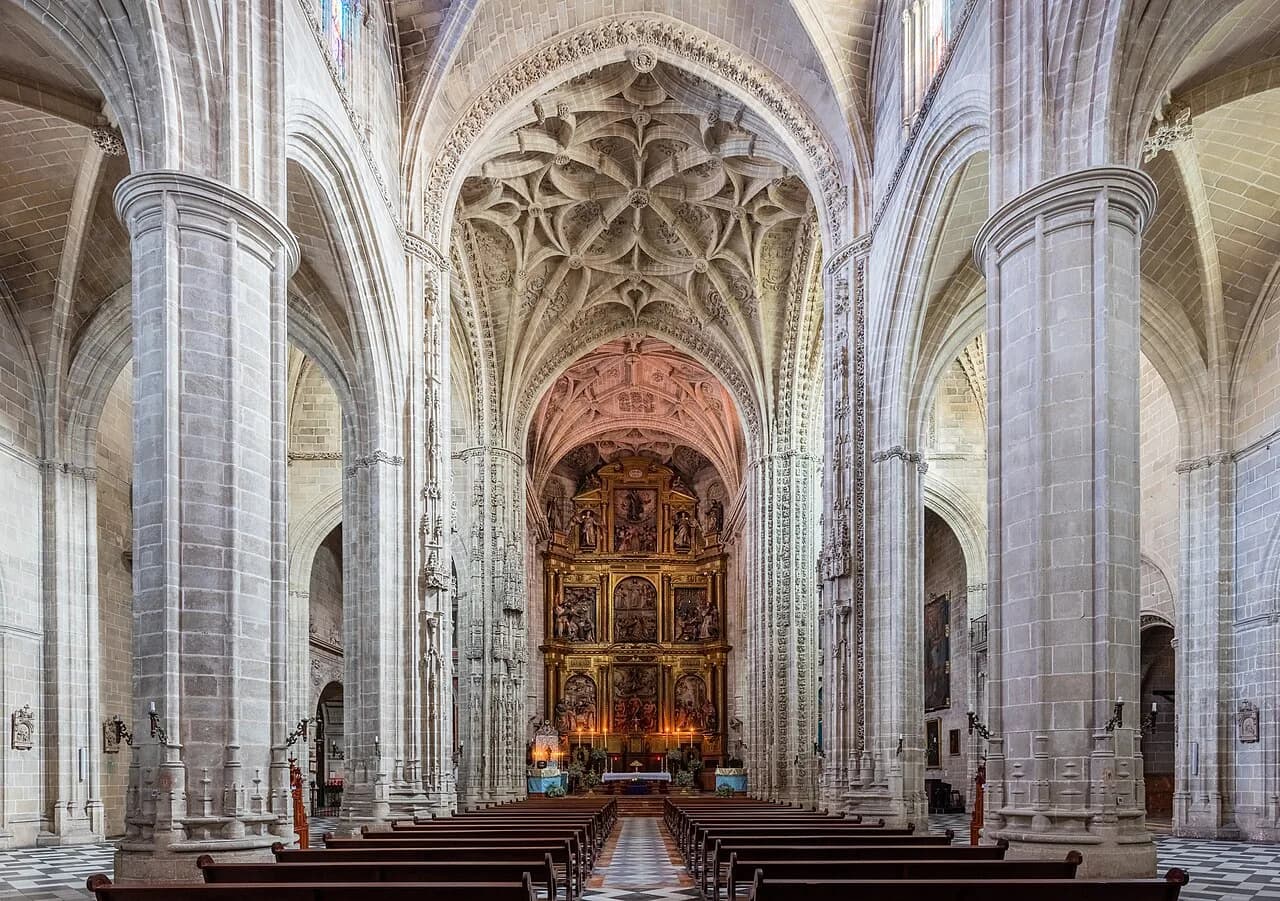
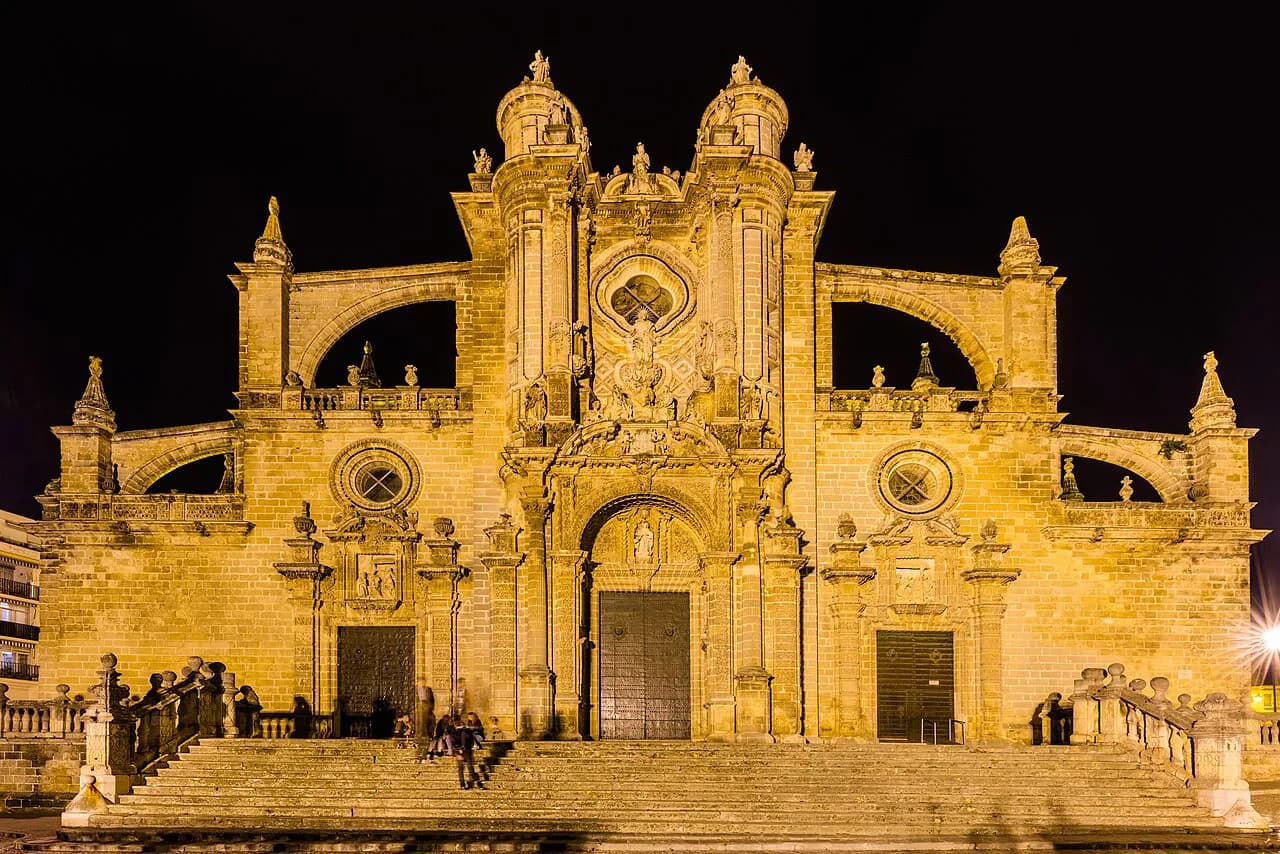
The Catedral de Jerez stands a step from the Alcázar, founded on the site of a former mosque and built as the old Colegiata de San Salvador. Its fabric mixes baroque and neoclassical work, while the tower keeps mudéjar touches. Inside there are paintings by Zurbarán, which is the strongest reason to go beyond the doorway.
Practical advice for the cathedral and the other churches is to check the parish and diocesan information before you build a day around a specific interior. Church visiting is often suspended for services, and Sunday mornings in particular can see tourists held back.
The Plaza del Arenal and the cathedral are close enough that you can treat this stretch as one continuous piece of the walk. If you want to see the old town on foot in detail, the Jerez old town guide picks up where this layout leaves off, with the churches, palaces and lanes around the Alcázar.
San Miguel and the plazas beyond the Alcázar
On the far side of the Alcázar lie the plaza and Iglesia de San Miguel, a space ringed with orange trees. The church is a composite of Gothic, Renaissance and baroque work, finished by a notable altarpiece. Sitting there at dusk with the orange trees lit is one of the simple pleasures of the city.
San Miguel marks the eastern edge of the densest sightseeing area. Beyond it the streets loosen out towards the newer town, so this is the natural point to turn back or to head north towards the Arenal. Walking between the Alcázar and San Miguel takes only a few minutes on foot, which makes this a sensible pair for a single morning.
The old walled town: San Mateo and San Lucas
The oldest part of Jerez is the tangle inside the line of the old walls, where churches and palaces stand almost on top of one another. Here you find the Iglesia de San Mateo and the Iglesia de San Lucas, alongside the Palacio de Riquelme and the Palacio de Pemartín. These are quieter lanes than the Arenal side of town, and the pleasure is in looking up at the stonework.
The aristocratic Palacio de Pemartín now holds the Centro Andaluz de Flamenco, an audiovisual centre, library and sound archive devoted to the art form. That gives you a second, indoor option alongside the Alcázar if the weather turns.
Santiago, the flamenco quarter
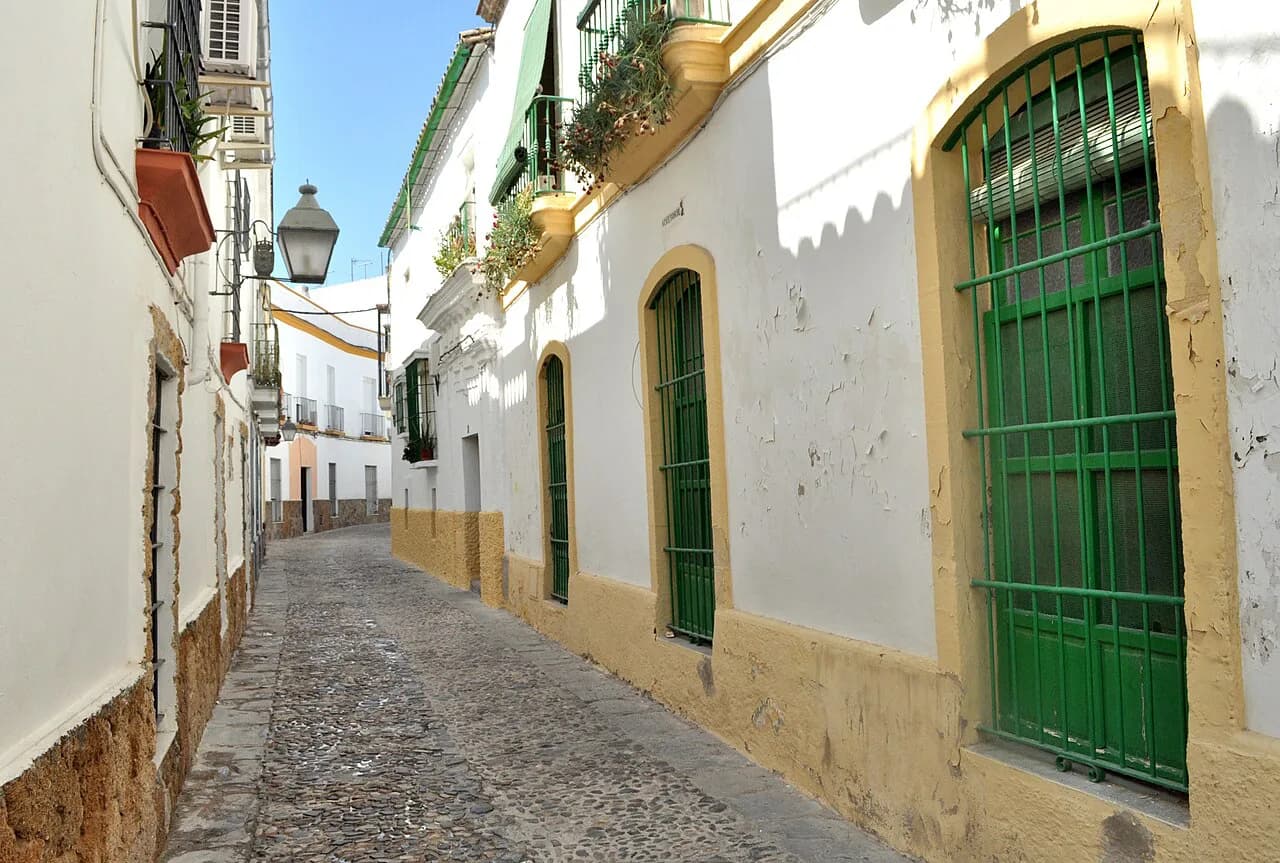
Santiago is the district with the longest flamenco tradition in Jerez, a whitewashed neighbourhood full of peñas and religious brotherhoods. It lies close to the walled core, so you reach it after the lanes around San Mateo rather than looping back to the Arenal. Think of it as a separate eastern quarter rather than another stretch of the central walk.
The streets here are residential, narrow and not obviously signposted, so the simplest approach is to use the churches as bearings rather than seeking a marked route. Allow more time than the distance suggests. Anyone planning to see a performance should look up the individual venue's own programme and ticket arrangement rather than assuming something is on.
Beyond the centre: the Cartuja and the outer sights
The Cartuja de Santa María de la Defensión sits outside the built-up centre, founded as a Carthusian monastery and holding a plateresque façade and a major altarpiece by Zurbarán. Its church mixes late Gothic and baroque work in a way that makes a visit feel quite different from the parish churches in town. That makes it a separate half-day rather than a stop on the central walk.
The Carthusians bred the cartujana horse here for centuries, and their name still attaches to the breed. Without a car the monastery needs planning rather than casual wandering, so check local transport or arrange a lift before you decide on it. It is well worth the detour if you care about Zurbarán more than about keeping to the centre.
Horse culture is the other outer-centre draw, at the Real Escuela Andaluza del Arte Ecuestre. If that is your reason for the trip, the Jerez horse show guide covers how the school's performances and visits are arranged. Our Jerez Attractions: 4 Visitor Guides overview shows how the fortress, the churches, the equestrian school and the Cartuja fit together across a break.
Walking distances and how to order the sights
The central sightseeing area is genuinely walkable, so plan on foot rather than by car. Start at Plaza del Arenal, pass San Dionisio and San Francisco, then take the walled lanes south to San Mateo and on to Santiago. Work westward through the Alcázar and cathedral for the afternoon, and finish at San Miguel near dusk. That order avoids doubling back and keeps the open spaces for the coolest hours.
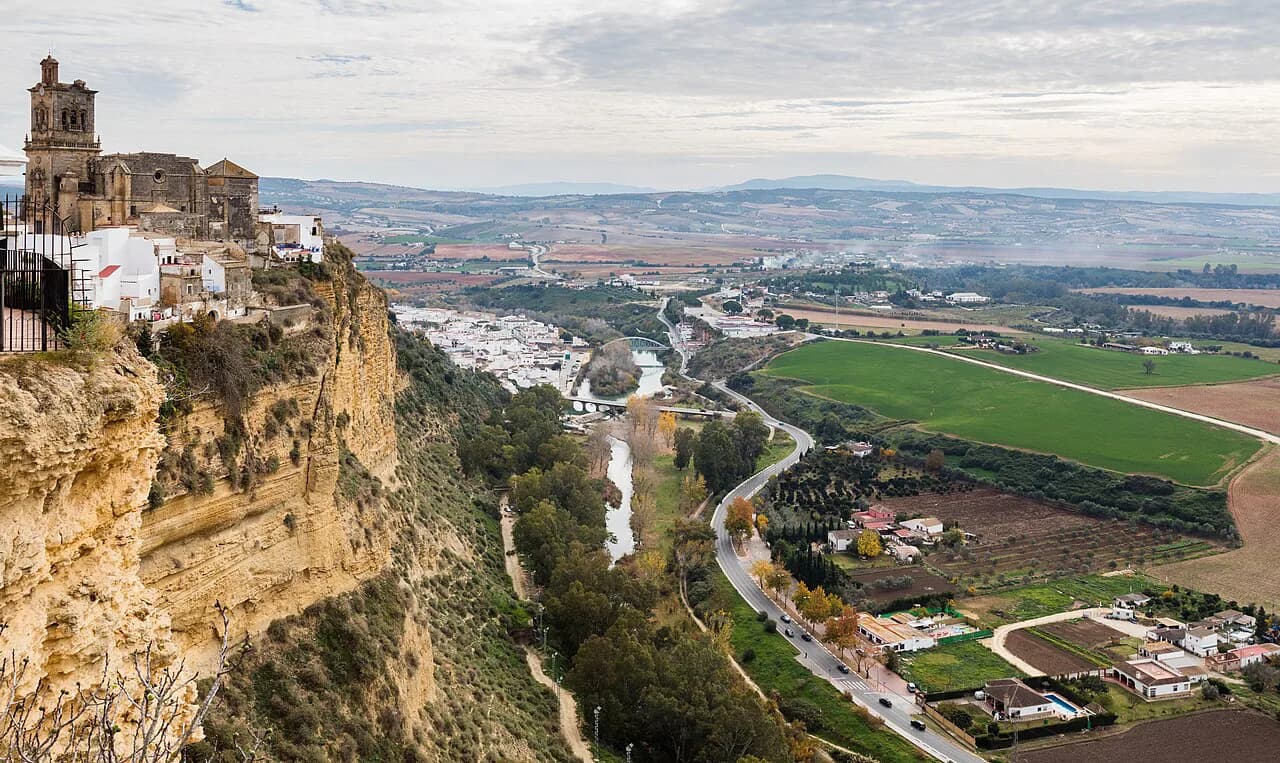
Parking inside the dense old town is limited, and driving between sights is more trouble than walking, so leave the car outside the centre if you have one. Summer afternoons in inland Cádiz province are hot, which makes the morning start worthwhile. If you want a broader base for the day, Arcos de la Frontera and the Sierra de Grazalema lie within reach to the east, though as a separate excursion rather than part of this walk.
Which part of Jerez do you map first?
Start with the Alcázar and cathedral, because everything else in the centre is measured from there. Then give Santiago its own stretch of the afternoon and treat the Cartuja as a separate outing. If you only have one day, the walled core around San Mateo plus the Alcázar will reward you more than a rushed circuit of every church.
Check the local transport for the Cartuja and the current opening times for the Alcázar and cathedral, since none of these are fixed by this page. From the UK, direct flights into Jerez depend on the airline and the season, so look at airport departures for your dates rather than trusting a general timetable. The full Things to Do in Jerez de la Frontera guide picks up the detail on each sight.
Frequently Asked Questions
Can you fly direct to Jerez from the UK?
Some airlines have run routes between UK airports and Jerez, but which carriers and which airports varies by season. Check the departures board for your dates rather than relying on a general list.
What is there to see in Jerez de la Frontera?
The core sights are the Alcázar with its Arab baths and Cámara oscura, the cathedral with its Zurbarán paintings, the church of San Miguel, the walled lanes around San Mateo and San Lucas with the Riquelme and Pemartín palaces, and the Santiago flamenco quarter. The Cartuja de Santa María de la Defensión is outside the centre and needs a separate trip.
Is Jerez walkable for a short break?
The central sights sit within a compact area that you can cover on foot. The Alcázar, cathedral, Arenal and San Miguel all lie within a short walk of each other, though the lanes are narrow and the pavements uneven. Wear shoes you can walk in and avoid the hottest part of the afternoon.
Sources
Notes for your next Spanish town break
Optional updates to our guides.
You might also like
Continue reading
More guides you'll find useful