Jerez Old Town: Streets, Plazas and Route Through the Historic Centre
Walk Jerez old town from El Gallo Azul and Calle Larga to Plaza del Arenal, the Alcázar quarter and Barrio de Santiago, with the streets that shape the centre.
On this page
Jerez old town fits into a single unhurried day, and the free pleasure of it is the walk itself: from El Gallo Azul down Calle Larga to Plaza del Arenal, then into the Alcázar quarter and on to Barrio de Santiago. The monuments along the way are the punctuation, not the whole story. This guide orders the streets and plazas so you know what costs nothing, what needs booking, and where the centre's texture changes from shopping street to palace walls to flamenco neighbourhood.
The historic centre is small enough to cross on foot, which makes it a good fit for a short Andalusian break, and it pairs naturally with the wider set of things to do in Jerez if you want to add a bodega visit or a horse show. Plan the street walk for the cooler ends of the day, because this is an inland town and the middle of a summer afternoon is punishing.
What the old town covers and how the parts fit together
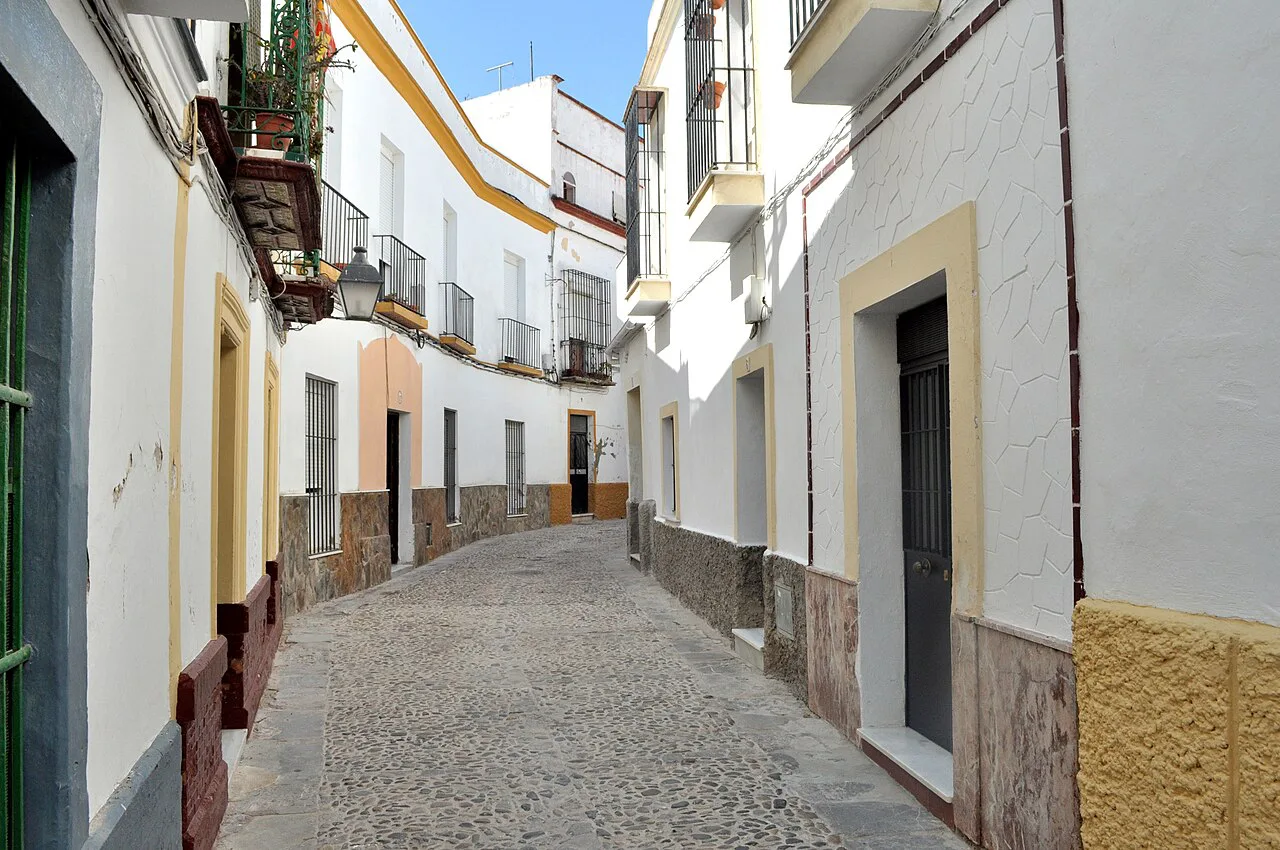
Jerez's historic quarter mixes buildings from several eras, with Phoenician, Roman, Muslim and Christian layers sitting close together, and the result is a centre where a baroque palace can stand a few steps from an Almohad wall. It helps to think of it in three bands: the commercial spine of Calle Larga and Plaza del Arenal, the fortified Alcázar and cathedral block just north of it, and the eastern neighbourhood of Santiago. Walk them in that order and the town reads chronologically.
The Casco Histórico is best treated as a pedestrian route rather than a checklist of separate sights, since the pleasure lies in the connective streets. Start at El Gallo Azul, follow Calle Larga, cross Plaza del Arenal, then work north and east. Keep the Jerez map open on your phone for the small lanes around the Alcázar, where the street pattern tightens and signposts thin out.
Start at El Gallo Azul and Calle Larga
El Gallo Azul is the natural starting point because it is a photogenic landmark and sits at the head of the pedestrianised Calle Larga, the street where the city's main shops and commerce are concentrated. Walk the length of it at street level: this is the everyday centre, busy with shoppers rather than sightseers, and it gives you the town's commercial pulse before the monuments begin. It is also the easiest stretch for anyone with limited mobility, since the traffic is kept away.
The street runs roughly from El Gallo Azul towards Plaza del Arenal, so you get a clean line into the historic core without backtracking. Allow the walk itself to set your pace rather than treating Calle Larga as a corridor to be cleared. On a hot day this stretch offers the most shade and the most places to pause, which makes it a sensible first leg.
Plaza del Arenal and the streets around it
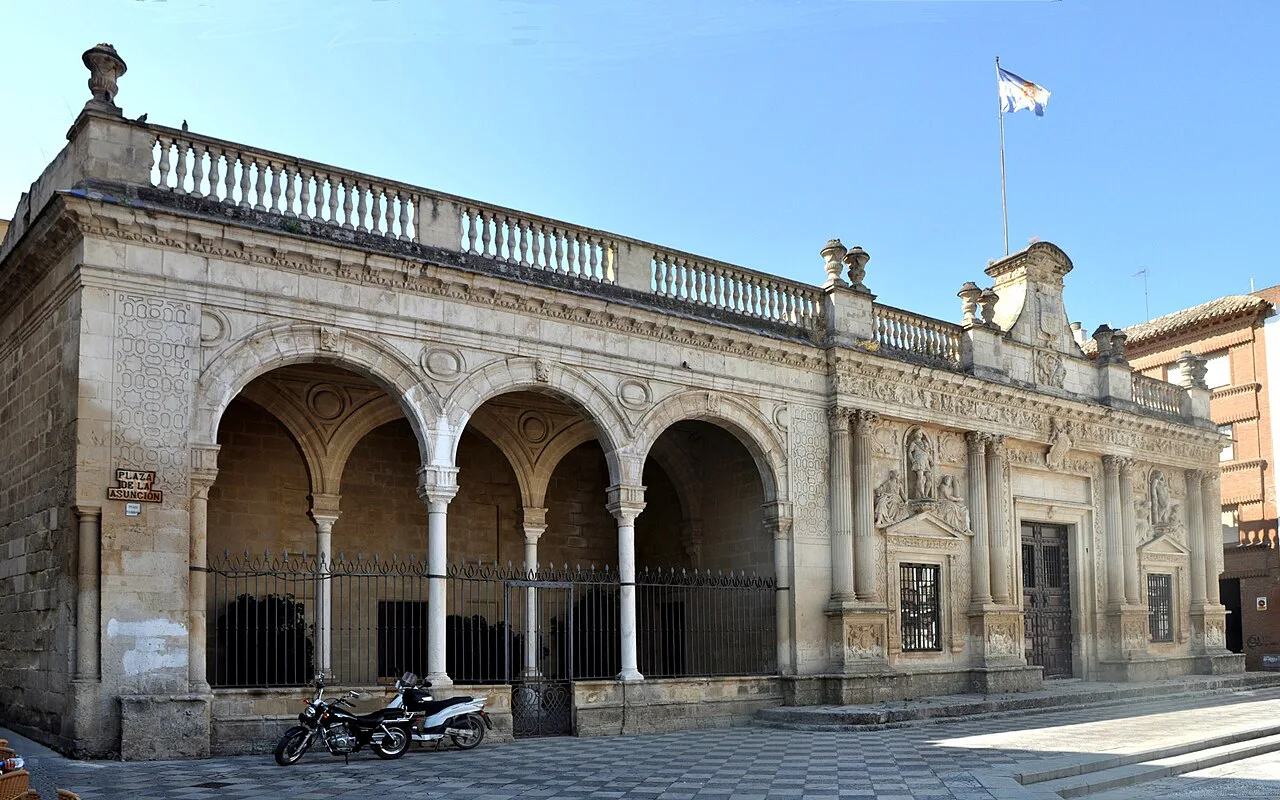
Plaza del Arenal is the city's principal square and takes its name from its former use as ground for jousts, battles and clashes between knights. At its centre stands the monument to Miguel Primo de Rivera by Mariano Benlliure, paired with a fountain of angels and dolphins. The square is ringed by terraces, so it works as the natural halfway pause on the walk, and its open centre is where the heat is least forgiving at midday.
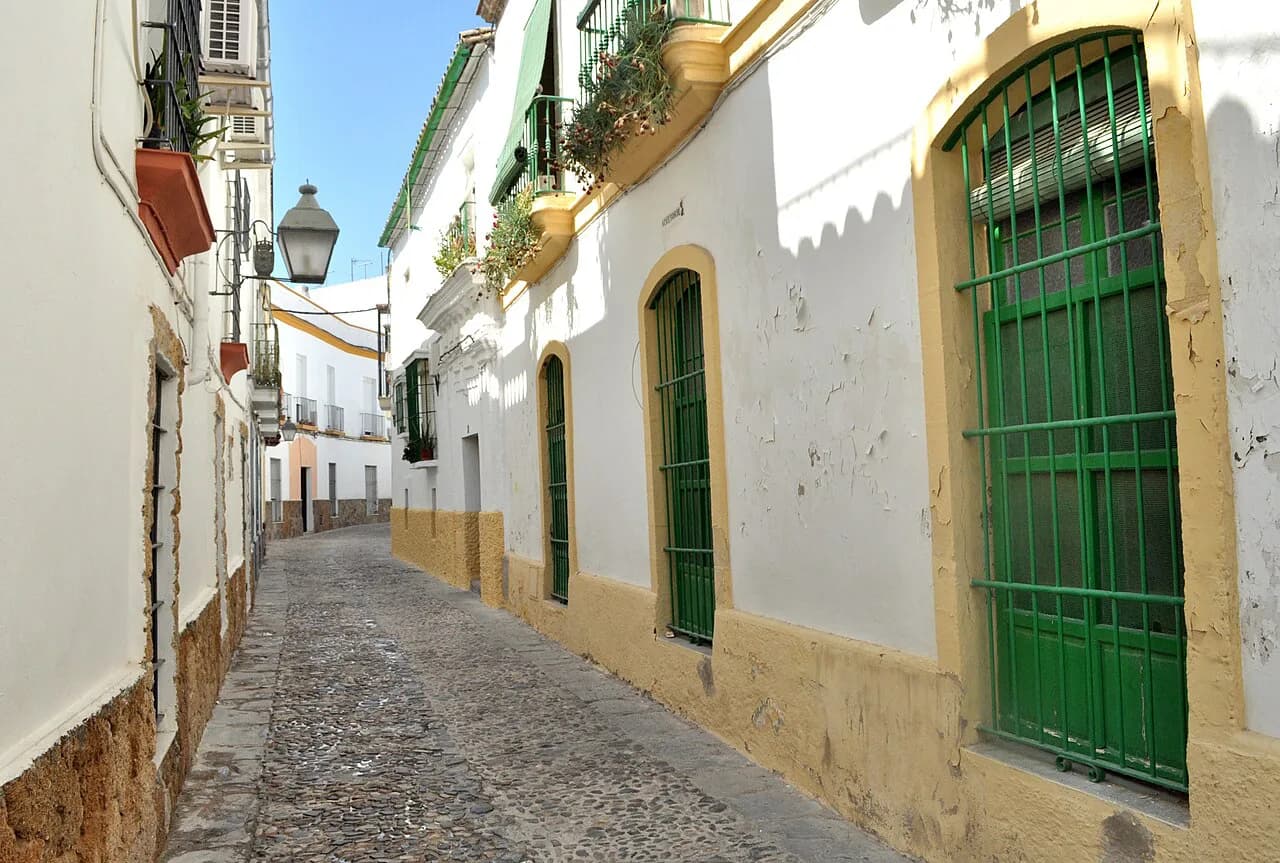
From Arenal, the surrounding lanes give you the centre's quieter corners and the whitewashed houses and orange trees that define the old town's look. Wander without a fixed target for ten or fifteen minutes before heading north towards the Alcázar. This is the part of the route to leave loose, because the reward is the small squares and facades rather than any single named sight.
The Alcázar quarter: Puerta de la Ciudad, mosque, baths and gardens
The Alcázar is the one monument that justifies building the walk around it, because it is among the very few surviving Almohad complexes in Spain. The defensive enclosure of walls, towers and gates holds a fortress-palace, a mosque, Arab baths, gardens and courtyards, built in the twelfth century as a residence for the Sevillian caliphs and enlarged and reworked up to the eighteenth century. Entry begins through the twelfth-century Puerta de la Ciudad.
Inside, the sequence runs past the eighteenth-century oil mill to the twelfth-century mosque, with its minaret, ablution basin and mihrab. The parade ground separates that zone from the baroque Palacio de Villavicencio, which holds a nineteenth-century municipal pharmacy and, in its tower, a camera obscura for looking out over the city. Beyond lie the palace gardens and the Arab baths with their vaults pierced by star-shaped openings, plus the Puerta del Campo, the octagonal tower, the Almohad palace of Doña Blanca with its pool, the fifteenth-century Torre del Homenaje and the cistern.
The full circuit is the most substantial stop of the day, so give it the coolest part of your schedule and carry water. Note that it sits beside the leafy park of La Alameda Vieja, which gives you a shaded approach and a place to sit afterwards.
Around the cathedral and its free-standing tower
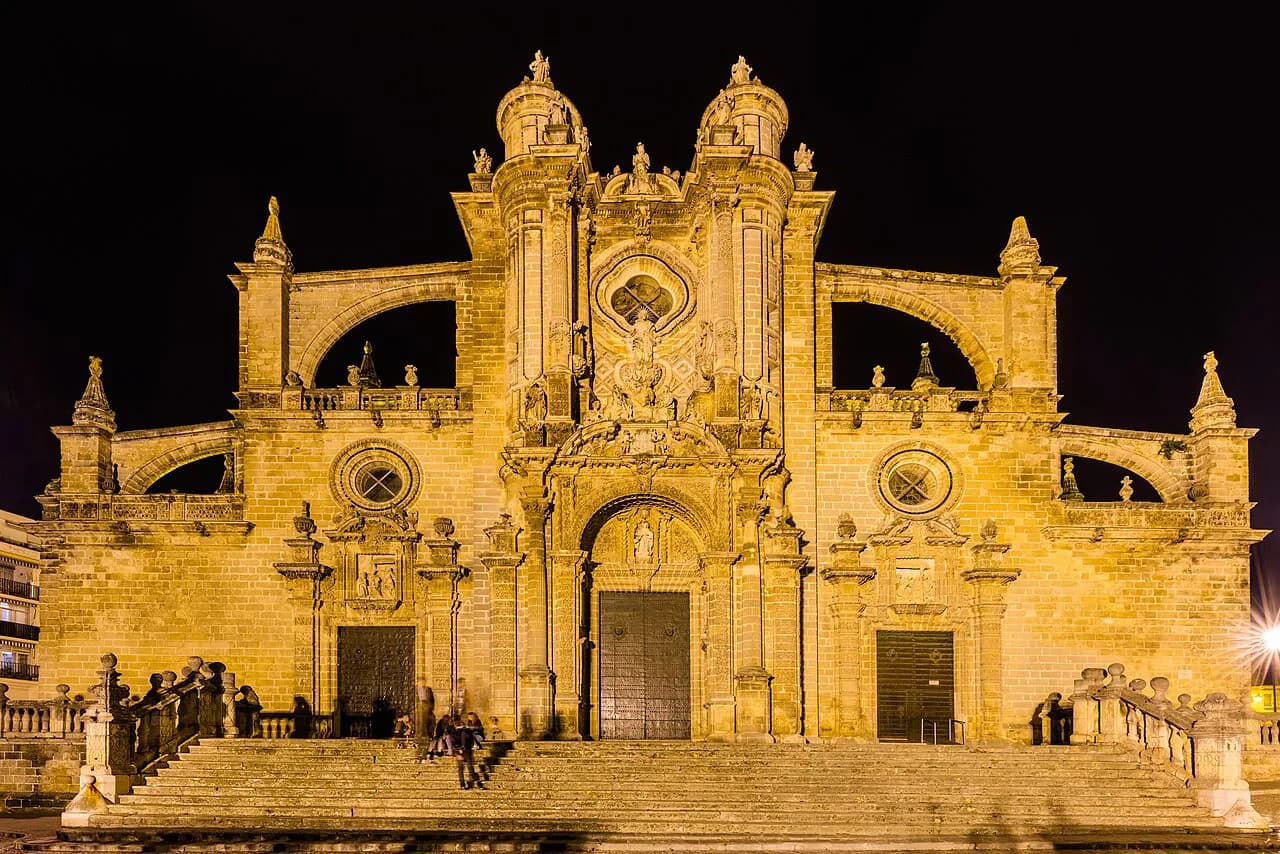
The Catedral de Jerez was built between 1695 and 1778 as the collegiate church of San Salvador and only became a cathedral in 1980, when the city gained episcopal status. The building mixes Gothic, baroque and neoclassical elements, with a large dome, flying buttresses and three richly decorated baroque portals. Its tall free-standing tower is Gothic at the base and baroque above, and is said to have been raised on the minaret of a former mosque.
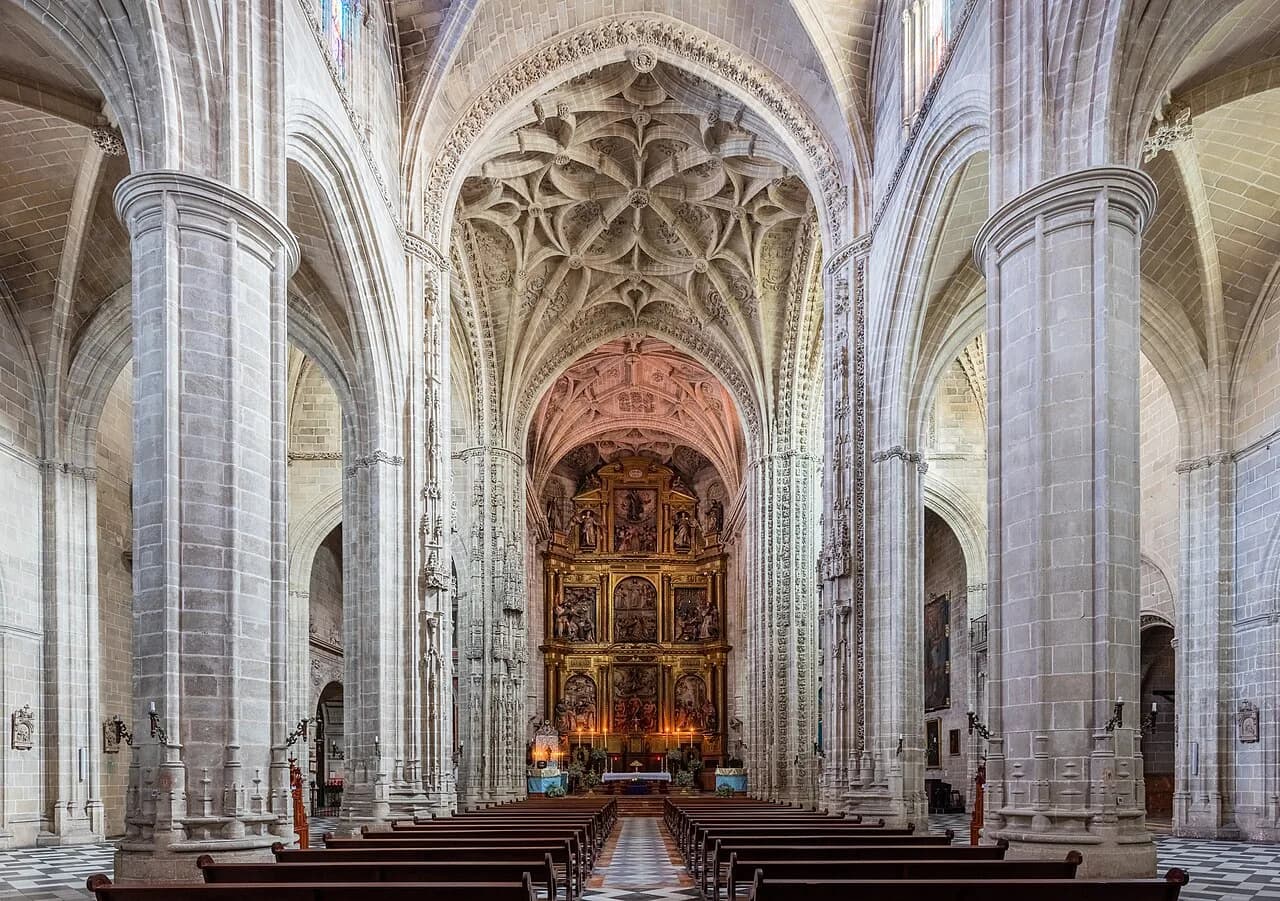
Inside, the rectangular plan holds five naves, with chapels including the Sagrario, the Inmaculada and the Ánimas, which houses the fourteenth-century Cristo de la Viga. The cathedral museum holds important paintings by Zurbarán. Pair the visit with the nearby streets rather than treating the cathedral in isolation, because the block around it, with the Alcázar a short walk away, is the historic centre's densest concentration of monuments.
Tourist visits can be interrupted when the cathedral is needed for mass, so a flexible slot in the middle of the day is often easier to rearrange than a fixed early booking. Confirm current visiting times with the cathedral itself before you travel.
The Claustros de Santo Domingo
The Claustros de Santo Domingo began when Alfonso X gave the Dominicans an Islamic military building after the conquest of 1264, and the monks funded the growing convent from their orchards. After the church lands were sold off, the cloisters passed through winemaking families and later Rumasa before coming into municipal hands, and the city reopened them in 2012. The great cloister is pure Gothic, built between 1460 and 1500 and now used for concerts, with the upper level added between 1515 and 1546.
They sit slightly off the main spine of the route, which is precisely why they reward the detour: the arcades give you a quiet, shaded space in the middle of the old town. Visit them on the way between the cathedral block and Santiago rather than as a separate trip. Their programme of concerts and events makes them worth checking before you go, since a performance can change how much of the cloister you see.
Barrio de Santiago and the flamenco side of the centre
Barrio de Santiago is the old town's flamenco quarter, a neighbourhood where the art is woven into the fabric of the streets rather than staged for visitors. Walking through it after the monument-heavy middle of the route changes the tone of the day: this is residential Jerez, with parish life centred on its church and a flamenco culture the city is known for well beyond Andalusia. Treat it as a place to walk slowly and look at, not a ticketed attraction.
The neighbourhood closes the suggested route neatly, because it lies east of the historic core and can be left until the light softens. If you have time left in your break, the same city holds the Real Escuela Andaluza del Arte Ecuestre and the bodegas clustered near the Alcázar, including González Byass with its Tío Pepe brand, whose cellars can be visited.
Church of San Dionisio and the other historic churches
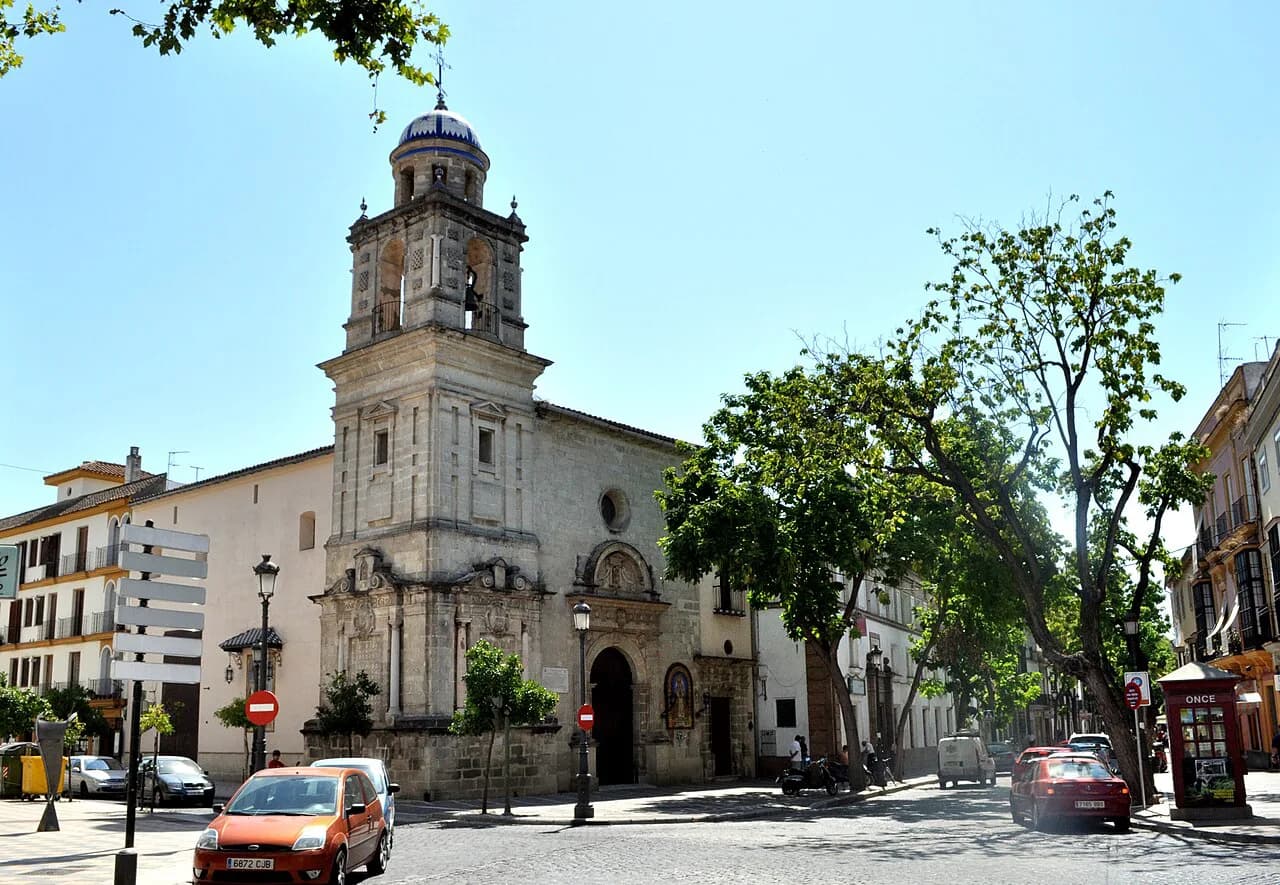
The Iglesia de San Dionisio is the standout among the centre's churches, a Gothic-Mudéjar building that shows how Christian architecture absorbed Islamic craft traditions after the reconquest. Beyond it, the old town holds a dense scatter of churches and convents worth stepping into when the doors are open: they are the reason the skyline of the centre is a run of towers rather than a single dome. Each is an active parish, so visiting hours bend around services.
How long the walk needs and where to break it
The street-and-plaza route from El Gallo Azul through Calle Larga, Plaza del Arenal and on to Santiago is a half-day on foot at a relaxed pace, and the Alcázar and cathedral add real time on top. A sensible shape for a day is the commercial spine in the morning, the Alcázar through the hot middle hours, the cathedral and cloisters afterwards, and Santiago late in the day. That order keeps you indoors when the sun is strongest and outdoors when the light is kindest.
Break the walk twice: once at Plaza del Arenal, where the terraces make a natural stop, and once in the shaded arcades of Santo Domingo. If you only have an afternoon, choose the Alcázar and Calle Larga and leave the cathedral and Santiago for a return. The wider Jerez Attractions collection is the place to check which ticketed sights you want to prioritise before committing.
Practical trade-offs: heat, closures and timing the monuments
This is an inland Andalusian town, so summer midday heat makes the open squares of Arenal and the Alcázar courtyards hard work between roughly two and five in the afternoon, while the narrow lanes of Santiago stay cooler and shadier. Churches and shops in the centre keep Spanish hours, with many closing for the siesta and reopening in the evening, which is why the middle of the day is best given to a single ticketed monument rather than a shopping wander.
Monday closures are a real risk for museum-style sights, and the cathedral also closes to tourists when mass is celebrated. Treat any opening time, ticket price or free-entry slot you see quoted online as needing confirmation with the monument itself. Use the Jerez Map to plan the order of stops, and build your day around the two or three sights you most want rather than trying to see everything.
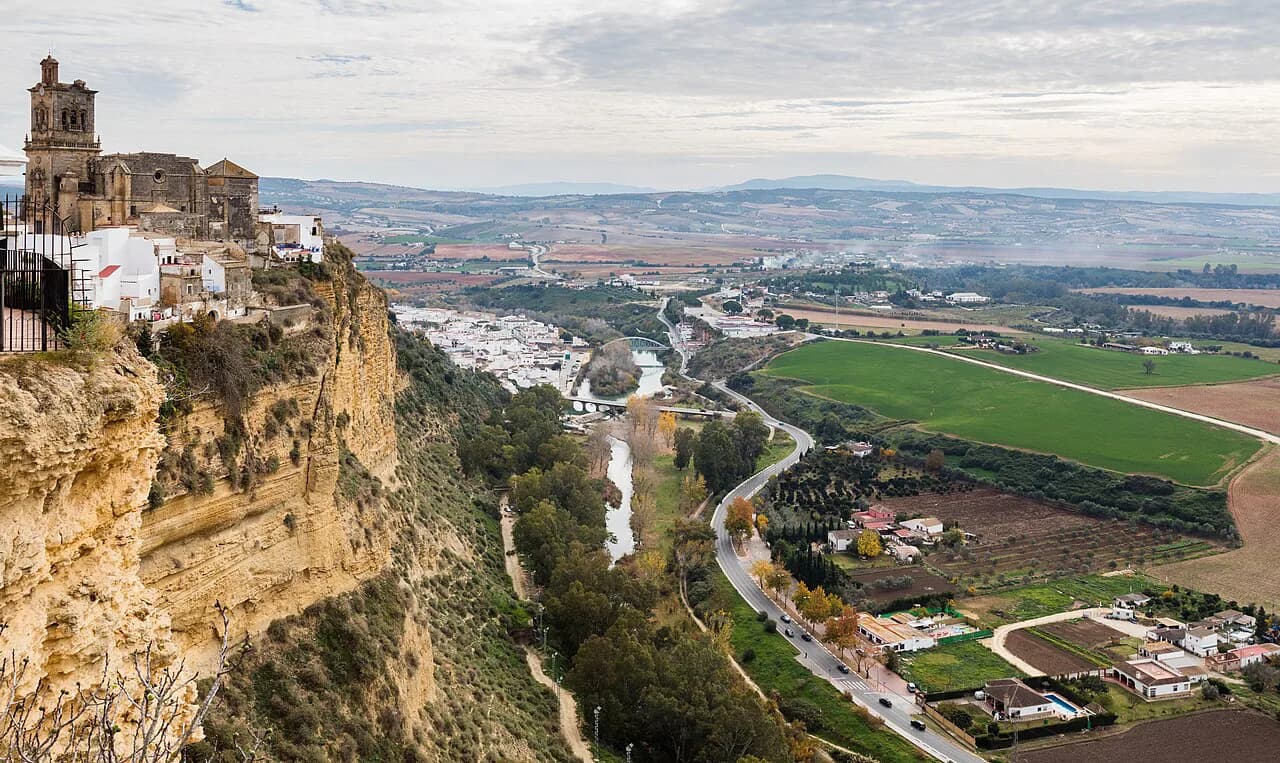
Beyond the centre, Arcos de la Frontera sits above the Río Guadalete on the edge of the Sierra de Grazalema and is one of the easier towns of the province to add on. Make it a half-day addition rather than a replacement for the old town walk.
Which part of the old town to build your day around
If you only do one thing, make it the Alcázar, then let Calle Larga and Plaza del Arenal fill the hours around it. The street walk costs nothing and gives the town its shape; the monuments give it its history. Book the Alcázar and cathedral for the hours you actually want, and leave Santiago and the cloisters loose.
Group the rest of your plans around the same centre so you are not crossing town repeatedly, and put the heat-sensitive squares early or late. That way a short break in Jerez feels like one continuous walk rather than a series of separate appointments.
Sources
Notes for your next Spanish town break
Optional updates to our guides.
You might also like
Continue reading
More guides you'll find useful