
Campo de San Francisco, Oviedo: Oviedo's Central Park

The Campo de San Francisco is Oviedo's central public park and the obvious pause in any walk between the cathedral and the Fontán. It covers around 90,000 square metres, of which 55,000 are green space, and locals call it El Campo. This guide covers where it sits, what to hunt down inside it and how much of a short break it deserves.
Access is free, and the park fills the middle of the Asturian capital rather than sitting on its edge, so it works as a route rather than a detour. The city's parks service maintains it and publishes a contact address and telephone number for the gardens.
What the Campo de San Francisco is and why Oviedo calls it El Campo
The park began as the orchard and vegetable garden of a Franciscan monastery that stood where the Junta General del Principado now has its seat. In 1534 the scattered plots were agreed into a single public space, and later centuries turned the informal woodland into something closer to an English landscape park.
The nickname El Campo is simply the old word for that monastic field, and it is what people in Oviedo say. The park is also treated as the city's botanical garden: it holds 951 trees, some roughly 300 years old, with a few reaching past 40 metres.

Where the park is in central Oviedo and how to reach it
The address is Campo de San Francisco, in the 33007 postcode of Oviedo, right in the commercial and monumental centre of the city. If you are working through the city's sights on foot, the park is the natural hinge between the old quarter around the cathedral and the streets towards the Fontán.
Buendía's Oviedo blog runs through bus, train and car approaches to the park, which is useful if you are arriving from outside the centre. Its position means you can also simply walk in from almost any central street.

What to see inside: sculptures, Mafalda and the Clarín monument
The park holds 18 sculptures, all dedicated to people connected with Oviedo, which is why it gets described as an open-air museum. The most popular is Mafalda, Pablo Irrgang's figure of Quino's character, unveiled in 2014 when Quino received the Premio Príncipe de Asturias.
Other pieces include a bust of the Marqués de Santa Cruz and a memorial to the cartoonist Alfonso Iglesias. Spain.info singles out the monument to the writer Clarín among the park's principal monuments.
Walking the paths to tick off the sculptures is the main reason to linger rather than pass through. Each tree carries an identification plate, so a slow circuit doubles as a lesson in the species on show.
Buildings and fountains: the Quiosco del Bombé, El Palomar, La Granja and the Fuente de las Ranas
Several small buildings of different styles sit inside the park: El Palomar, La Granja, the Quiosco de la Música, El Escorialín and the Quiosco de La Chucha. Of the ornamental fountains, the Fuente de las Ranas and the Fuentona are the most elegant, while the Fuente del Caracol is the best loved.
The Quiosco del Bombé, an octagonal bandstand on a stone podium, was commissioned in 1887 by Leopoldo Alas Clarín while he was a city councillor. The parks service describes the municipal band playing there on Thursdays and Sundays in July and August, accompanying the dances that take place in the park, so time a summer visit around that if music in a park appeals.
The Romanesque doorway ruins and the trees of the botanic-style garden
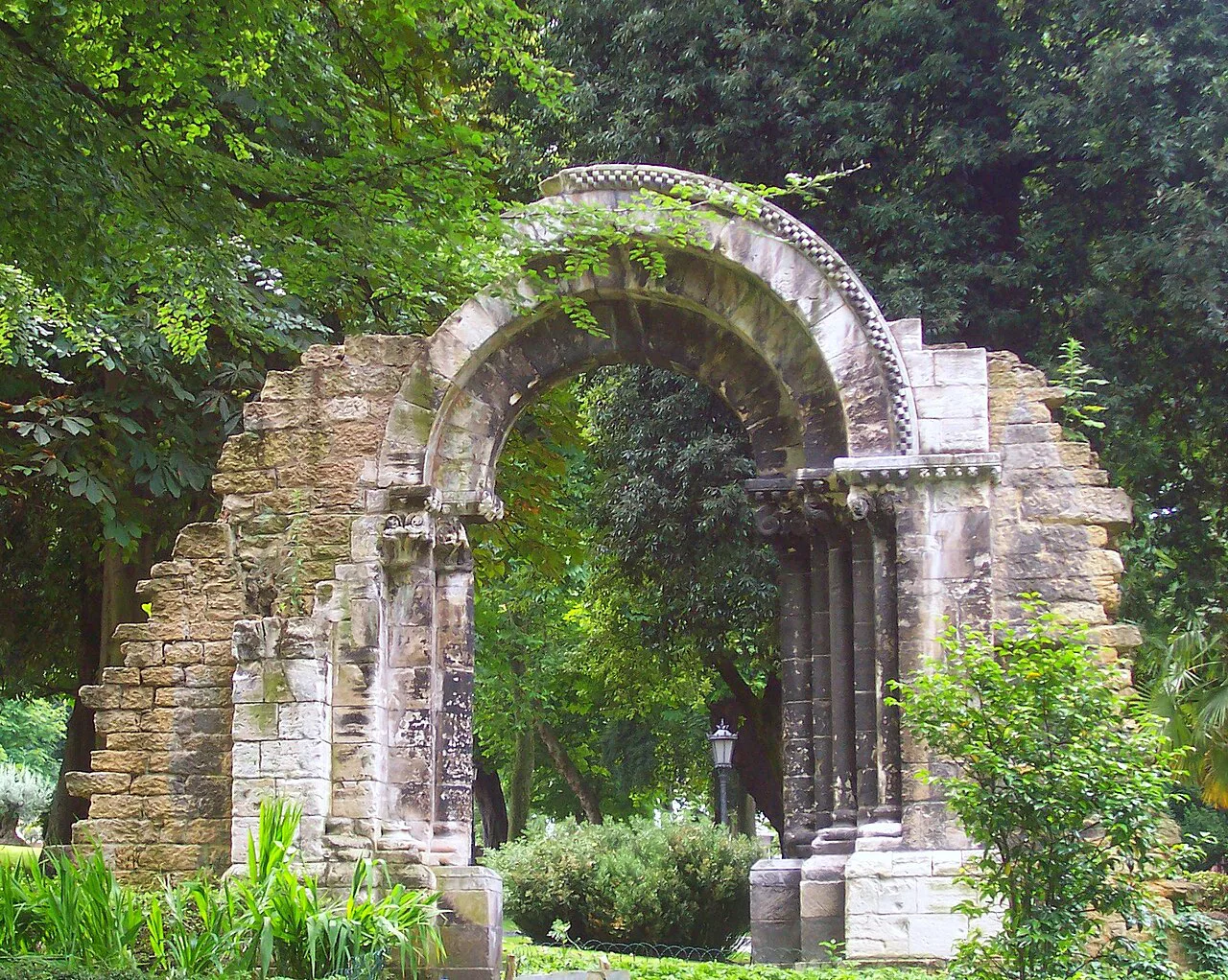
Among the trees stand the ruins of the Romanesque doorway from the old church of San Isidoro, an easy detail to walk past. Spain.info lists these remains alongside the Clarín monument as the park's standout features, so look for the carved stone rather than assuming everything here is nineteenth-century landscaping.
The planting is broad rather than exotic: oaks, horse chestnuts, limes, plane trees, maples, poplars, ashes, holm oaks, laurels, magnolias and cedars. The age of some specimens, roughly three centuries, is the strongest argument for a slow lap rather than a shortcut across the grass.
The duck pond, peacocks and the small sports facilities
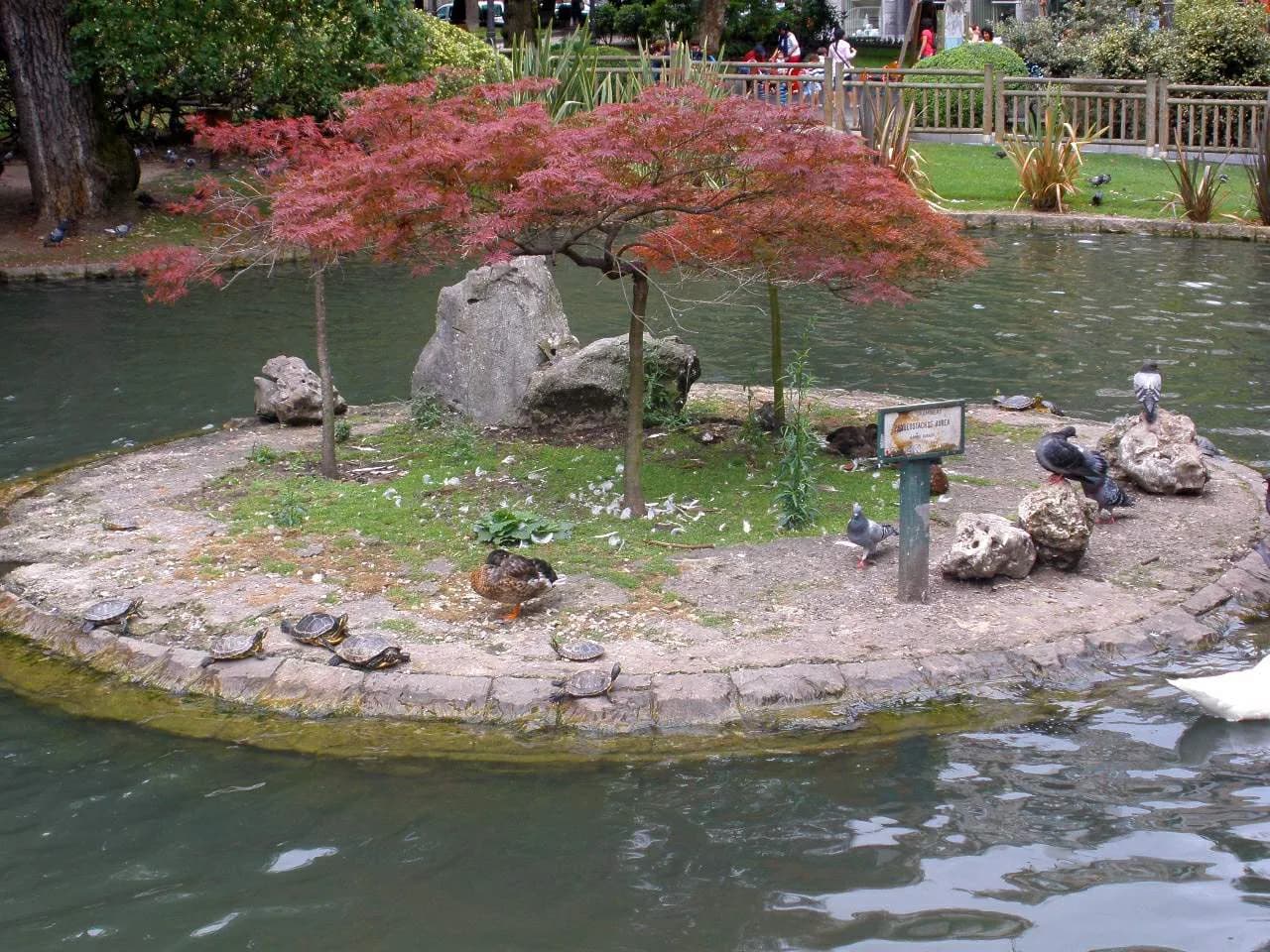
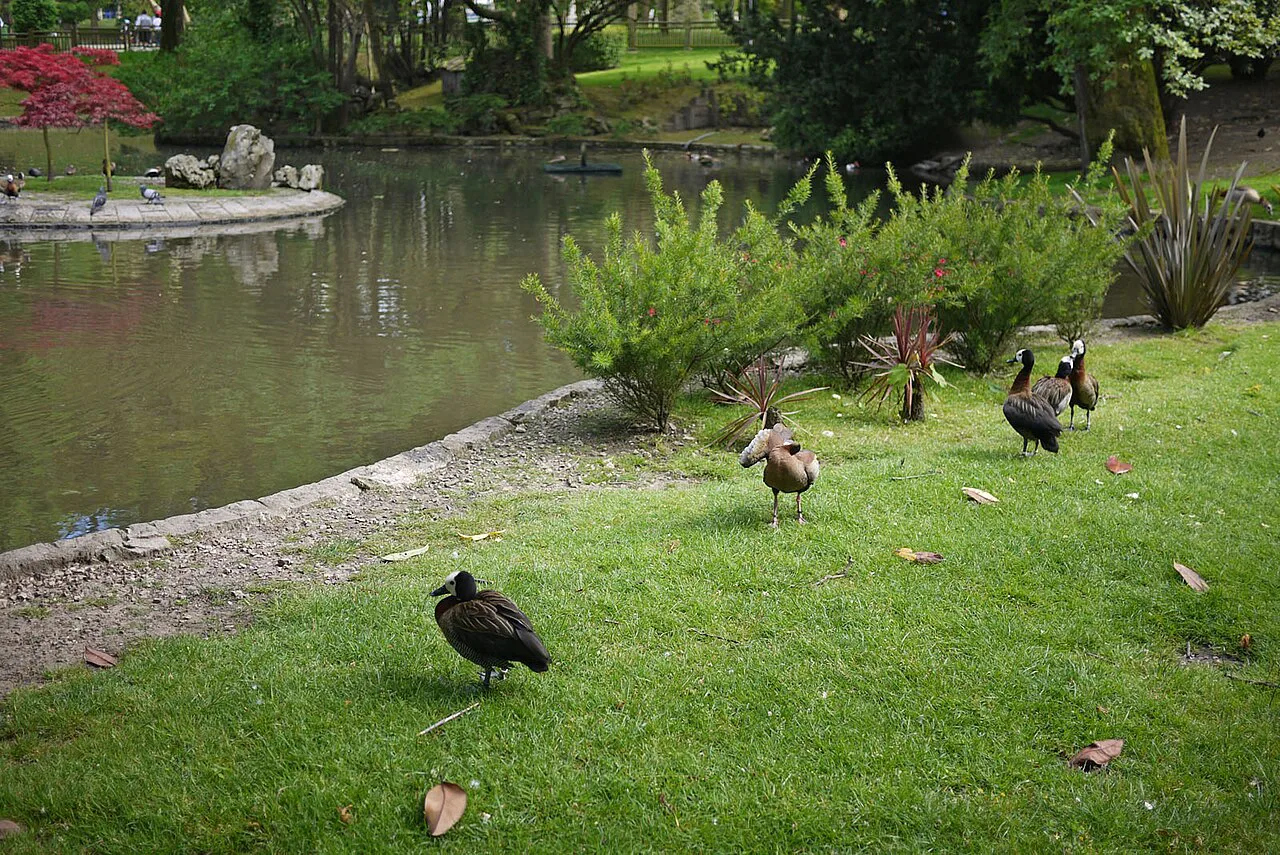
The estanque de Los Patos holds ducks, pigeons and turtles, and peacocks grow and breed freely by the pond. The birds are the reason children tend to treat El Campo as a destination rather than a passage.
For something more active, the park has a skatepark, an outdoor gym, ping-pong tables and a basketball court, all part of the public gardens. Bear in mind that these are neighbourhood facilities, busiest after school and at weekends.
How long a visit needs and how to fit it into a short break
Allow about an hour for a proper circuit that takes in Mafalda, the Quiosco del Bombé, the Romanesque doorway and the pond, and rather less if you are simply crossing the centre. The park's size means you can cut straight through or lose an afternoon, depending on whether you follow the winding paths or the broad promenades.
Oviedo's parks service publishes the park's own pages, including a virtual tour, and the gardens team can be reached for current information on access and any works. That is the place to confirm arrangements before a themed visit rather than relying on older write-ups.
What is within a few minutes' walk: cathedral, Fontán, Campoamor and the fine arts museum
The Catedral de San Salvador de Oviedo is about 500 metres away, close enough that the park and the cathedral make one continuous walk. The cathedral's Gothic core and its Romanesque chamber reward a separate, unhurried stop rather than a glance on the way past.
The Mercado y Plaza del Fontán sits a similar five-minute distance, as do the Teatro Campoamor and the university building. The Museo de Bellas Artes de Asturias, spread across three buildings in the old quarter, is roughly 600 metres off and makes a sensible rainy-hour pairing with the park.
Further out, Oviedo's pre-Romanesque churches are the strongest reason to leave the centre: Santa María del Naranco and San Miguel de Lillo stand on the hillside above the city, and San Julián de los Prados sits closer in. All three need their own transport or a taxi and a check of opening arrangements before you set out.
Is El Campo worth building into your Oviedo walk?
Yes, if you treat it as the spine of a central walk rather than a separate outing. Enter from the cathedral side, hunt down Mafalda and the Romanesque doorway, and leave by the Fontán for the market square, with an hour in hand if you want the fountains and the bandstand properly.