
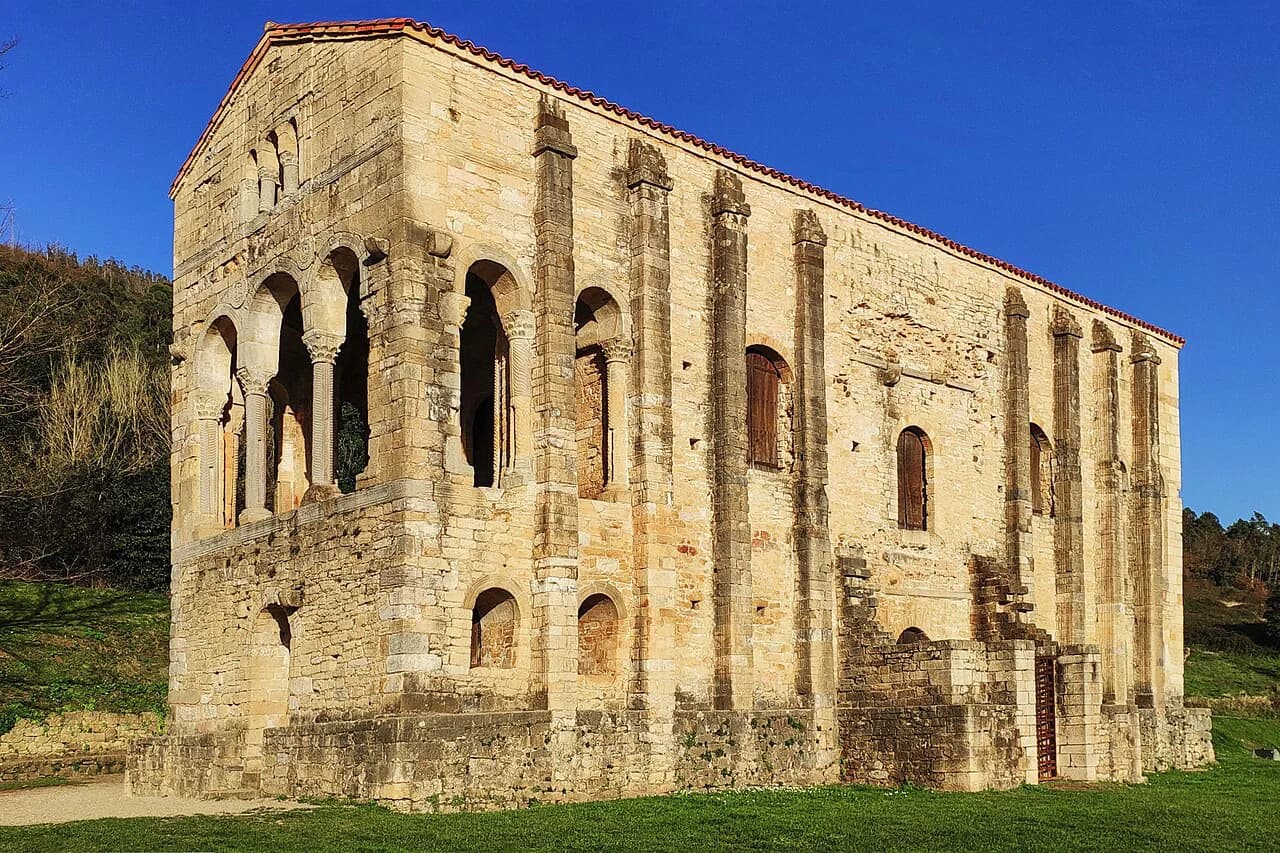
Santa María del Naranco: how to visit Oviedo's hillside church

Santa María del Naranco is a ninth-century building on the Monte Naranco hillside above Oviedo, built under Ramiro I as a palace hall and later used as a church, and it forms part of the Asturian Pre-Romanesque World Heritage listing. A visit is always guided except on Mondays, when access is free and self-guided, and the ticket covers both Santa María and the nearby San Miguel de Lillo. This page sets out how to reach the hill, what you see inside and out, the ticket rates, the seasonal timetable and how the group capacity shapes your timing.
Treat it as a half-day outing rather than a quick photo stop: there is a sloping path from the car park, a fixed start point at Santa María and a set group size, so the practical details matter as much as the architecture.
What Santa María del Naranco actually is
The building began as a royal hall in the kingdom of Asturias, raised on the slope of Monte Naranco within sight of the city, and only later served as a church. Its survival alongside San Miguel de Lillo makes it one of the clearest expressions of Asturian Pre-Romanesque architecture, which is why the pair sits on the World Heritage list. Visitors come for the exterior proportions and the carved interior rather than for furnishings or displays.
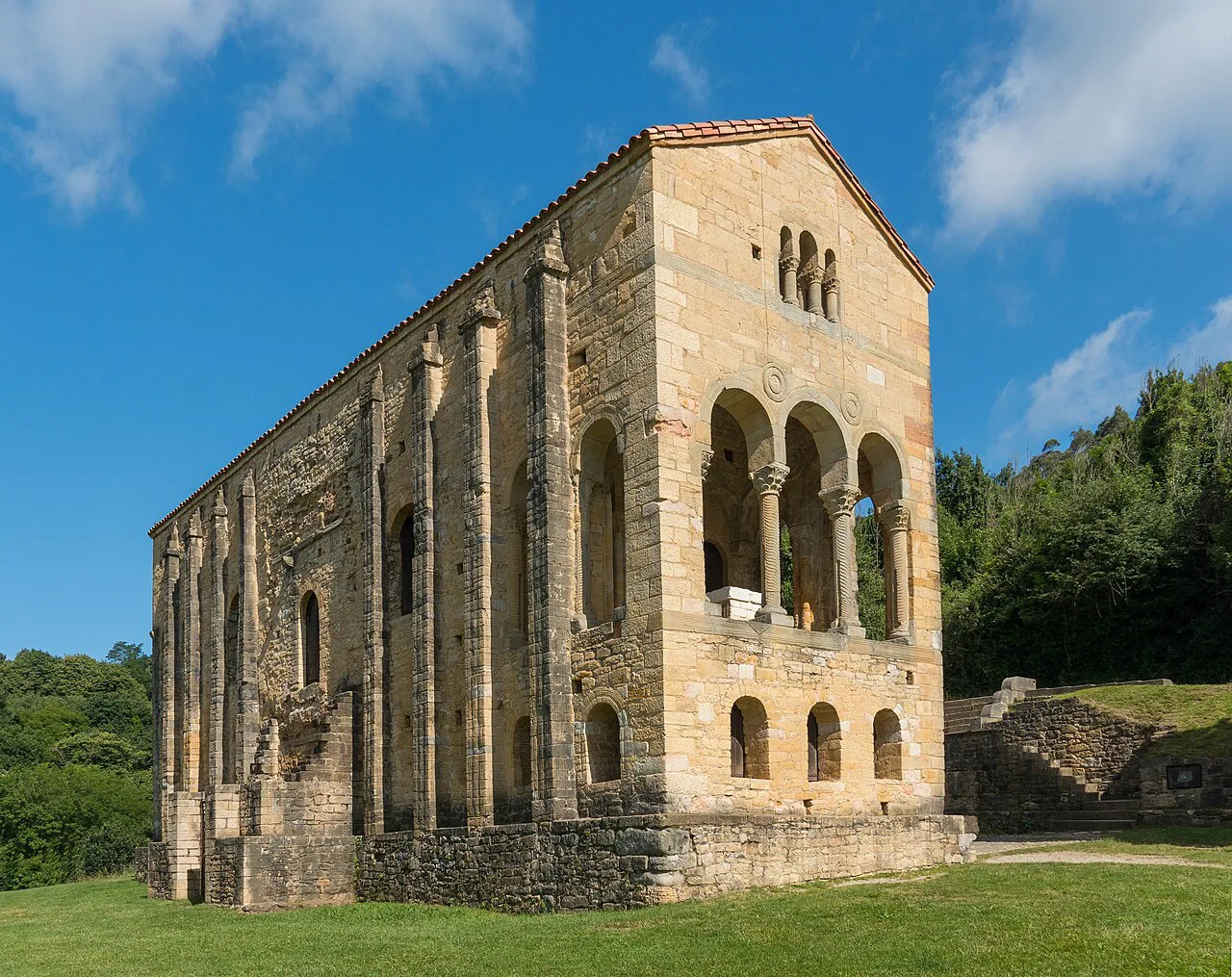

Where it is on Monte Naranco
Both monuments stand on the Monte Naranco hillside just outside central Oviedo, and the visit itself begins at Santa María. From the car park at the base, a walking path of about 300 metres with a noticeable gradient leads up to the start point, signposted for visitors. That approach is part of the trip, so allow for it before your slot rather than arriving at the last minute.
Beside the church stands the Centro de Recepción e Interpretación del Prerrománico Asturiano, an interpretation centre where you can read up on the Pre-Romanesque buildings before or after your visit. It gives useful context on what you are about to see inside Santa María.
How to get there from Oviedo
The urban bus line A runs up to the Naranco monuments and serves the hill from Oviedo. If you drive, park in the large free car park for cars and coaches at the base of the monuments and walk up from there.
Walking up from the city is feasible and takes under an hour on the hillside roads, but the climb is steady and the reward is the same path from the car park. Whichever way you arrive, plan to present your ticket fifteen minutes before your booked slot; a ticket does not admit you to a later pass.
Do not rely on a printed timetable for the bus: check the current line A schedule and its stops with the operator on the day, since frequency and last departures are the practical risk when you are up on the hill.
What you see on the visit
The visit starts at Santa María and takes in the exterior and interior of the building before moving on to San Miguel de Lillo, a short distance away; entry to both is covered by the same ticket. The tour is guided every day except Monday, when access is free and self-guided, and runs about forty minutes.
Because the two churches are visited together and the groups move with a guide, you cannot wander off and rejoin later. Look at the interior carving and the exterior arcades while the guide is talking, and save photographs for the moments the group stops.
Tickets and rates
The standard individual ticket is 5 €, and groups of twenty or more pay 4 € with prior booking; schoolchildren aged 8 to 14 pay 3 € and school groups accompanied by a teacher pay 2 € with prior booking. Payment is accepted in cash and by bank card, and the general ticket is also sold at the ticket desk at Santa María, where groups form.
Tickets are bought at the start of the visit, at Santa María del Naranco, and booking is not required for general passes, though online purchase is available for certain slots. Groups of more than twenty must book in advance by phone, WhatsApp or email.
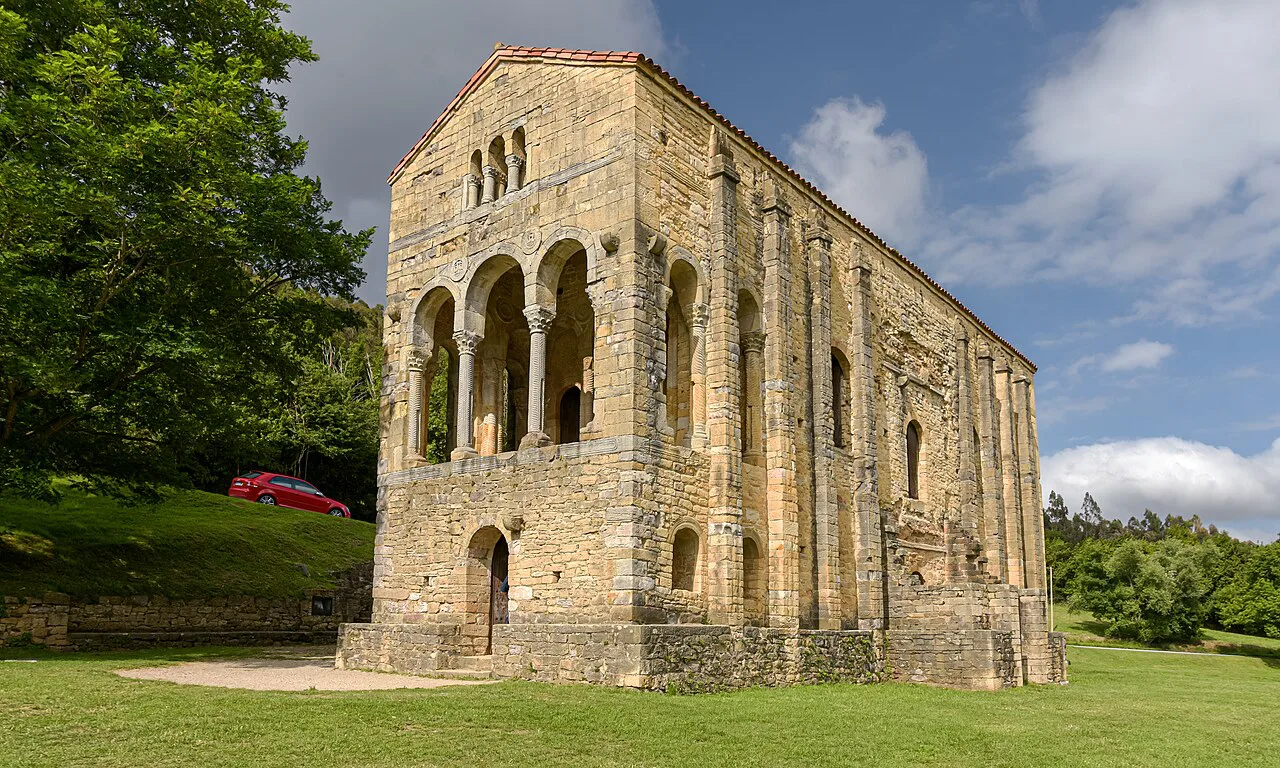

Opening seasons, times and closure dates
From 1 April to 30 September the monuments open Tuesday to Saturday from 09:30 to 13:00 and from 15:30 to 19:00, and on Sundays and Mondays from 09:30 to 13:00. From 1 October to 31 March the hours become Tuesday to Saturday 10:00 to 14:30, with Sundays and Mondays 10:00 to 12:30. The midday gap in summer is real, so do not plan a visit across it.
The monuments close on 1 and 6 January, 8 and 21 September and 25 December every year, which rules out those dates regardless of season. Online summer sales are limited to the 11:00 and 17:00 slots, and winter online sales to 11:30, so the booking page is worth opening before you fix a day.
Monday: free access and a different visit
Monday is the day the site works differently: entry is free and access is self-guided rather than led by a guide. You still pay nothing but you lose the commentary, so if you want the explanation of the building's history, choose another day.
Mondays also run shorter opening hours than midweek in both seasons, morning only, which narrows the window if you are fitting the hill around other sights in Oviedo. A free Monday morning combined with a walk back down into the city is the sensible shape for that day.
How long to allow and when to go
Budget around forty minutes for the guided visit itself, plus the walk up the 300-metre path and time at the interpretation centre, so a comfortable half morning covers it. The guided groups are capped at 25 people per pass, which means waiting is normal at busy periods, especially in summer.
Arriving early in the day, or outside the middle of summer, reduces the chance of standing in line for the next group. If you are on a tight schedule, take a morning slot and treat the afternoon as uncommitted rather than booking something immediately after.
San Miguel de Lillo, included on the same ticket
San Miguel de Lillo stands a short walk from Santa María and is visited on the same pass, so there is no second ticket to budget for. The building was intended as a church from the outset, unlike Santa María, and the pair together show the range of the Asturian Pre-Romanesque style.
Because the group moves between the two buildings with the guide, plan your photography and reading around the stops rather than expecting free time between them.
Practical trade-offs
The main physical consideration is the sloping path from the car park to the start of the visit, which comes before any of the architecture. If anyone in your group finds gradients difficult, allow extra time and consider the bus up to the hill rather than the walk from the city.
The trade-off between a weekday and a Monday is straightforward: weekdays bring the guide and a small fee, Monday brings free entry, no commentary and morning-only hours. Pick according to whether you want the explanation or the saving.
Nearby in Oviedo
Back in the centre, the Oviedo Cathedral and its Cámara Santa hold the city's other great collection of Pre-Romanesque work, making a natural second stop after the hill. Pairing the two gives you the architecture on Monte Naranco and the reliquary context in the old town on the same break.
For a gentler contrast, the Museo de Bellas Artes de Asturias occupies the Palacio de Velarde in the old town and covers Spanish and Asturian painting, useful when the weather turns.
San Julián de los Prados, known as Santullano, is the third of Oviedo's Pre-Romanesque churches and lies within the city rather than on the hill, so it slots easily into an afternoon.
Which day should you book for Santa María del Naranco?
Book a weekday if you want the guide and the full explanation of the building, and keep Monday free for the no-cost, self-guided version with its shorter morning hours. Whichever you choose, build in the 300-metre slope from the car park and arrive early for your slot.
If the hill is the main reason for your stop in Oviedo, put it first on the day and let the cathedral and old town follow in the afternoon.
Explore more Oviedo guides
Frequently Asked Questions
Is Santa María del Naranco free on Mondays?
Yes. Monday entry is free and self-guided, while the rest of the week is led by a guide for the standard ticket price.
Do you have to join a guided tour at Santa María del Naranco?
On every day except Monday, yes: the visit starts at Santa María and continues to San Miguel de Lillo with a guide, lasting around forty minutes. Monday access is free and unguided.
Can you walk from Oviedo to Santa María del Naranco?
You can, and it takes under an hour on the hillside roads, but the last stretch is a 300-metre path with a slope from the parking area to the start of the visit.