
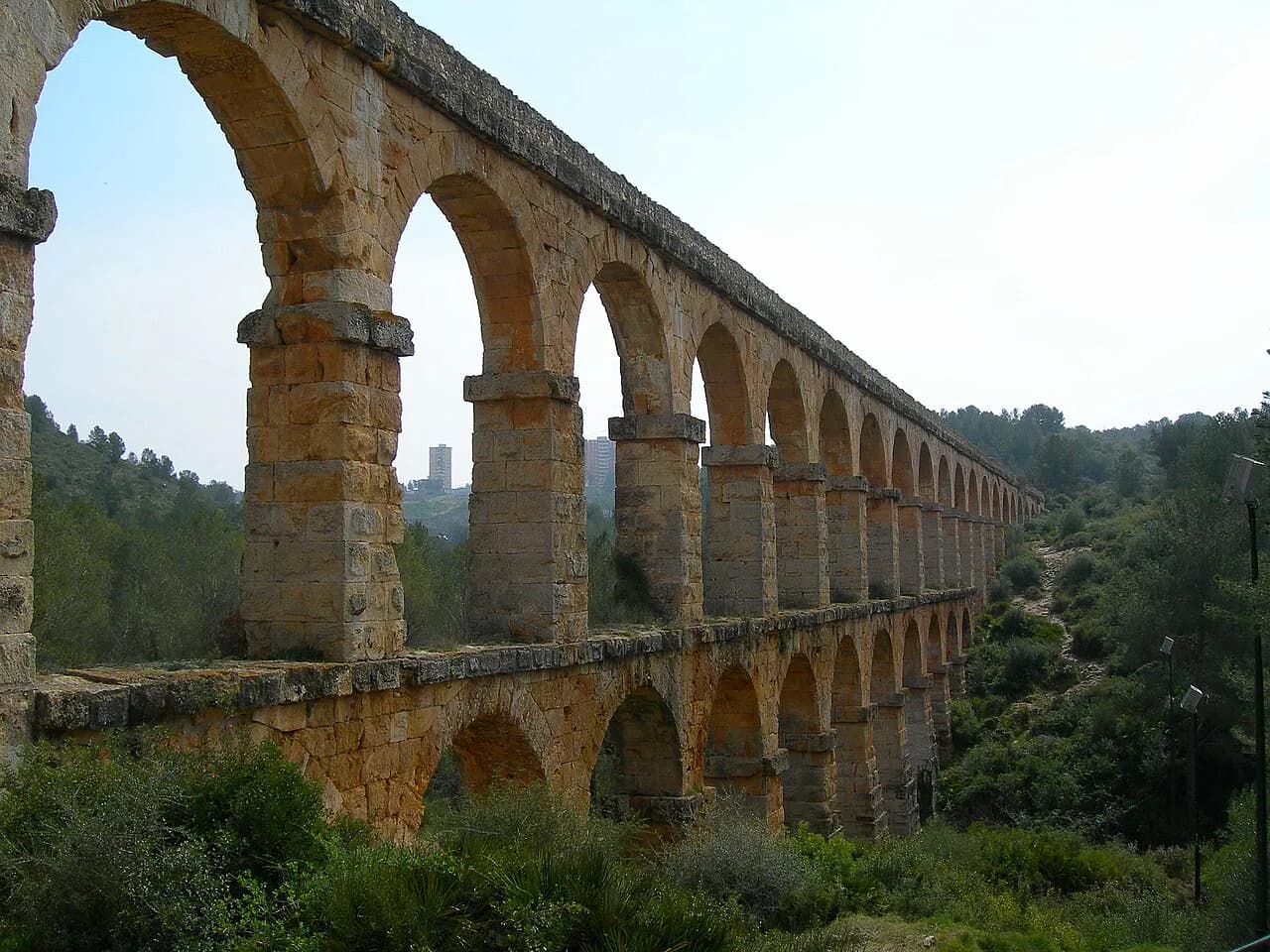
The Roman Aqueduct of Tarragona (Aqüeducte de les Ferreres)

The Roman aqueduct of Tarragona is the Aqüeducte de les Ferreres, a protected historic and architectural monument standing roughly 2.9 km from the city centre as the crow flies. It is a standalone structure rather than part of the walled old town, so the visit is short and outdoor. This page covers where it stands, how to reach it, what to examine when you arrive and what else fits into the same outing.
Treat the aqueduct as one stop among Tarragona's Roman sites rather than a full day out. The straight-line figures below are exactly that, so build in extra time for the actual approach on foot or by local transport.
What the Aqüeducte de les Ferreres is and where it stands
The Aqüeducte de les Ferreres is listed as a Bien de Interés cultural, Spain's protected heritage designation, and is catalogued for its history and architecture. It sits within the municipality of Tarragona in Catalonia, at coordinates 41.14593, 1.2439, roughly 2.9 km from the centre in a straight line. That distance places it outside the old town, so it does not slot into a stroll between the plaças.
Because the monument lies beyond the city core, plan it as a separate stop with its own transport leg rather than an incidental detour. The figure of 2.9 km is measured in a straight line, so the real approach is longer.
The aqueduct belongs to Tarragona's wider Roman inheritance, the same set that includes the amphitheatre, the circus and the archaeological museum. Seeing it alongside those sites makes clearer how the city's water supply fitted into a much larger Roman townscape.

How to get there from Tarragona and the nearest airport
The nearest major airport is Josep Tarradellas Barcelona-El Prat (BCN), about 72 km from the aqueduct in a straight line. That makes Barcelona's airport a plausible arrival point for a Tarragona break, with the onward leg covered by road or rail. The 72 km is an as-the-crow-flies measurement, not a driving distance.
From Tarragona itself, the monument is close enough to reach without a long excursion, but far enough that the approach is worth planning. The straight-line figure is not a route, so allow for a longer walk or a local transport leg. Check the local transport operators' own timetables for the day you travel.
If you are combining the aqueduct with ticketed attractions in the Tarragona area, the regional ticket platform lists what can be booked in advance, including guided tours. Those are separate city purchases; no ticket is needed for seeing an outdoor monument from the outside.

What to see: the arcades, the setting and the Roman remains nearby
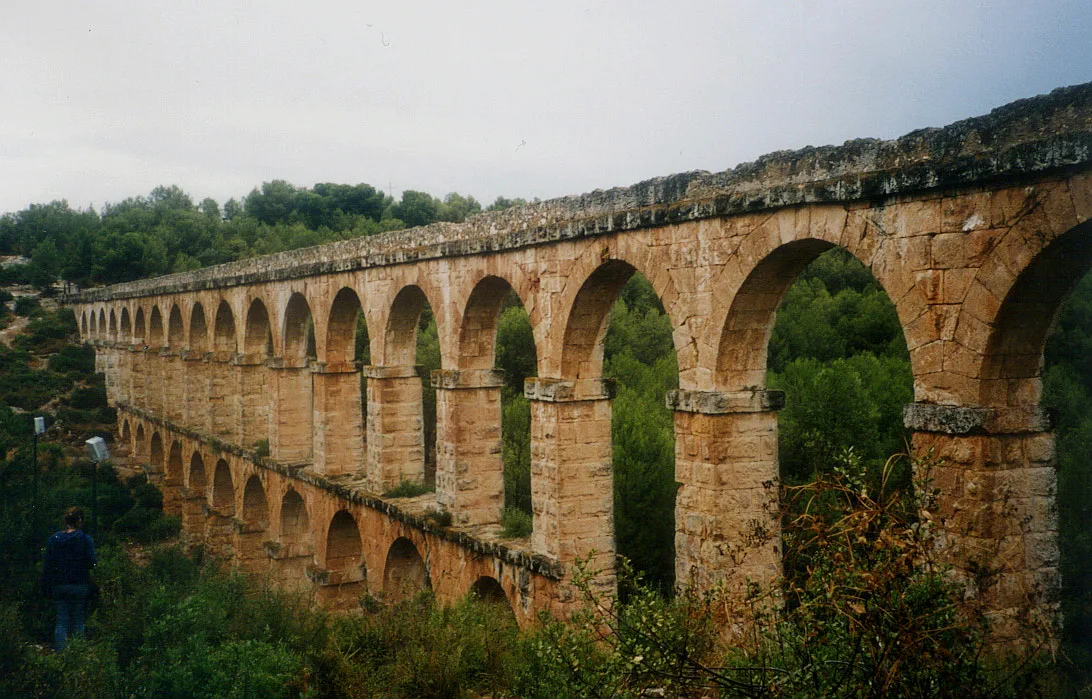
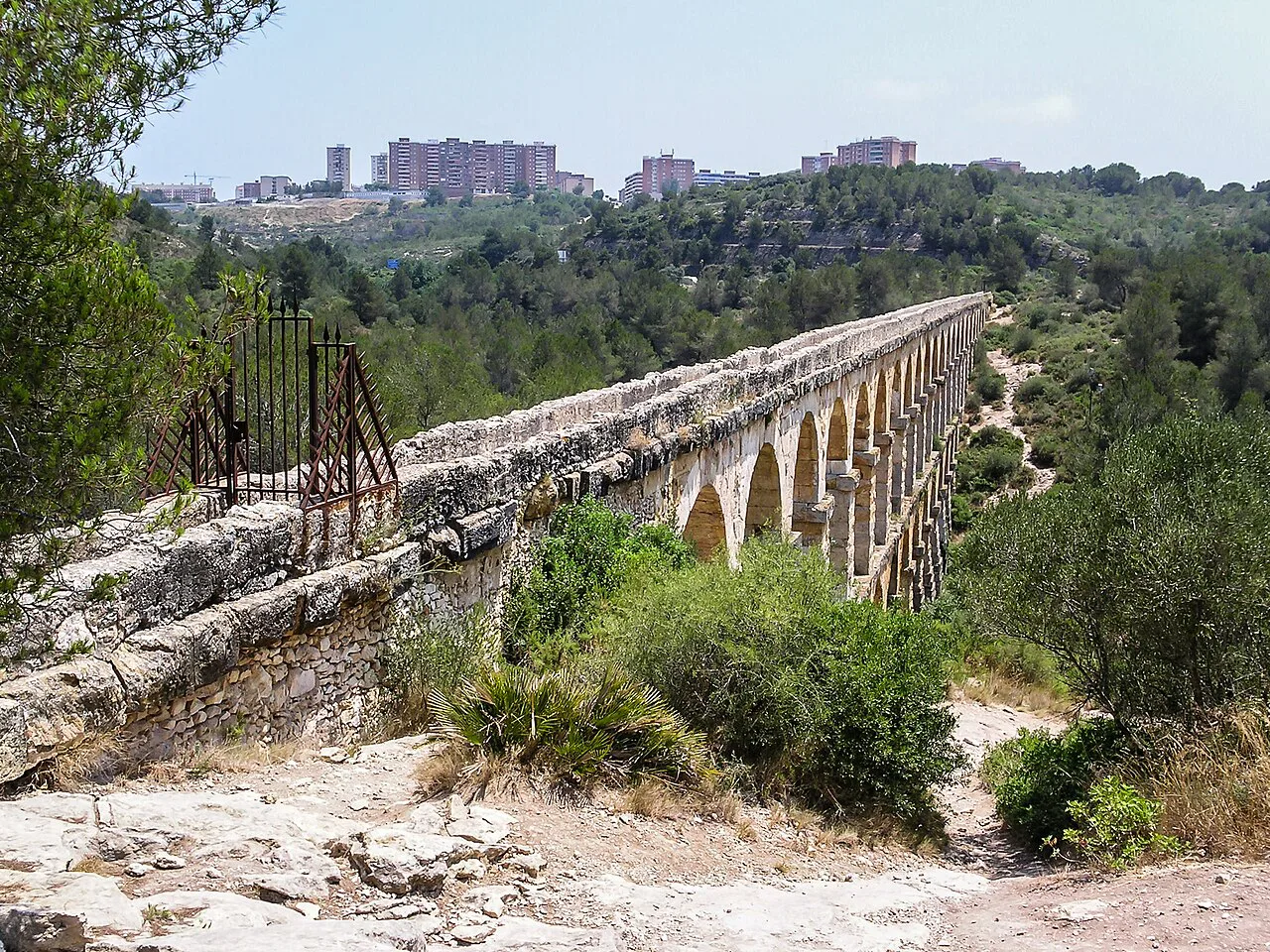
The structure is an aqueduct, so the visit is about reading the arcade: the tiered arches that carried water, and the way the monument sits in open country rather than in a street. Look at it from more than one angle, because an aqueduct reveals its scale from a distance and its masonry up close.
Nearby, the Roman villa of Centcelles is a protected heritage site about 1.8 km away in a straight line, and the El Serrallo maritime neighbourhood lies roughly 1.4 km off. Both extend a Roman-themed day without turning it into a city-wide trek. Distances are straight-line figures, so confirm the actual route before setting out.
In the old town, the Tarragona amphitheatre and the Roman circus continue the same story in a denser setting, and the archaeology museum holds the finds that explain it. Pairing the aqueduct with one of these gives context to the arcades you have just seen.
How long to allow and the best months for the walk
March to June and September to October are the choice months for this monument, according to the site's seasonal guidance. Daylight runs to about 14 hours 57 minutes in June but only around 9 hours 3 minutes in December, which matters for an outdoor structure visited on foot. A late-afternoon arrival in winter leaves little margin.
Allow a couple of hours from leaving the centre to returning: enough to walk the approach and spend time at the arcades. Add more if you are folding in Centcelles, which needs its own travel leg.
Summer afternoons inland are hot, so morning visits work better in July and August. In spring and autumn the daylight is generous enough to combine the monument with a walk in the city afterwards.
Admission, access and what to confirm before you go
The aqueduct is an outdoor heritage monument, and Tarragona's municipal heritage pages and the tourist office are the places to confirm current admission terms, any charges and access restrictions before travelling. Prices and access details are the things most likely to change from year to year.
If your Tarragona plans include guided visits or ticketed sites, the regional booking platform shows which options are sold in advance and which are bought on the day. The aqueduct itself is not one of its listed products.
What else is close by: El Serrallo, Centcelles and Tarragona Cathedral
El Serrallo, Tarragona's maritime quarter, is about 1.4 km from the aqueduct in a straight line and makes a natural pairing for a walk back towards the coast. The Roman villa of Centcelles, at roughly 1.8 km, is the other obvious companion if you want more Roman remains on the same day.
Back in the old town, the Tarragona cathedral, the Catedral de Santa María de Tarragona, anchors the medieval city the way the aqueduct anchors the Roman one. The difference in setting is the point: one is a working urban church at the heart of the city, the other a monument in open ground.
For a broader plan of what to see across the city, the Tarragona Attractions: 5 Visitor Guides collection sets out the main monuments and how they fit together. Use it to sequence the Roman and medieval stops around your aqueduct visit.
Practical points on heat and daylight
The monument is outdoors, so treat weather and light as the main variables. In summer, go early and carry water, because the open setting gives little relief at midday. In winter, start early enough to finish well before dusk, given the shorter days.
The approach is on foot from the centre, and the straight-line distances here understate the real route. If mobility is a concern, arrange a taxi or local bus rather than assuming a short walk. Confirm access conditions at the site itself, since the terrain around a Roman structure is not the same as a paved city street.
Is the aqueduct worth the detour from Tarragona's old town?
Yes, if you are interested in Roman engineering and want to see it in the open rather than in a museum. The Aqüeducte de les Ferreres is a protected monument about 2.9 km from the centre in a straight line, best visited in spring or autumn and given a couple of hours including the approach.
Build the trip around daylight, pair it with Centcelles or a return through the old town, and confirm admission details before you set out.
Frequently Asked Questions
Where can I see a Roman aqueduct in Spain?
The Aqüeducte de les Ferreres stands just outside Tarragona in Catalonia, about 2.9 km from the city centre in a straight line, and is protected as a Bien de Interés cultural. Tarragona is easily reached from Barcelona's airport, roughly 72 km away in a straight line.
What airport do you fly into for Tarragona?
Josep Tarradellas Barcelona-El Prat (BCN) is the nearest major airport, about 72 km from the aqueduct in a straight line. From there, onward travel to Tarragona is by road or rail, and the local transport operators publish the current timetables.
How long does it take to visit the Aqüeducte de les Ferreres?
Allow around two hours from leaving Tarragona's centre to returning, including the approach and time at the arcades. Add more if you also visit the nearby Roman villa of Centcelles, which is a separate stop.
Are there tickets or opening hours for the aqueduct?
It is an outdoor heritage monument. Current admission terms and access restrictions are published by Tarragona's municipal heritage pages and the tourist office, and those are the places to check before travelling.