
Tarragona Amphitheatre: Tickets, Hours and What to See

The Tarragona amphitheatre is a compact Roman arena carved into the hillside in the Parc del Miracle, just below the old town and a few minutes from the beach. Allow about 45 minutes to an hour, and buy the combined ticket if you also want the circus, the forum and the Passeig Arqueològic, because five sites cost 15 € together against 5 € for one.
This page covers the amphitheatre alone: where it sits, how to walk to it, when the gates open, which ticket to choose and what survives inside. It is one stop in Tarragona Attractions: 5 Visitor Guides, which sets each monument in the layout of the city.
What the Tarragona amphitheatre is and why it matters
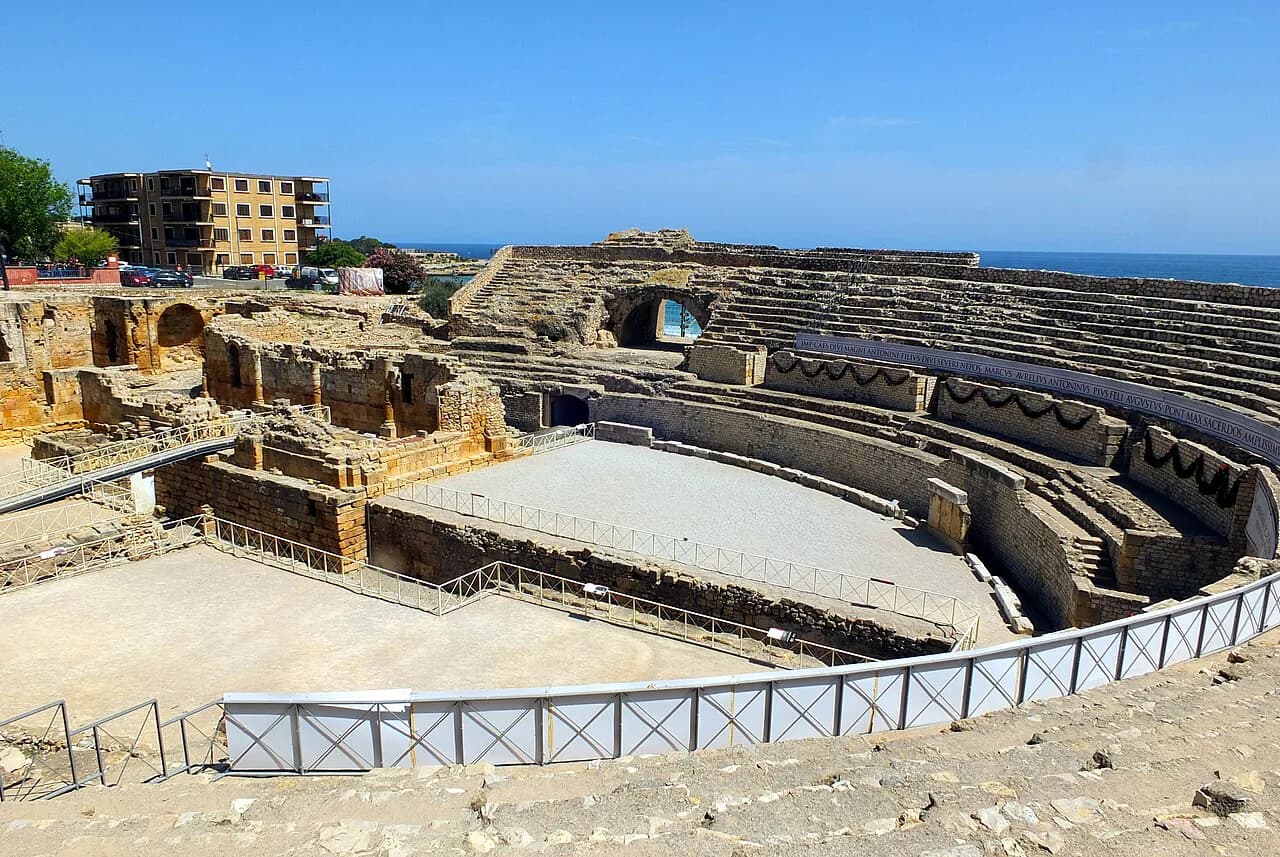
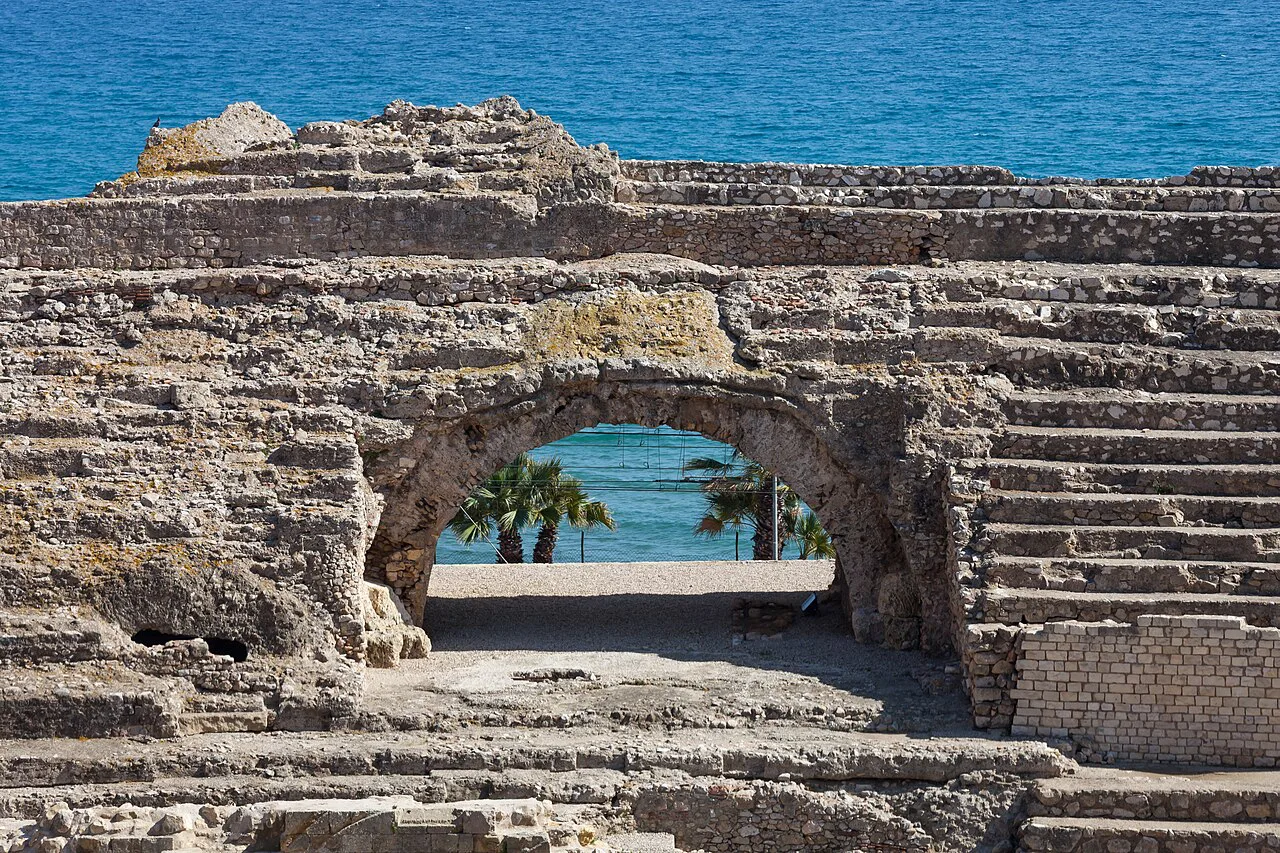
The arena was built in the early second century AD, when Tarraco was the capital of Rome's Spanish provinces and one of the largest cities in the western empire. Part of the seating was cut straight into the natural rock, and the surviving southern terrace was carried on concrete vaults. It held spectacles of the kind staged across the Roman world, and the site later became a place of Christian memory.
Bishop Fructuosus and his deacons were martyred here in 259, and a Visigothic basilica was raised in their memory at the start of the sixth century. A medieval church, Santa María del Milagro, was later built over that basilica, so the arena reads as three buildings stacked in time rather than a single ruin. Look for the church shell within the ellipse of the cavea.

Where it is and how to get there
The entrance is in the Parc del Miracle, on the sea side of the old town and below the level of the Rambla Nova. From the Rambla Nova, walk down past the balcony over the Mediterranean and follow the park paths to the arena; from the Passeig Marítim, the site is a short climb inland from the beach. Either approach is a walk of roughly ten minutes, and the final stretch is stepped or sloping rather than flat.
Tarragona sits on the coastal rail line south of Barcelona, with regional and long-distance trains into the city's stations, and the historic centre is uphill from the station area. Travellers arriving by air usually fly into Barcelona and continue by train, so the amphitheatre works as a stop on a rail-based break rather than a car-dependent detour. This is a walking city with steep lanes, so leave the car behind for the day.

Opening hours by season and Monday closures
Opening times change with the season, and the arena follows the museum network's two calendars. From 1 April to 26 October it opens Tuesday to Saturday from 9.00 to 20.45 and on Sundays and public holidays from 9.00 to 14.30. From 27 October to 31 March the weekday close moves earlier, to 18.30 Tuesday to Friday and 18.30 on Saturdays, with Saturday opening at 9.30 and Sunday and holiday hours of 9.30 to 14.30.
The arena is closed on Mondays, as are most of the network's monuments, except on programmed public holidays. On open days, access to the sites stops 30 minutes before the stated closing time, so a late-afternoon visit needs to start well before the gate shuts. Several public holidays run morning-only hours, which catches people out on days that feel like normal weekdays.
Tickets and prices
A single-site ticket costs 5 €, and the combined ticket covering five sites — the Passeig Arqueològic, Circ-Pretori, Fòrum de la Colònia, Amfiteatre and Casa Canals — costs 15 €. If the amphitheatre is one of three or more Roman sites you plan to see, the combined ticket is the better buy. A separate 5 € ticket covers the Volta del Pallol video mapping.
Free entry applies to children up to 12, ICOM and ICOMOS members, official guides, accredited teachers and journalists, and several heritage bodies. Half price applies to people aged 12 to 17, students, retirees, unemployed visitors, single-parent families, groups over 20 and people with a certified disability. Bring proof, because the discount is checked at the counter.
The museum network also holds open days on the last Tuesday of every month, and on a handful of heritage days through the year. Those dates are worth checking before you fix your day. For the Roman city beyond the arena, the Roman Circus of Tarragona and its attached Praetor tower make the natural next stop uphill.
What to see inside
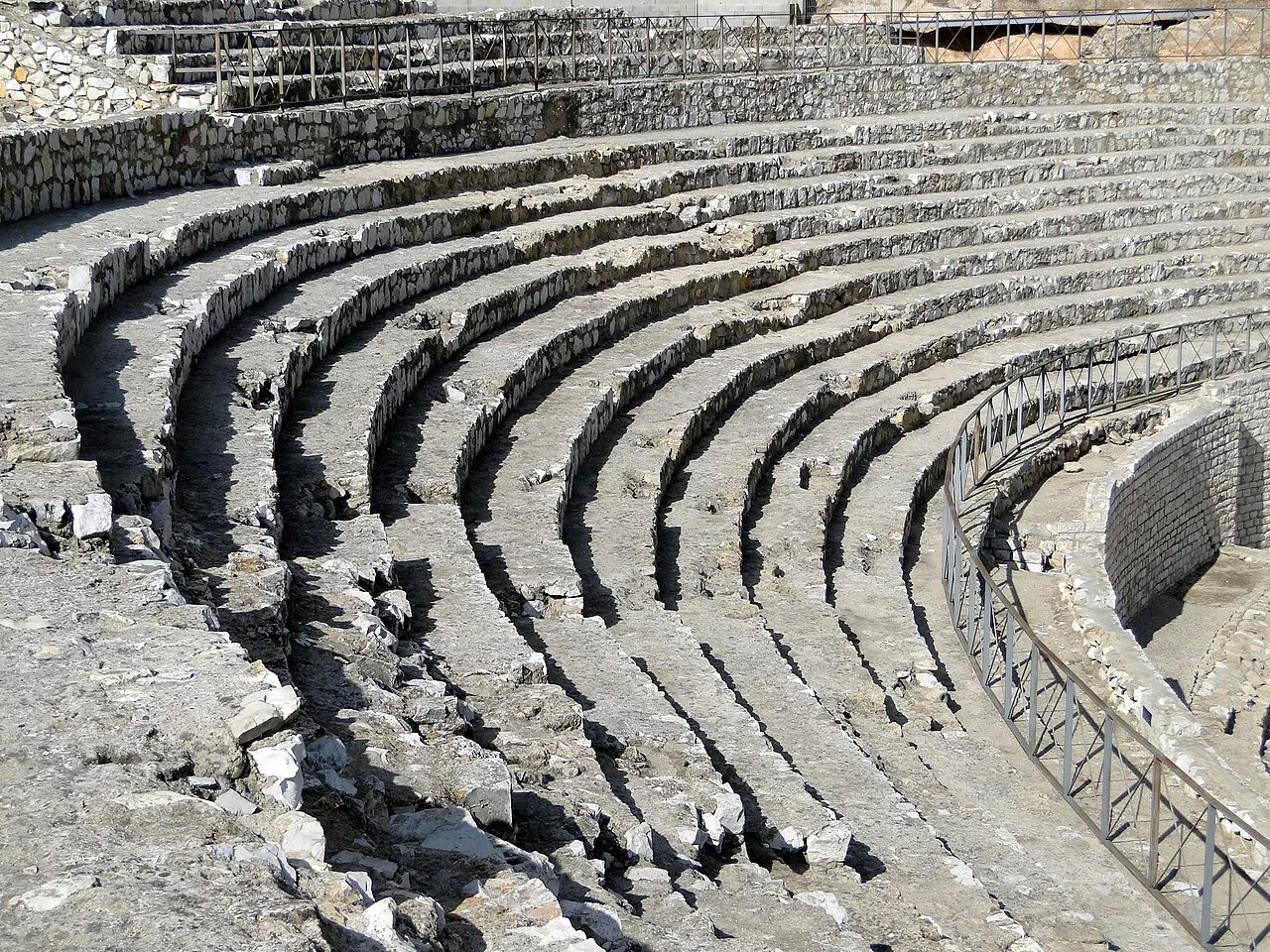
Walk the ellipse first: the curve of the cavea, the rock-cut tiers and the surviving southern terrace give the clearest sense of the arena's size and shape. The podium carried a 140-metre inscription, the longest of its kind in the empire, which crowned the wall around the arena floor. Much of the stone is eroded, so the site rewards slow looking rather than a brisk circuit.
Inside the bowl, the outline of the Visigothic basilica and the church of Santa María del Milagro explains why the site survived: it was a place of worship long after the games ended. The result is a layered monument where Christian architecture sits inside Roman engineering. Give the interpretation panels a few minutes, then climb to the rim for the view over the sea and the beach below.
How long to allow and when to go
Plan on 45 minutes to an hour for the arena itself, and add the Passeig Arqueològic or the circus if you hold the combined ticket, which turns the Roman morning into a half day. The site is open to the sky and offers little shade, so summer visits are best at opening time or in the last couple of hours before closing. Midday in July and August is exposed and hot, with the sea breeze doing less than you would hope.
Because access stops 30 minutes before closing, the late slot is shorter than the published hours suggest. Check that your visit does not fall on a Monday or a morning-only public holiday before building the day around it.
What is nearby
The Passeig Arqueològic follows the old city wall just above the arena and is included in the combined ticket, which makes it the most efficient pairing on foot. Further uphill, the Circ-Pretori and the Fòrum de la Colònia complete the Roman circuit within the old town, and the Rambla Nova is the natural place to pause afterwards.
For a contrast that costs nothing, The Roman Aqueduct of Tarragona (Aqüeducte de les Ferreres) stands outside the centre with free access, and its double arcade is the most photographed Roman structure in the area. The aqueduct is a separate excursion rather than a walk from the arena.
If you want the finds from the Roman city under one roof, the Tarragona Archaeological Museum (MNAT) holds sculpture, mosaics and everyday objects from Tarraco. The Tarragona cathedral, a short climb away in the upper town, makes a cool, dim contrast to the sunlit arena and suits a later slot in the day.
Practical points before you go
The arena is an outdoor site with uneven stone, steps and sloping ground, and much of the circuit is on unshaded rock. Wear shoes with grip and carry water in warm months. Benches and shade are limited, so anyone with mobility difficulties should plan a shorter stay and use the flatter park paths around the site.
The museum network sometimes closes monuments at short notice for weather alerts, works or events, and individual sites in the group can be shut while others stay open. The network's own pages carry any current notices, so read them the day before you travel if your trip hinges on one monument.
Single ticket or the five-site pass?
Buy the 15 € combined ticket if you intend to see the circus, the forum and the Passeig Arqueològic as well as the arena, because three paid sites already beat the single price. Choose the 5 € single ticket if the amphitheatre is your only Roman stop.
Build the day around a Tuesday-to-Saturday morning or a late afternoon, avoid Mondays, and keep the arena for a cooler hour in summer. That timing, more than any ticket choice, decides how much of the site you actually enjoy.
Frequently Asked Questions
How old is the amphitheatre in Tarragona?
It was built in the early second century AD, during the period when Tarraco was capital of Rome's Spanish provinces. A Visigothic basilica followed in the sixth century, and the medieval church of Santa María del Milagro was later built over it.
Is Tarragona close to Barcelona?
Yes. Tarragona lies on the coast south of Barcelona and is served by the coastal rail line, so it works as a day trip or an overnight stop. The historic centre is uphill from the station area.