
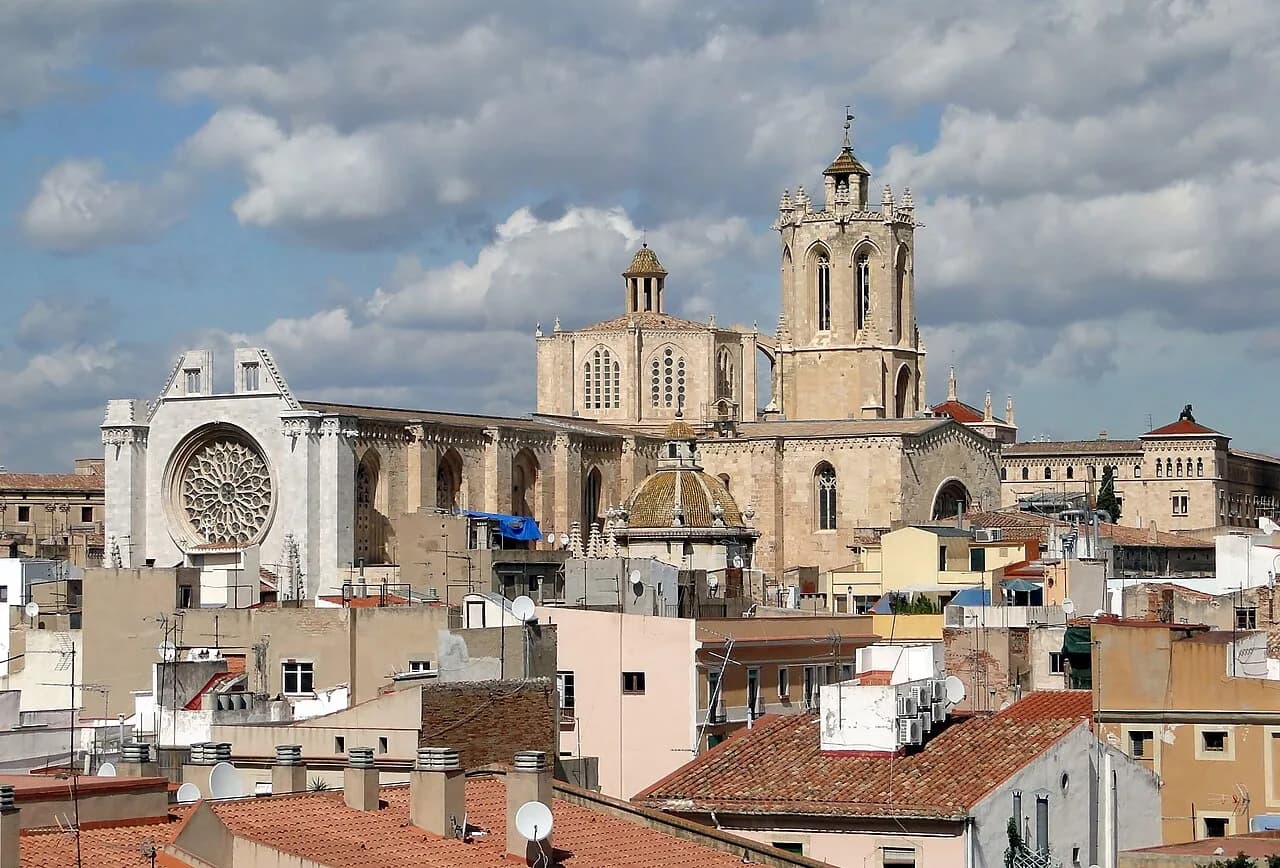
Tarragona Cathedral: visitor guide to the cloister, museum and archaeological route

Tarragona Cathedral needs about an hour, and one ticket covers far more than the church itself: the cathedral buildings, the Romanesque cloister, the Diocesan Museum and an archaeological route through the canons' rooms. It sits at the top of the old town on Pla de la Seu, a short climb from the modern centre. This guide breaks the visit into its four parts, then covers hours, prices, the last-entry rule and what is within a few minutes' walk. For the practical details, see the Tarragona guide.
What Tarragona Cathedral is and where it sits in the old town
The Catedral de Santa María de Tarragona is dedicated to Santa Tecla, the city's patron, and stands on the highest part of the old town at Pla de la Seu. Construction began in 1171 on a site previously occupied by a Roman temple to Augustus and a Visigothic cathedral; the building was consecrated in 1331 and declared a national monument in 1905.
That layered history is the reason to visit: you are walking over Tárraco's imperial footprint as well as through a medieval church. The setting also means the cathedral is the natural full stop to a wander through the old town rather than a detour from it. Pair it with the city's Roman sights and you have a coherent half-day.
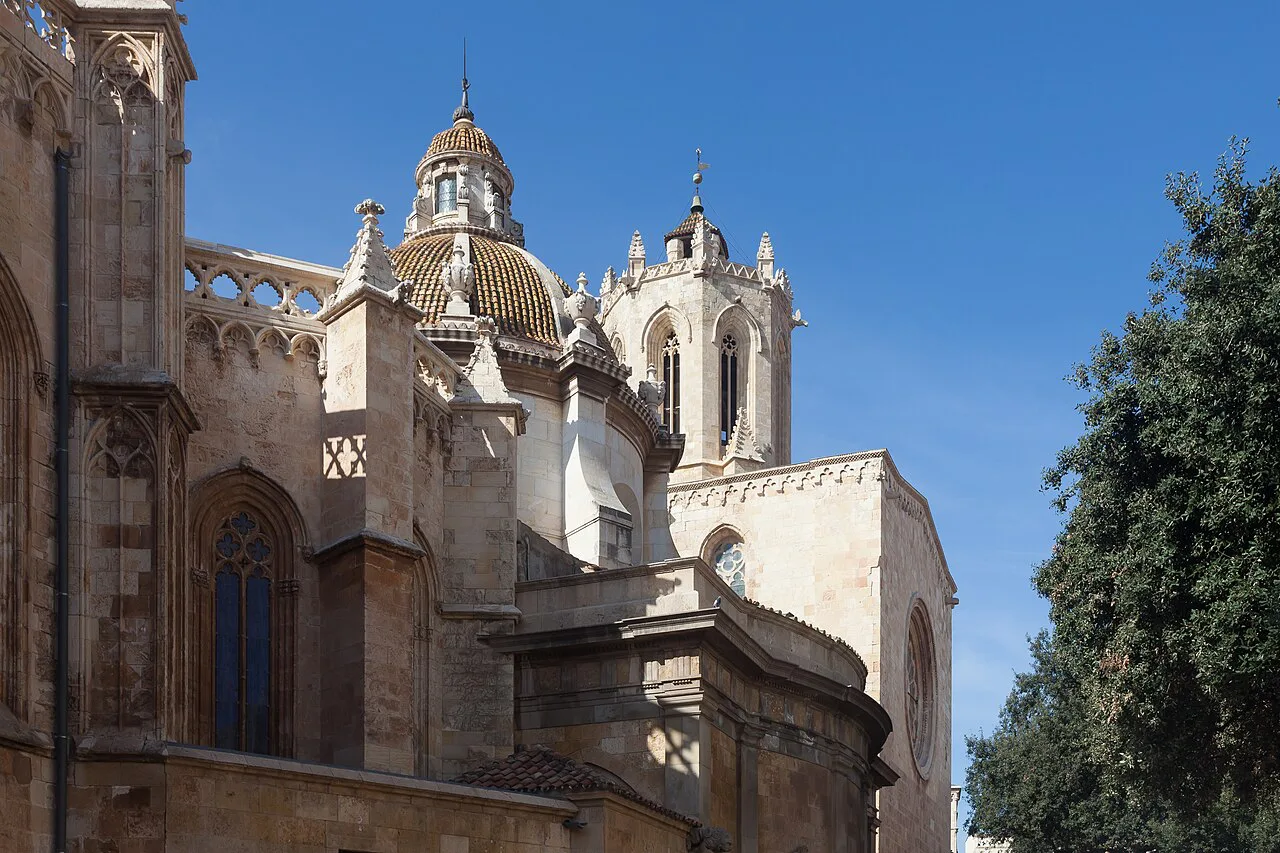

How to get there: Pla de la Seu and the walk up from the Rambla Nova
Address the visit to Pla de la Seu, 43003 Tarragona. From the Rambla Nova and the modern city below, the approach is on foot and uphill through the old town's lanes; allow a relaxed climb rather than a dash, especially in summer heat.
Tarragona is easily reached by train from Barcelona, which makes the cathedral feasible as a day out from the city, though it rewards a night if you want the Roman sights too. Once in the old town, the cathedral is the landmark everything else orients around.

What the ticket covers: cathedral, cloister, Diocesan Museum and archaeological route
A single visit ticket includes the cathedral buildings, the cloister, the rooms of the Diocesan Museum and the archaeological route. The cathedral's own visitor information confirms this four-part scope, which is why an hour is a realistic minimum rather than an indulgence.
The order is yours to choose, but most visitors move from the nave to the cloister, then the museum, saving the archaeological route for last. If time is short, the cloister and museum hold the strongest medieval material.
The Romanesque cloister and the portalada
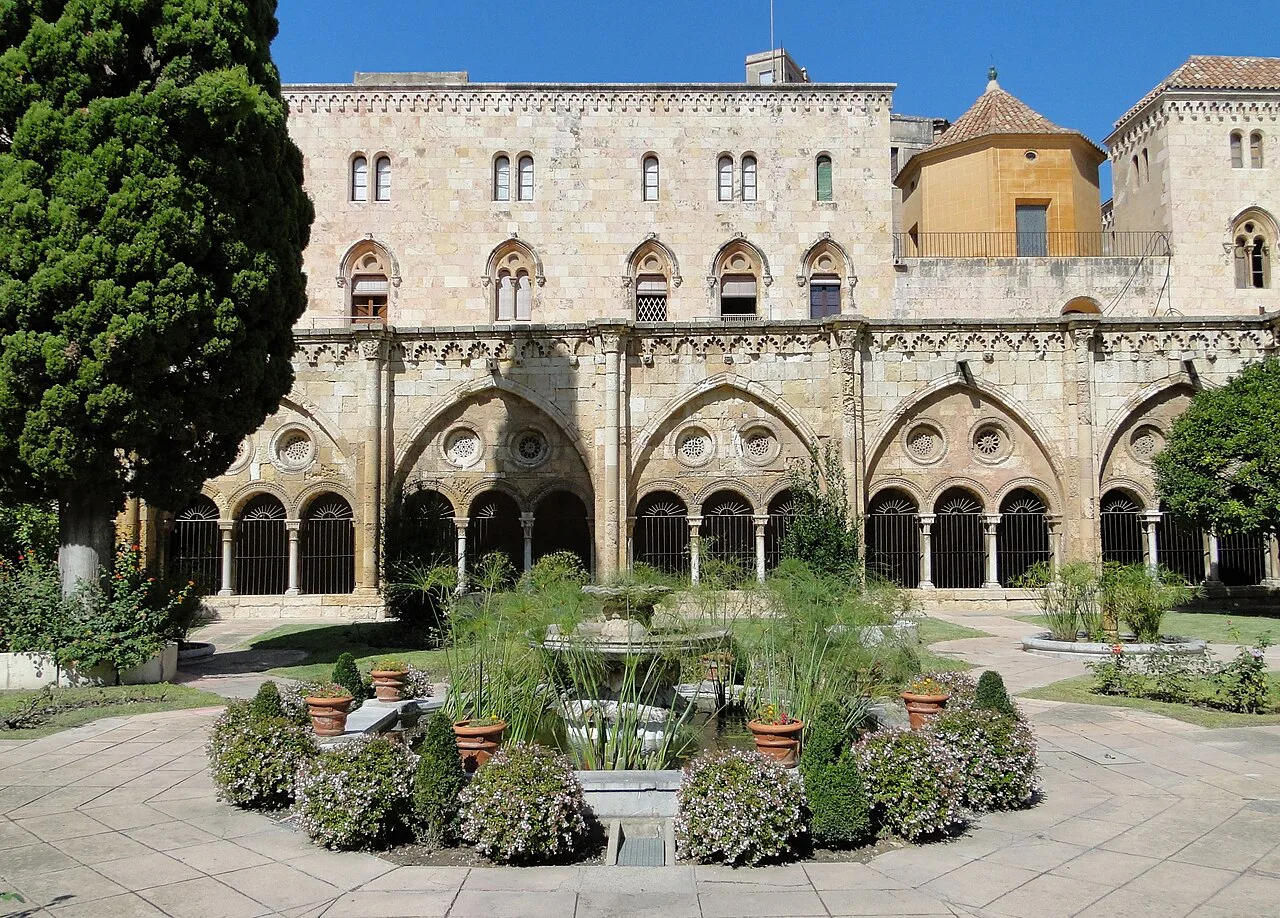
The cloister is described as the largest Romanesque cloister in Catalonia, entered through an impressive Romanesque portal. Its arcades and carved capitals are the visual highlight for many visitors, and the enclosed garden gives a quiet contrast to the old town outside.
Give the cloister real time rather than passing through: read the capitals, sit with the garden and look back at the portal from inside. It is also the part of the visit most exposed to the weather, so a rainy day changes the experience more here than in the museum rooms.
The Diocesan Museum and its Gothic collection
The Diocesan Museum holds an important collection of medieval art, with a particularly strong Gothic holding. The museum spaces are integrated into the visit rather than a separate building, so you pass through them naturally on the way round.
If your interest is painting and sculpture rather than architecture, this is where to slow down. The museum also provides a useful indoor interval on a hot midday or a wet afternoon.
The archaeological route: the Roman imperial wall and the canons' rooms
The archaeological route shows the perimeter wall of the Roman imperial precinct of Tárraco and the canons' rooms, where prehistoric pieces are displayed. It ties the cathedral directly to the Roman city beneath it, which is the thread running through the whole of Tarragona, and the wider set of Tarragona Attractions: 5 Visitor Guides shows how the other Roman sites fit the same story for a day in the city.
This section is partly underground and the route is not step-free, so visitors with mobility limitations should plan accordingly. The cathedral visit is described as partially accessible, with the archaeological itinerary the part that is not.
How long to allow and the last-entry rule
The recommended visit duration is one hour, and the last entry is 30 minutes before closing. That last-entry rule matters more than the closing time for a late arrival, so aim to be at the ticket desk well before the final half-hour.
A one-hour visit covers the essentials; if you read every museum label and linger in the cloister, budget 90 minutes. Groups and slow walkers should add time for the climb up through the old town on either side.
Opening hours by season and days when tourist visits are closed
Opening hours shift with the season. In broad terms, the cathedral opens later on Mondays than other days, closes earliest in the winter months and latest in high summer, and on Sundays it opens only in the afternoon. The published schedule gives the exact windows for each period.
Tourist visits are also suspended on a list of fixed dates across the year, including early January, several days in spring and around Christmas, and some days run to special shorter hours. These catch visitors out because they are not obviously religious holidays; the cathedral lists them alongside the seasonal timetable.
Ticket prices in EUR and who qualifies for reduced or free entry
The general adult ticket is 12.50 EUR, children aged 7 to 12 pay 5.50 EUR, and a reduced rate of 8.50 EUR applies to over-65s, accredited students and under-18s. Children aged 0 to 6 enter free, and the ticket covers the cathedral, cloister and Diocesan Museum.
Buying online in advance secures a date and avoids queueing at the desk, and you present the voucher at the ticket office on arrival. Bring proof of status if you are claiming the reduced rate, since accreditation is required for students.
Accessibility, audioguide and house rules
A free audioguide works through a QR code scanned on your own smartphone at the start of the visit. Headphones are compulsory out of respect for the space, and if you have none you can buy a pair at the ticket desk for 1 EUR.
Food and drink are not allowed inside, voices should be kept low, and tripods need prior authorisation. The visit is partially accessible, with the archaeological route the part that is not step-free.
Nearby: what else sits within a few minutes of the cathedral
The old town around the cathedral holds the Roman circus, whose vaults run beneath the streets nearby, and the amphitheatre down by the sea is a longer but walkable descent. Both make a natural second stop after the cathedral.
Further out, the Roman Aqueduct of Tarragona (Aqüeducte de les Ferreres) sits outside the city centre and needs separate transport planning. Keep it for a trip with more time rather than trying to fold it into a cathedral visit.
Is Tarragona Cathedral worth the climb?
Yes, if you want one ticket to cover a Romanesque cloister, a Gothic-heavy museum and a slice of Roman Tárraco. The climb up to Pla de la Seu is the price of entry, and the last-entry rule is the thing most likely to catch you out.
If you have limited mobility, plan around the archaeological route and check accessibility before booking. Otherwise, build the cathedral into a morning and leave the afternoon for the circus and amphitheatre.