
Roman Circus of Tarragona: visiting the Circ Roma

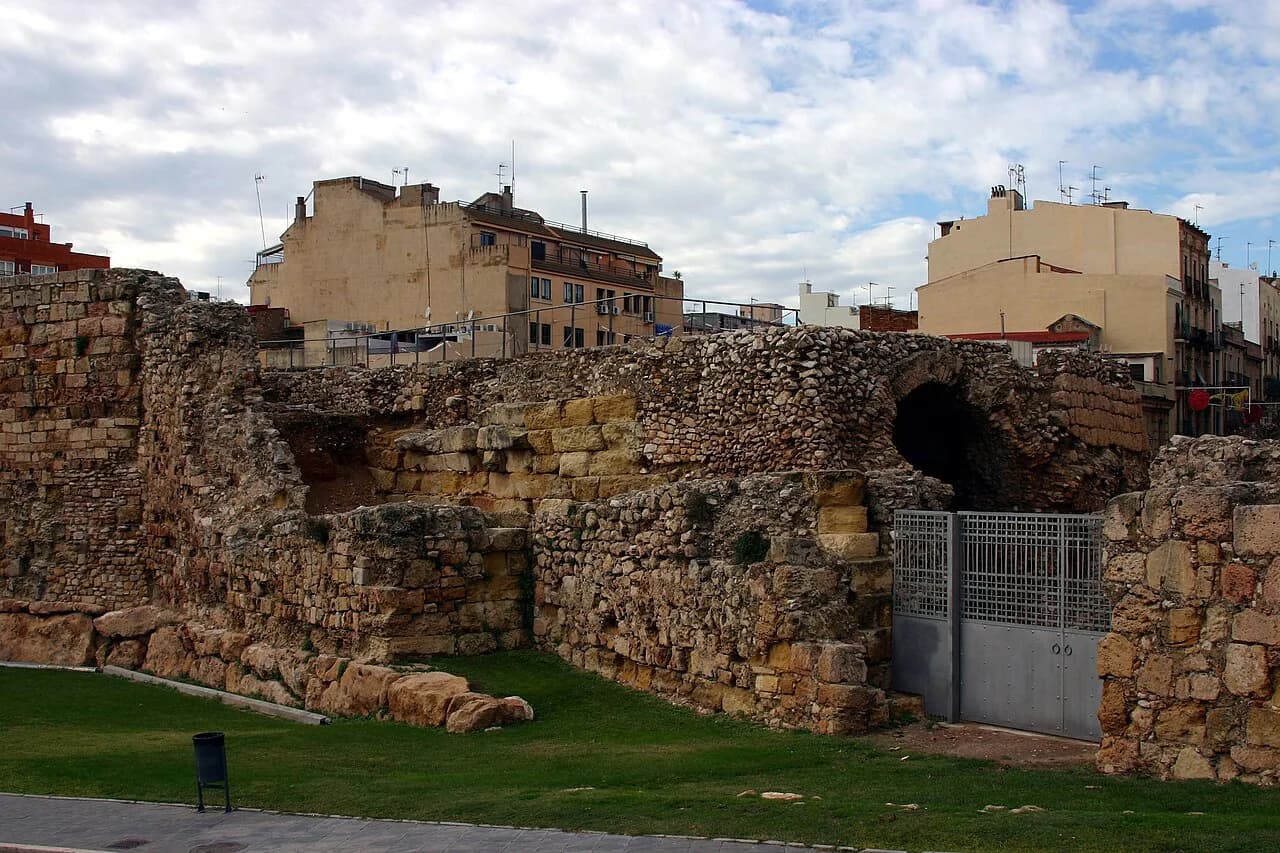
Visit the Circ Roma on Rambla Vella and you see one end of a chariot-racing track that once ranked among the largest and best-preserved in the Roman west. The monument is the anchor of Tarragona's Roman circuit: the eastern end is open and legible, while the rest runs beneath the 19th-century streets of the old town. This page covers where the circus sits, what survives, how long to allow and which nearby Roman sites make the most sense in the same walk.
Allow around an hour for the circus itself and half a day if you add the amphitheatre and the forum squares. The value of the visit lies in reading the fragments as one huge building, not in touring a complete arena, so knowing what to look for before you arrive makes the difference.
What the Roman Circus of Tarragona is
The circus was the venue for chariot races, run with two-horse bigae or four-horse quadrigae, and Tarragona's is described as among the best preserved in the western Roman world. It formed part of the monumental complex built into the city's acropolis in the second half of the first century AD, alongside the provincial forum; that whole complex, covering 7.5 hectares, is described as the largest of its type in the Roman world. Seeing circus and forum together is what makes the site legible.
A ticketing platform describes the circus as a first-century structure with room for 23,000 spectators. Treat that capacity figure as an indicative number from a commercial listing rather than an excavated measurement, and let the visible masonry do the persuading.
Knowing the 7.5-hectare figure before you arrive prepares you for the central surprise of the visit: you are walking through a building the size of a city district, of which only a fraction is exposed.

Where the Circ Roma sits and how to get there
The entrance address is Rambla Vella, 2, at the eastern edge of the old town, where the monumental façade faces the street. Because the circus runs inland from here, you can trace the line of the track above ground by following the street grid towards the Plaça del Rei.
On public transport, the L22 bus stops at Portal del Roser, a short walk from the Pallol area where the old Audiència building holds the city's Roman model. Tarragona also has a mainline rail station west of the old town, so a taxi or a steady climb brings you up to the Rambla.
If you are flying into Málaga, Alicante or Palma for a short break, Tarragona works as a two-night stop rather than a day trip, because the Roman sights alone fill a full morning. The circus is the natural first stop, since everything else in the old town radiates from the Rambla.

What you actually see inside
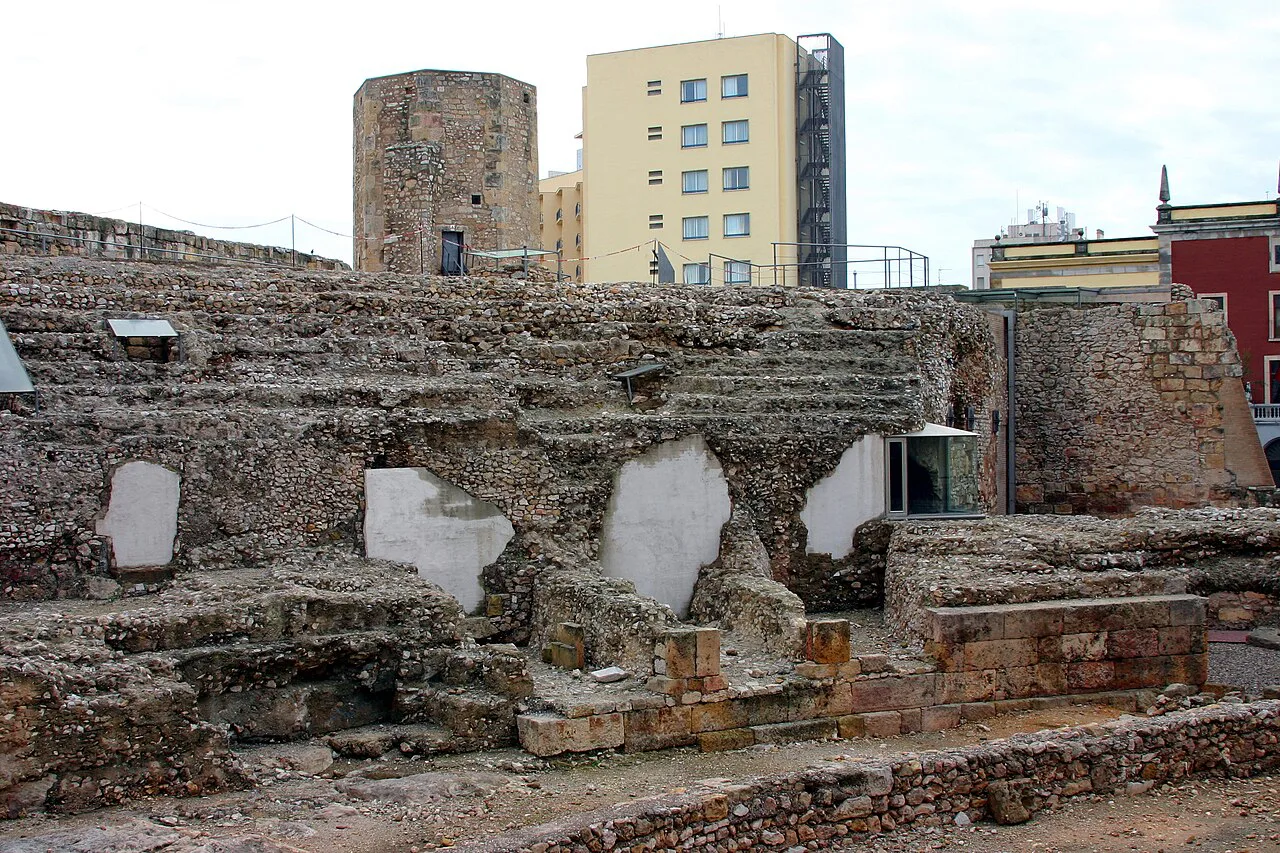
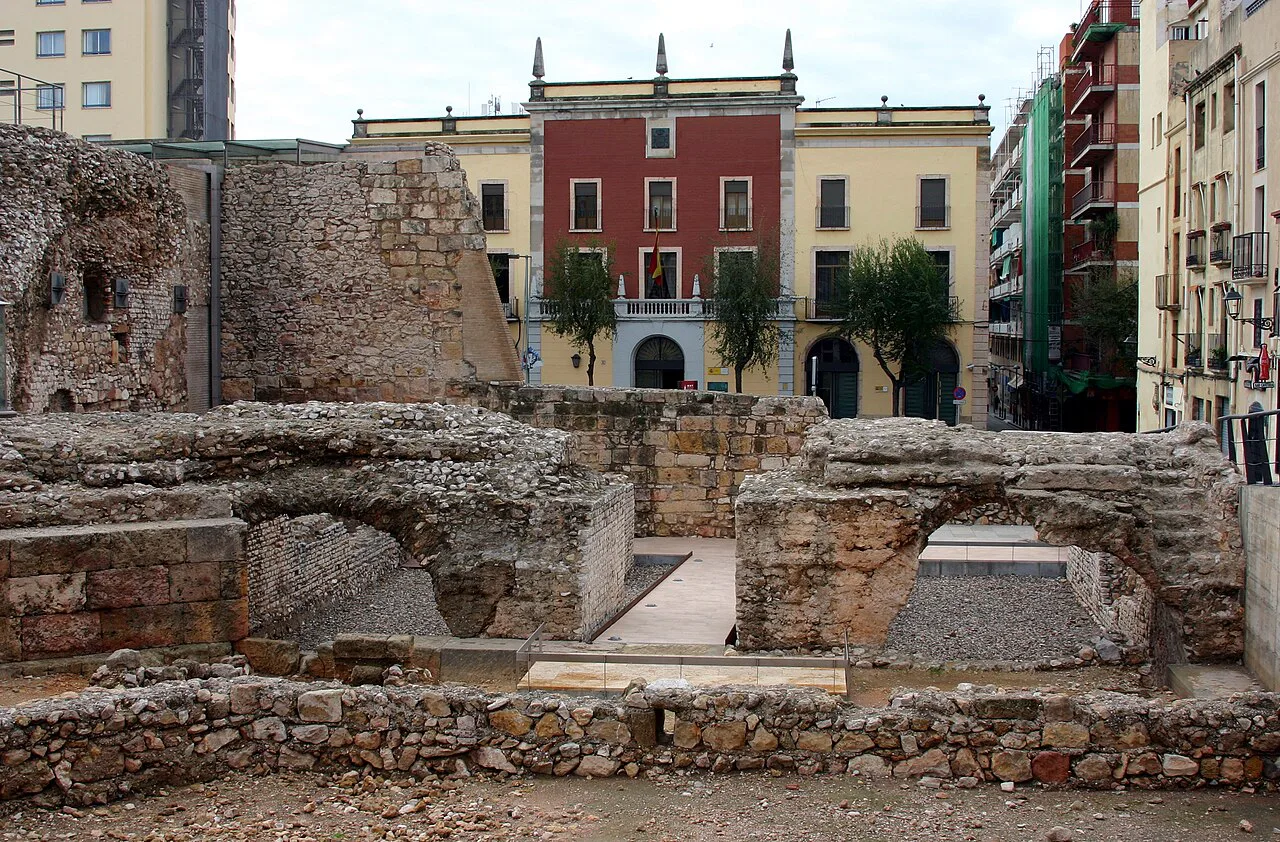
The visit concentrates on the eastern end of the track, where the monumental façade, the seating and two named vaults survive: the Volta de Sant Hermenegild and the Volta de l'Enrajolat. Look for these two vaulted passages in particular, as they show how the structure was carried over the sloping ground and give the clearest sense of the building's volume.
Because the accessible stretch is short, the visit rewards slow looking rather than walking distance. Read the seating tiers against the street above, then step back onto the Rambla and imagine the track continuing under the shops and flats in front of you.
Why most of the circus is hidden
Much of the circus structure remains concealed beneath 19th-century buildings — the city heritage listing notes that a large part of the structure is still hidden under these later buildings — which is why the monument feels fragmentary from street level. The circuit visible today is the exposed eastern end rather than the full course.
That fact changes how you should plan the stop. Treat it as an architectural puzzle with a small, high-quality set of remains rather than an arena you can walk around, and budget time accordingly.
The provincial forum squares nearby
The circus belongs to the same provincial complex, whose lower square was an enormous rectangle of 318 by 175 metres, edged on three sides by porticoes and decorated with gardens and statues whose inscribed pedestals still turn up, for example on Carrer de la Merceria. Remains of that complex surface at three small squares in the old town: Plaça del Pallol, Plaça del Fòrum and Plaça del Rei.
At Plaça del Pallol, the Antiga Audiència holds a scale model of Roman Tàrraco at its height in the second century AD, which is the fastest way to understand how circus and forum fitted together. Plaça del Fòrum and Plaça del Rei sit over the remains of the forum's porticoes in situ, so the three squares work best as a short loop before or after the circus itself.
How long to allow and the walking order
Start at the circus on Rambla Vella, walk up to the three forum squares, then continue into the upper old town towards the Tarragona Cathedral. That order follows the Roman street pattern rather than doubling back, and it keeps the heaviest masonry at the start when you are freshest. For the wider set of Roman stops, see Tarragona Attractions: 5 Visitor Guides.
Half a day covers the circus, the forum squares and the amphitheatre without rushing. Add the Passeig Arqueològic walls and you are into a full day, so pick two or three Roman sites and see them properly rather than counting off the whole set.
Tickets, hours and what to confirm
Opening hours, ticket prices and how entry is sold are not covered by the sources used here, so confirm the current details with Tarragona's municipal heritage service before setting out.
Nearby Roman sights that fit the same morning
The Tarragona Amphitheatre sits down by the sea below the old town, hewn from the rock, and is one of Tarragona's most dramatic Roman monuments. Pair it with the circus for contrast: one is a hillside circuit read in fragments, the other a coastal arena with visible tiers.
The Passeig Arqueològic follows the Republican walls built in the second century BC, of which around 1,100 metres of the original 3,500 survive around the old town. The stretch here shows megalithic foundations and two of the six original gateways, making it the best complement to the circus for understanding the city's defences.
For the finds themselves, the archaeological museum holds sculpture and inscriptions from the Roman city, and it rounds off the walk with objects the outdoor sites cannot show. North of town, the Roman Aqueduct of Tarragona carries water across a green valley on two tiers of arches and is worth the separate trip by bus or car.
Is the circus worth an hour of your morning?
Yes, provided you go in expecting an excavated fragment rather than a stadium. The two vaults, the monumental façade and the scale model at Plaça del Pallol together explain more about Roman Tàrraco than any single site in the city, and an hour is enough to see them properly.
Build the rest of the morning around the forum squares below and the amphitheatre by the sea, and finish with the Tarragona Cathedral on the hill for the medieval counterpoint to all that Roman stone.
Frequently Asked Questions
How much of the Roman Circus in Tarragona can you actually walk through?
You can see the exposed eastern end, including the monumental façade, the seating and the vaults of Sant Hermenegild and de l'Enrajolat. The rest of the structure runs under the 19th-century buildings of the old town, so the visit covers a fraction of the original track.
Do you need to book tickets for the Circ Roma in advance?
Booking requirements are not confirmed by the sources used here, so check with Tarragona's municipal heritage service or ask at the entrance for opening hours and whether a combined ticket covering several Roman sites is on offer.
Where does the circus sit in relation to the rest of Roman Tarragona?
It occupies the eastern edge of the old town on Rambla Vella, below the provincial forum squares at Plaça del Pallol, Plaça del Fòrum and Plaça del Rei. The amphitheatre lies downhill towards the sea, and the Republican walls run along the Passeig Arqueològic.