Burgos Old Town: Streets, Plazas and a Walking Route
Walk Burgos old town from the Paseo del Espolón through the Arco de Santa María to the cathedral, the castle mirador and the Plaza Mayor.
On this page
Burgos old town works best as a single loop on foot, starting at the Arco de Santa María and finishing in the Plaza Mayor, with the cathedral and the castle mirador as its two anchors. The historic quarter is compact enough to cross in stages, and the streets between the monuments are part of the visit rather than filler. This guide sets out the order to walk, what each square and gateway looks like, which sights carry an entry fee, and how the tourist train can save your legs on the outer stretches.
Where Burgos old town begins: the Arco de Santa María
The natural entry to the casco histórico is the Arco de Santa María, a fortified gate that once formed part of the town wall and now opens straight onto the cathedral square. Burgos originally had twelve entrances to the walled city, and this is one of the few that survive, so it carries more weight than a decorative arch. Walk through it once on foot before doing anything else, because the route ahead makes sense from that threshold.
The gate is decorated with statues of Emperor Carlos V flanked by the most significant figures in the city's history, which makes the facade worth a pause before you pass under it. Inside, the arch houses exhibition rooms that change programme, so the reason to step in is usually the current show rather than the stonework alone. Access is free, with weekday opening from 11.00 to 14.00 and 17.00 to 21.00, Sundays from 11.00 to 14.00, and closure on Mondays and public holidays.
The Paseo del Espolón approach along the Arlanzón
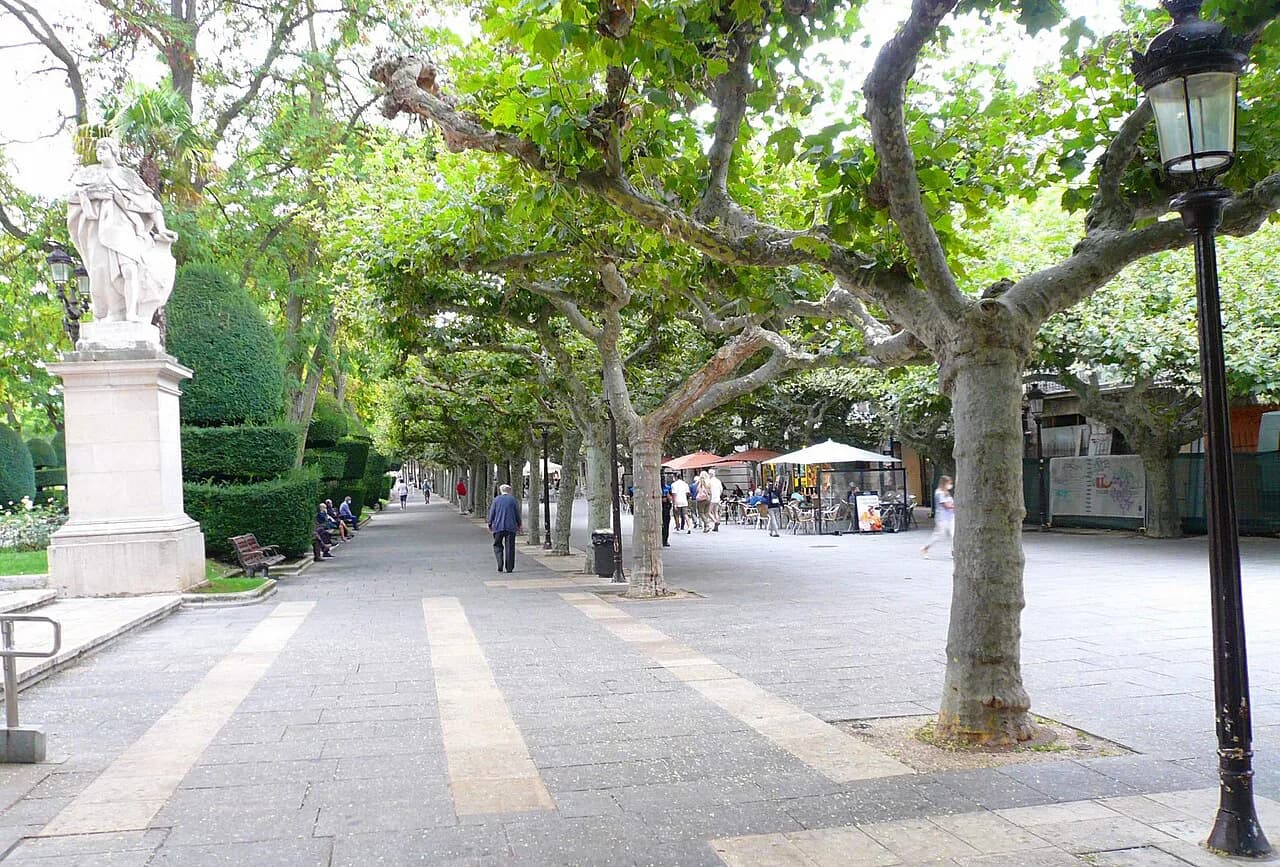
Most visitors reach the gate from the Paseo del Espolón, a gardened promenade whose plane trees knit overhead along the bank of the Arlanzón. The walk passes the Diputación Provincial, the Teatro Principal and the Consulado del Mar before the Arco de Santa María comes into view, which gives the approach the feel of a formal entrance to the old city. Just before you go through, turn round: the Puente de Santa María, a pedestrian bridge, sits behind you and once led towards the walled town.
Treat this stretch as the orientation leg of the walk rather than a sight in itself, because it shows you how the river, the promenade and the gate line up. The trees give real shade on a hot midday, which matters in a city whose open ground between monuments bakes in summer.
Plaza del Rey San Fernando and the cathedral
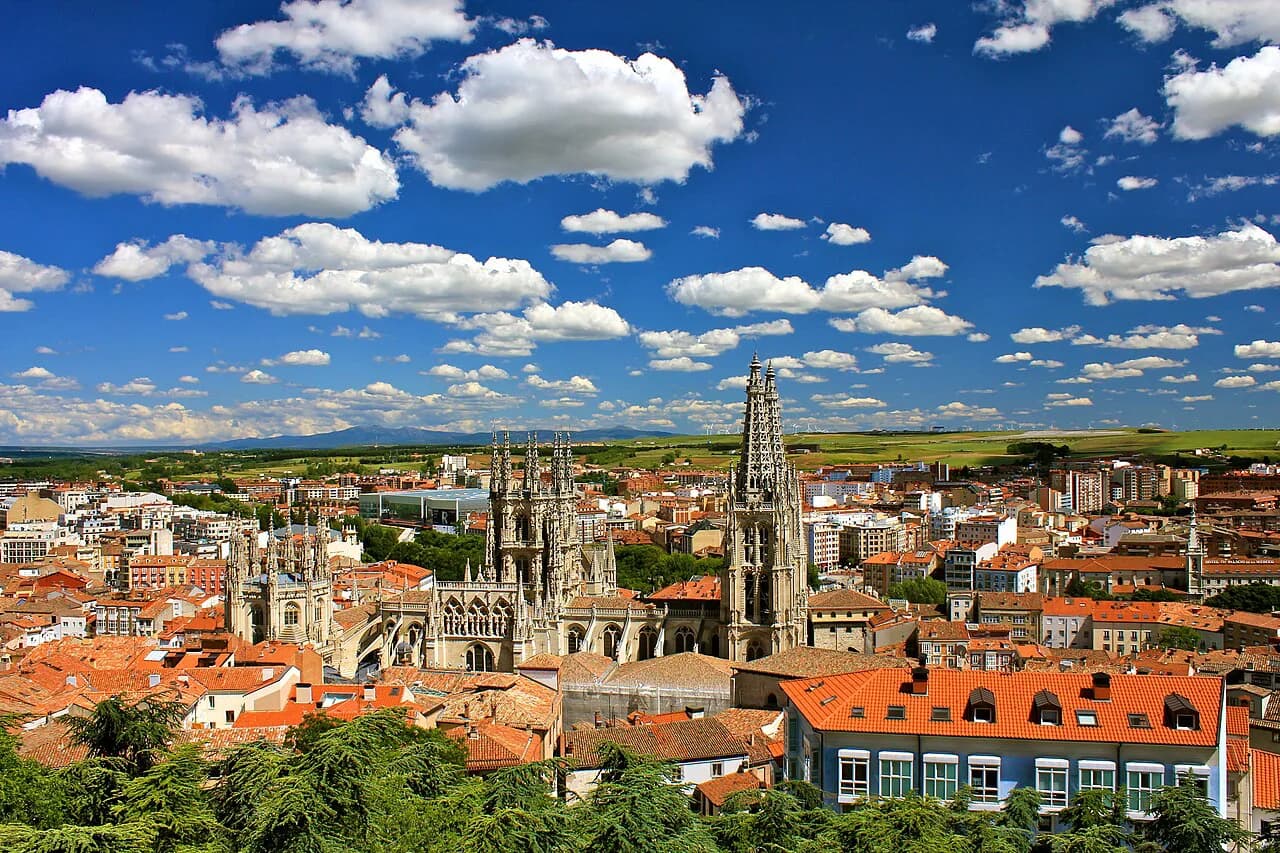
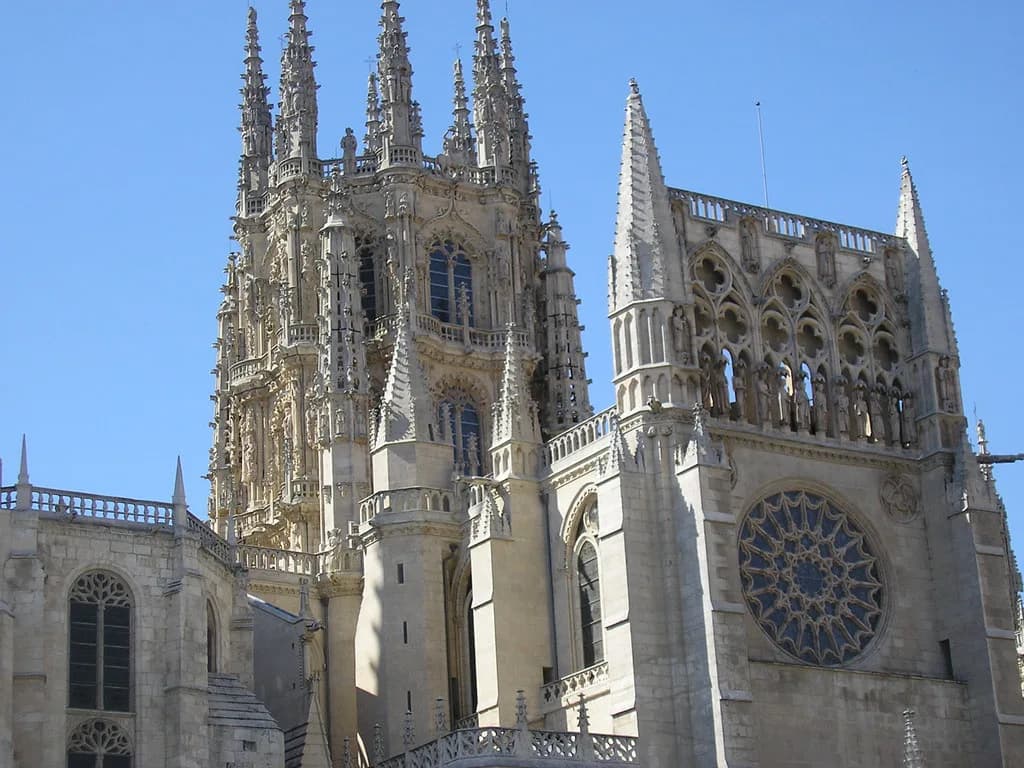
Beyond the arch, the Plaza del Rey San Fernando delivers the view most people come for: the cathedral's Gothic facade filling one side of the square. The Catedral de Santa María is a UNESCO World Heritage site dedicated to the Virgin Mary, and its exterior is the strongest single image of the city. The square itself is where you get your bearings before committing to the interior, and where the tourist train picks up.
Inside, the full visit is priced at 7 EUR and includes an audioguide covering all the rooms, so one ticket takes you through the whole building rather than a shortened circuit. Tuesday afternoons open a free window, from 16.30 to 18.30, or 16.30 to 18.00 in winter, which is the practical way to keep costs down if your dates are flexible. Beyond the famous Capilla del Condestable and the star-vaulted cimborrio, the interior holds the tomb of El Cid Campeador and his wife Jimena, the Santísimo Cristo de Burgos and the retablo by Gil de Siloé.
Time your exit for the hour if you can: the Papamoscas, the figure mounted on the cathedral wall, opens and closes its mouth and rings its bell on the hour only. It is a small piece of theatre that costs nothing and takes a minute, so build it into the square rather than making a separate trip.
The streets of the casco antiguo
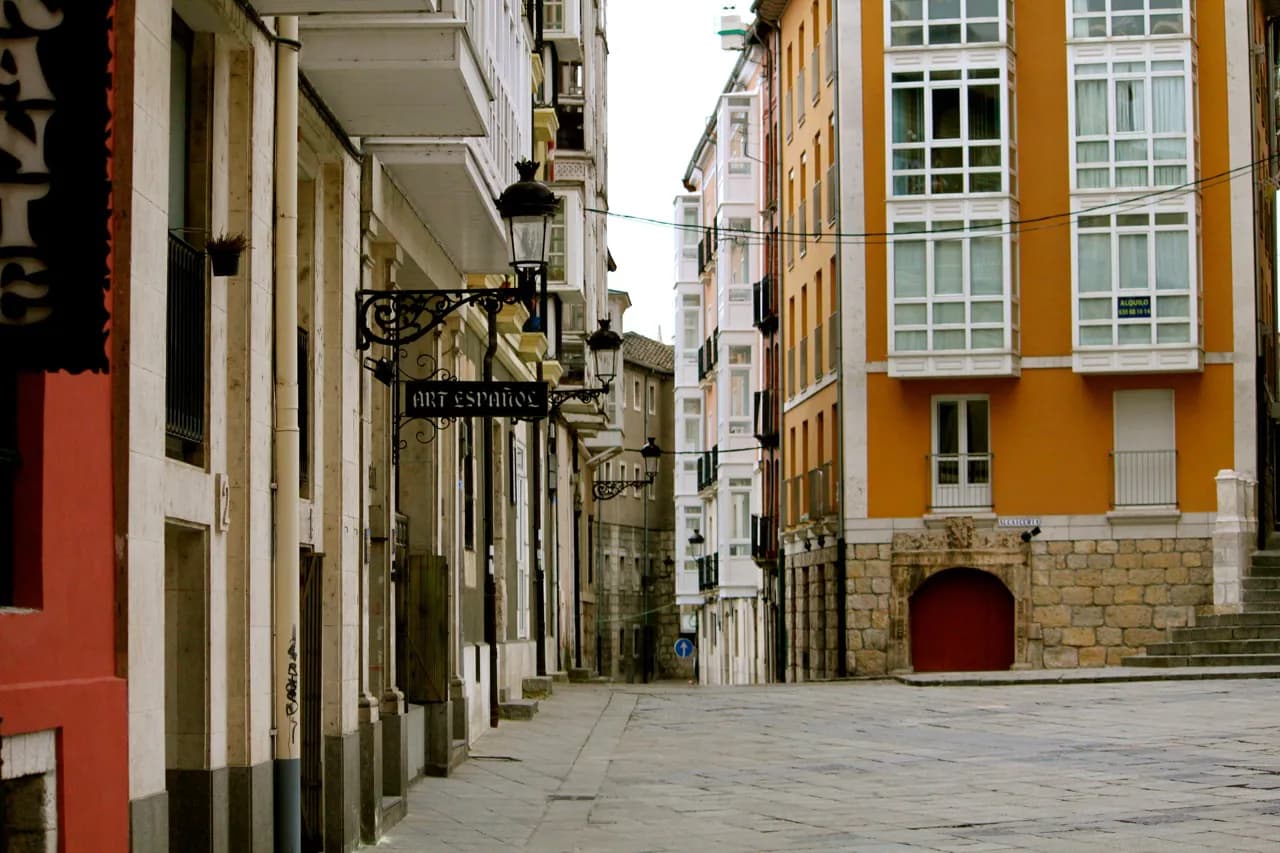
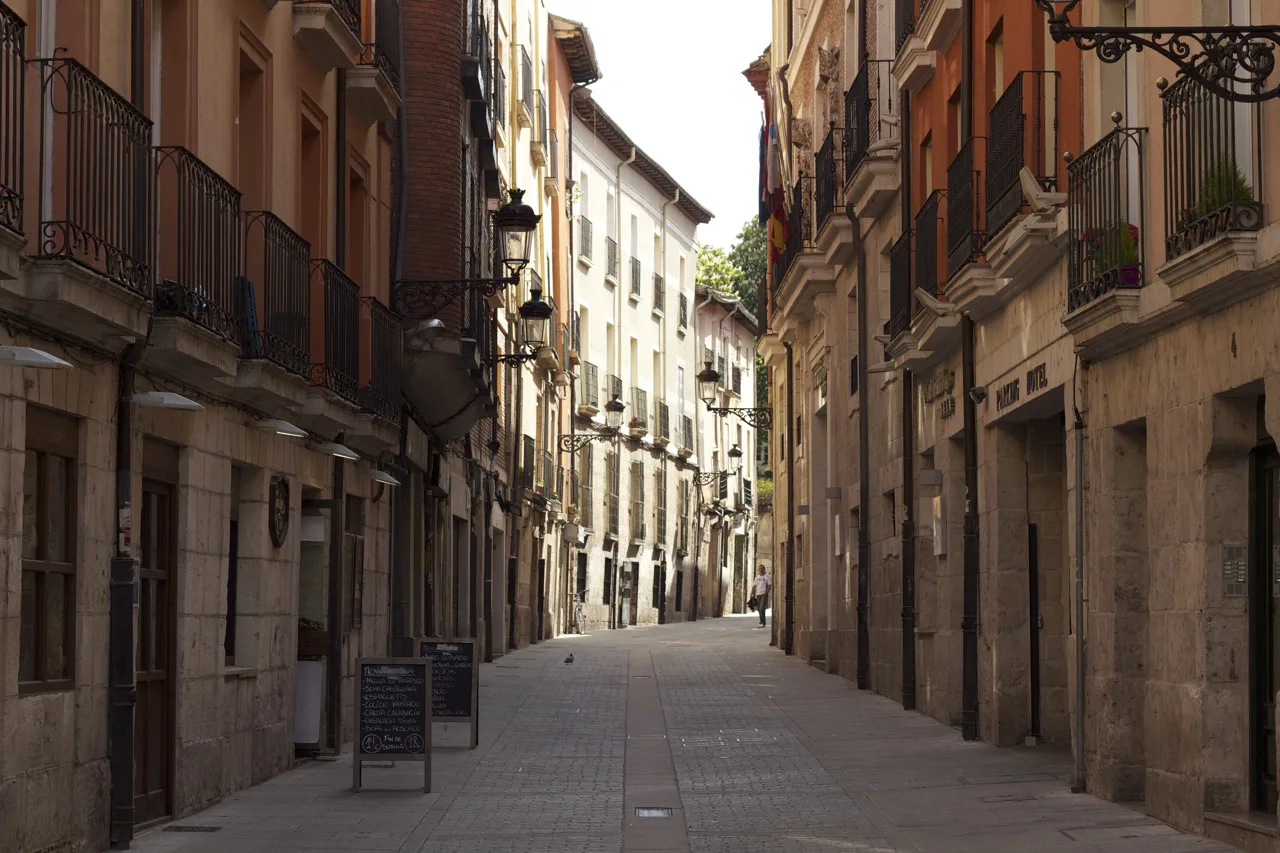
From the cathedral square, the old town unfolds along Calle Nuño Rasura, Calle Santa Águeda and Calle Fernán González, which together carry you past the Iglesia de Santa Águeda, sections of the town walls and the solar del Cid. These are ordinary streets with monument after monument set into them, so the walk is a matter of looking up and stepping aside rather than following a single marked trail. Keeping to this line means you see the quarter as a whole instead of hopping between isolated sights.
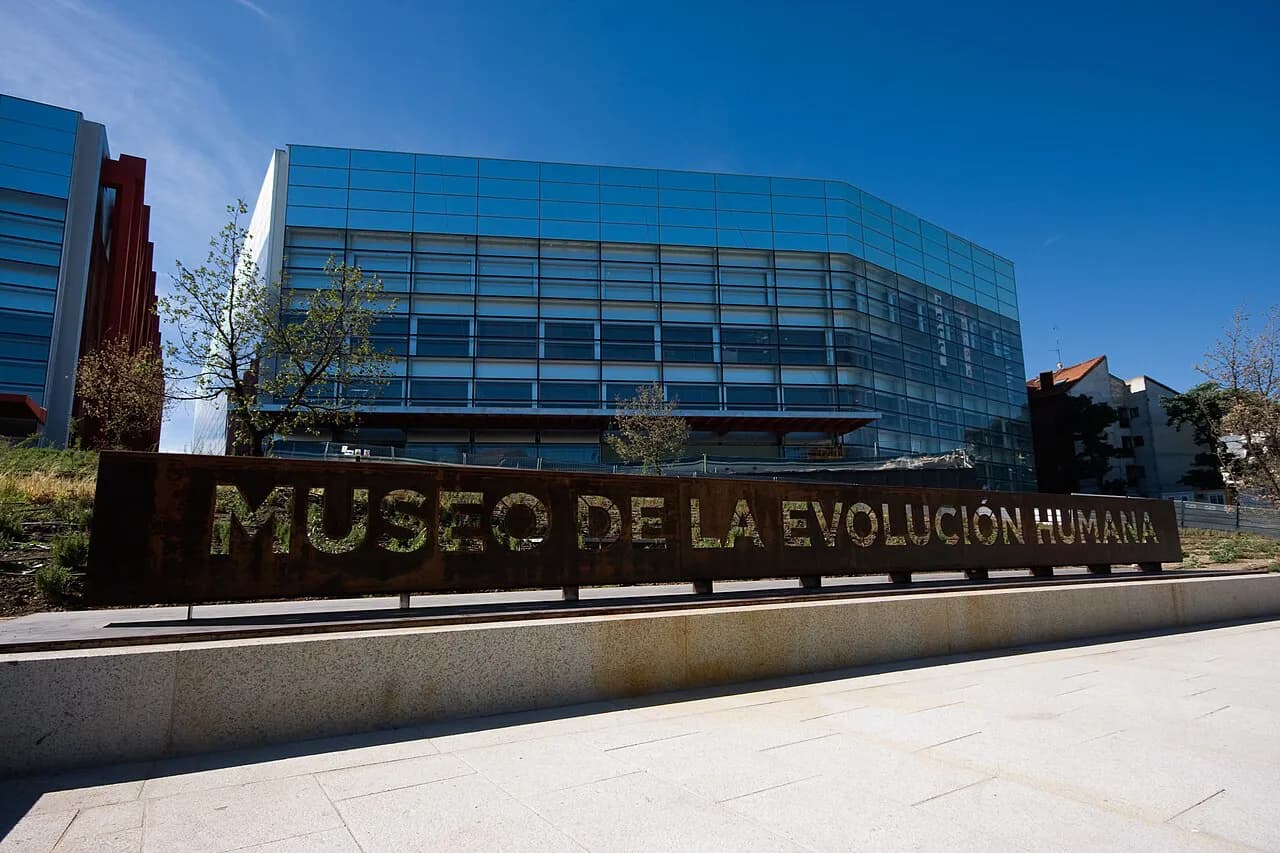
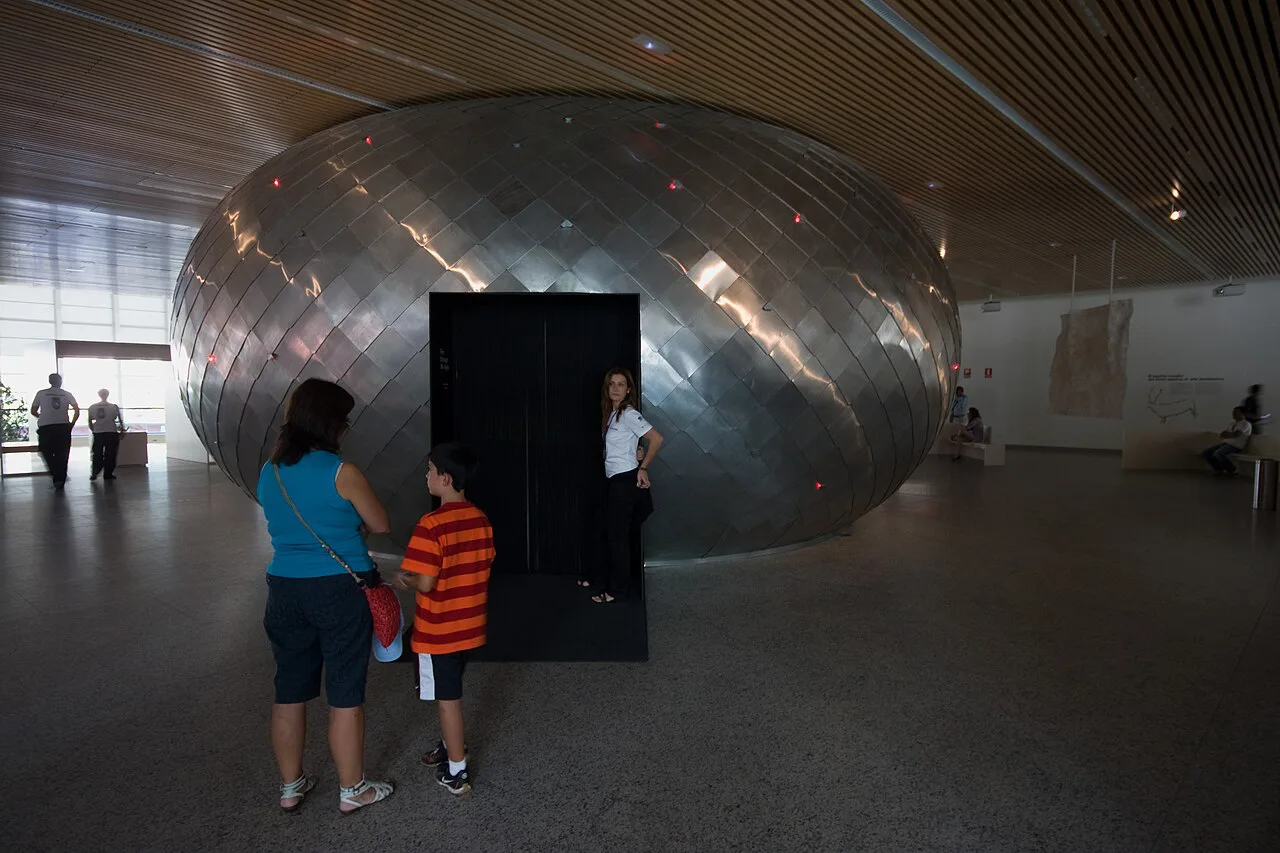
The Museo de la Evolución Humana and the Iglesia de San Esteban sit within easy reach of this part of the centre and reward a longer stop if you want museum time alongside the streets. Opening hours, ticket prices and closing days vary between them, so check each museum's own published information before setting aside an afternoon. Our guide to the museums in Burgos explains what each collection covers and who each one suits.
Allow for how churches work here: interiors often close to visitors around services, and doors that are open in the morning may not be later. Build the streets around fixed-entry sights rather than the other way round, so a closed door does not strand your route.
The castle hill and the Mirador del Castillo
Above the old town, the Cerro San Miguel carries the Castillo de Burgos and the Mirador del Castillo, and the viewpoint is the reason to climb or ride up. From there the whole city opens out below you, with the cathedral and the old streets laid out in relation to the river. It is the one stop on the route that reframes everything you have already walked.
If you take the tourist train, the Mirador del Castillo is a scheduled stop where passengers get out for the panorama before the circuit continues, which removes the climb without losing the view. On foot, treat the hill as the high point of the day and descend the same way before the afternoon heat builds.
The castle site and the hill sit above the historic centre rather than inside it, so they work best as the middle leg between the old streets and the Plaza Mayor. Check the castle's own published opening arrangements before you rely on going inside, and treat the mirador as the fixed reward either way.
Plaza Mayor and the squares to finish on
The Plaza Mayor is the natural place to end the walk: a colourful, arcaded square where you can sit at a terrace with a coffee and look back on the route you have covered. It is a working civic square as much as a visitor sight, which is part of its appeal after the density of the cathedral and the old streets.
Plaza de la Libertad, the Puente de San Pablo and the Plaza del Cid round out the set of public spaces within the centre if you want to extend the loop rather than stop. Each is a short addition to the same walk and costs nothing but time, so add them in the order they come rather than as separate outings.
Covering the ground by tourist train
The Chu-Chú tourist train leaves from the Plaza del Rey San Fernando and runs two circuits, one to the Mirador del Castillo and Las Huelgas at 11.00 and 15.00, and the Monumental route through around 30 monuments. Fares are 4.60 EUR for adults, 3.40 EUR for children aged 4 to 13, and free for under-3s. In summer a night route, the Ruta de la Luz, covers more than 30 illuminated monuments in roughly 60 minutes with limited places.
Use the train for the layout, not as the whole visit: it shows you the perimeter and the outer sights, and you still need to be on foot for the cathedral and the old streets. The recorded commentary explains the city's history as you go, which makes the first hour on the ground more legible.
Outside the old town: Las Huelgas and Miraflores
Two monuments beyond the historic centre are worth adding to a Burgos break: the Monasterio de las Huelgas, a Cistercian convent founded in the 12th century with royal tombs and a noted collection of historic textiles, and the Cartuja de Miraflores, a Carthusian monastery outside the centre with a late Gothic retablo and the tombs of Juan II of Castilla and Isabel de Portugal. Neither sits inside the walkable casco histórico, so plan them as separate stops rather than squeezing them into the old-town loop.
The Chu-Chú's Mirador del Castillo and Las Huelgas circuit is one way to reach the monastery side without arranging transport yourself. Miraflores requires its own journey out, so leave it for a half-day rather than bolting it onto the cathedral morning.
On foot or by train: the trade-offs
The old town is a walking route first and a train route second: on foot you get the streets, the gate and the cathedral square in sequence, while the train covers distance and the outer sights. Doing both is the most efficient combination, with the train early to fix the layout and the walk afterwards at your own pace.
Midday sun is the real constraint on the open stretches between the cathedral and the castle hill, and Burgos feels cold outside summer, so the walk is more comfortable earlier or later in the day. Monday matters too: the Arco de Santa María is closed that day, so plan the gateway for another morning if the exhibitions are part of your reason for going in.
Keep the fixed-entry sights as the skeleton of the day and let the streets fill the gaps, because church interiors and small museums keep their own hours around services. That way a closed door changes the order of the walk rather than the plan.
Which half of Burgos old town to do first
Start at the Arco de Santa María and the cathedral, then decide whether the castle hill or the Plaza Mayor comes next depending on the heat and the hour. If you only have an afternoon, take the train once for the layout and spend the rest of the time on foot between the gate, the cathedral and the square.
Prices, opening hours and train departure times change with the season, so confirm them against the cathedral, the Arco de Santa María and the tourist train's own published information before you travel.
Explore more Burgos guides
Frequently Asked Questions
Why is Burgos famous?
Burgos is known above all for its Gothic cathedral, a UNESCO World Heritage site dedicated to the Virgin Mary, and for its historic quarter of walls, gates and squares. The city is also tied to El Cid Campeador, whose tomb is inside the cathedral, and the surrounding province holds the Monasterio de las Huelgas, a 12th-century Cistercian convent, and the Cartuja de Miraflores.
Which monuments outside the old town are worth adding?
The Monasterio de las Huelgas, a Cistercian convent with royal tombs and a noted collection of historic textiles, and the Cartuja de Miraflores, a Carthusian monastery with a late Gothic retablo and the tombs of Juan II of Castilla and Isabel de Portugal. Neither sits inside the walkable old town, so plan them as separate stops rather than squeezing them into the casco histórico loop.
Sources
Notes for your next Spanish town break
Optional updates to our guides.
You might also like
Continue reading
More guides you'll find useful