Alcúdia Old Town: Walls, Streets and Squares to Walk
Walk Alcúdia's old town gate to gate: medieval walls, the Sant Jaume quarter, Tuesday and Sunday markets, and Roman Pol·lèntia just outside.
On this page
Alcúdia's old town is a small walled quarter you can walk end to end in a morning, and the walls themselves are the best reason to come. Start at one gate, cross the pedestrian streets inside, climb a stretch of rampart for the rooftop view, then cross to the Roman ruins beside the walls. This guide sets out that route and explains how the quarter and the port fit together.
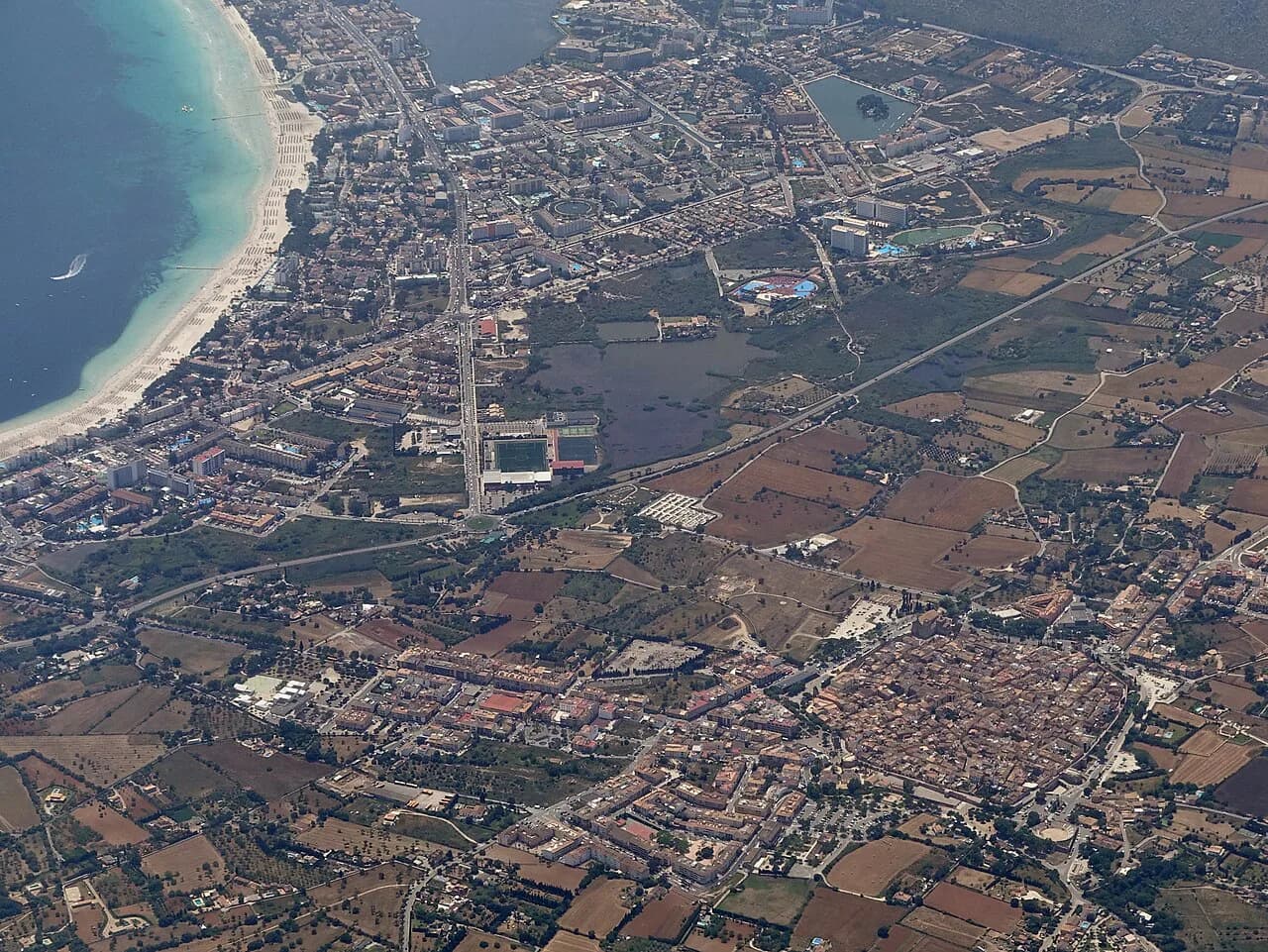
The historic centre sits on Mallorca's north coast, roughly 60 km from Palma and a short drive beyond the MA-13 motorway exit. It is a separate place from Port d'Alcúdia, the marina and resort strip about 2 km away, so plan on visiting the two at different points of the day rather than expecting one continuous stroll.
What Alcúdia old town is, and where it sits
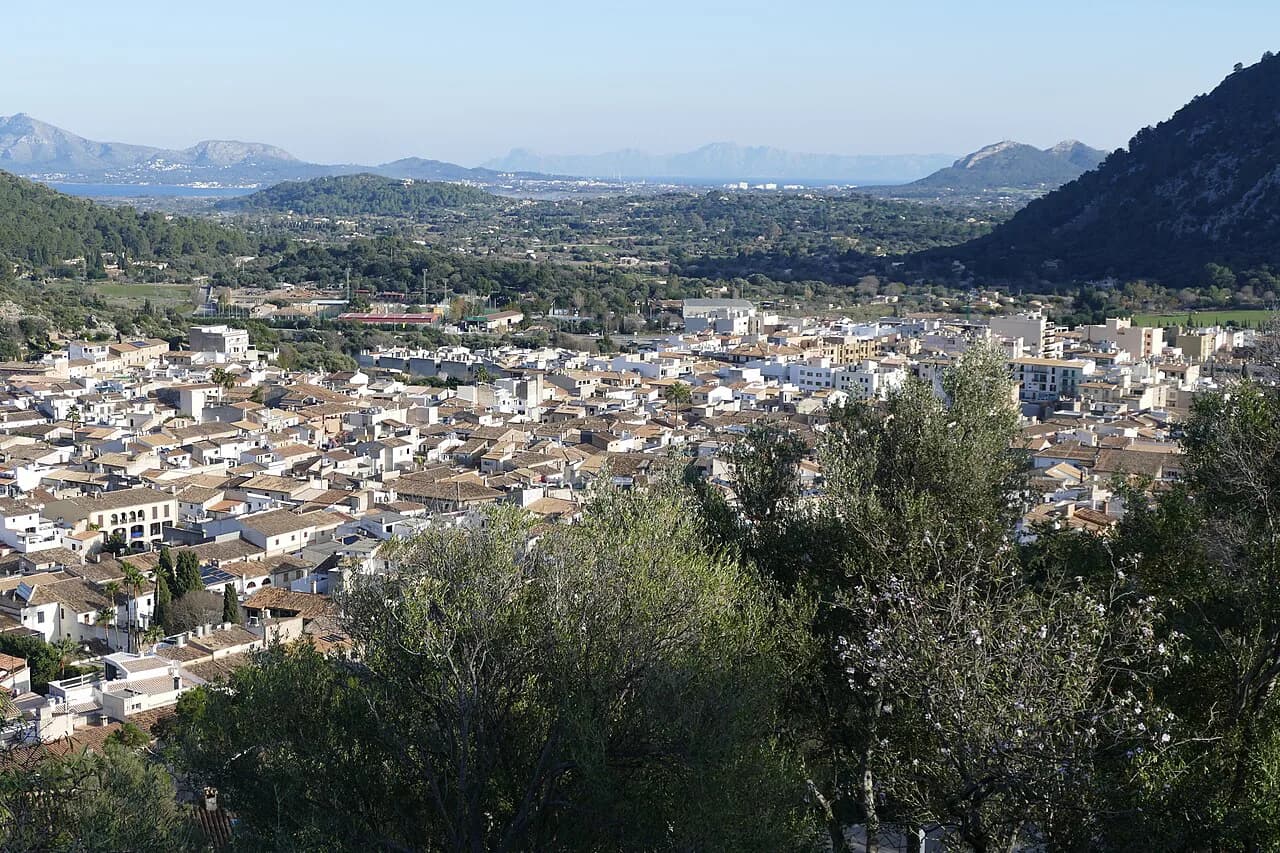
Alcúdia is one of the north of Mallorca's most visited villages, and its appeal is split between the coast and the old quarter. The historic centre keeps a complete ring of medieval walls, a web of pedestrian lanes and stone houses built from the local marès sandstone. That combination of fortification and lived-in streets is what makes it worth a dedicated stop rather than a drive-through.
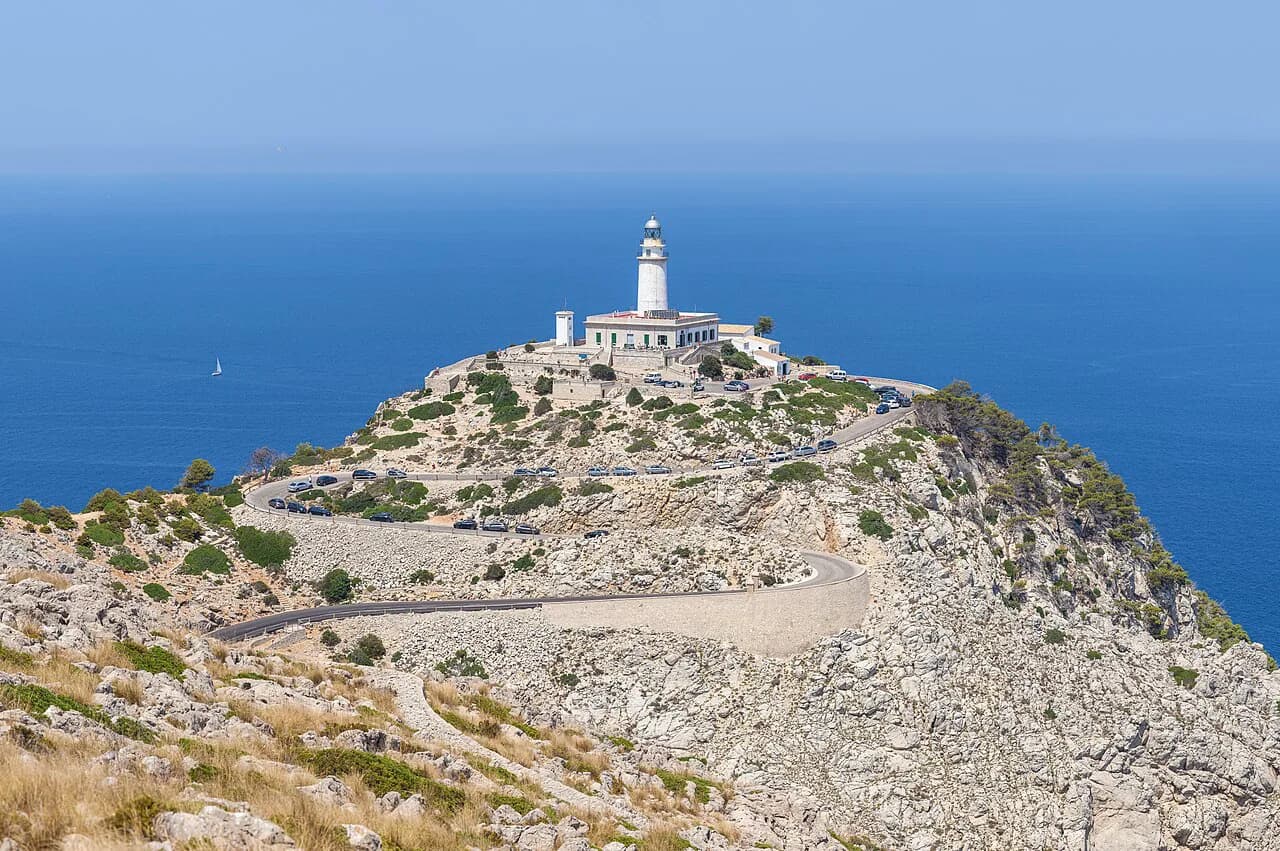
The town lies in the north of Mallorca, with Pollença and Port de Pollença nearby and the long bay of Alcúdia to the east. If you are working out how the sights cluster, treat the walled centre as one half-day and Pol·lèntia beside it as the other. Beyond the town, the coast road leads on towards Cap de Formentor for anyone extending the loop.
How the walled quarter is laid out
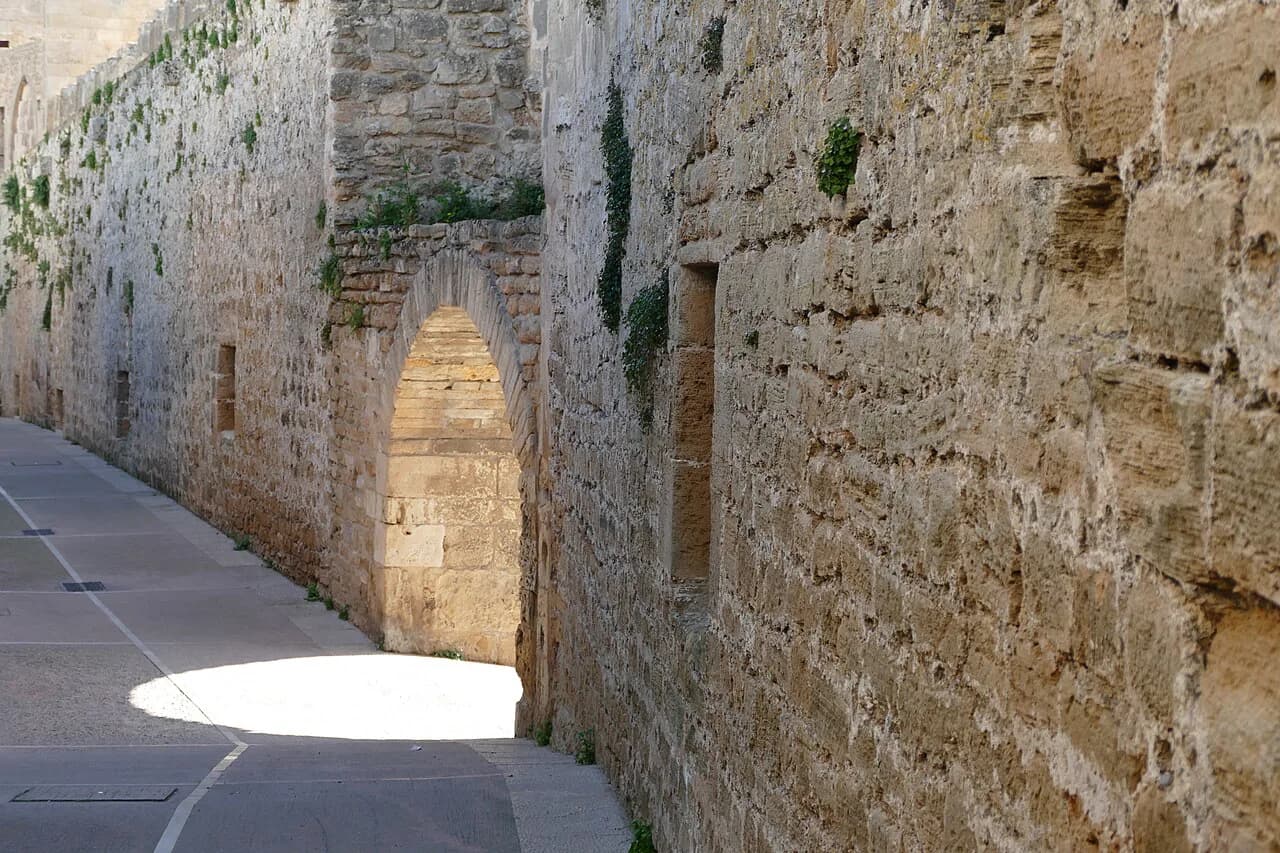
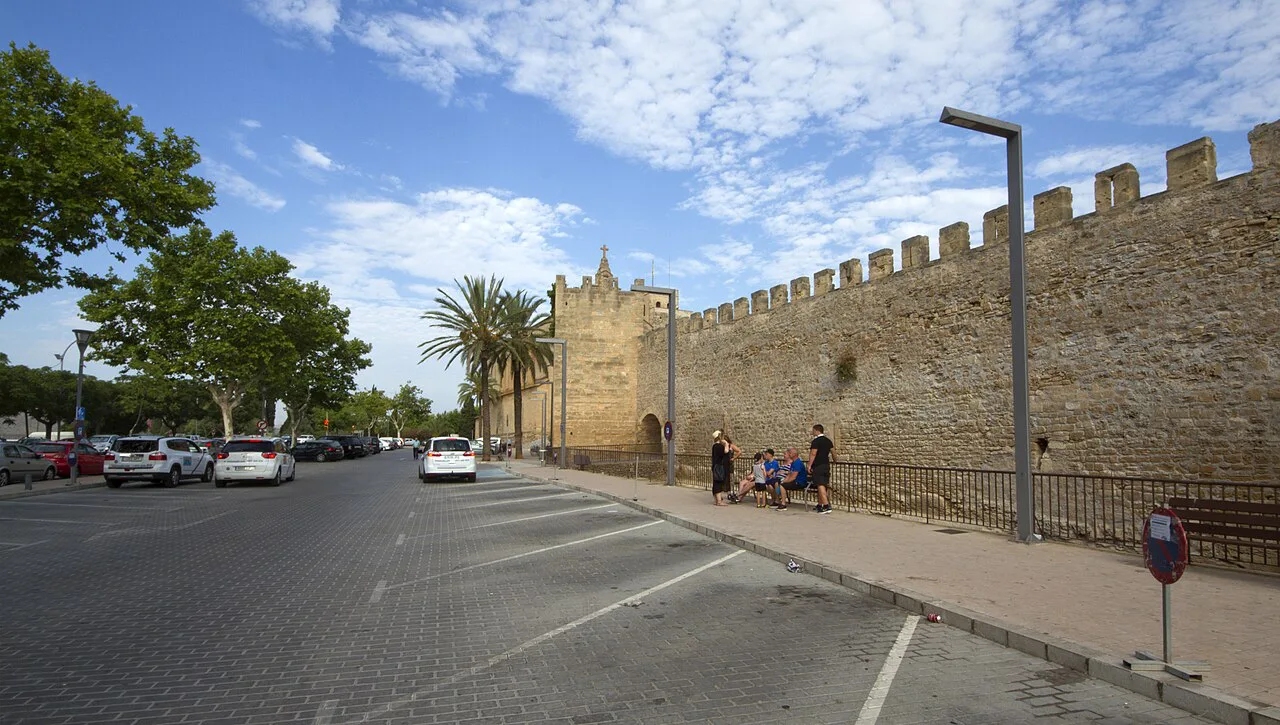
The old town is a ring of ramparts wrapped around a pedestrian core. The defensive circuit runs for well over a kilometre and stands about 6 m high, built in the 14th century under King Jaume II to protect a coast exposed to raids from the sea. Three gates pierce it: the Porta de Mallorca, the Porta del Moll and the Porta de la Vila Roja.
Inside, almost everything is on foot: narrow cobbled lanes, stone facades with wooden shutters and small shops opening onto the street. Cars stay outside the walls, which keeps the centre calm even when the gates are busy. That layout is why the walk works best as a loop from one gate to the next rather than a single street.
Start at the gates
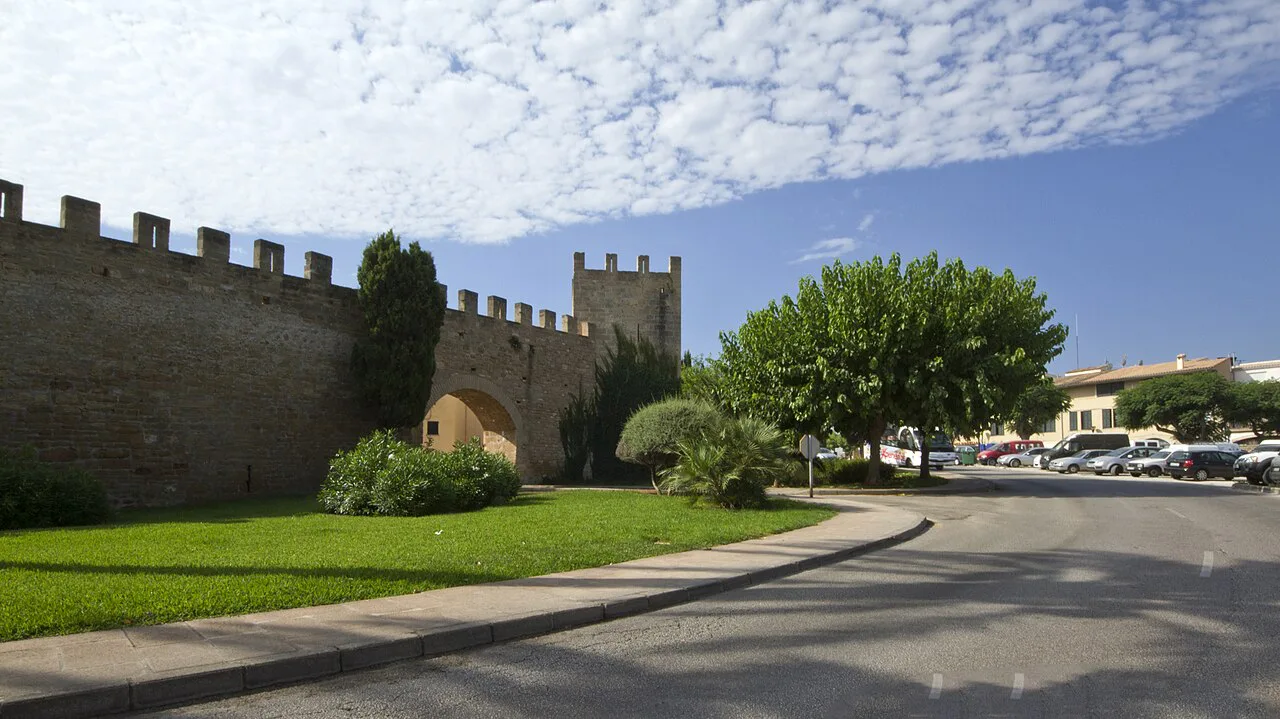
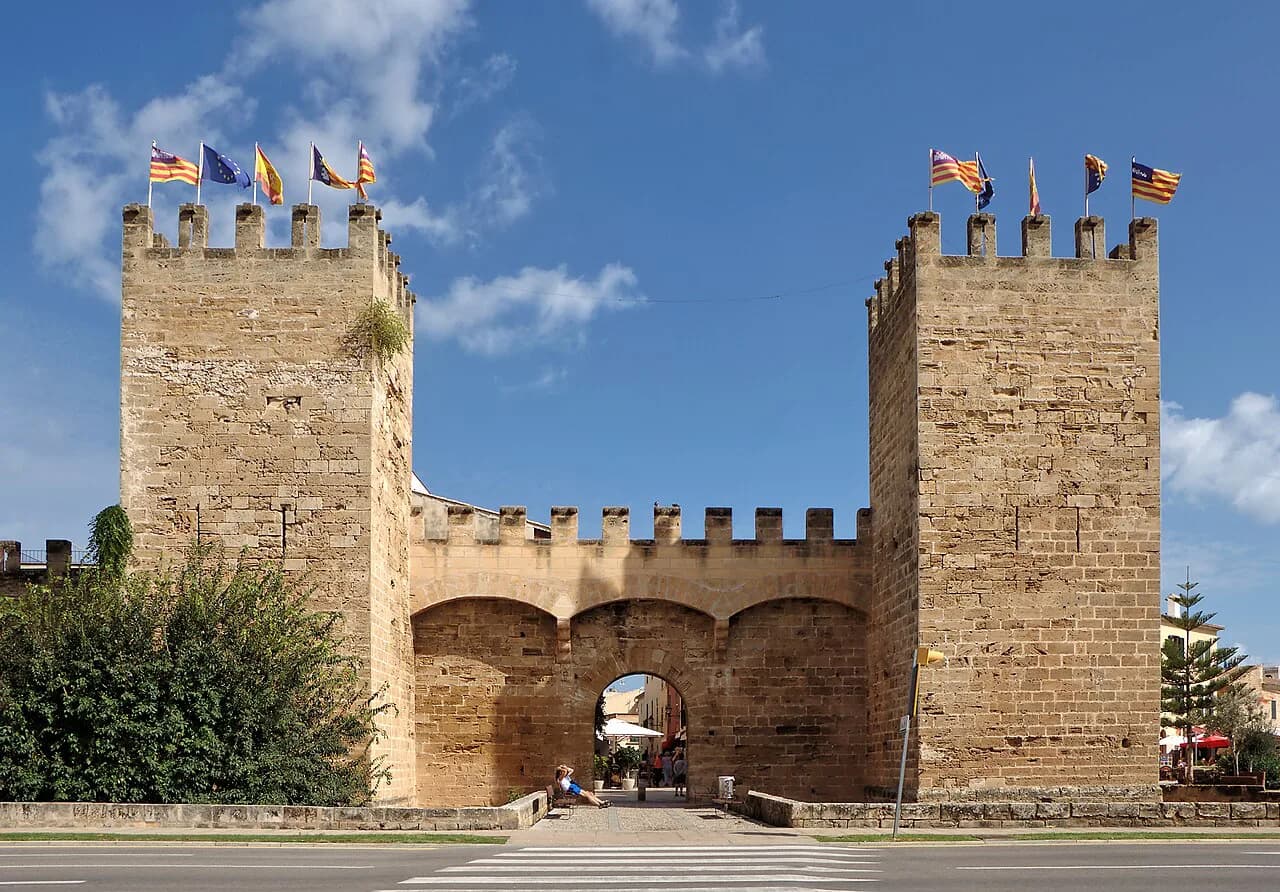
The Porta de Mallorca is the obvious first stop, its twin towers framing the way in and setting the tone for the stonework ahead. From there the pedestrian streets carry you across the quarter, and the Porta del Moll on the seaward side gives you a second orientation point and a favourite spot for photographs. Working gate to gate means you always know which edge of the town you are on.
The Porta de la Vila Roja completes the set of three, and walking the line between them gives your visit a natural shape. The houses around the gates are among the oldest in the quarter, so the short stretches outside the walls are worth the detour before you head in.
Walking the medieval walls
Several stretches of rampart are open to walkers, and the climb is the high point of a visit. From the top the view runs across tiled rooftops to the Mallorcan countryside and, in the distance, the sea. Look for the towers placed at intervals to watch the coast, and the tiny courtyards and gardens tucked against the inside of the stone.
Late afternoon is the most rewarding time to be up there, when the light turns golden on the marès and the shadows lengthen across the walkway. The trade-off is that the wall path is exposed, with little shade, so a hot midday climb in summer is best avoided. Allow a slow half-hour for the circuit rather than treating it as a quick photo stop.
Squares, streets and stone houses inside
Two squares carry most of the life inside the walls: the Plaça de l'Ajuntament and the Plaça de Carles V, both lined with terraces, historic buildings and craft shops. Settle into one of them for a coffee and you get the rhythm of a working Mallorcan town rather than a museum piece. The side lanes around them are where the best wandering is, with traditional marès houses, flowered balconies and small shops selling local oil, salt and wine.
Look up as you walk: several facades carry family shields and carved portals from the families who once ran the town's trade. Some carvings and plaques are easier to spot on the quieter streets than on the main square, so take the lanes slowly. If buying local produce appeals, the old town's small shops reward a browse between the sights.
Església de Sant Jaume and the monumental heart
The Església de Sant Jaume stands in the middle of the old town and dominates its skyline. The building is a Gothic church with later art and religious pieces inside, and a small museum attached to the church adds context to the quarter's history. It sits close to the wall line, giving you another reason to walk the inner edge of the circuit.
Treat the church as part of the same wander rather than a separate excursion, and pair it with the nearby old buildings and portals that complete the monumental corner of the quarter. Doors close around services, so time your look inside around the rest of the walk.
Pol·lèntia and its museum, just outside the walls
A few minutes beyond the ramparts lie the ruins of Pol·lèntia, the Roman city that made this stretch of coast important long before the medieval walls. The excavated streets and foundations are easy to read on foot, and the small site museum displays finds that explain how the settlement worked. Combining the Roman site with the old town makes a coherent half-day without leaving the immediate area.
Give the ruins their own slot rather than squeezing them in at the end, and read up on the site's main houses before you go so the foundations mean more on the ground. The walls and the Roman streets together tell the story of why this spot was fought over for centuries.
When to come: market mornings and quiet evenings
The weekly market fills the old town on Tuesdays and Sundays, with crafts, clothing and local produce spread through the streets. Those mornings are the liveliest and the busiest, which is the trade-off: you get atmosphere and stalls, but the lanes are crowded and the gates slow to pass. If you want the stonework to yourself, come on another day.
Evenings inside the walls are quieter and cooler, and the same lanes that throng in the morning empty out after the day visitors leave. The lighting on the marès gives the quarter a different character after dark, and the squares stay open for a slow stroll. Spring and autumn are the most comfortable seasons for a wall walk, when the midday heat is less punishing.
Getting there and parking outside the walls
By car, the run from Palma takes roughly 45 minutes via the MA-13 motorway, and the town is also reachable by bus from the capital. Parking is free and signed in several places just outside the old town, with the Ca Na Pila and Sa Talaia car parks among the closest to the centre. Leave the car outside the ramparts, because the centre is pedestrian.
Drivers should look for the signs to the centre històric and take the first free space rather than circling the walls. From any of the outer car parks it is a short walk to the nearest gate, so a few minutes on foot at the start and end is part of the visit.
How long the old town needs
Two to three hours covers the gates, the squares, Sant Jaume and a stretch of wall at an unhurried pace. Add another hour for Pol·lèntia and its museum, and a market morning will eat into that further as you pause at stalls. If you are building a north Mallorca short break, this makes a neat half-day that pairs with the coast or the peninsula later on.
Pair the old town with the port in a single day by driving the 2 km between them, or with the gardens and green spaces outside the walls if you want a slower pace. Keeping the wall circuit as the spine of the day stops the visit turning into a list of disconnected sights.
Which gate to start from
Begin at the Porta de Mallorca if you want the classic arrival, or the Porta del Moll if you are coming from the port side; either way, work around the walls and climb a stretch before heading inside. Finish at Sant Jaume and cross to Pol·lèntia to close the loop. This sequence keeps you oriented, puts the best views at the right time of day and leaves the busiest squares for a pause rather than a bottleneck.
Explore more Alcúdia guides
Frequently Asked Questions
Where is Alcúdia old town?
It sits on Mallorca's north coast at the base of the Formentor peninsula, roughly 60 km from Palma and just off the MA-13 motorway. The walled centre is a separate place from Port d'Alcúdia about 2 km away.
Does Alcúdia old town have a market?
Yes. The weekly market fills the streets on Tuesdays and Sundays, with crafts, clothing and local produce. Those are the busiest mornings, so visit on another day if you prefer quiet lanes.
Can you walk on the walls of Alcúdia?
Several stretches are open to walkers, with views over rooftops, the countryside and the sea. The route is exposed with little shade, so late afternoon is more comfortable than midday in summer.
Sources
Notes for your next Spanish town break
Optional updates to our guides.
You might also like
Continue reading
More guides you'll find useful