Pollentia: Roman Alcúdia's Forum, Houses and Theatre
Pollentia is the Roman city just outside Alcúdia's walls, with a residential quarter, forum and rock-cut theatre, plus a museum in the old town.
On this page
Pollentia is worth an hour or two of any Alcúdia break, and you reach it on foot from the old town rather than by car. The Roman city lies just outside the medieval walls, opposite the Església de Sant Jaume, and its three excavated areas plus a museum in the old town make a compact, self-guided circuit. This guide explains what each part holds, the walking order that works best, and how the site fits around the heat of an inland Mallorcan summer.
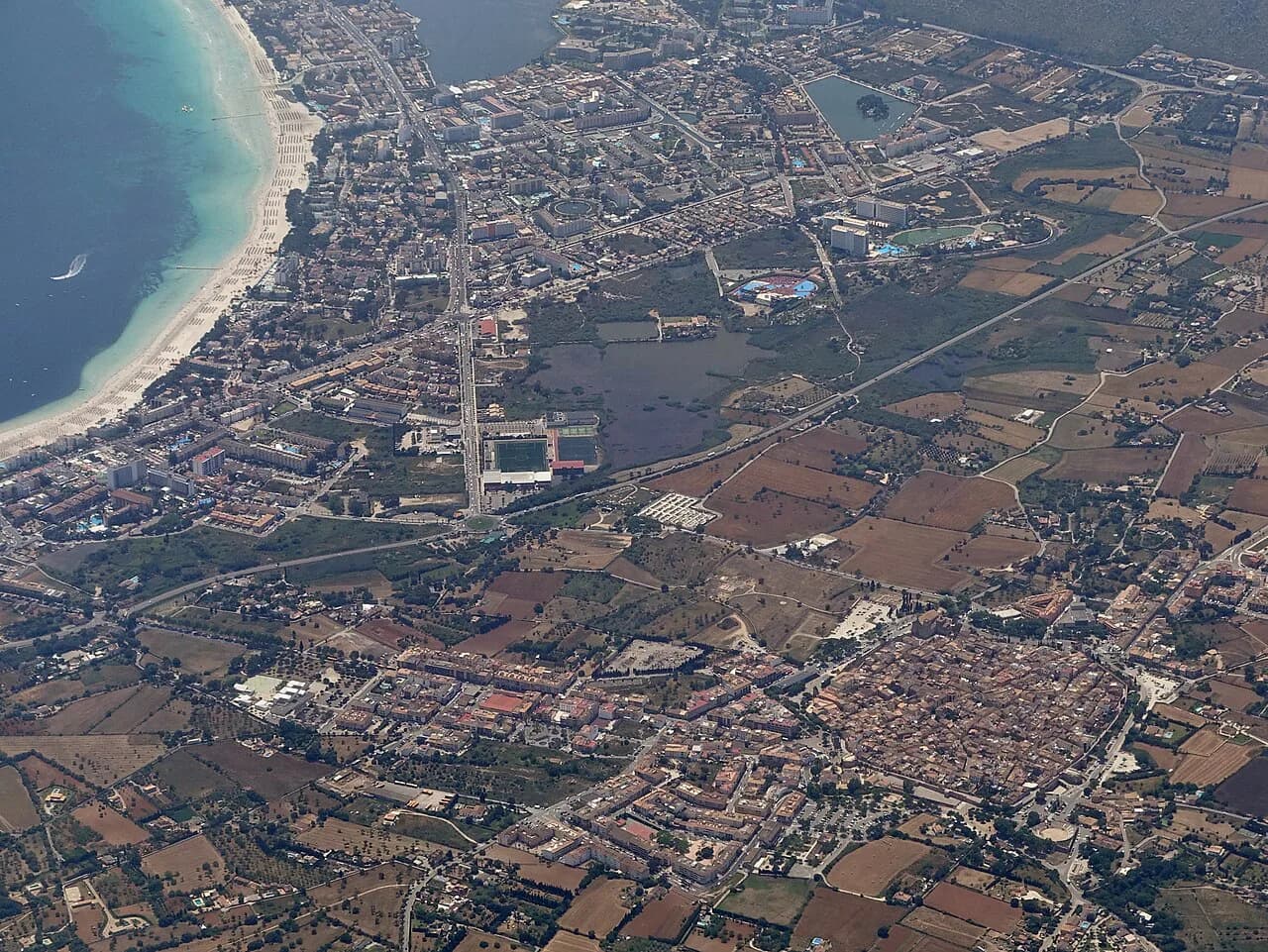
Founded after Quintus Caecilius Metellus took Mallorca in 123 BC, Pollentia grew into the island's leading Roman city and the capital of the Balearics under Roman rule. At its height it covered roughly 18 hectares on the isthmus between the Badia d'Alcúdia and the Badia de Pollença, a position that controlled sea routes between Italy and Hispania. Expect foundations, street lines and a handful of standing structures rather than a reconstructed town: most of the stone was carted away over the centuries, so the grid and the house plans carry the visit.
What Pollentia is and where it sits outside Alcúdia's walls
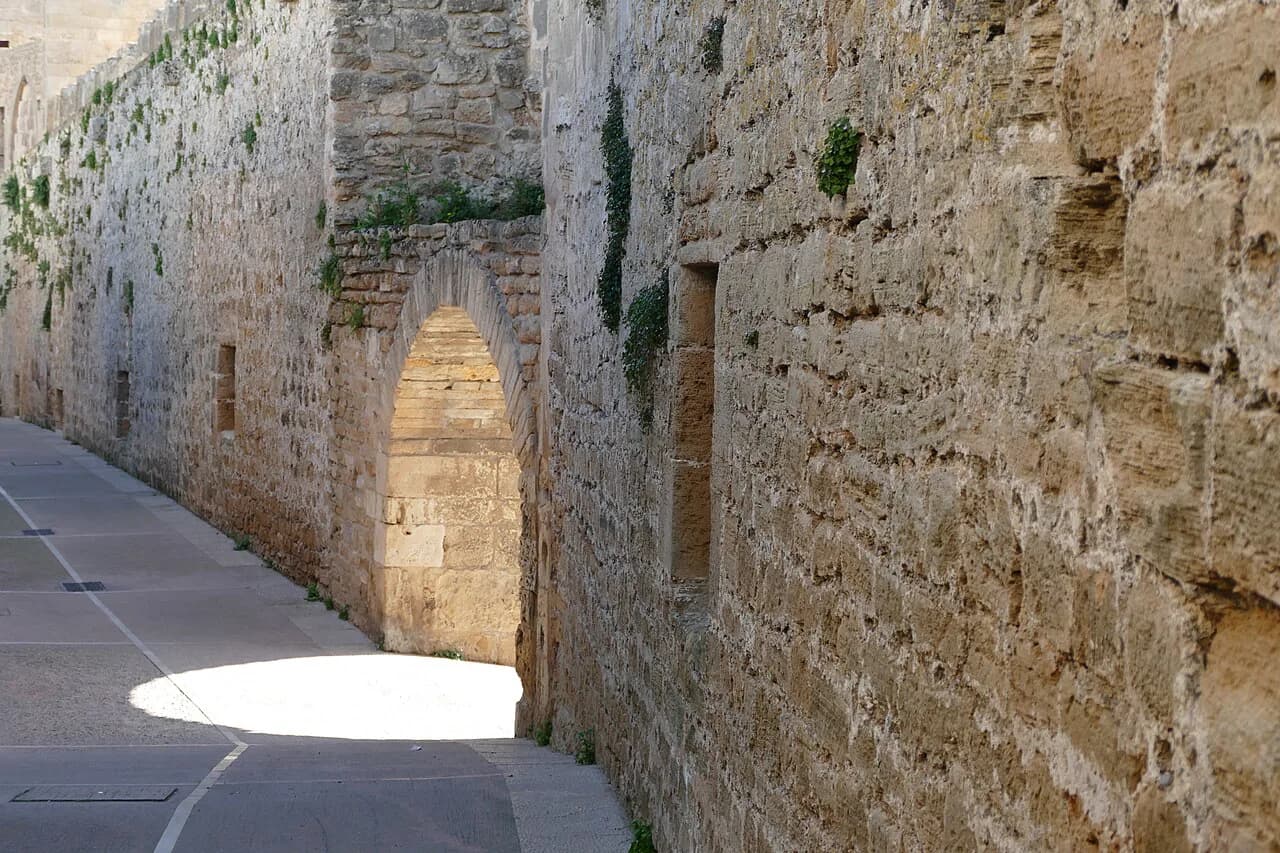
The archaeological zone sits in the open ground beyond the Porta de Mallorca side of the old town, facing the church of Sant Jaume. Because the excavation is unprotected by walls or a large visitor centre, the layout reads as field archaeology: low masonry, gravel paths and explanatory panels, with the medieval town visible behind you. Come with that expectation and the site rewards you; come expecting a Pompeii-scale monument and it will not.
The land was declared an archaeological zone in 1963 and the state began buying plots from 1973, which is why the site survives as a preserved island in a built-up resort town. A consortium has managed conservation since 2000. Treat those years as history rather than as a description of how the site is run today.
The three visitable areas: Sa Portella, the forum and the theatre
Pollentia opens up as three separate areas, each a short walk from the next: the residential quarter of Sa Portella in the north, the forum about 200 metres south of it, and the theatre on the southern edge of the city. Plan your visit in that order, because it follows the Roman street plan and saves backtracking. The theatre is the one area where the walk between stops is longest, so leave it until you have seen the houses and the forum.
Sa Portella: the cardo and decumanus, Casa dels Dos Tresors and Casa del Cap de Bronze
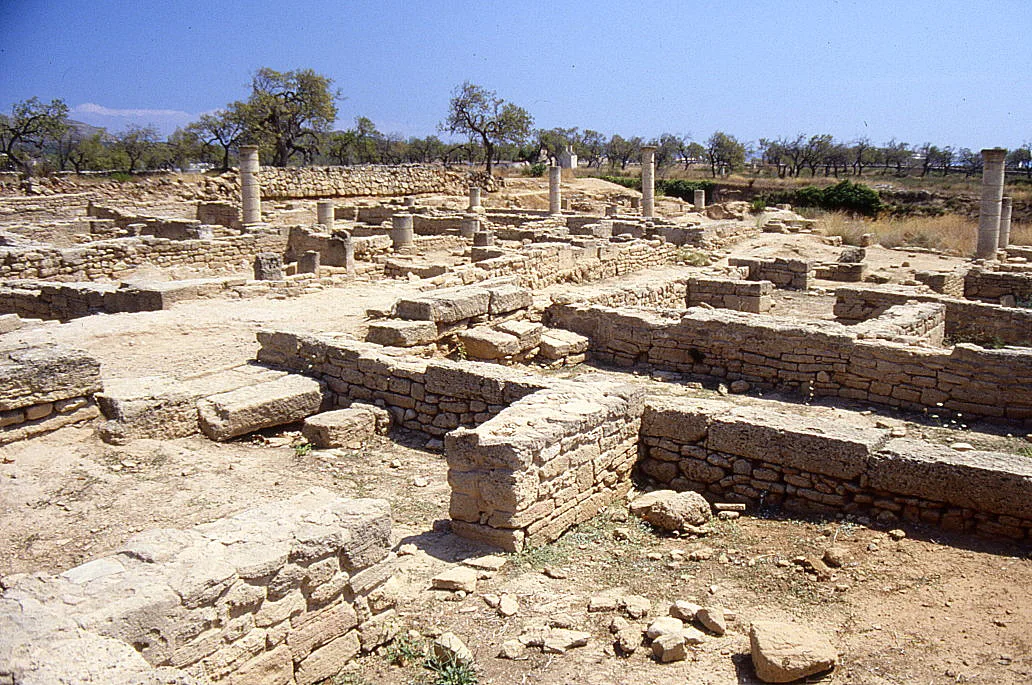
Sa Portella is the best-preserved part of the site and the right place to start. Two paved streets cross at right angles: the cardo runs north to south and the decumanus, called Carrer Porticat, runs east to west with a colonnaded frontage. Those two lines give you the shape of a Roman city block, with houses grouped into insulae either side.
Excavations between 1957 and 1961 uncovered three houses along those streets. The Casa dels Dos Tresors is the best preserved, with an atrium, an impluvium for collecting rainwater, a triclinium and small rooms opening off the courtyard. The Casa del Cap de Bronze stands across the street and is more fragmentary, while the Casa del Nord-oest was cut short by a later defensive wall whose remains you can still see. A fourth house, the Casa de Polímnia, lies south of the quarter.
The forum: the Capitolium, the small temples and the tabernae
The forum was excavated in the early 1980s and revealed the civic and religious heart of the city. Its most important building is the Capitolium, a temple dedicated to the triad of Jupiter, Juno and Minerva, with two smaller temples and a shrine, the edículo, alongside. Behind the portico runs a line of tabernae, the shop units that funded much of civic life.
Look for the honourific inscriptions found in the forum, some of which are now displayed in the monographic museum rather than on site. The forum's foundations are low, so the value here is in reading the plan: temple platform, portico, shops, all in a row. Spend ten minutes on the panels before you walk the ground.
The Roman theatre: cavea, orchestra and stage, and its later use as a burial ground
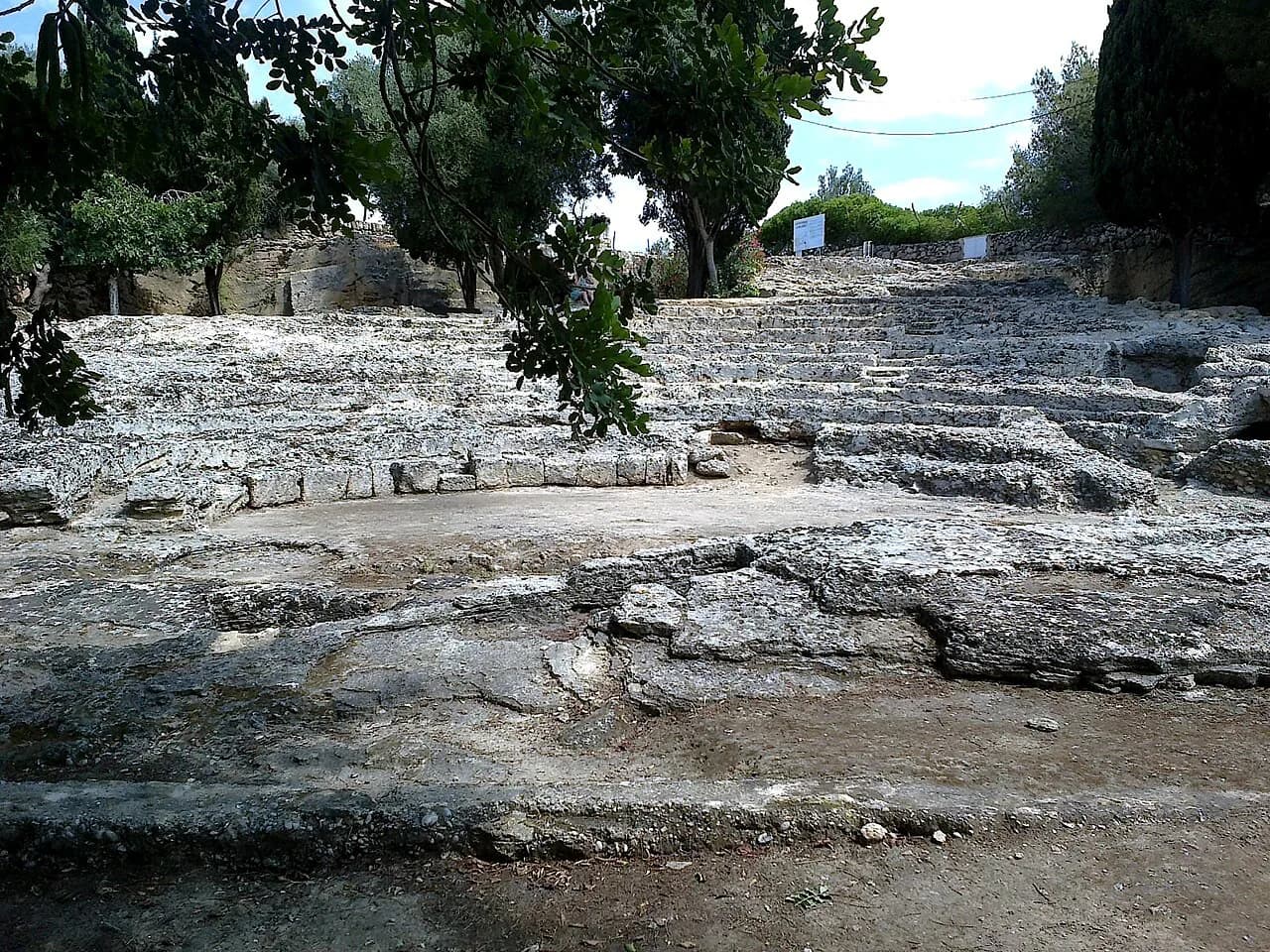
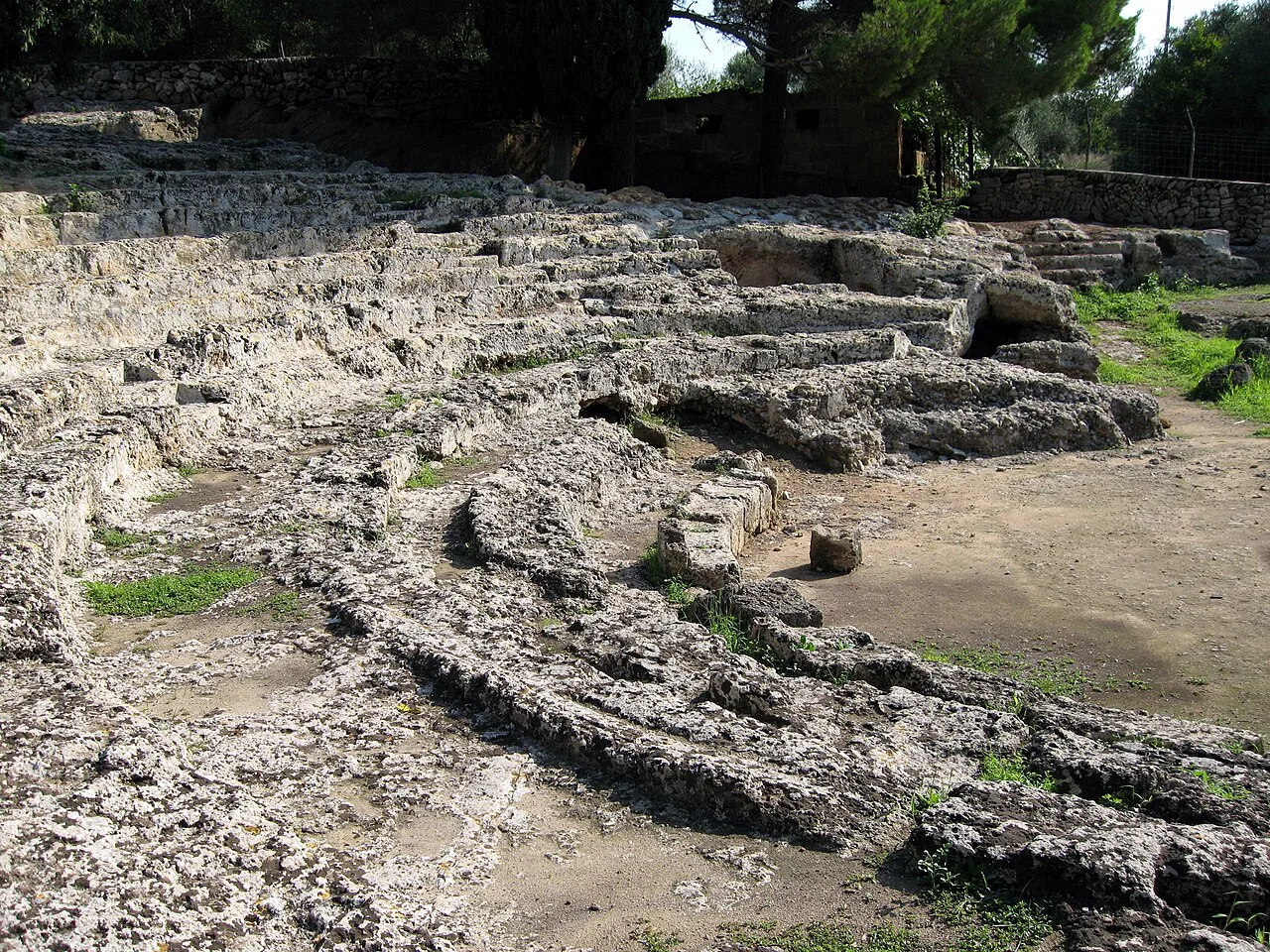
The theatre is cut into the rock about half a kilometre from the modern town, with a semicircular cavea divided into three tiers, an orchestra between the seating and the stage, and a rectangular stage building. Earlier scholars mistook it for an amphitheatre or a Greek theatre, but the 1952 excavation by the American Bryant Foundation confirmed it as a Roman theatre.
What makes it more than a ruin is its afterlife. After the Vandals invaded, the theatre fell out of use and was turned into a necropolis, with trapezoidal graves cut into the stage and the upper seating. The theatre has been revived for cultural performances in August through the 'Agosto a la Fresca' cycle, but no dates are set for a coming season, so treat that as history rather than as a fixture of your trip.
The Museu Monogràfic de Pollentia on Carrer de Sant Jaume
The museum sits separately, inside the old town on Carrer de Sant Jaume in what was a medieval hospital. It holds most of the objects found at Pollentia: marble sculptures including a cuirassed general and a Roman matron, glass, ceramics, coins, bone and ivory ornaments, and pieces of gladiatorial gear. Do the site first and the museum after, and the fragments on display will make sense.
Layout and walking order between the site areas and the museum
A sensible circuit starts at Sa Portella, continues south to the forum, then on to the theatre, and finishes back inside the walls at the museum on Carrer de Sant Jaume. Budget a steady walk of around 30 to 40 minutes between the stops, more if you read the panels and linger. The whole loop is flat, and the only shade is that of the occasional tree or wall.
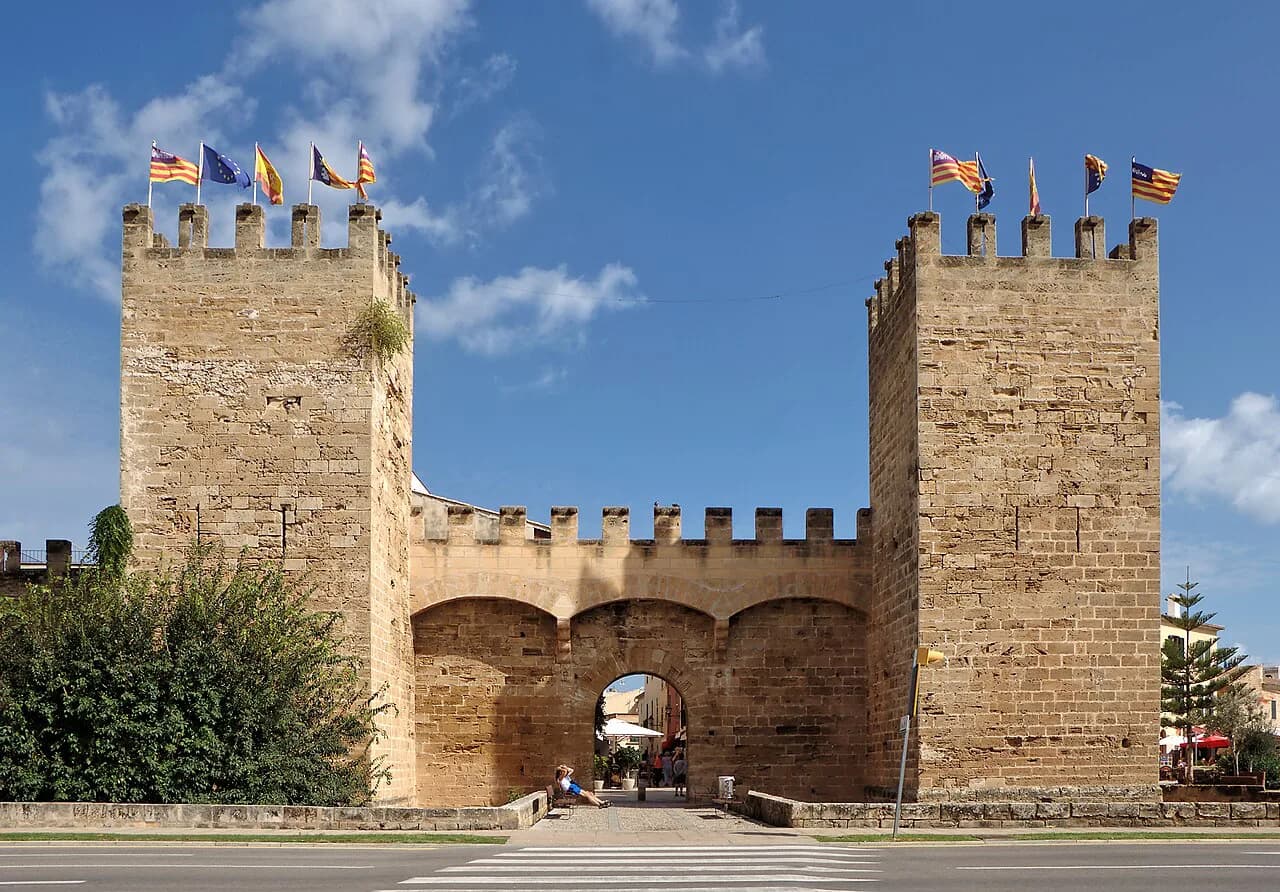
If you are coming from the port, the walk into Alcúdia's centre brings you to the walled town first, and the site is a few minutes past the gates. Combine it with the old town's walls and gates for a half-day that mixes Roman and medieval, or with wider things to do in Alcúdia if you have a full day.
How long Pollentia takes and how it fits a short break from Palma or the port
Two hours covers the houses, forum and theatre comfortably, plus 45 minutes for the museum. That fits neatly into a half day, which leaves the afternoon free for the old town or a boat trip out of the port. If you are based in Palma, Alcúdia is a straightforward bus or train-and-bus journey north, but check the current timetable rather than relying on memory.
What to expect in summer heat at midday and on Mondays
The site has almost no shade, so an early or late start makes the walk far more comfortable in July and August. The theatre area can be behind a gate, and the museum keeps its own hours. Check the museum's own listing for its opening days and hours before you set out.
Where to find opening times and ticket prices before you go
Pollentia's opening hours and any admission charge are not given in the sources consulted, so look at the Alcúdia council's heritage pages and the museum's own listing for current hours, closing days and any charge before you travel. Group tours run through the town's heritage department, but confirm times directly rather than assume they run all year.
Should you put Pollentia on your Alcúdia itinerary?
Yes, if you have an interest in Roman urban life and want something more textured than a single reconstructed monument. The reward is the plan itself: streets, houses, a forum and a theatre you can read as a city, plus the objects that came out of it in a small museum. Skip it only if you are short on time and want the old town's walls and gates instead.
Pair the visit with the medieval town on the same morning, take water, and check the museum's hours the day before. It is a low-cost, high-value stop that suits a relaxed half day in northern Mallorca rather than a rushed one.
Explore more Alcúdia guides
Sources
Notes for your next Spanish town break
Optional updates to our guides.
You might also like
Continue reading
More guides you'll find useful