Museums in Murcia: Which Are Worth Your Time
Museums in Murcia city: Salzillo's Holy Week sculpture, Islamic art at Santa Clara, the free Museo de la Ciudad and more, with hours and closing days.
On this page
Murcia rewards two or three museums in a single morning, not a museum marathon: the strongest city collections sit within walking distance of the cathedral and each other. The Museo Salzillo, the Monasterio de Santa Clara La Real, the free Museo de la Ciudad, the Bellas Artes and the Arqueológico each hold something the others do not, so pick by subject rather than by size. This guide sets out what is inside each one, how long to allow, which days to avoid and how the split timetable pattern shapes a day.
Several city museums follow a similar rhythm: doors open in the morning, sometimes close for a long afternoon gap, then reopen in the early evening, with Monday as a common closing day. That pattern, plus shorter summer hours at several sites, decides how you sequence a visit far more than distance does. Pair these with the cathedral and the Real Casino and you have a full day without crossing the city.
Why Murcia's museums suit a short break
Murcia is a compact provincial capital, and its main museums cluster around the historic centre and the streets between the Segura river and the cathedral. That makes them easy to combine with the things to do in Murcia that sit outdoors, from the cathedral facade to the plazas, without losing a morning to transport. Alicante is the nearest common arrival airport for the region; the museums themselves need no particular order, and you can pick them by subject.
The sensible approach is to choose one anchor collection per half-day. Salzillo for sculpture and Holy Week, Santa Clara for Islamic art and a living convent, the Museo de la Ciudad for the story of the city itself, the Bellas Artes for painting and the Arqueológico for the region's deep past. Two of those in a morning, a long lunch, and one more in the early evening is a realistic shape.
If you want to understand the city's layers before visiting the collections, start with the Murcia history background: it explains why Islamic, Baroque and modern pieces sit so close together here. It also helps you read the pieces in Santa Clara and the Arqueológico with more context.
Museo Salzillo: the sculptor behind Murcia's Holy Week
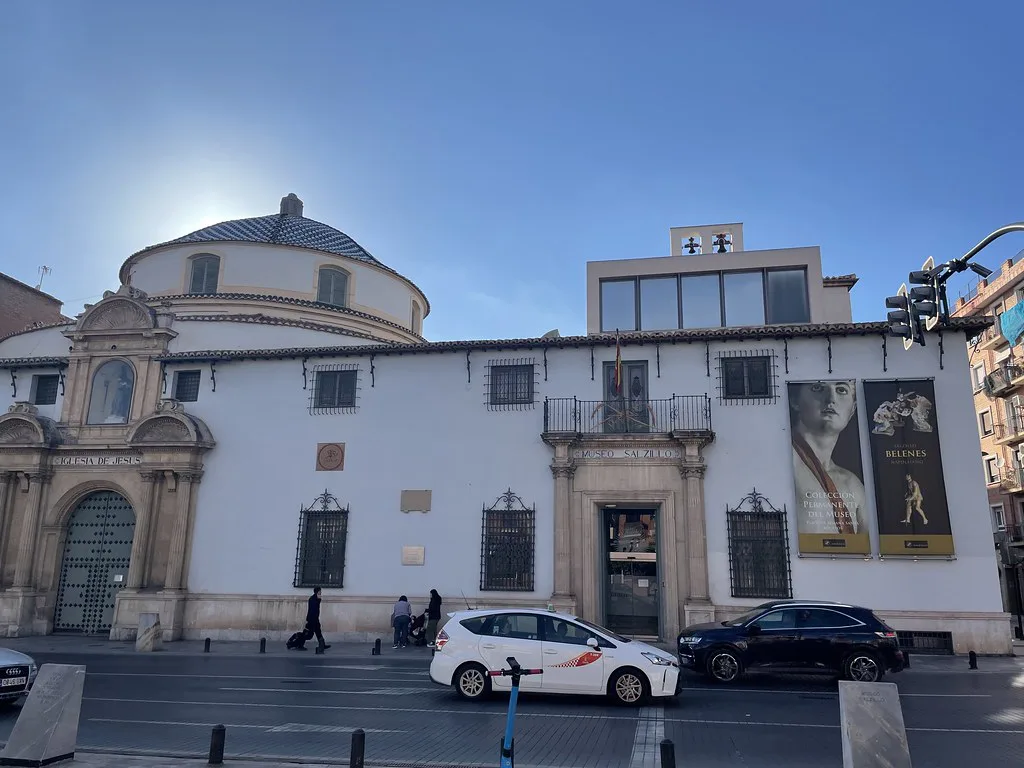
The Museo Salzillo is the city's most significant museum, dedicated to the Murcian sculptor whose Holy Week figures define the processions. It occupies a modern 20th-century building combined with the 17th-century church of Jesús, and the collection includes major pasos such as La Cena and La Oración del Huerto. The famous belén, a nativity scene of 556 pieces commissioned by the Marqués de Riquelme, is displayed alongside original sketches.
Treat this as a sculpture collection with a specific subject, not a general art gallery. If you are in Murcia outside Holy Week, it is still the clearest way to see why the processions matter so much locally. Allow around an hour; if sculpture and religious art are your main interest, allow longer and see the church as well.
Monasterio de Santa Clara La Real: Islamic art in a working convent
On the central Avenida Alfonso X el Sabio, the Monasterio de clausura de Santa Clara La Real opens to the public and holds the region's best collection of Islamic art, alongside the historic and artistic heritage of the Clarissan nuns. Pieces range from remains as old as the 11th century to Baroque works, and the building itself served as a palace for Muslim emirs before becoming a royal monastery. It remains a closed-order convent, so the visit is a quiet one in the middle of the city.
Opening is Tuesday to Saturday from 10:00 to 13:00 and 16:00 to 18:30, and Sundays and public holidays from 10:00 to 13:00. In July and August the museum opens Tuesday to Sunday from 10:00 to 13:00 only, with no afternoon session. The carved wood, decorated skirting and painted plasterwork reward a slow look, so allow 45 minutes to an hour rather than a quick pass.
Museo de la Ciudad: free entry and the city's own story
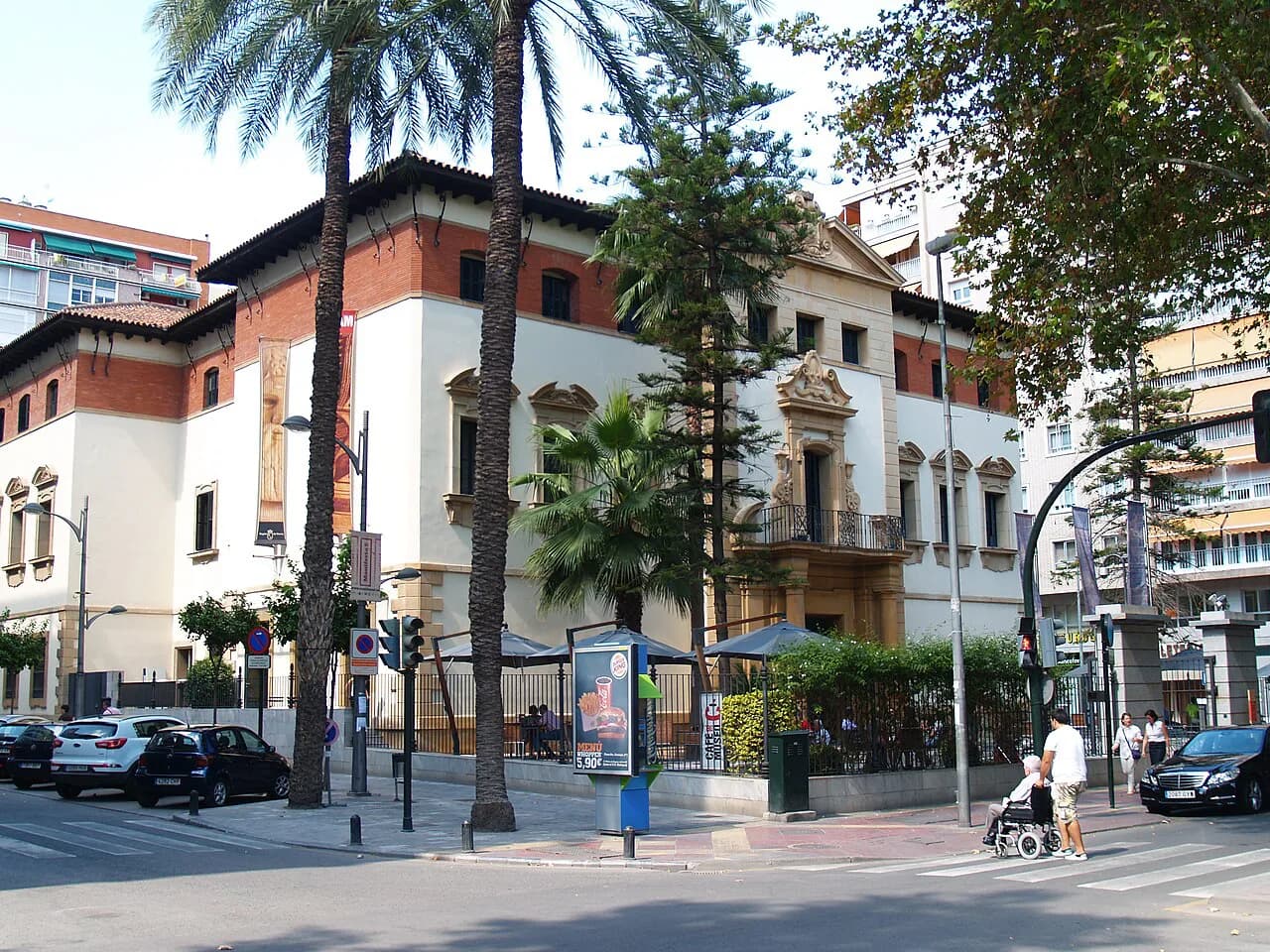
The Museo de la Ciudad is the one to prioritise if you want context before walking the streets: it traces the history, material heritage, art, craft and ethnography of Murcia through original pieces, models and reproductions arranged chronologically. Entry is free, which makes it the easiest museum to add to a morning without committing to a ticket. It sits on Plaza Agustinas between the old Fábrica de la Pólvora and the Convento de las Agustinas, close to the Salzillo museum and the Jardín del Salitre.
Hours are Tuesday to Saturday from 10:00 to 14:00 and 17:00 to 20:00, and Sunday from 10:00 to 14:00, closed on Mondays. The building is the 19th-century López-Ferrer house, and at the back it opens onto a small patio beside a Hispano-Muslim-inspired garden watered by the acequia Caravija. That patio is used for concerts, poetry readings and workshops, so the museum feels tied to the neighbourhood rather than sealed off from it.
Museo de Bellas Artes: painting from the 16th to the 20th century
The Museo de Bellas Artes, opened in 1910, holds paintings from the 16th to the 20th centuries, with works including Odazzi's El martirio de San Agapito de Palestrina, Federico de Madrazo's portrait of Javier Fuentes y Ponte and a group of panels by Carlos de Haes. It is the city's painting collection rather than a survey of sculpture or archaeology, so it suits travellers who want a gallery afternoon.
From Tuesday to Friday it opens 10:00 to 14:00 and 17:00 to 20:00, Saturday 11:00 to 14:00 and 17:00 to 20:00, and Sundays and public holidays 11:00 to 14:00. In July and August it opens only 10:00 to 14:00. A summer visitor who plans on the winter timetable will find the gallery shut in the evening, so build the visit into a morning and use the afternoon for the cathedral area.
Museo Arqueológico: Argar, Iberian and Roman Murcia
The Museo Arqueológico covers the Palaeolithic to the 20th century, with collections drawn largely from sites across the Region and strong Argaric, Iberian and Roman material. Highlights include Argar culture remains, a female torso from Cabezo Roenas in Cehegín, a Hércules Viandante from Los Torrejones in Yecla, a Pudicitia and Hermae from Cartagena. If you are heading on to Cartagena, this is a useful primer on the region's Roman past.
It opens Tuesday to Friday 10:00 to 14:00 and 17:00 to 20:00, Saturday 11:00 to 14:00 and 17:00 to 20:00, and Sundays and public holidays 11:00 to 14:00. In July and August the general hours are 10:00 to 14:00, with Saturdays, Sundays and public holidays 11:00 to 14:00. Allow an hour if you read labels, less if you are picking out the pre-Roman and Roman pieces.
Museo Ramón Gaya: a Murcian painter's own collection
The Museo Ramón Gaya is a tribute to the Murcian artist, showing a permanent collection of his works alongside temporary exhibitions, painting workshops, lectures and book presentations. It is a smaller, more personal museum than the Bellas Artes, and a good choice if you have already done the big collections. The permanent display gives you a single artist in depth rather than a survey.
The pattern is Tuesday to Saturday 10:00 to 14:00 and 17:00 to 20:00, and Sundays and public holidays 11:00 to 14:00. From 15 June to 15 September it opens Monday to Friday 10:00 to 14:00, with an extra 17:00 to 20:00 on Tuesday to Thursday. That summer schedule is unusually generous on weekday mornings, so it works well as a first stop before the heat builds.
Planning around closing days and the afternoon gap
The single most useful planning fact in Murcia is that several museums close on Monday, and some shut for an afternoon gap. If you try to visit three in a day without checking, you may spend the afternoon walking between locked doors. Instead, plan one museum in the morning slot and a second for the late-afternoon reopening where the museum has one, keeping Monday for the cathedral, the Real Casino or the streets of the old town.
Summer changes the picture. The Bellas Artes and Arqueológico drop to morning-only hours in July and August, Santa Clara loses its afternoon session and the Ramón Gaya shifts to a weekday-morning pattern. Check the day and the month together before you set out, because a winter plan will not survive a July afternoon.
How the museums fit a short break
For a single morning, pair the free Museo de la Ciudad with the Museo Salzillo: the first gives you the city's story and the second its most famous sculptor, and they are close together near the Jardín del Salitre. Add the cathedral and the Real Casino in the afternoon once the museums have closed, and you have covered the essentials without rushing. Allow 45 minutes at the city museum and an hour at Salzillo.
If you have a second day, choose between Santa Clara for Islamic art and the Arqueológico for the region's prehistory, then use the remaining time for the Bellas Artes or the Ramón Gaya. A rough city map helps: the Murcia map shows how the museums sit relative to the river, the cathedral and the shopping streets, so you can order them without backtracking.
Beyond the city, the Region of Murcia holds other collections worth a trip, including the Museo Nacional de Arqueología Subacuática, ARQUA, in Cartagena, which houses the treasure of the frigate Nuestra Señora de las Mercedes, and the Museo del Teatro Romano in Cartagena. If you are heading to the coast, the Cartagena Roman theatre is the obvious pairing with the city's archaeology museum.
Which Murcia museum should you book first?
Start with the Museo de la Ciudad because it is free and gives you the city's story in under an hour; follow it with the Museo Salzillo if sculpture and Holy Week interest you, or Santa Clara if Islamic art does. The Bellas Artes and Arqueológico are the stronger second-day choices, and all of them reward a morning visit over an afternoon one.
Check the day of the week and the month before you go, since Monday closures and reduced July and August hours catch out visitors who plan on winter timetables. The Murcia Attractions: 5 Visitor Guides hub links the surrounding sights so you can build the rest of the day around them.
Explore more Murcia guides
Frequently Asked Questions
Are Murcia's museums free?
The Museo de la Ciudad de Murcia has free entry. Other city museums publish their own admission arrangements, so check each museum's own website before you go rather than assuming a single city-wide policy.
Which day are museums in Murcia closed?
Monday is a common closing day for several Murcia museums, including the Museo de la Ciudad. Some museums keep different summer schedules, so check the specific museum for the month you are visiting.
How long do Murcia's museums take?
Most of the city's museums are small enough for 45 minutes to an hour each. Plan around the afternoon closures: one museum in a morning, a break for lunch, and another once the afternoon reopening begins where a museum has one.
Sources
Notes for your next Spanish town break
Optional updates to our guides.
You might also like


Continue reading
More guides you'll find useful