Murcia History: A Visitor's Timeline of the City
Murcia's history in a visitor's timeline, from the 825 founding of Madinat Al-Mursiya to the Christian city and the streets you can still walk today.
On this page
Murcia's history is best read as a walk through one compact centre: an Islamic walled city founded in 825, refashioned as a taifa capital, then rebuilt as a Christian town, all within the same few streets. This guide sets out those layers in date order, tying each one to the gates, streets and monuments you can still see, and it pairs with the wider things to do in Murcia guide.
The key dates are memorable: a pact in 713, the foundation of Madinat Al-Mursiya in 825, an Almohad siege in 1171-72, the Treaty of Alcaraz in 1243 and Aragon's intervention in 1266. Keep them in mind and the old town stops being a jumble of church towers and closes.
What Murcia's history gives a visitor
For a traveller, Murcia is a working Christian city laid over an Islamic plan, not a fortress town preserved in aspic. The street pattern of the medina survives under the modern centre, which makes the old town unusually legible once you know where the walls and gates ran; the Murcia Old Town guide covers the current layout in more detail.
What follows is a timeline in order, from the Cora de Tudmir to the medieval Christian city, with the physical traces to look for at each stage. Read it before you arrive and the walk between the cathedral and the river gains a plot.
Before the city: the Cora of Tudmir and the Segura valley
The ground for Murcia was prepared in 713, when the governor Abd al-Aziz and the Visigothic noble Teodomiro, known as Tudmir in Arabic, signed a pact allowing Muslims and Christians to coexist in a prosperous region centred on the Vega Baja. That agreement underpinned the Cora de Tudmir, giving the Segura valley a settled political framework a century before the city itself existed.
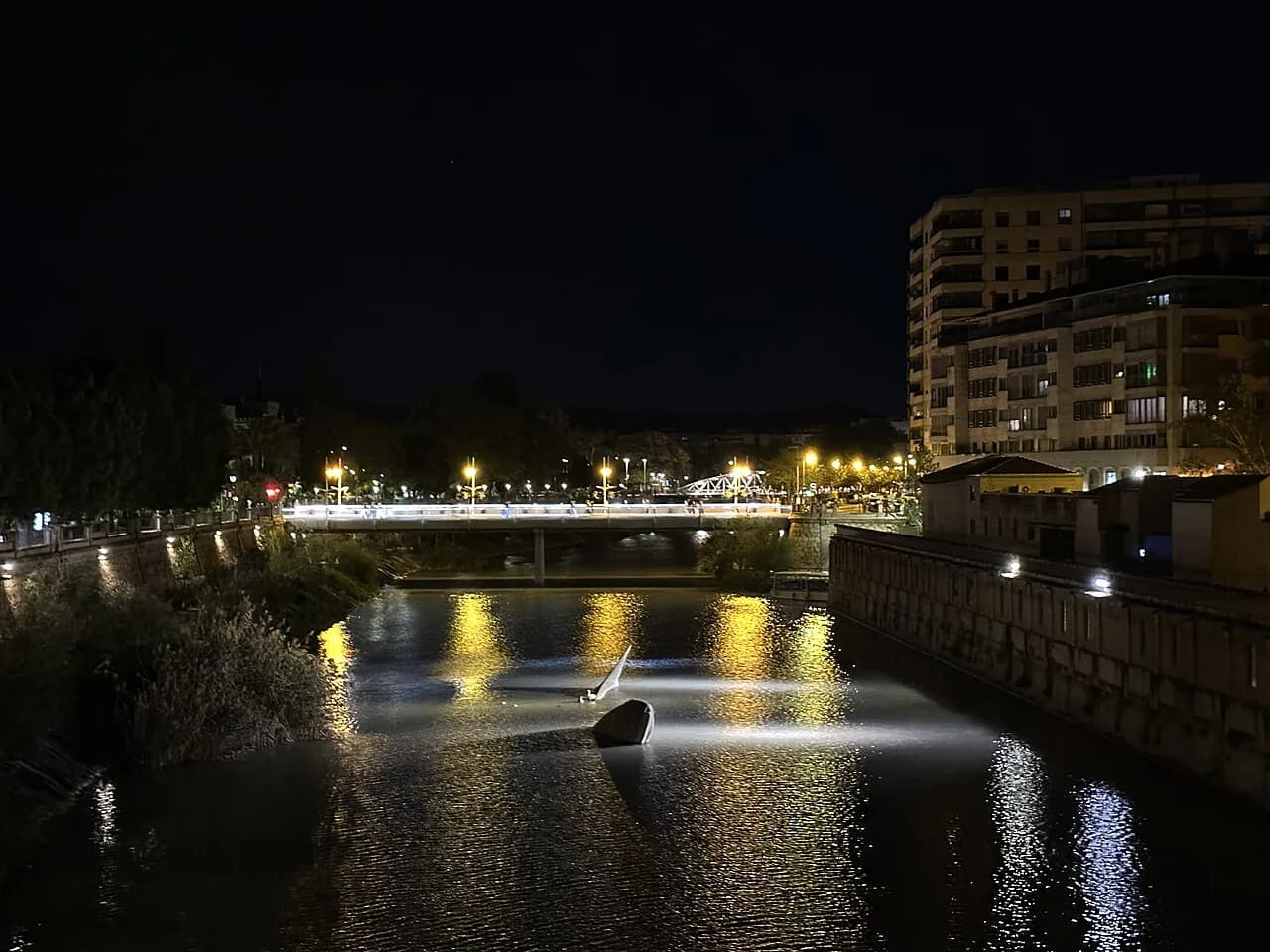
The river explains why this spot mattered. When the city was finally laid out, its planners worked with the Segura's fertile floodplain and built a network of irrigation channels that turned the huerta into an economic engine, a pattern still visible in the green belt around the city.
825: Abderramán II founds Madinat Al-Mursiya
The city's official starting point is 25 June 825, when the emir Abderramán II founded Madinat Al-Mursiya as a strategic strongpoint in Al-Ándalus. The date comes from Alfonso Carmona's estimate as set out in a local history account, and it is the event Murcia's 1,200th-anniversary commemoration centres on.
The new city was designed around a walled medina of narrow, winding streets with the great mosque at its heart, its defences and its markets shaped by the river beside it. That organic plan, rather than a grid, is why the central streets still bend the way they do.
The medina and its walls: where the Islamic city was laid out
Murcia's Islamic wall carried several gates linking the city to the outside world: the Puerta de Orihuela, the Puerta de Santa Eulalia and the Puerta de la Aduana. These names are the most useful orientation points for a modern visitor, because each one marks a direction of approach to the historic centre.
The wall was extended and modified in the thirteenth century and again in the Christian period, so its defensive and symbolic role outlasted the state that built it. The gate names remain the clearest way to orient yourself around the line the walls once followed.
The taifa of Xarq al-Ándalus and Murcia as a capital
When the Caliphate of Córdoba fragmented in the early eleventh century, Murcia became the capital of one of the most important taifas of Xarq al-Ándalus, the eastern Islamic lands of the peninsula. Its position at a commercial and military crossroads brought a period of cultural, economic and urban growth.
This is the era to hold in mind when you stand in the old town: the city you are walking through was, for a while, a capital rather than a provincial town. That status explains the ambition of its later religious architecture and the density of its historic core.
Ibn Mardanish, the Rey Lobo, and Murcia's own currency
In the twelfth century Murcia was ruled by Ibn Mardanish, known as the Rey Lobo, who made the city his capital and led resistance first to the Almoravids and then to the Almohads. His reign brought notable economic and military development, making him one of the most fascinating figures in the city's Islamic story.
Murcia under the Rey Lobo struck its own coin, the morabetino lupino, which was accepted as payment across the Mediterranean. It is a neat shorthand for the city's independent streak: a local currency circulating well beyond the taifa's borders.
Ibn Arabi, the Sufi thinker born in Murcia in 1165
The mystic, philosopher and poet Ibn Arabi was born in Murcia in 1165 and became known as the Shaikh al-Akbar, or the Master Supreme, one of the most influential figures in Sufism. His works, including the Illuminations of Mecca, are still studied widely.
For a visitor, his birthplace is the reminder that twelfth-century Murcia was a court city with an intellectual life, not merely a military outpost. It is worth pairing the old town walk with a look at the city's museums for the material culture of the same centuries; the museums in Murcia guide sets out the options.
1171-72: the Almohad siege and the end of taifa independence
The decline of Islamic Murcia began with the siege of 1171-72, when the Almohads took the city and consolidated their control over Xarq al-Ándalus. It marks the end of the taifa period as a political force in the city, even though the Islamic city itself continued.
In the story visitors follow, this is the hinge between Murcia as an independent capital and Murcia as a contested frontier city. The next seventy years set up the Christian conquest.
1243: the Treaty of Alcaraz and Alfonso X
In the thirteenth century Alfonso X, the Wise, acting for his father Fernando III, took Murcia in 1243 through the Treaty of Alcaraz. The agreement established a period of coexistence between Muslims, Christians and Jews in the city, one of the more unusual arrangements of the Reconquista.
Alfonso X's rule also left an institutional mark: in 1272 he founded a higher school that became the germ of what centuries later would be the University of Murcia. The city's academic identity, in other words, is medieval in origin.
1266: Jaime I of Aragon and the end of Muslim privileges
In 1266 Jaime I of Aragon, the Conqueror, intervened in Murcia to put down a Mudéjar revolt. For a short period the city was tied to the Kingdom of Aragon before passing definitively to Castile, a shift that ended Muslim privileges and changed the city's social and urban structure abruptly.
The change was not merely dynastic. New rulers meant new institutions, new property arrangements and a reordering of who lived where inside the walls, which is exactly what the next stage of the city's plan shows.
Reading the Christian city: Trapería, churches and the social split
After the conquest, Calle Trapería became the dividing axis of the city. Jews and moriscos settled on its eastern side while Christians concentrated to the west, making the street a physical record of medieval social geography that you can still walk today.
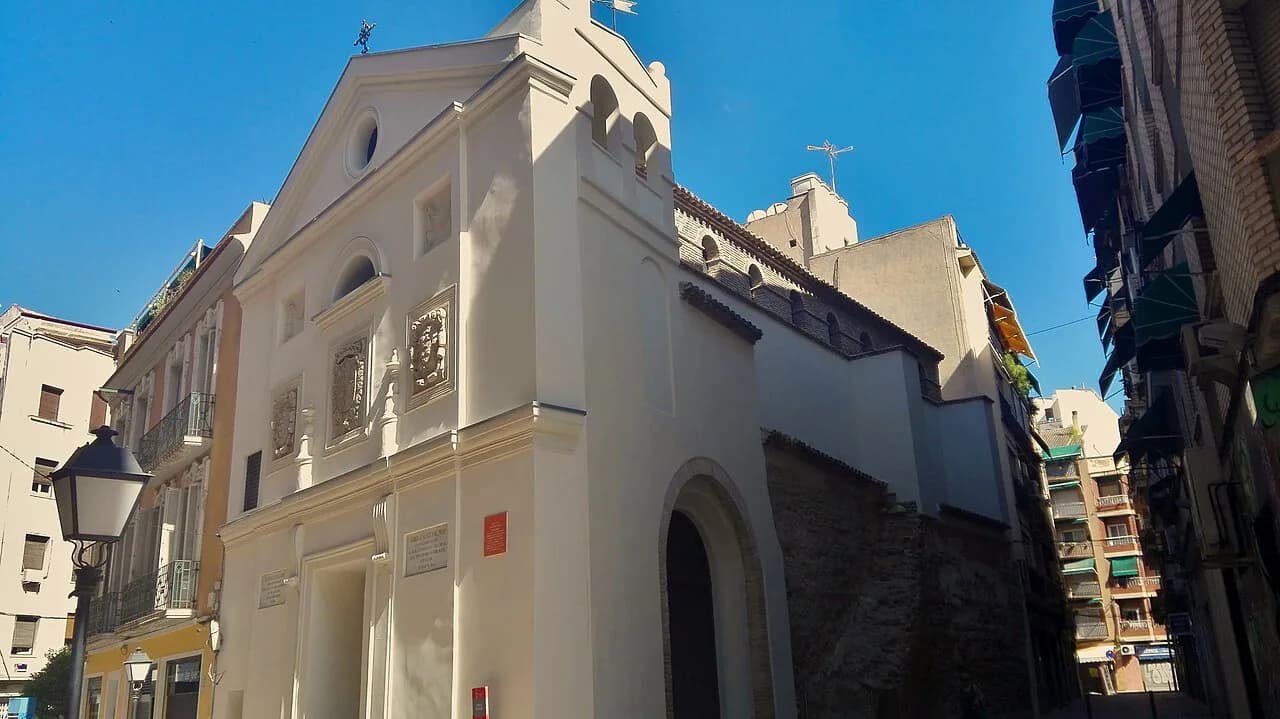
The Christians also built churches on the sites of former mosques and reorganised public space to fit the medieval Christian model. That is why several of the city's oldest churches sit where the medina's religious buildings once stood, and why the cathedral precinct became the centre of the new town.
What survived: tracing the layers on foot
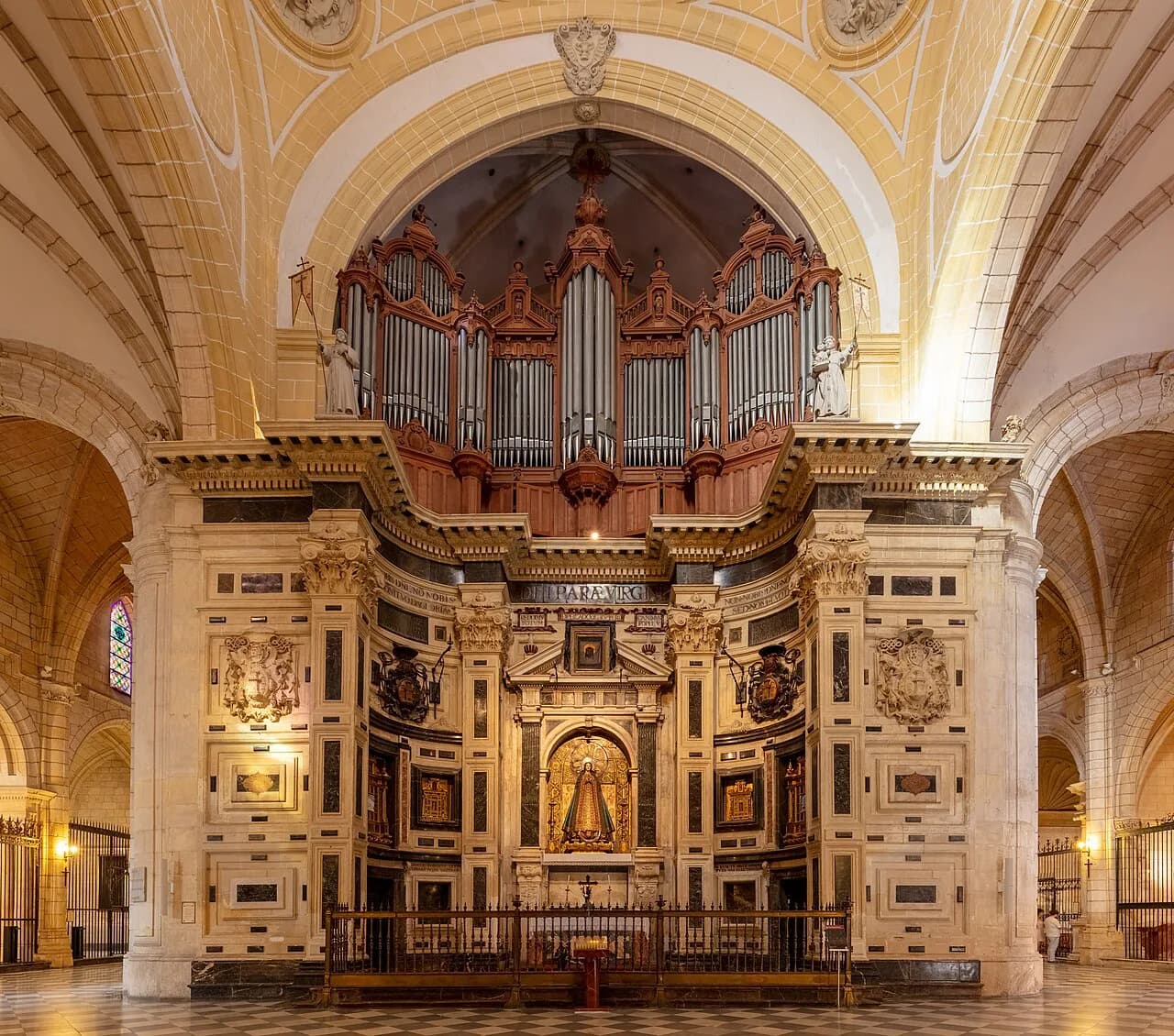
The most practical way to use this history is to walk the centre with the gates and Trapería in mind, then finish at the cathedral, where the Christian city's ambition is most visible. The Catedral de Santa María and its surroundings anchor the things to do list for most short breaks.
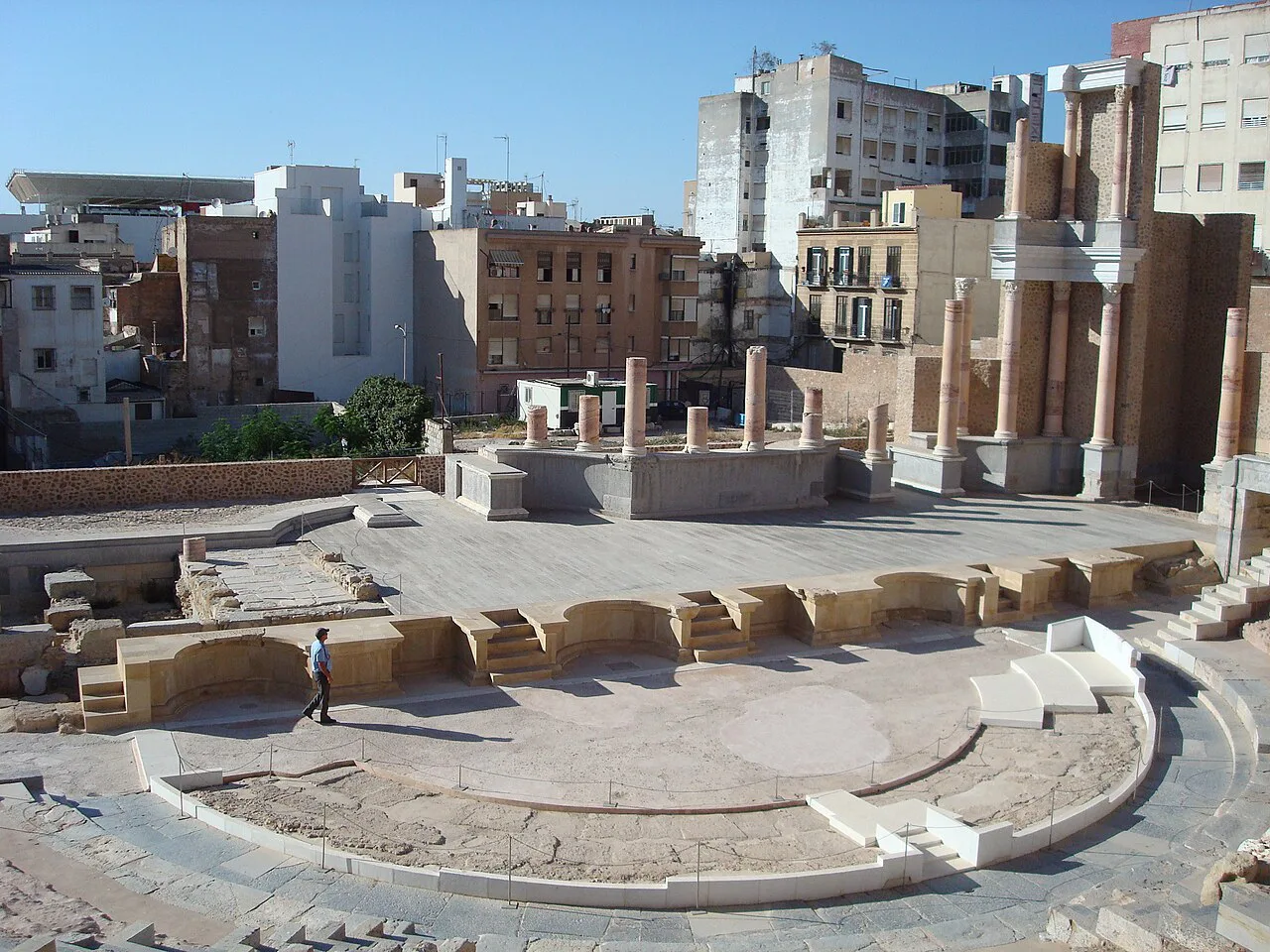
If you want a wider regional comparison, Cartagena is the obvious counterpart, with a Roman theatre that shows the layer Murcia largely lost below its medieval and modern rebuilds. It is a separate day out, not a substitute; see Cartagena, Spain for the detail.
Use the Murcia map to plot the gates, Trapería and the cathedral before you set out, and the Murcia Attractions hub for the individual monument guides. The timeline above is the thread that holds them together.
Which layer of Murcia should you chase first?
Start with the Islamic footprint: the medina plan, the three gate names and Trapería as the old dividing line. It is the layer that makes the rest of the centre intelligible, and you can trace it on foot through the streets.
Then take the cathedral and the Christian city as the second half of the walk, and add a museum only if the twelfth-century court period interests you. That order follows the dates and keeps a short break from turning into a checklist.
Explore more Murcia guides
Frequently Asked Questions
What does Murcia mean in Spanish?
The name derives from Madinat Al-Mursiya, the foundation title given when Abderramán II established the city in 825 according to the estimate set out in local historical accounts. The Arabic name is the origin to look for rather than a modern Spanish meaning.
How do you reach Murcia for a city break?
Murcia sits inland in the Segura valley and is reached by road and rail from the wider region. Check current flight, train and transfer options with the relevant operators before booking, as routes and timetables change.
What is the best single thread for following Murcia's history?
The Islamic layer: the medina plan, the three gate names and Trapería as the old dividing line. It makes the rest of the centre intelligible and you can trace it on foot through the streets.
Sources
Notes for your next Spanish town break
Optional updates to our guides.
You might also like


Continue reading
More guides you'll find useful