Cartagena Roman Theatre: What You See at the Museum
The Cartagena Roman Theatre sits beneath the old cathedral, reached through the Rafael Moneo museum. Here is what you see and how the visit runs.
On this page
The Cartagena Roman Theatre is not a ruin you walk up to from the street: you enter through the Museo del Teatro Romano, pass through Rafael Moneo's building and reach the seating by an underground passage. The theatre itself was raised under Augustus, hidden under the old cathedral for centuries and uncovered in 1988, and it now anchors the old town around the Plaza del Ayuntamiento. This guide covers what you see, how the visit runs and how to slot it into an afternoon, and it sits alongside the wider set of things to do in Murcia.
What the Cartagena Roman Theatre is
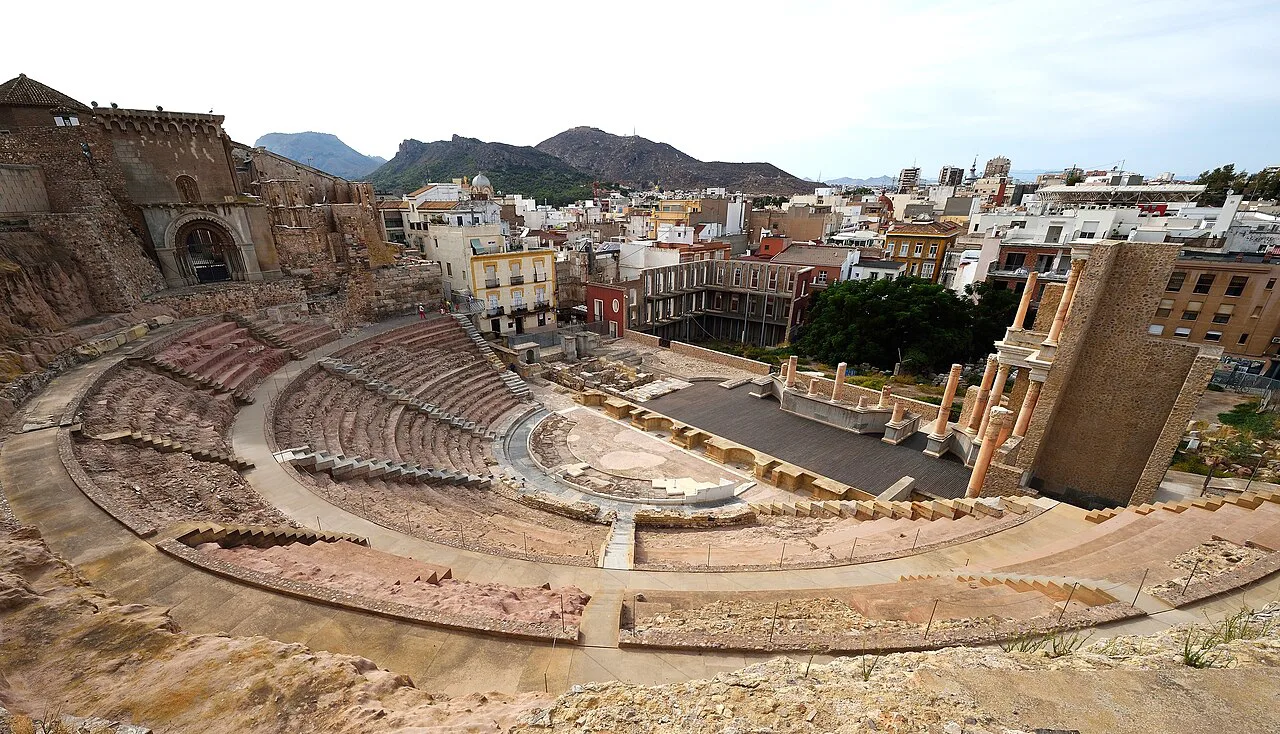
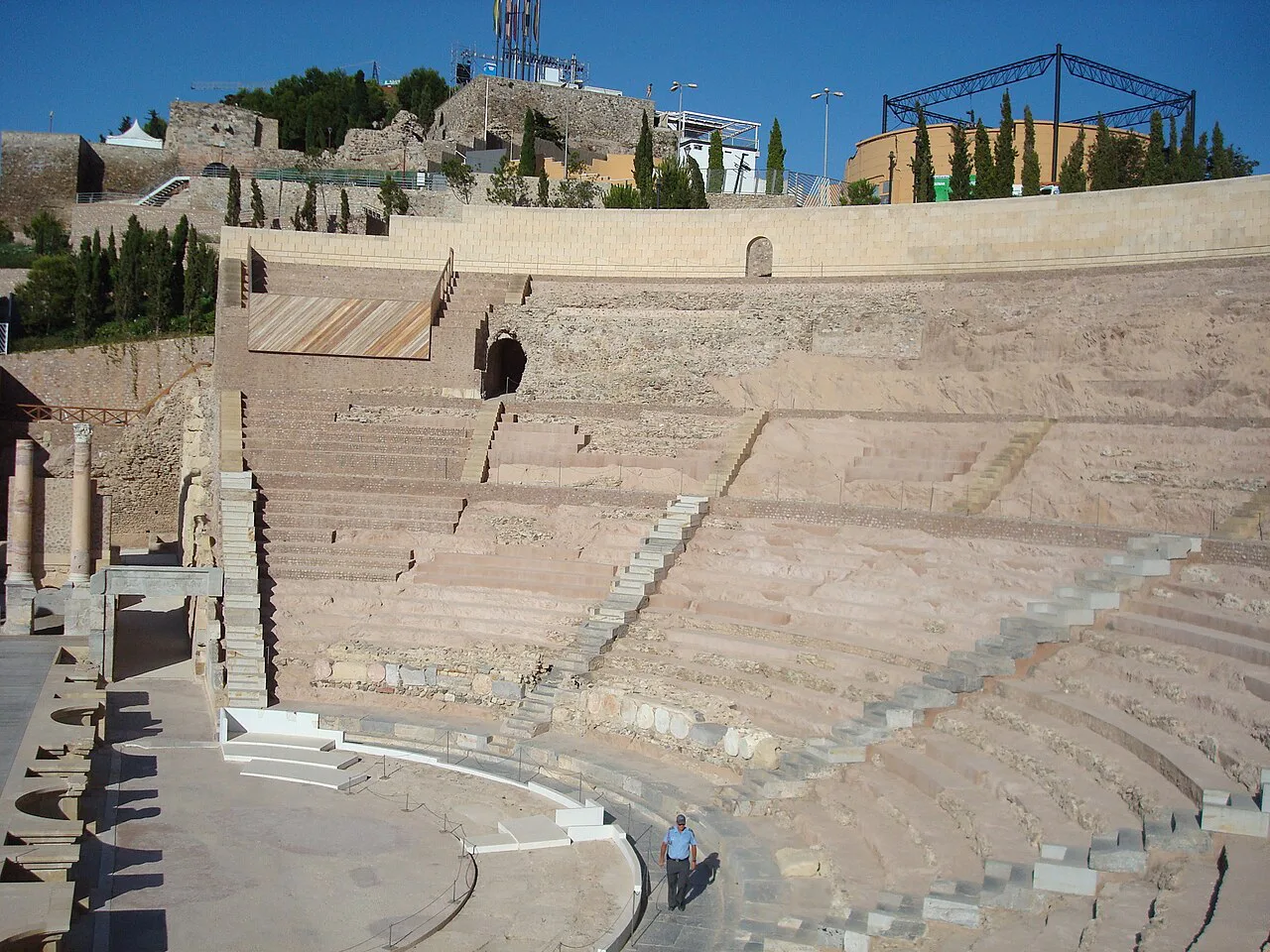
The theatre was built between 5 and 1 BC, during the reign of Augustus, as part of a wider rebuilding of Carthago Nova, and it was dedicated to Gaius and Lucius Caesar, the emperor's grandsons. The cited account puts capacity at 6,000 to 7,000 spectators and describes a stage front roughly 43.6 metres long. Limestone came from local quarries, marble from the Cabezo Gordo and reddish travertine from La Mula, with white Pentelic marble brought from Greece for the decoration.
If you are weighing up what to see in Cartagena Spain in a short break, the theatre is the headline Roman sight in the city, and it pairs naturally with the Punic and Roman material elsewhere in the old town. The museum route makes it a contained visit rather than a scattered trail of stones.
Why it sat hidden under the old cathedral
The building served as a theatre for about two centuries before its function changed: in the third century AD it was turned into a market and much of its stone was taken for reuse. The Vandal invasion of 425 caused serious damage and the market was abandoned, and later phases included a Byzantine commercial quarter on the site. By the thirteenth century the Old Cathedral of Santa María la Vieja had been built directly over the upper seating, using the Roman structure as its foundation, and the theatre disappeared from view for hundreds of years.
That layering is the reason the visit works as a single site rather than two separate monuments: you read the cathedral and the theatre as one story of a city building on itself. For the broader background of the region, our Murcia history page covers the same pattern of overlaying civilisations.
Where it stands in the old town
The museum and theatre sit in the heart of the old town, close to the Plaza del Ayuntamiento and the Town Hall, with Calle Mayor running nearby as the main commercial street. Santa María la Vieja, the ruined old cathedral, stands directly above the upper part of the seating. Because these pieces sit within a few minutes of each other on foot, the theatre is best treated as the centre of a short old-town circuit rather than a separate excursion.
For orientation before you go, a Murcia map helps you see how Cartagena relates to the rest of the region and how the old town is laid out. The streets here are compact, so a single loop covers the theatre, the cathedral and the main square without much doubling back.
How the visit runs: the Moneo building and the passage
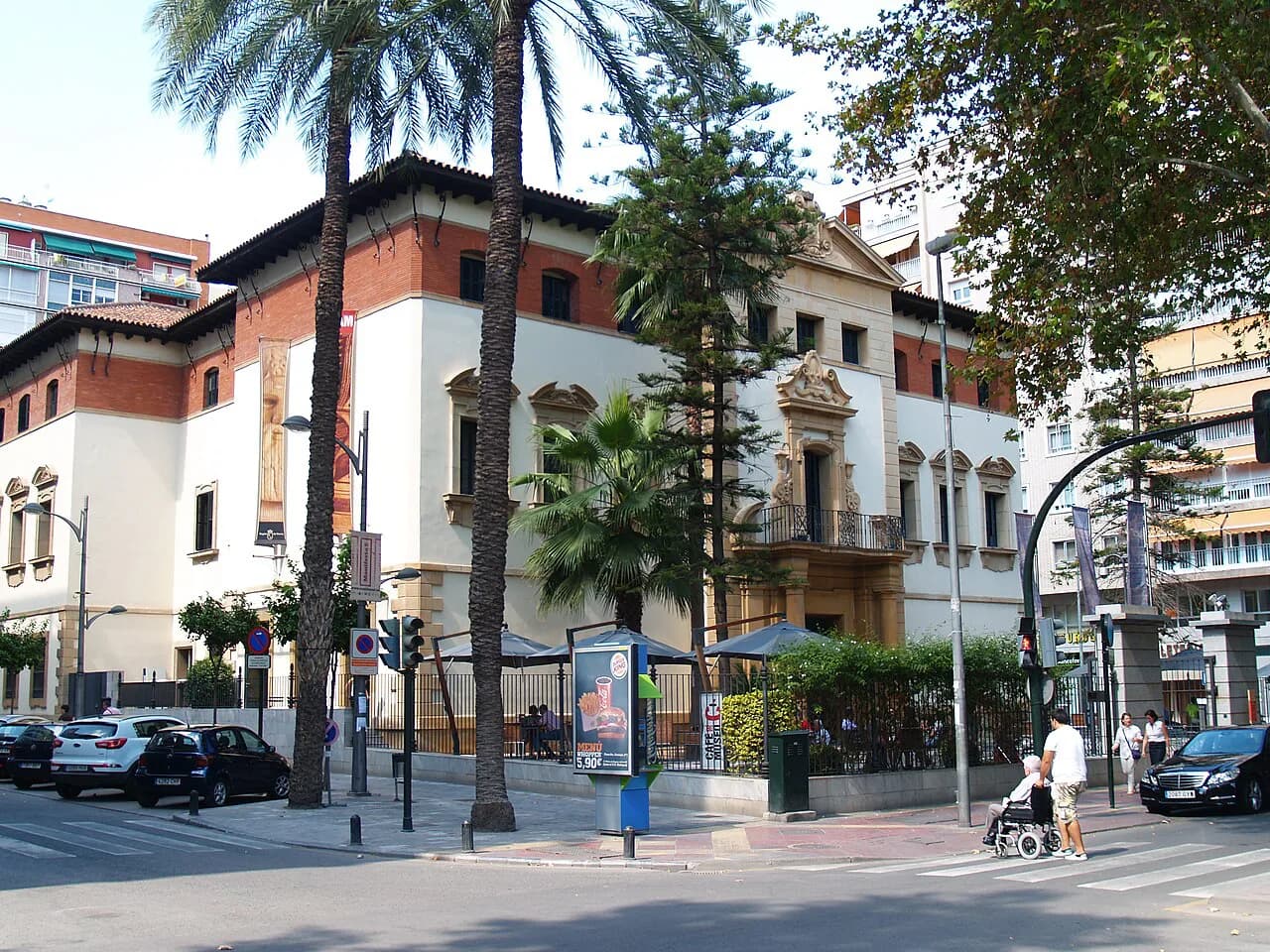
You enter through the Museo del Teatro Romano, designed by Rafael Moneo, which was commissioned in 2003 and opened in 2008. The museum integrates the excavated remains into a modern building, and a subterranean passage then leads visitors directly into the restored theatre. That route means the theatre is experienced as the climax of the visit rather than something glimpsed from the street.
The official theatre website is the place to confirm current visiting arrangements and any ticketing details before you travel, since published conditions can change. Check it once you have fixed your dates rather than relying on older descriptions.
What to look for inside the theatre
The seating is the sight that surprises people: around 60 per cent of the original material remained in situ, which is what made a serious restoration possible and why the cavea reads as a structure rather than a footprint. Look for the stage front, the long proscaenium wall, and the mix of local limestone and imported marble that tells you how far the builders reached for materials. The contrast between the cut stones of the Roman rows and the later masonry of the cathedral above them is the detail worth slowing down for.
The museum is described as the most visited in the Region of Murcia, which is a fair warning that it draws groups as well as independent visitors. Planning a visit around opening times helps you avoid the busiest stretches. The wider set of museums in Murcia gives context if you want to compare collections across the region.
How long the visit takes and how it fits an afternoon
The museum and theatre together make a contained visit, and the rest of an afternoon can go on the Plaza del Ayuntamiento, Calle Mayor and Santa María la Vieja, all within a short walk. No exact visit duration is published, so plan around the time you want for the displays and the seating. If you are building a longer list, our Things to Do in Murcia guide sets the theatre beside the region's other headline sights.
Cartagena is an easy add-on to a Murcia break, and the two old towns work differently: Murcia old town spreads around its cathedral and squares, while Cartagena compresses its Roman layer into a few streets. Doing both gives you a contrast between a living cathedral city and an archaeological one.
Practical trade-offs: heat, crowds and closures
Cartagena's summer midday heat is real, and the museum is an indoor route, so it makes sense to schedule the theatre for a hot part of the day and keep outdoor wandering for the morning or evening. The theatre is occasionally used for concerts and other performances, which can affect access on certain days, so confirm the calendar before a special trip.
Cruise calls can concentrate visitors into the middle of the day, and the museum is a standard port stop, so early or late visits tend to be calmer. The city council publishes news and civic notices that can flag street works or events around the old town, which is worth a glance if your visit coincides with a major date.
Tickets, opening hours and what to confirm
Ticket prices, opening hours, closing days and any free-entry periods are set by the museum and change over time, so confirm them on the official theatre website when you book your dates. Treat any figure you see elsewhere as indicative rather than current.
If your trip also takes in Murcia city, the Catedral de Santa María and the surrounding streets are the obvious counterpart to Cartagena's layered site, and they are covered in our things to do in Murcia guide. Checking both before you travel lets you plan a route that does not depend on guesswork about opening times.
Should the theatre be your first stop in Cartagena?
Yes: the Roman theatre is the headline ancient sight in the city and the museum route makes it manageable in an afternoon. Build the visit around the Plaza del Ayuntamiento, Calle Mayor and Santa María la Vieja, and confirm tickets and hours on the official site before you go.
Explore more Murcia guides
Frequently Asked Questions
What is a Roman theatre called in Spanish?
It is a Teatro Romano, and in Cartagena the monument is the Teatro Romano de Cartagena, housed within the Museo del Teatro Romano.
Do you enter the Cartagena Roman Theatre directly from the street?
No. Visitors go in through the Museo del Teatro Romano and reach the seating by an underground passage, so the theatre is the final part of the museum visit rather than a street-level ruin.
Was the theatre built all at once?
The cited history places its construction between 5 and 1 BC under Augustus, as part of a wider rebuilding of the city. It was later converted into a market and then partly buried beneath the old cathedral.
Sources
Notes for your next Spanish town break
Optional updates to our guides.
You might also like

Continue reading
More guides you'll find useful