Cartagena, Spain: Roman Theatre, Old Town and Port Guide
Plan a short break in Cartagena, Spain, around its Roman theatre, old centre and port, with what to see, how the town is laid out and how long it needs.
On this page
Cartagena packs a lot into a compact centre above a working naval port: the Roman theatre and its museum, the Roman forum, a Roman house, the castle hill and a grid of modernist streets are all close to the harbour. The port and naval base explain why the city looks the way it does, with defensive architecture and a long waterfront. This guide covers the monuments worth your time, the modernist streets between them, the outlying coastal battery, how the town is laid out on foot and how it fits a short break from Alicante or Murcia.
Treat the centre as the core of the trip and the coast as an optional extension. The Batería de Castillitos sits out at Cabo Tiñoso, west of the city, so it needs its own transport and its own slot in the day rather than a casual stroll from the theatre.
Where Cartagena sits and why the port matters
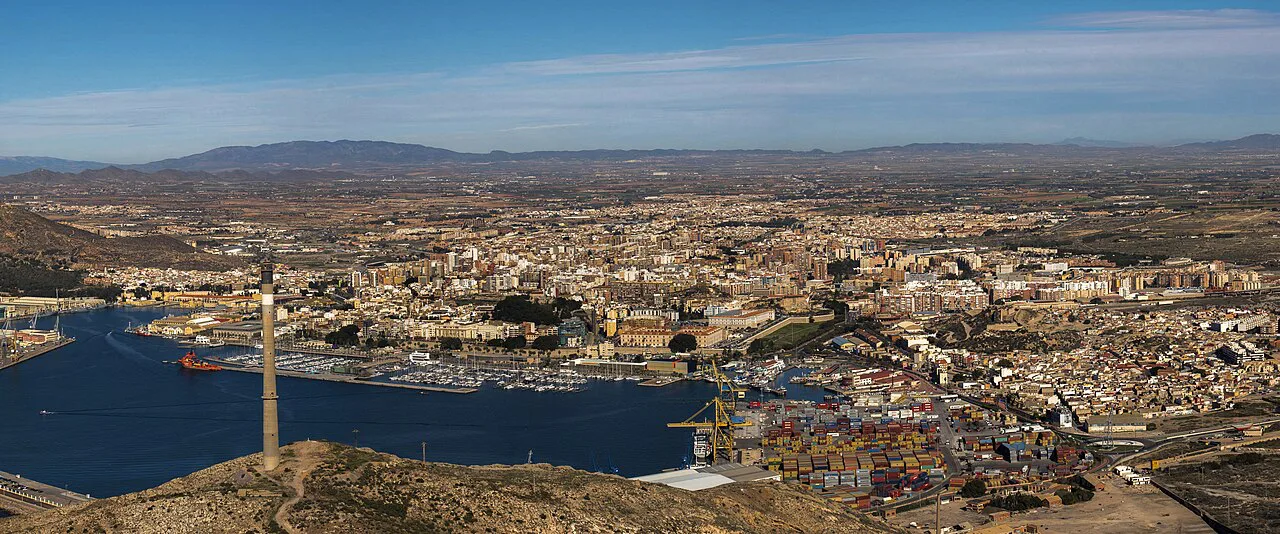
Cartagena is the second city of the Región de Murcia, set on a bay that gives it one of the best natural harbours on this stretch of the Mediterranean. That shelter turned it into a strategic naval base and shipbuilding centre, and the military presence still shapes the waterfront today.
The port is civil as well as military, so the city reads as a working place rather than a resort. Expect harbour views, naval buildings and a centre that grew up behind the docks; the layout makes more sense once you know the sea came first.
The Roman Theatre and the museum built around it
The Roman theatre is Cartagena's headline monument and the reason most visitors come. It was built for several thousand spectators, lay hidden for centuries and was rediscovered in 1988, after which the site was restored and opened up. The visit runs through the Museo del Teatro Romano, which wraps around the remains and explains the building before you step out into the seating.
Allow around an hour and a half for the theatre and museum together, and go early or late in the day in summer because the upper levels are exposed. For a closer look at the monument itself, the dedicated guide to the Cartagena Roman theatre covers the visit in detail.
Other Roman remains: the forum and the Casa de la Fortuna
The Roman forum sits in the same cluster as the theatre, so it slots naturally into the same morning or afternoon. The remains are fragmentary compared with the theatre, but they complete the picture of a Roman city rather than a single showpiece building.
The Casa de la Fortuna is a Roman townhouse from the first century BC, uncovered in 1971, where you can see floor mosaics and painted walls across most of the surviving rooms. It is small, and that is the point: it shows domestic life rather than public spectacle. Pair it with the forum and the theatre for a compact Roman half-day.
Plaza del Ayuntamiento and the modernist old centre
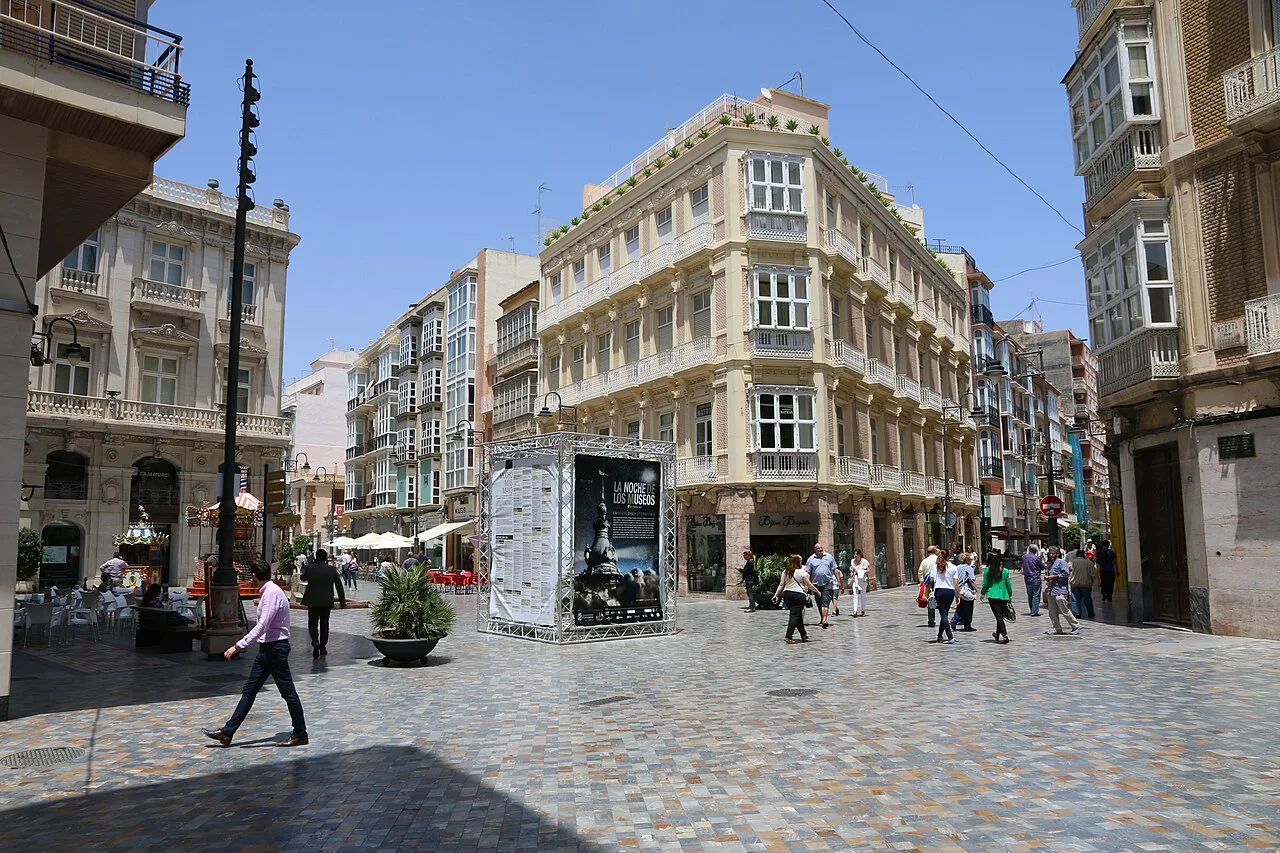
Cartagena's old centre is one of Spain's stronger concentrations of modernista architecture, built on late nineteenth-century mining wealth and the naval yards. The Plaza del Ayuntamiento is framed by the town hall, and elsewhere in the centre you will find the Casino, the Gran Hotel, the Palacio de Aguirre, Casa Cervantes and Casa Maestre, the last inspired by Gaudí.
Walk this quarter rather than ticking it off, because the pleasure is in facades, balconies and ironwork glimpsed between errands. Shops and churches here keep Spanish hours, so a midday pause is normal and the streets fill again in the late afternoon.
The Castillo de la Concepción and the view over the bay
The Castillo de la Concepción occupies the hill above the old centre and is one of the sights to look out for when you walk the town. Its position gives the best sense of how the city sits above the harbour, so it is worth building into the day if the hill and the view appeal.
The payoff is the panorama over the harbour and the rooftops, the best orientation you will get before walking the centre. Check opening hours and access to the hill at the tourist office before you build the climb into a tight schedule.
Peral and the naval side of the city
Isaac Peral, a Cartagena-born naval officer, is credited with the first electrically propelled torpedo submarine, launched in 1888. The prototype is displayed inside the Museo Naval de Cartagena, while a replica stands on a roundabout on the Paseo de Alfonso XIII as a free street-level marker.
The naval museum suits anyone interested in how the base and shipyards made the modern city. It is a museum stop rather than a walk-by sight, so give it a proper slot if submarines and naval history appeal, and skip it if your day is already full of Roman remains.
The Batería de Castillitos and the coastal defences
The Batería de Castillitos is a coastal fortification at Cabo Tiñoso, west of the city, part of the defensive ring that guarded the naval base. Its position on the headland was the whole point: guns here covered the approaches to the bay.
This is an outlying stop, not an old-town sight, and the approach is by road on a minor coastal route. Go only if you have a car and a spare half-day, and confirm access and any restrictions with the tourist office before setting out, since military-adjacent land can be closed without much notice.
How the town is laid out on foot
The working parts of Cartagena stack neatly: the port along the water, the Plaza del Ayuntamiento just inland, and the Roman cluster of theatre, forum and Casa de la Fortuna immediately behind it, with the castle hill above. Almost everything in this guide is within a fifteen- to twenty-minute walk of the others, so you do not need transport inside the centre.
Plan a loop rather than a list: start at the port, walk up through the plaza, take in the theatre and museum, then the forum and Casa de la Fortuna, and finish on the castle hill for the view. The outlying battery is the only piece that breaks the pattern and needs a car.
How long Cartagena needs
A half-day covers the Roman theatre and museum plus a walk through the modernist centre; a full day adds the forum, the Casa de la Fortuna and the castle. Two days let you spread the museums out and take the coastal battery seriously without rushing the centre.
If you are based in Murcia city, Cartagena works as a long day out rather than an overnight, but staying over gives you the evening waterfront and an unhurried start at the theatre. The wider things to do in Murcia guide covers how the city fits with the rest of the province.
Getting there from Alicante and Murcia
Cartagena sits south of Murcia city and south-west of Alicante, connected by road and by rail, so it works as a stop on a Murcia break or as a day out from the coast. For the train and bus timetables, check the operator sites directly rather than relying on memory.
The city's tourist portal sets out how to arrive and how to move around once you are there, including the local transport options. Arriving by train puts you close to the centre, which keeps the day simple.
What a visit costs in euros
The main monuments charge admission, and the tourist office sells tickets and publishes current prices, so buy there or online rather than guessing.
If you plan to see several sites, ask at the tourist office about a combined ticket before paying individually.
When to go: heat, crowds and the levante wind
Cartagena is a port and naval city in the Región de Murcia, so plan the day around the season and the site opening hours. The tourist office publishes up-to-date visiting hours, which are the ones to work from when you fix a museum into a tight schedule.
Some of the Roman and castle sites are exposed to the sun and the wind off the water, so build in a shade break and check conditions before a long walk on the upper theatre seating or the castle hill. The tourist office publishes seasonal opening hours, which shift between summer and winter, so check before fixing your day around a specific museum.
Where to go next in the Region of Murcia
Murcia city is the obvious next stop, with its cathedral and its own old town, and it pairs naturally with a Cartagena day. The Murcia old town guide covers the centre on foot, and the Murcia history guide explains the layers beneath it.
If you want more museums after Cartagena's Roman sites, Murcia's museums include the Museo Salzillo, a change of pace from amphitheatres and forts.
Should Cartagena be a stop on your Murcia trip?
Yes, if you want Roman remains and a working port in one compact centre: the theatre alone justifies the trip, and the forum, the Roman house and the castle hill fill a satisfying day without a car. Skip the coastal battery unless you have transport and a spare half-day.
Build the day around the Roman cluster, leave room for the modernist streets, and buy tickets through the tourist office so prices and hours are current. Pair it with Murcia city for a two-centre break in the Región de Murcia.
Explore more Murcia guides
Frequently Asked Questions
What is Cartagena, Spain like?
It is a port and naval city in the Región de Murcia with a compact old centre built over Roman remains. The Roman theatre and its museum anchor the visit, with a Roman forum, a Roman townhouse, modernist streets and a castle hill all close to the harbour.
When is the best time to visit Cartagena?
Spring and autumn are the most comfortable seasons for walking the centre, with the Roman and castle sites exposed to the sun and the wind off the water. Check the tourist office's up-to-date opening hours before you fix a museum into your day.
Sources
Notes for your next Spanish town break
Optional updates to our guides.
You might also like

Continue reading
More guides you'll find useful