Covadonga: the Cave Shrine, Basilica and Lakes
Plan a visit to Covadonga in Asturias: the Santa Cueva and the Santina, the pink stone basilica, the museum, and how the sanctuary and lakes fit one day.
On this page
Covadonga rewards a half day, and a full one if you also climb to the Lagos de Covadonga. The sanctuary itself is compact: the Santa Cueva, the Basílica de Santa María la Real, a small museum and a handful of monuments stand within a few minutes of each other on Monte Auseva in the Picos de Europa. This guide explains what each part is, how the site is laid out, where to park and how the lakes above change the shape of your day.
What Covadonga is: a sanctuary site, not a village square
Covadonga is a monumental sanctuary rather than a town with a plaza to stroll. The sanctuary, known as the Real Sitio de Covadonga, sits in the concejo of Cangas de Onís at the foot of the Picos de Europa, and its buildings are grouped to one side of the road on the slope of Monte Auseva. Around fifty people are counted as residents, so do not arrive expecting a village centre with shops and cafés on every corner.
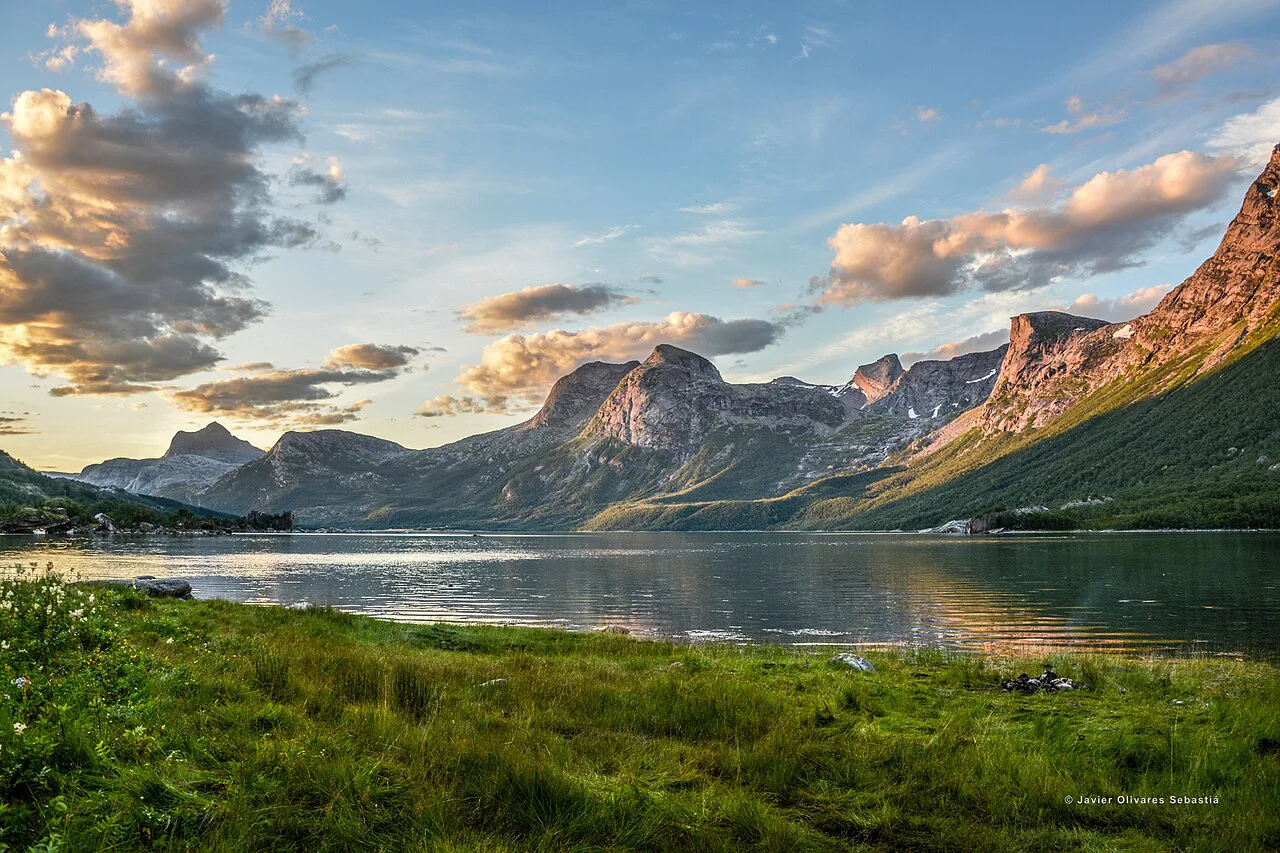
The geography matters when you plan. The lakes lie about 15 kilometres above the sanctuary, already inside the Asturian part of the Parque Nacional de los Picos de Europa, so the shrine and the lakes are two separate stops joined by a mountain road. Treating Covadonga as a quick photo stop on the way up shortchanges the cave and the basilica; the site deserves unhurried walking.
The Santina in the Santa Cueva: the heart of the visit
The Santa Cueva is a natural cavity opening in the rock of Monte Auseva, and inside it stands the small chapel that houses the Virgen de Covadonga, known affectionately as la Santina and venerated as patron of Asturias. The image now in the cave is not the original: a fire destroyed the earlier carving in 1777, and the Cathedral of Oviedo gave the present sixteenth-century figure the following year. She wears mantles that change colour through the year, and the crowns were offered by Asturians for the canonical coronation of 1918.
You reach the cave either through the tunnel or by the Escalera de las Promesas, the stairway many pilgrims climb as part of a promise. The cave is the emotional centre of the whole site, so give it a few quiet minutes rather than filing past. Visitors with limited mobility should ask the sanctuary about access conditions before setting out, since the stairway is not the only route but the site is built into a hillside.
From the cave mouth the view opens over the valley, which is much of why the place holds people. Legend places the battle of Covadonga here in 722, when Pelayo and his followers resisted the Muslim forces and the episode became the symbolic starting point of the Kingdom of Asturias. The sepulchre of Don Pelayo is in the Santa Cueva, tying the warrior to the shrine itself.
The Basílica de Santa María la Real: what to look at inside
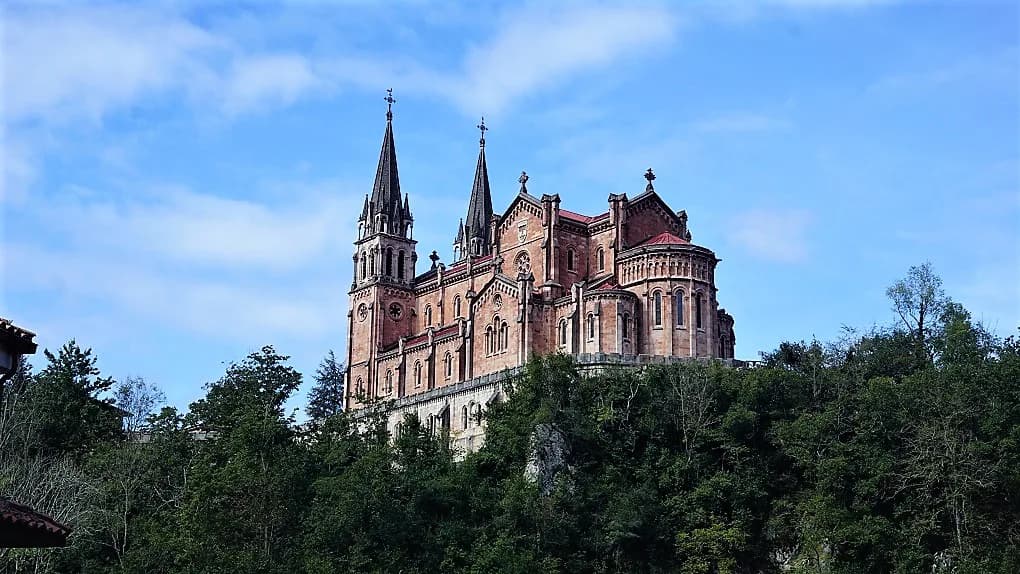
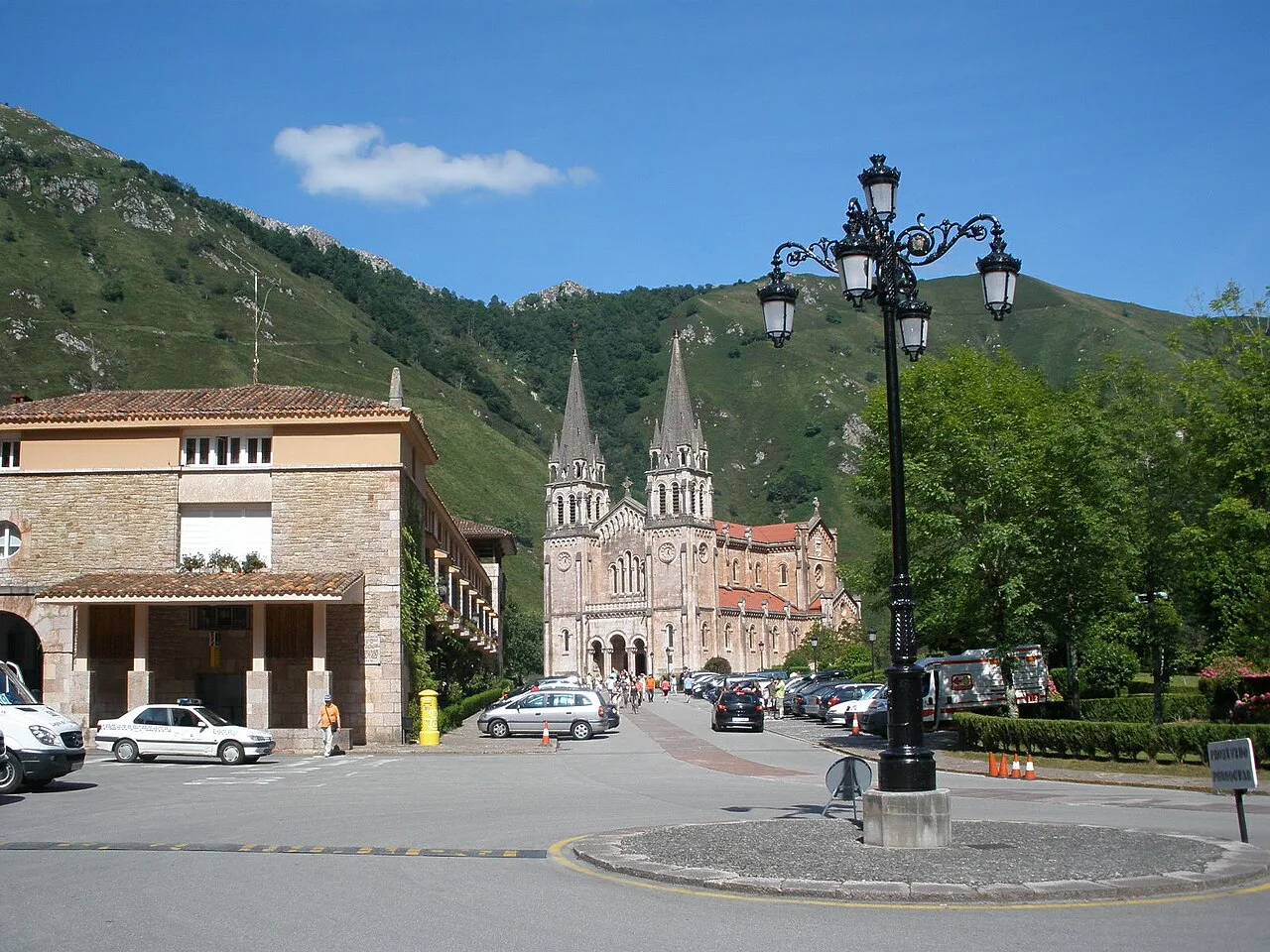
A few steps from the cave stands the Basílica de Santa María la Real de Covadonga, a Neo-Romanesque church built in a pink limestone that reads almost rose against the green mountains. It was inaugurated in 1901 and is the image most people carry away from Asturias. Entry is free, and inside the altar Mayor holds the image of Nuestra Señora.
Look at the building as well as the altar. The stonework, the proportions of the nave and the way the basilica sits against the mountain explain why it dominates photographs of the site. The Pico Priena, crowned by the Cruz de Priena, rises nearby.
The museum and the monuments on the esplanade
Across the great esplanade from the basilica, the Museo del Real Sitio de Covadonga explains the religious, cultural and historical weight of the place through religious objects, documents, paintings and photographs, including plans of the basilica and pieces of goldsmiths' work. Among the treasures is the crown of the Virgen de Covadonga, placed on the image each 8 September. The museum ticket costs EUR 2.50.
The esplanade also gathers monuments you will pass without trying: the Monumento a Don Pelayo and La Campanona, a bell some three metres tall and close to five tonnes. The Colegiata de San Fernando is part of the same group of buildings around the basilica.
For a pause, the Hotel Pelayo near the basilica is a historic early twentieth-century building named for the same king, and its café serves as a convenient stop within the sanctuary precinct. Treat it as a breather between the cave and the lakes rather than a destination in itself.
Below the cave: the Jardines del Príncipe, the Pozón and the Fuente de los Siete Caños
Walking up from the lower car park takes you through the Jardines del Príncipe, a green, sheltered stretch with views over the valley that leads towards the sanctuary. It is the gentlest introduction to the site and sets up the first sight of the cave.
Under the Santa Cueva you pass the Pozón and the Fuente de los Siete Caños, a fountain wrapped in local tradition: anyone who drinks from it, so the story goes, will find love and marry within a year. The water and the rock are part of the atmosphere of the place as much as the buildings.
How the sanctuary is laid out and how long it takes
Think of the sanctuary as a compact cluster on a slope: parking and gardens below, the cave and the basilica in the middle, the esplanade with the museum and monuments alongside. Everything is within a short walk, but the ground rises, so allow for that when judging times. A focused visit to the cave, basilica and esplanade fits comfortably into a morning or afternoon; adding the museum and a slow walk through the gardens takes longer.
If you also want the lakes, plan the sanctuary as a half day and the lakes as the other half, or give the whole thing a full day. The site rewards unhurried walking rather than a rushed circuit before the road up.
Getting there: parking at El Repelao and walking in
Drivers leave the car at the El Repelao car park, the practical starting point for the sanctuary, then follow the path through the Jardines del Príncipe up to the cave and basilica. Arriving early gives you the cave with fewer people around and leaves the middle of the day for the lakes.
Covadonga sits in the concejo of Cangas de Onís, which makes it a natural stop on a route through eastern Asturias from Oviedo or the coast. Build the day around the sanctuary first and the mountain road second, because the light and the crowds both change as the morning goes on.
The Lagos de Covadonga: the road up to Enol and Ercina
About 15 kilometres above the sanctuary, the Lagos de Covadonga lie within the Parque Nacional de los Picos de Europa. Three lakes make up the group: Enol and Ercina are visible all year, while Bricial appears only in winter and spring. A circular route of roughly 6.5 kilometres links the lakes and the viewpoints, with cattle grazing freely along it.
In high season, access to the lakes is regulated, so you may need to take a bus from the base rather than drive up. That changes the shape of the day, so check the current arrangement with the operator before you set off and build in waiting time at the bottom.
The lakes are the natural counterpart to the shrine: rock, water and mountain rather than stone and devotion. Walk to the viewpoints if the weather holds, and keep an eye on the time if you still have the sanctuary or Cangas de Onís ahead of you.
Pelayo, the battle and the beginnings of the Kingdom of Asturias
Tradition places the battle of Covadonga in 722, when Pelayo led resistance in these mountains and the victory became the founding episode of the Kingdom of Asturias and, in the telling, the start of the Reconquista. The statue on the esplanade and the sepulchre in the cave both keep his memory in the landscape. Read the story as tradition rather than as settled history; the site is as much about identity as about chronology.
Cangas de Onís: the concejo around Covadonga
Cangas de Onís, the concejo to which Covadonga belongs, is the obvious place to end the day, and it works best as a stop on the return rather than another full excursion. Its centre gives you a change of pace after the sanctuary and the mountain road, and it keeps the day tied to one part of Asturias instead of scattering it.
Trade-offs: crowds, coach parties and splitting the day
Covadonga draws coach parties and pilgrims, and the cave and basilica are small enough that a couple of coaches change the feel of the place. Arriving early or late in the afternoon is the practical answer, with the museum and gardens saved for the busiest stretch. The lakes have their own pressure in high season, where regulated access can add a wait at the base.
The real decision is how to divide the day. Sanctuary only, with the museum and a slow walk through the gardens, is a calm half day; sanctuary plus lakes is a full day with a mountain road in the middle. Trying to add Cangas de Onís as a third stop stretches things thin.
Sanctuary first, lakes second
Give the sanctuary the morning: the Santa Cueva, the basilica and the esplanade monuments sit within a short walk of each other, and the museum adds the historical context for EUR 2.50. Then decide whether the lakes fit the rest of your day, remembering that in high season access is regulated and may mean a bus from the base.
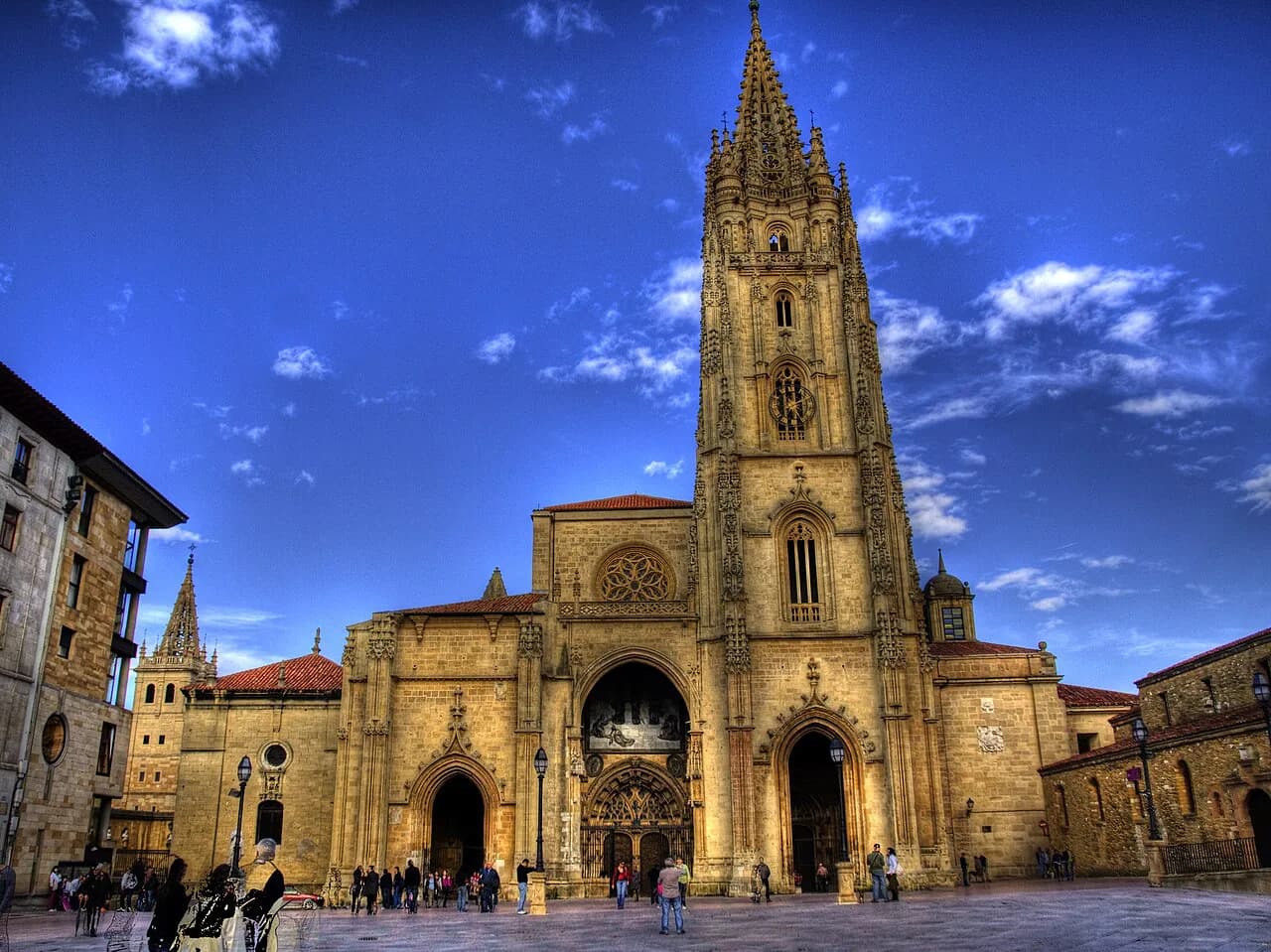
If you are building a longer Asturias itinerary from the region's cities, our guide to things to do in Oviedo makes a sensible anchor, and the Oviedo old town walk pairs well with a day out to Covadonga. Check the current lake access arrangement with the operator before you travel.
Explore more Oviedo guides
Frequently Asked Questions
Why is Covadonga famous?
Covadonga is famous above all for the Santa Cueva, where the Virgen de Covadonga, la Santina, is venerated as patron of Asturias, and for the Neo-Romanesque basilica of pink limestone beside it. Tradition also places the battle of Covadonga here in 722, the episode that became the symbolic beginning of the Kingdom of Asturias.
What happened in Covadonga?
According to tradition, Pelayo and his followers resisted a Muslim force at Covadonga in 722, and the victory was later presented as the start of the Kingdom of Asturias and of the Reconquista. The cave also holds the sepulchre of Don Pelayo, and a statue of him stands on the esplanade.
Why is the image in the Santa Cueva not the original Santina?
A fire destroyed the earlier carving and much of the cave's possessions in 1777. In 1778 the Cathedral of Oviedo donated the present sixteenth-century figure of the Virgin, which is still venerated in the cave today.
Do I need a bus to reach the Lagos de Covadonga?
In high season access to the lakes is regulated and you may need to take a bus from the base instead of driving up. The arrangement changes with the season, so confirm it with the operator before the day of your visit.
Sources
Notes for your next Spanish town break
Optional updates to our guides.
You might also like
Continue reading
More guides you'll find useful