Gijón: What to See in Asturias's Seaside City
Plan a short break in Gijón: Cimadevilla's old streets, the Roman baths at Campo Valdés, the Elogio del Horizonte and how the city fits a trip from Oviedo.
On this page
Gijón rewards a full day rather than a flying half-day: the old quarter of Cimadevilla, the Campo Valdés Roman baths, the Torre del Reloj and the Cerro de Santa Catalina with Chillida's Elogio del Horizonte all sit within a compact peninsula that you can cross on foot. The rest of the city, including the arcaded Plaza Mayor and the long Muro de San Lorenzo, wraps around the same seafront. This guide sets out how the city is laid out, a walking order for the sights, how to reach Gijón from Oviedo and how to time your visit around closures and midday heat.
Where Gijón sits in Asturias and how the city is laid out
Gijón is the largest city in Asturias, on the Cantabrian coast, and its centre is unusually easy to read because almost everything a visitor wants sits on or near a small peninsula. Cimadevilla, the old fishing quarter, occupies that peninsula: the harbour and marina lie on one side, the Playa de San Lorenzo on the other, and the Cerro de Santa Catalina rises at the tip. Walking is the practical way to cover it, since much of the centre is level and the sights are close together.
Think of the city in three layers. The first is Roman, represented by the Campo Valdés baths and the Torre del Reloj; the second is the baroque and mercantile quarter around the Palacio de Revillagigedo and the small arcaded plaza by the Ayuntamiento below Cimadevilla; the third is the 20th-century city of the Muro de San Lorenzo and, out of the centre, the Laboral building. Keeping those layers separate helps you decide what to see first when time is short.
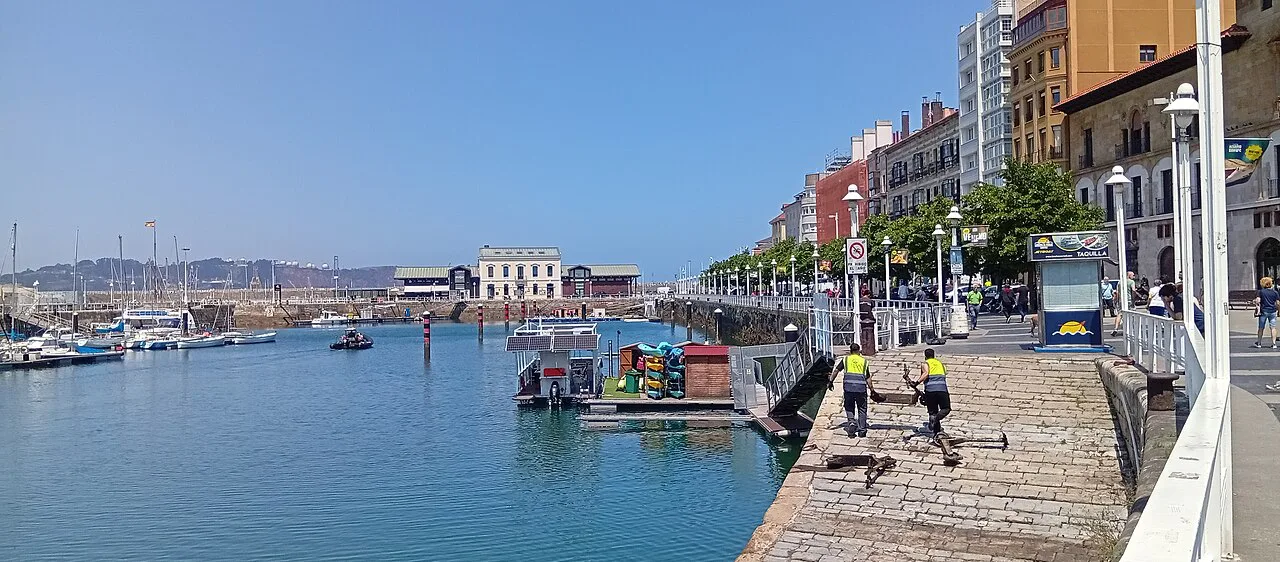
Cimadevilla: the old fishing quarter, Plaza del Marqués and the Palacio de Revillagigedo
Cimadevilla is the historic core, a knot of narrow lanes where old fishermen's houses stand alongside palatial townhouses. Start at the Plaza del Marqués, where the statue of Don Pelayo stands, and look up at the baroque Palacio de Revillagigedo, an 18th-century palace with one tower dating from the 15th century. The palace is attached to the fragment of Roman wall that once protected the town and is now used for exhibitions, so it is worth checking what is on before you go in.
Next to the palace stands the Colegiata de San Juan Bautista, and the lanes around it hold cider houses and small terraces rather than blockbuster sights. Treat Cimadevilla as a place to wander for its own sake rather than a checklist: the pleasure is in the stairways, the sea glimpses between buildings and the sudden openings onto the water. Allow a slow hour here if you want to look properly.
The Cerro de Santa Catalina and the Elogio del Horizonte
Climb to the Cerro de Santa Catalina, the grassy headland at the tip of Cimadevilla, and you get the best orientation in the city: the Cantabrian Sea ahead, the marina on one side and the sweep of San Lorenzo on the other. The hilltop park also holds an open-air auditorium, skate ramps on the climb up and plenty of green space, so it doubles as a breather between the old quarter and the seafront.
The Elogio del Horizonte, Eduardo Chillida's sculpture, has stood on the hill since 1990 and has become the symbol of the city. Stand inside the concrete form and the point becomes clear: the curve frames the wind, the sound of the sea and the horizon rather than presenting a view like a picture. It is a five-minute stop that repays a few minutes of stillness, not a sight to rush past.
The Roman baths of Campo Valdés and the Torre del Reloj
The Termas Romanas de Campo Valdés, discovered in 1903 and opened to the public in 1965, are among the most important Roman sites in northern Spain. The baths were built between the 1st and 4th centuries and served as public baths and a gathering place for the town's residents, with a small museum alongside. They sit just below Cimadevilla and are an easy addition to a walk between the old quarter and the Iglesia de San Pedro.
The Torre del Reloj was raised on the ruins of an older Roman tower and today houses the archaeological museum and the municipal archive. Pairing it with the baths gives you the city's Roman layer in one short stretch, which is the most efficient way to see both without criss-crossing the centre.
Plaza Mayor, the Ayuntamiento and the arcaded streets below Cimadevilla
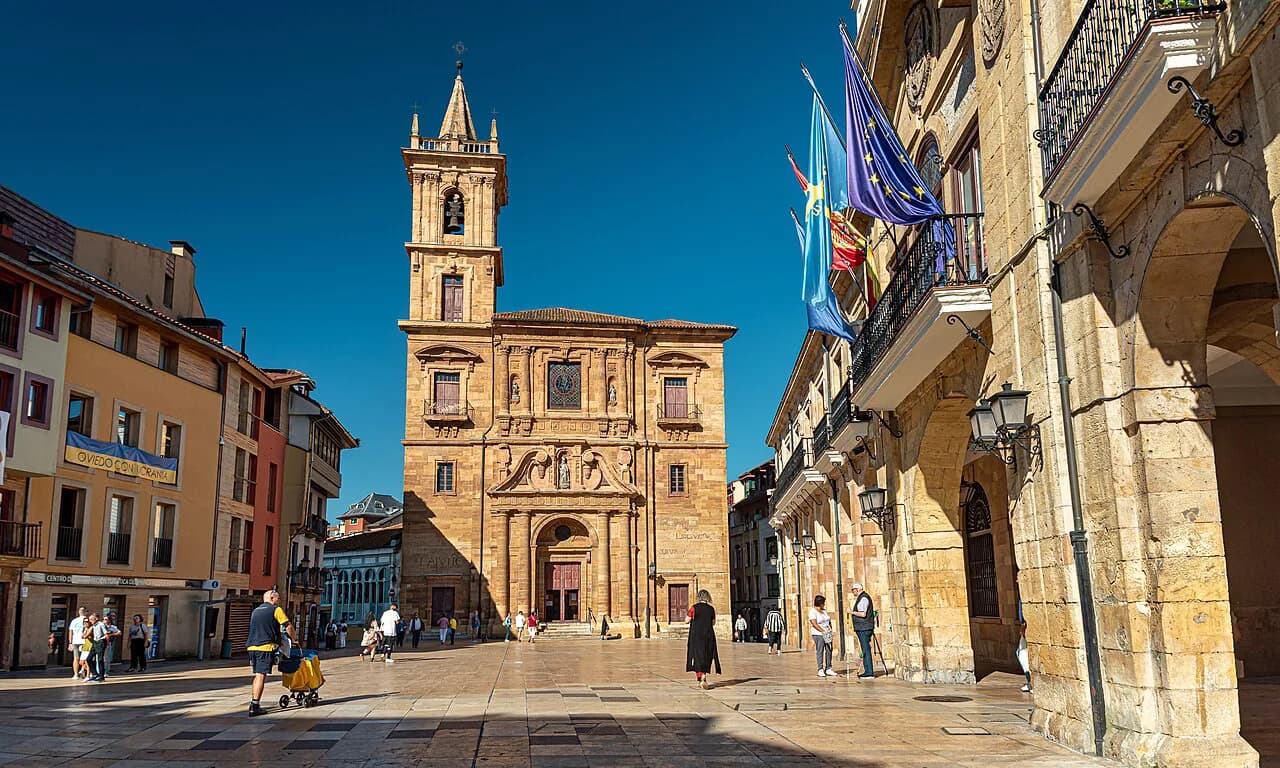
Below Cimadevilla, the small plaza by the Ayuntamiento is enclosed and ringed by arcades, with cider houses and cafés tucked underneath. It is a natural pause between the old quarter and the beach, and the covered walkways make it usable even in a shower. From the square you can walk straight down to the seafront.
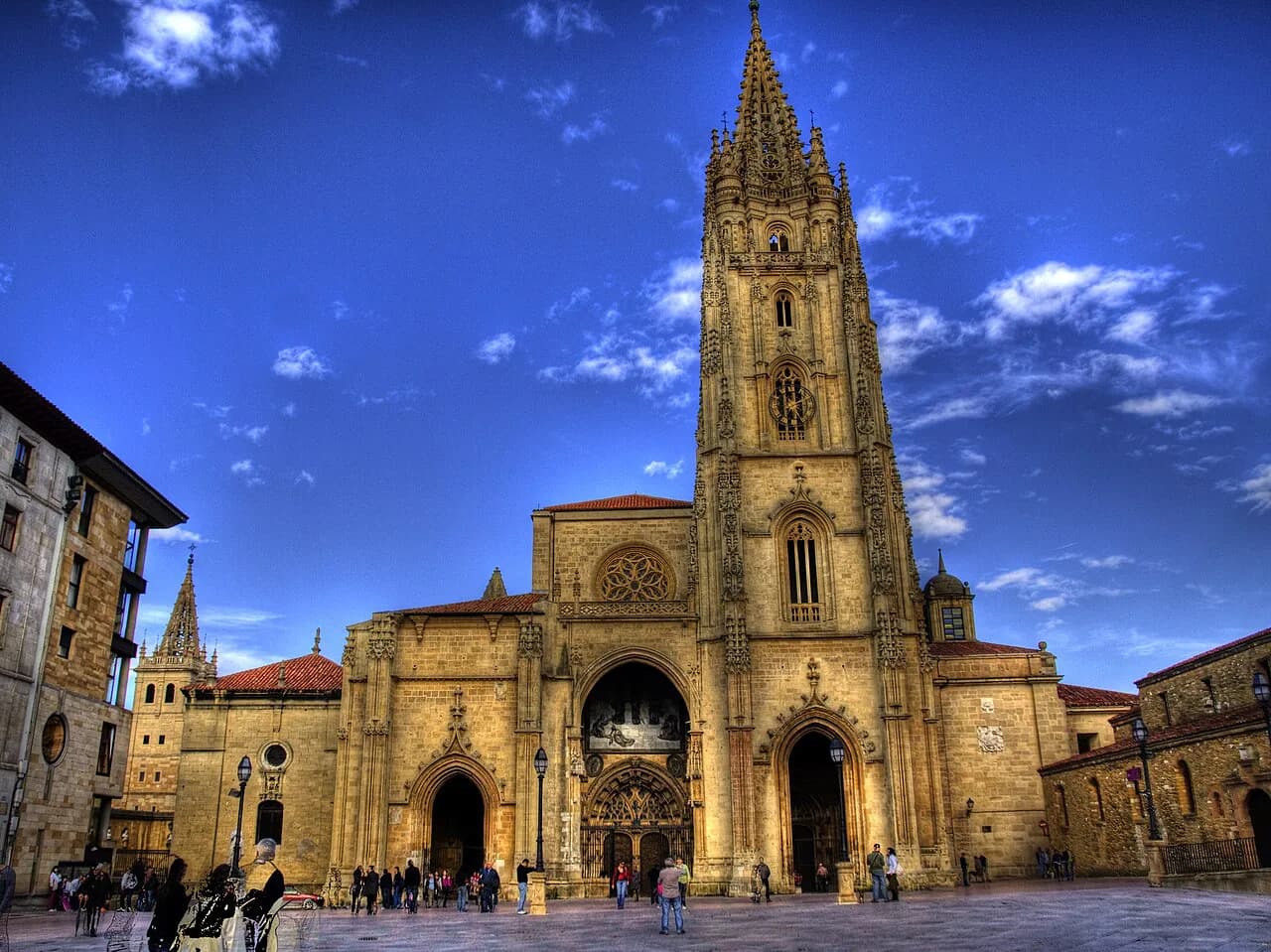
This is also the moment to step back into Oviedo's own historic core for comparison, since the two cities are close enough to combine. If you are basing yourself in the Asturian capital, the Oviedo old town is the obvious counterpart to Cimadevilla's lanes.
The Muro de San Lorenzo and the walk to the Iglesia de San Pedro
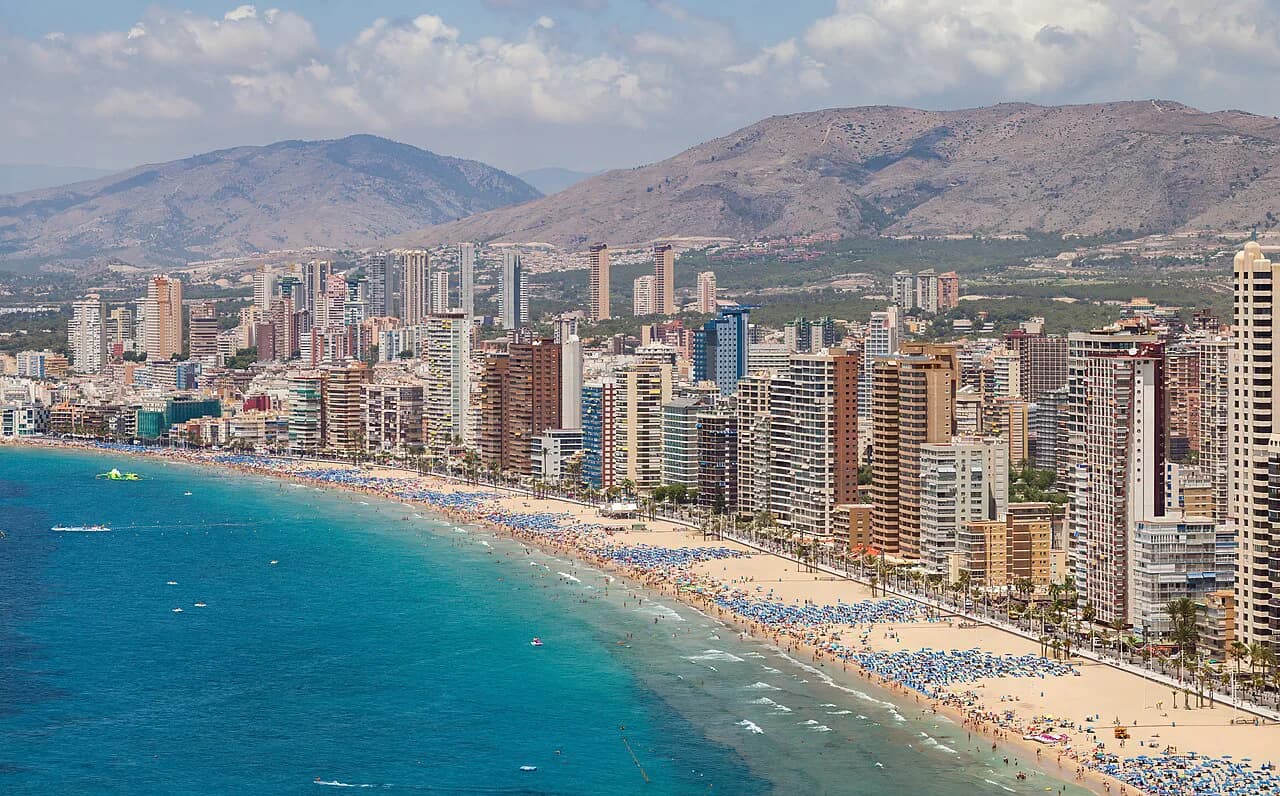
The Playa de San Lorenzo is a rare thing: a city beach right in the centre, curving in a shell shape along the seafront. The promenade known as the Muro de San Lorenzo runs from the mouth of the river Piles to the Iglesia de San Pedro, and walking it takes around 30 minutes at an easy pace. Treat it as the city's front room rather than a beach day: the point is the sea air and the view back towards Cimadevilla.
Finish at the Iglesia de San Pedro, the church by the water at the far end of the promenade. From there the Campo Valdés baths and the old quarter are a short walk back inland, which makes the seafront a sensible closing leg of a loop rather than a separate outing.
The Museo Casa Natal de Jovellanos and the Capilla de los Remedios
Gaspar Melchor de Jovellanos, the Enlightenment writer and reformer, was born in a house-palace built between the late 14th and early 16th centuries, now the Museo Casa Natal de Jovellanos. The adjacent Capilla de los Remedios holds his mausoleum, so the two together tell the story of the city's most famous figure in a single stop near Cimadevilla.
The Laboral: the old labour university building
The Laboral, the vast former labour university on the edge of the city, is the one major sight that sits away from the seafront and needs its own journey. Its scale is the attraction: this is monumental 20th-century architecture rather than another old-town lane, and it makes a useful counterweight to Cimadevilla if you have a full day. Check the current visitor arrangements and opening days before travelling out, since access to the building has changed over the years.
Getting to Gijón from Oviedo and how the town fits a short break
Gijón works best as a day out from Oviedo, the Asturian capital and the natural base for a short break in the region. The two cities are close and connected by road and rail, so Gijón can be an afternoon and a morning rather than a separate stay. If you are still choosing what to see in the capital itself, the things to do in Oviedo cover the cathedral, the pre-Romanesque churches and the old centre.
For travel times, use the current timetables from the rail and bus operators rather than relying on memory, since services change with the season. Book nothing around Gijón beyond a comfortable half-day margin if you are returning to Oviedo the same evening.
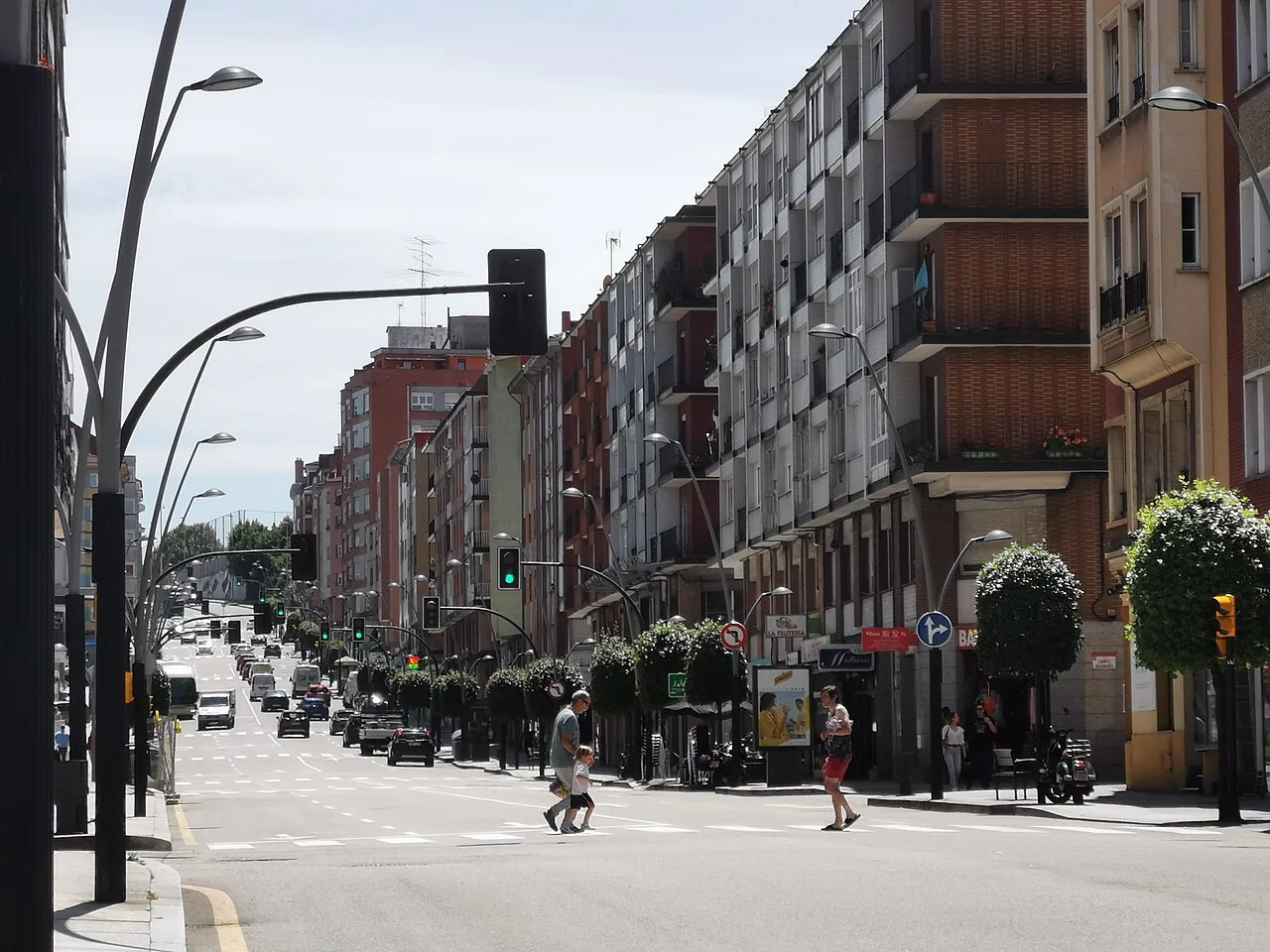
Walking the sights in an afternoon and a morning
For a single afternoon, start at the Plaza Mayor, climb into Cimadevilla for the Plaza del Marqués and the Palacio de Revillagigedo, then continue to the Cerro de Santa Catalina for the Elogio del Horizonte. Drop down to the Campo Valdés baths and the Torre del Reloj, then finish along the Muro de San Lorenzo to the Iglesia de San Pedro. That order keeps you moving in one direction and puts the seafront at the end.
With a morning to add, give it to the Laboral or to the Casa Natal de Jovellanos and the Capilla de los Remedios, depending on whether you want scale or local history. If you plan to move on to Oviedo the same day, the Oviedo map will help you place the cathedral, the Cámara Santa and the old town once you arrive.
Monday closures, midday heat and timing your day
The practical risks in Gijón are the familiar Spanish ones: small museums and churches keep short hours, many close one day a week, and the middle of the day is when you least want to be climbing the Cerro de Santa Catalina in summer. Plan the outdoor sights, the hill and the promenade for the morning or late afternoon, and put the baths, the Torre del Reloj and the Casa Natal de Jovellanos in the middle of the day.
Check opening days for each museum directly before you go, since the Campo Valdés baths, the Torre del Reloj and the Casa Natal de Jovellanos are separate sites with their own schedules and entry arrangements. That single check is the one thing that most often changes a Gijón itinerary.
Practical costs in euros for a short stay
Much of what is best in Gijón comes without a ticket: walking Cimadevilla, the plaza by the Ayuntamiento, the Cerro de Santa Catalina and the Elogio del Horizonte, and the Muro de San Lorenzo. Budget your euros for the ticketed museums and for the journey from Oviedo.
Prices for the Roman baths, the Torre del Reloj, the Casa Natal de Jovellanos and the Laboral are set by each site, so check the current admission and any reduced or free slots on their own pages before you travel. The same applies to train and bus fares from Oviedo, which vary by operator and fare type.
Is Gijón worth the day from Oviedo?
Yes, if you give it a full day and walk it in the right order: Plaza Mayor, Cimadevilla, the Cerro de Santa Catalina, the Roman layer, then the Muro de San Lorenzo. A rushed half-day sells the city short, because the pleasure is in the sequence from old lanes to clifftop to seafront rather than in any single sight.
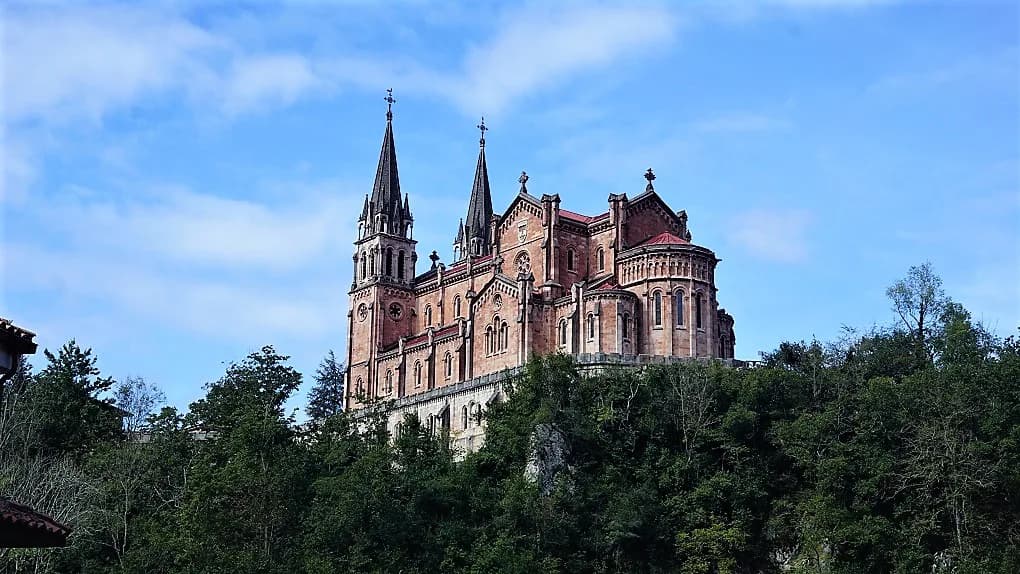
Base yourself in Oviedo, take the short trip across, and keep the Laboral for a second visit if the weather turns. If you want the region's religious and pre-Romanesque history as well, Covadonga and the Santa Cueva de Covadonga make a logical companion outing on another day.
Explore more Oviedo guides
Frequently Asked Questions
Is Gijón worth visiting?
Yes, for a full day. The compact peninsula of Cimadevilla holds the old fishing quarter, the Plaza del Marqués, the Campo Valdés Roman baths, the Torre del Reloj and the Cerro de Santa Catalina with the Elogio del Horizonte, all within walking distance, with the Muro de San Lorenzo closing the loop along the seafront.
Why is Gijón famous?
It is known for its city beach and seafront promenade, its old fishing quarter of Cimadevilla, the Chillida sculpture Elogio del Horizonte on the Cerro de Santa Catalina, and its Roman remains at Campo Valdés. The Laboral, the former labour university building, is the city's other landmark.
How do you pronounce Gijón?
In Castilian the j is a harsh sound close to the Scottish ch in loch, so Gijón is roughly hee-HON, with the stress on the second syllable. Asturian speakers often use a softer sound closer to an h.
Can you see Gijón in an afternoon?
You can cover the core on foot in an afternoon if you keep moving: Plaza Mayor, Cimadevilla, the Cerro de Santa Catalina and the Elogio del Horizonte, the Roman baths, then the promenade to the Iglesia de San Pedro. Add a morning for the Laboral or the Casa Natal de Jovellanos.
Sources
Notes for your next Spanish town break
Optional updates to our guides.
You might also like
Continue reading
More guides you'll find useful