Nerja Old Town: What to See on a Walk Through the Historic Centre
Walk Nerja's old town past the Balcón de Europa, whitewashed squares and the Ermita to see how the centre fits a short Costa del Sol break.
On this page
Nerja's old town is small enough to walk end to end in an afternoon, and its shape is easy to hold in your head: the Balcón de Europa on the cliff edge at one end, the Plaza de España and the older shopping lanes behind it. The centre rewards slow wandering rather than a checklist, because the pleasure is in the whitewashed facades, the patios behind them and the small squares that open without warning. This guide names those squares and chapels, sets out an order for walking them, and points to the separate places just outside town that need their own half-day; see also our Things to Do in Nerja guide for the wider shortlist.
What the old town is and where it sits
The historic centre occupies the flat ground and gentle slope between the Balcón de Europa and the Plaza de España, with the parish church of San Miguel a short walk inland. Nerja itself is a fishing and farming municipality at the eastern end of the Costa del Sol in Málaga province, close to the Granada boundary, and the old town keeps the scale of that older working town rather than a resort. Plan the centre as a walkable core of a few streets deep, with everything on this page reachable on foot. Use the Nerja Map to fix the squares and the church before you set out.
Orientation is straightforward once you fix two anchors: the Balcón de Europa for the sea side and the Plaza de España for the inland side. Between them, the lanes are cobbled and paved, houses are whitewashed with interior patios, and shopfronts sell local produce. That makes a loose loop more sensible than a strict route, so you can double back when a square looks worth a second look.
The Balcón de Europa: a viewpoint built on a battery
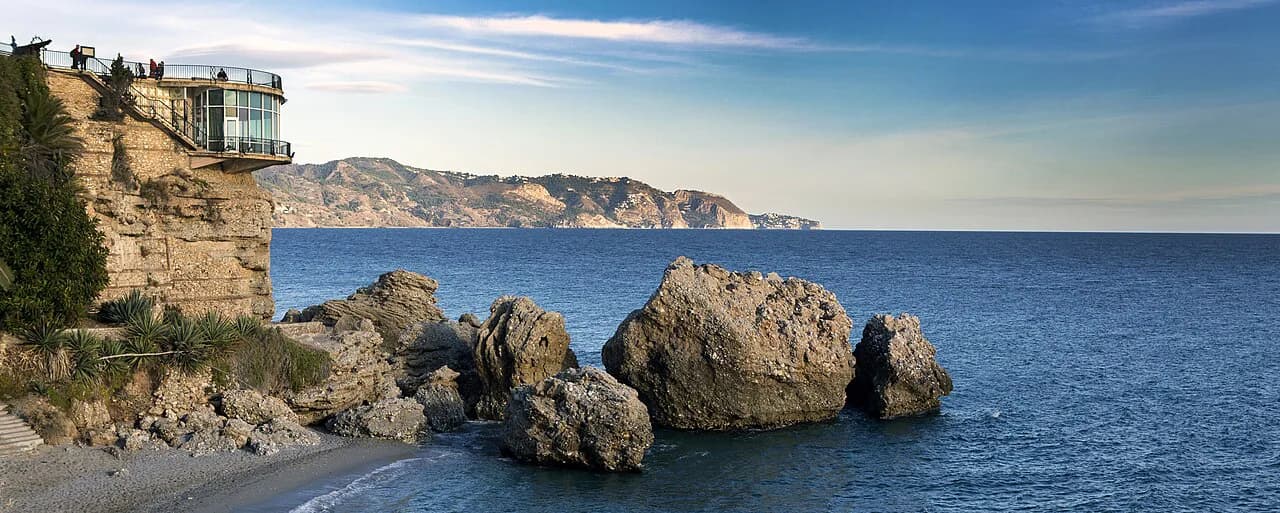
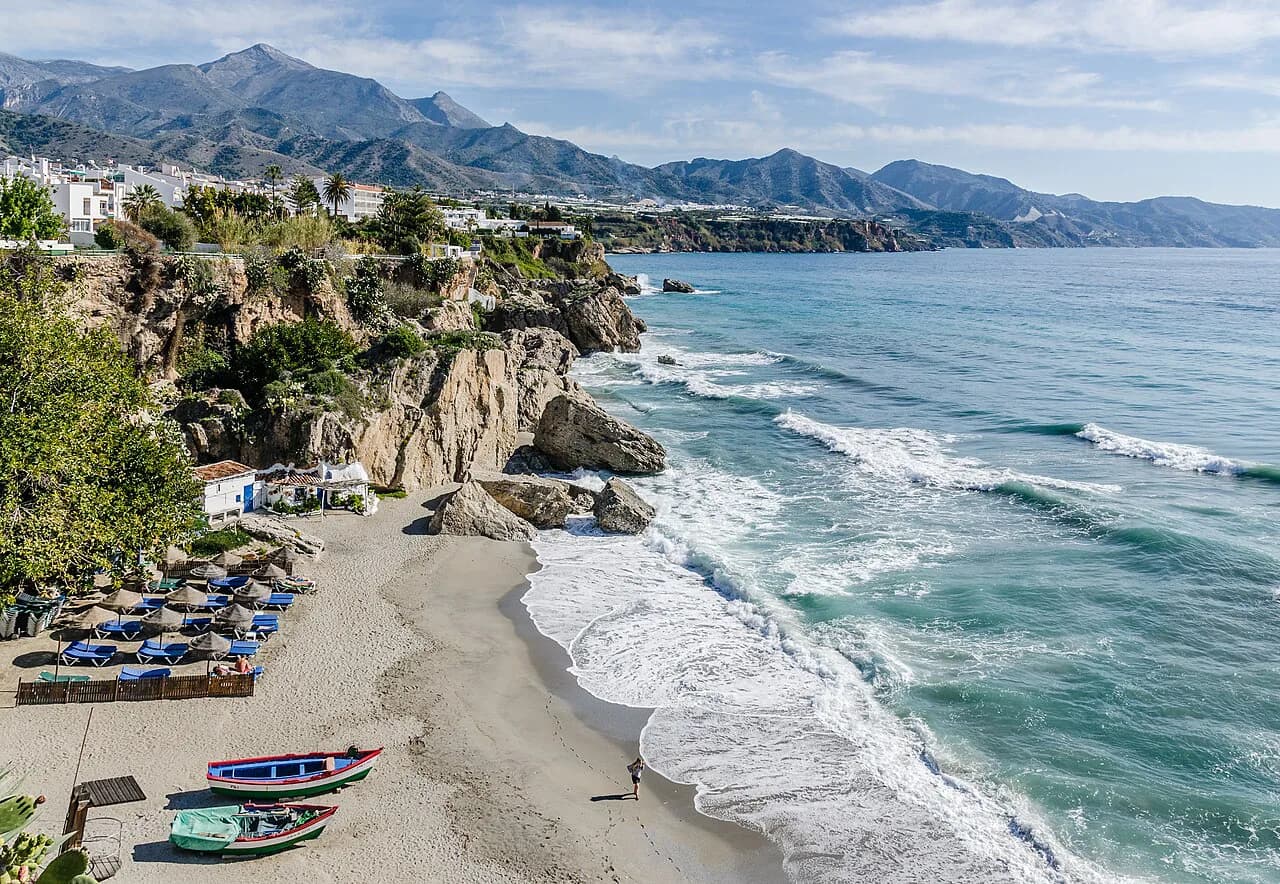
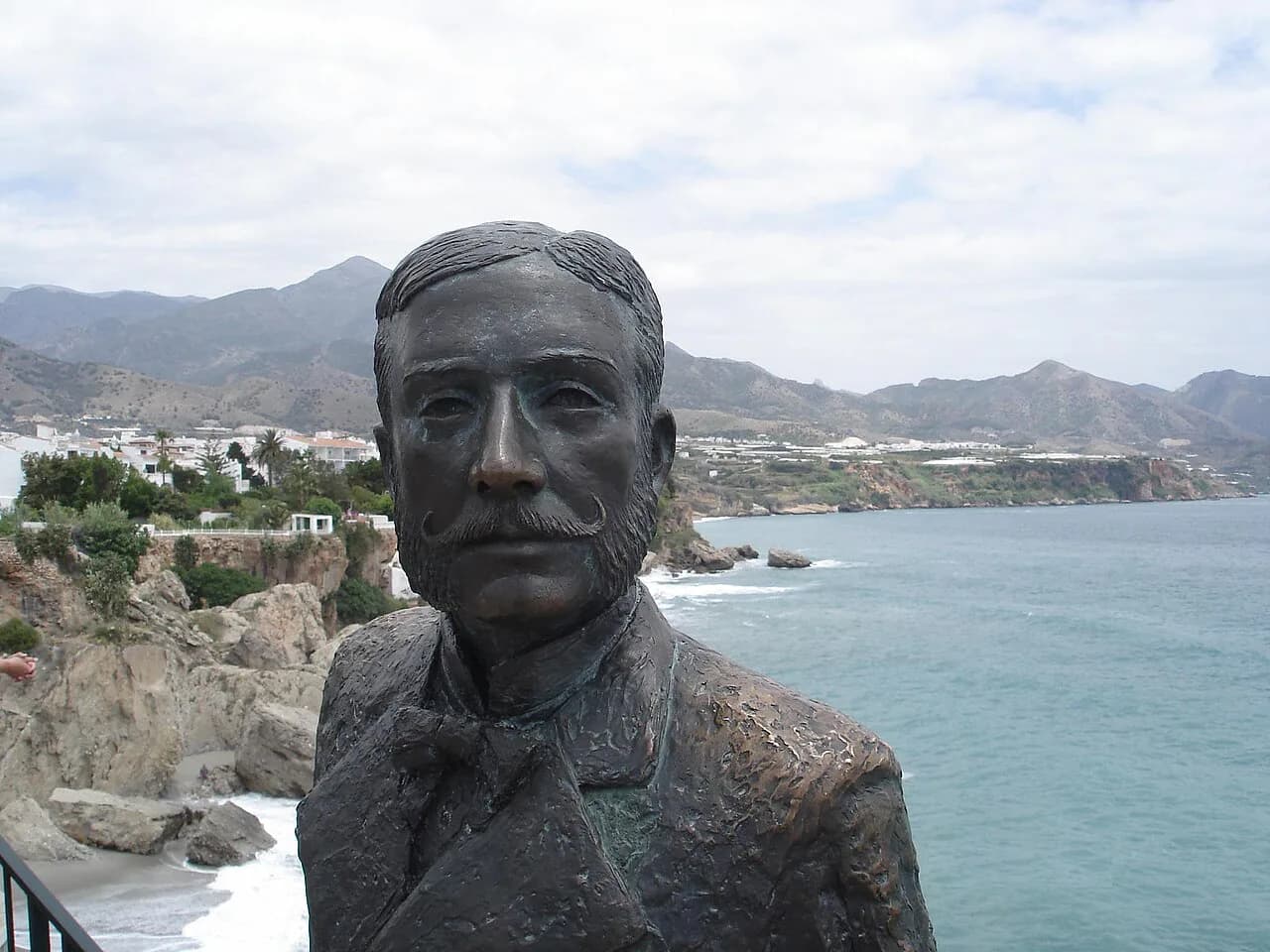
The Balcón de Europa is the centre's natural starting point, a promenade on top of the cliffs with views along the Nerja coastline and out to the Mediterranean. It began as the Paseo la Batería, a defensive fort from which approaching ships could be spotted, so treat it as a piece of the town's military past rather than only a photo stop.
Come here first thing or towards evening, when the light on the water is best and the promenade is easier to walk. The surrounding streets hold cafés and ice-cream shops, but the reason to linger is the drop below the railings and the long view back over the town's rooftops. From the Balcón, the rest of the old town runs inland, so you can leave the sea behind and head for the squares.
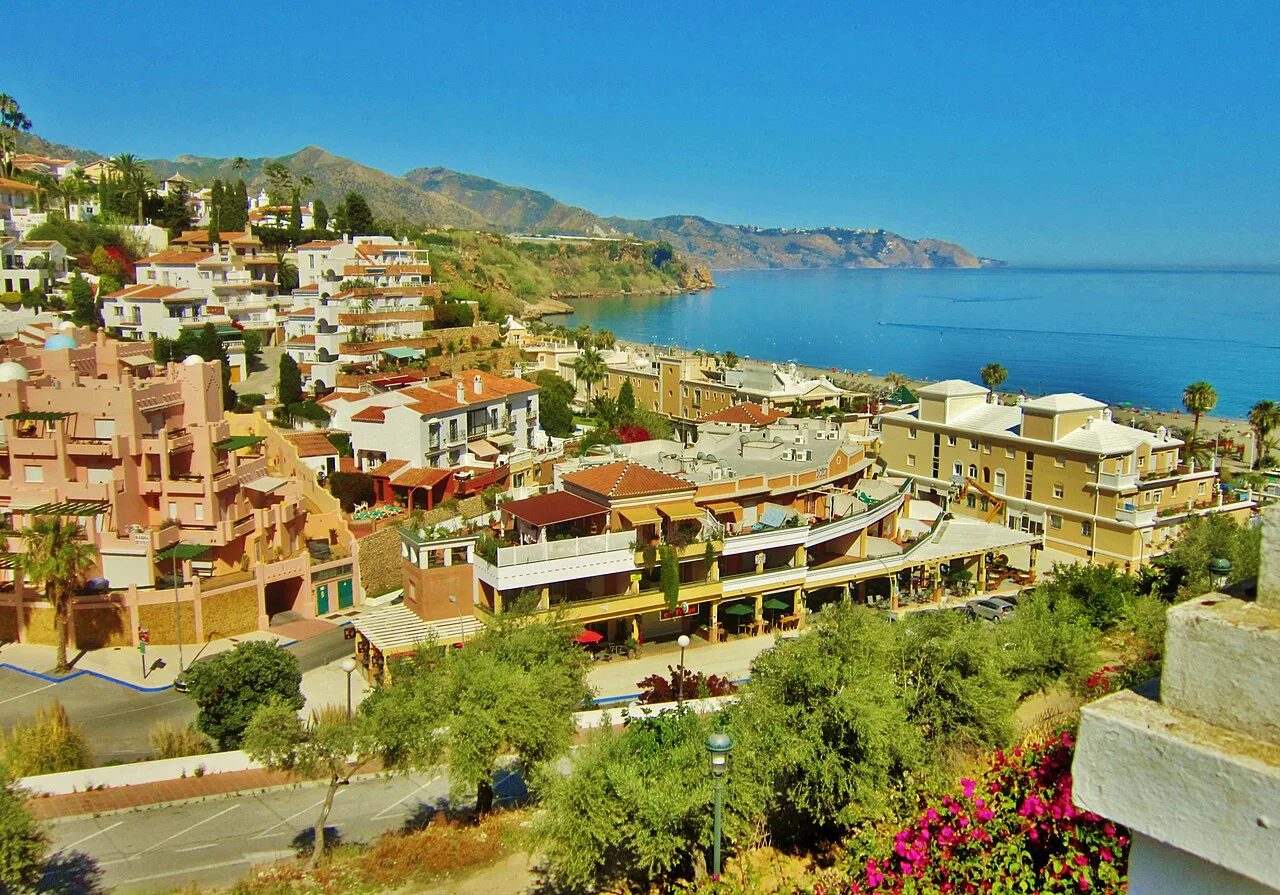
Whitewashed lanes, patios and cobbled streets
The casco antiguo is the classic Andalusian fabric: narrow paved streets, whitewashed facades, flowered balconies and courtyards tucked behind doorways. Walking it is the main activity, and the pleasure comes from the texture of the place rather than any single monument. Give yourself time to turn off the obvious through-routes, because the quietest lanes are usually one street back from the busiest.
Shops in these lanes sell local specialities such as moscatel wine, honey and handicrafts, alongside produce from the surrounding farms. It is worth noting that many small shops and churches in inland Andalusian towns close for the middle of the day, so a late-morning or late-afternoon walk suits browsing better than the early afternoon. In summer, the narrow streets give shade that the seafront lacks, which makes the old town a sensible place to be at midday.
The squares worth finding
Nerja's centre is best understood as a chain of small squares rather than a single main plaza. The named ones include Plaza de España, Plaza Cantarero, Plaza de los Cangrejos, Plaza Andalucía and Plaza de la Ermita, each with a different feel and a different reason to stop.
Plaza de España is the inland anchor and the natural place to start or finish a loop through the shopping streets. Plaza Cantarero and Plaza de los Cangrejos are smaller, quieter pockets that work as breathers between the busier lanes. Plaza Andalucía is the civic heart around the parish church, and Plaza de la Ermita is the setting for the town's patron saint chapel, so each square has a role beyond somewhere to sit.
Treat the squares as waypoints rather than destinations in themselves: a route that links them will take you through the streets that make the centre worth visiting. The distances between them are short, and the walking is on level or gently sloping paved ground. That makes the centre easy on a short break, when you may only have a morning to spare from the coast.
San Miguel and the Ermita de la Virgen de las Angustias
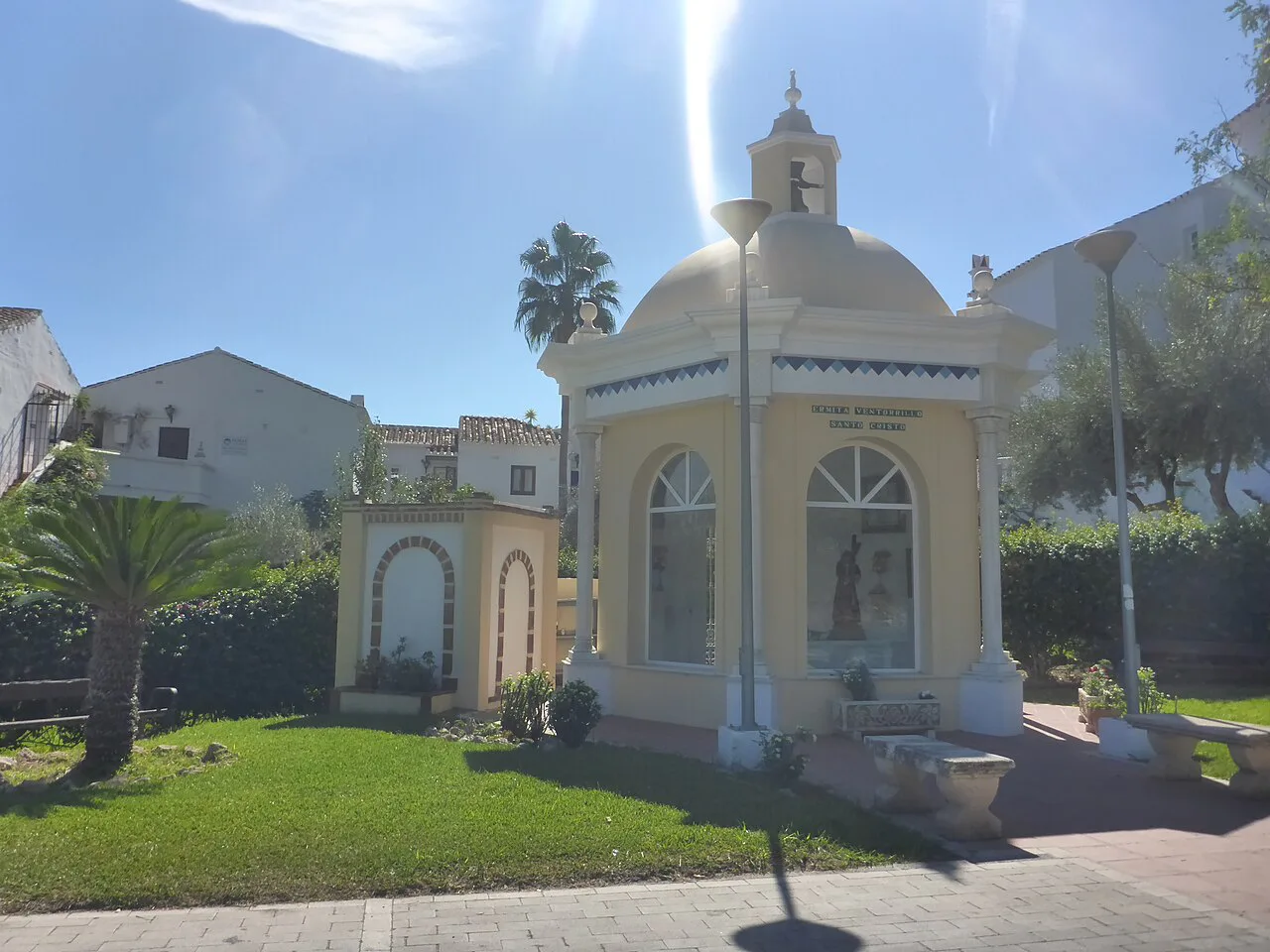
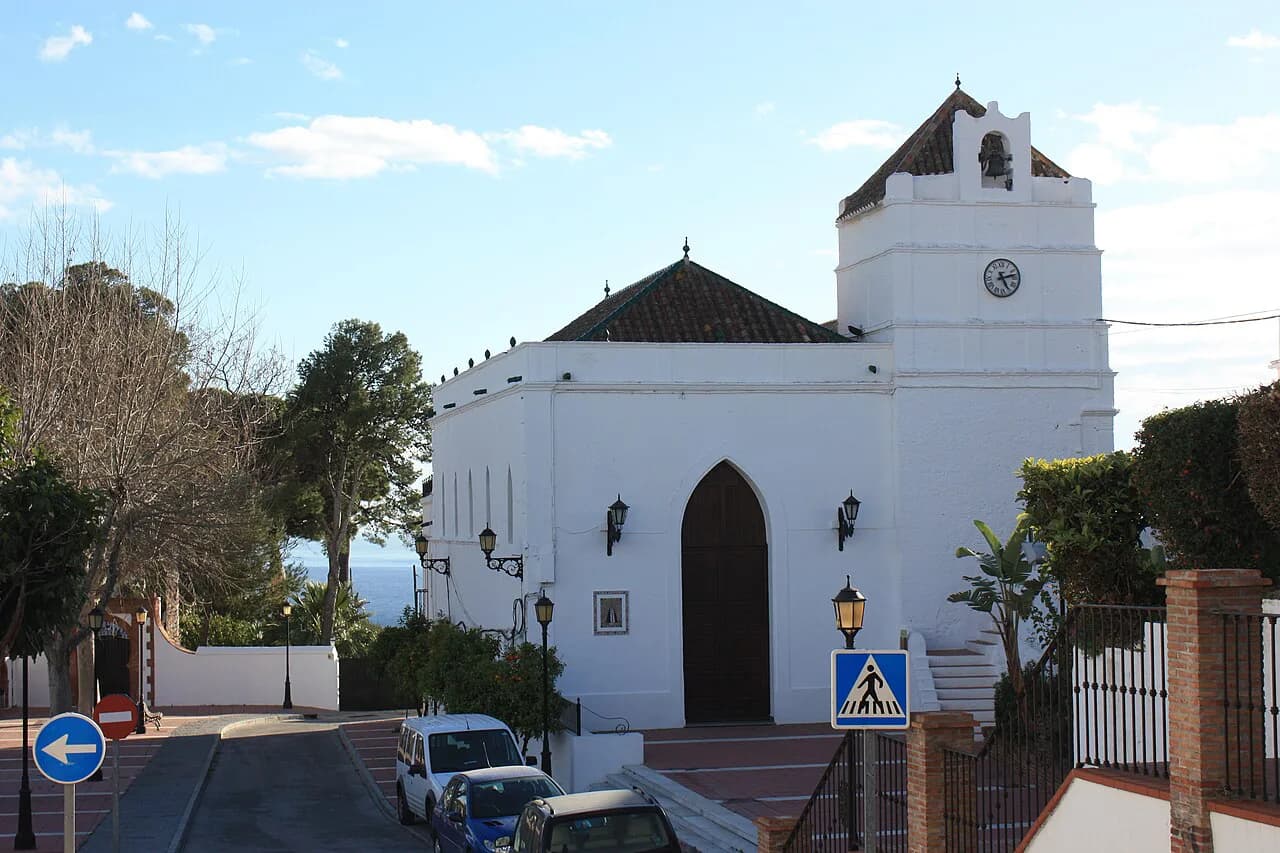
The Parroquia de San Miguel stands on Plaza Andalucía and is the centre's main church, a landmark for navigating the inland end of the old town. The Ermita de la Virgen de las Angustias on Plaza de la Ermita is the chapel of Nerja's patron saint, smaller and quieter than San Miguel but central to local devotion. Visit them as working parish buildings rather than as museums, and remember that churches in Andalusia commonly close to visitors during mass and for part of the day.
If a door is shut, the square outside is still worth the walk: both sit in the lived-in part of the centre, where the town's daily life carries on around them. Check the notice board at the door for service times and visitor access rather than planning around a fixed hour.
Buying local produce in the centre
The old town's shops are where the local larder shows up: moscatel wine, honey and handicrafts made from the area's produce. These make practical, light souvenirs that travel well, and buying them in the centre keeps your money in the town rather than at the resort edge.
Because these are small independent shops, their hours follow local patterns rather than tourist ones, and the middle of the day can be quiet. Shop in the morning or late afternoon, and use the siesta lull to walk the lanes or sit in a square instead. Prices vary by shop, so compare across a couple of streets before committing to a bottle or a jar.
If you want the town's history set out in order
For context before or after your walk, a town museum covers Nerja's story from prehistory to its growth as a tourist destination, including material linked to the caves. It gives the centre's whitewashed lanes a timeline, which is useful if you are fitting Nerja into a short break and want the background in one place.
Check the museum's own published opening times and ticket price before you go, since these are the details most likely to change with the season. The same applies to the churches, whose visitor access depends on services. A little checking the day before saves a wasted walk.
A suggested order for walking the centre
Start at the Balcón de Europa for the sea view, then head inland through the whitewashed lanes towards Plaza de España. From there, link Plaza Cantarero, Plaza de los Cangrejos and Plaza de la Ermita, then finish at Plaza Andalucía and San Miguel.
The whole loop is compact and walkable, and a relaxed version fits comfortably into a morning or an afternoon without rushing. Add time for shops, a church visit and a stop in a square, and the centre can fill most of a day. Because it is all on foot, you can reverse the order or cut a square without losing the thread.
If you want to see the town from the water after your walk, a boat trip along the cliffs runs from the resort side, outside the historic centre.
Frigiliana and the Palacio de los Condes de Frigiliana
Inland from Nerja, Frigiliana is a white village of steep, flower-lined streets in the Axarquía, known for its honey and its preserved old quarter. Its Palacio de los Condes de Frigiliana was built at the end of the sixteenth century for the Manrique de Lara family, who held the lordship of the village and its land from 1508. The palace is a large historic building in the village's upper streets, and it gives a visit a fixed point beyond the wandering.
Frigiliana works as a half-day add-on rather than part of the old town walk, and the climb between its streets is steeper than anything in Nerja's centre. Go early to avoid the heat and the coach traffic, and wear shoes with grip for the polished cobbles. Check bus and taxi options from Nerja before you commit, since the village sits up in the hills rather than on the coast.
Maro and the Cuevas de Nerja outside the centre
The Cuevas de Nerja sit at Maro, outside the town, and are a separate outing rather than part of the historic centre. The cave is important for its prehistoric paintings, among the oldest in Spain, and holds one of the world's largest columns formed where stalactites and stalagmites meet. Its main hall also serves as a theatre, and the Cueva de Nerja festival is held there each year.
The village of Maro itself is a clifftop settlement above the coast, and it pairs naturally with the caves on the same trip. Because both sit outside the centre, plan them as a half-day and leave the old town for a separate stretch of time. Check cave opening times and ticket prices through the official cave operator before travelling out.
One local walk is off the agenda for now: the Río Chillar route is currently closed to the public, and the town's tourism service says it will publish any change to that status. Do not build a day around the river until access is confirmed. The centre, the caves and Frigiliana remain open alternatives.
Fitting the old town into a short break
Most UK travellers reach Nerja through Málaga airport and then transfer along the coast, which makes the old town an easy first or last stop on a Costa del Sol break. The centre is compact and walkable, so you can see the Balcón, the squares and San Miguel without a car or a fixed timetable.
A sensible shape for a short break is one block in the old town, one block at the Cuevas de Nerja or in Frigiliana, and one slow morning for the lanes and shops. Keep the inland day for early in the trip if the forecast is hot, since the clifftop and cave outings are less punishing at midday. Local buses and taxis connect the centre with the caves and the coast road, but confirm times on the day, as seasonal timetables vary.
Which part of the centre to walk first
Start at the Balcón de Europa, walk inland through the whitewashed lanes to Plaza de España, and link the smaller squares on the way to San Miguel. That order gives you the sea view while it is quiet and leaves the churches and shops for when you are ready to slow down.
Keep Frigiliana, Maro and the caves as separate half-days, and check the Río Chillar access before planning anything around the river. The centre itself needs no ticket and no fixed plan, which is exactly why it suits a short Costa del Sol break.
Explore more Nerja guides
Frequently Asked Questions
Which airport do you fly into for Nerja?
Málaga airport is the usual arrival point for Nerja, with road transfers along the Costa del Sol from there. Confirm your onward transfer arrangements and current service options before booking, because timetables and operators change.
Is the Balcón de Europa part of the old town?
Yes. The Balcón de Europa sits on the cliff edge at one end of the historic centre and began as a defensive battery, the Paseo la Batería marks that history. It is the natural place to start a walk inland through the whitewashed lanes.
Can you walk Nerja's old town without a car?
Yes. The centre is compact, with the Balcón, Plaza de España, the smaller squares and San Miguel all reachable on foot on paved streets. A car is only useful for outlying places such as the Cuevas de Nerja at Maro and the village of Frigiliana.
Sources
Notes for your next Spanish town break
Optional updates to our guides.
You might also like
Continue reading
More guides you'll find useful